Transcripciones
1. Te doy la bienvenida a la clase: Soy alguien que encuentra
alegría en hacer piezas pequeñas y
profundamente satisfactorias
sobre grandes obras de arte complejas. Como ama de casa y mamá, apretando a tiempo para el
arte como una lucha de Rhal Me concentro en piezas más pequeñas. De esta manera, puedo
terminarlos de una
sola vez sin perder
la conexión con la obra de arte y el
proceso. Hola, amigos. Mi nombre es aninapel. Soy artista,
instructor de arte y autor. Mi primer encuentro con vertcla ocurrió cuando
tenía cinco años,
y recuerdo vívidamente
esos pasteles de y recuerdo vívidamente vertcla de forma
circular Desde ese primer
momento de descubrimiento, tengo ruidosamente entregándome a escapadas
de arte rápido A veces preparo una pintura monocromática
rápida, una puesta de sol vibrante o un escapo con algunas
salpicaduras A pesar de que estas
sesiones de arte son cortas, realmente satisfacen el alma. Si te encanta crear arte a diario, pero tienes tiempo limitado,
tengo tus próximos
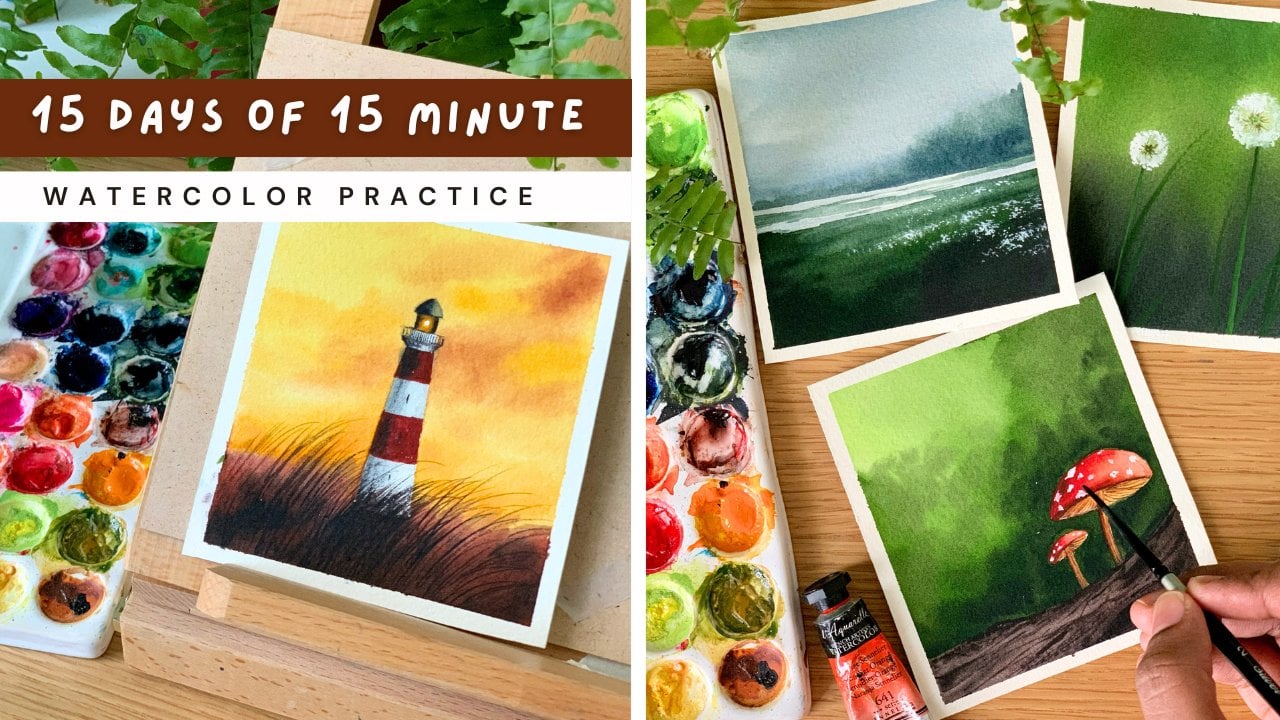
30 días cubiertos. Estoy súper emocionada de invitarlos a todos a un talento vertical de 30 días, donde juntos, vamos a elaborar 30 paisajes serviles Este desafío está
diseñado para caber en los
bolsillos más pequeños del tiempo libre, lo que les permite a todos crear hermosas y vibrantes
obras de arte sin comprometerse a largas sesiones. Antes de comenzar, explicaré sobre los
suministros de acuarela en detalle. Al inicio
de cada pintura, voy a hablar de los
colores que necesitarás. Entonces también probaremos algunas opciones de color
alternativo si no tienes el
mismo color que estoy usando. Cada pintura está
diseñada para inspirar una rápida pero satisfactoria
explosión de creatividad, alentando a los estudiantes a
explorar nuevas técnicas, paletas de
colores y estilos de una
manera manejable Tanto si eres un
artista experimentado como un principiante, este desafío
ofrece una forma refrescante y eficiente
en el
tiempo de disfrutar de tu pasión por la acuarela Estas obras de arte son pequeñas, pero son realmente hermosas. Por la misma razón, el proceso no lleva mucho tiempo. Facilitando que
las personas ocupadas se mantengan conectadas con
su pasión por el arte a pesar de
su ajetreo diario ocupado Si estás listo para disfrutar una breve pausa artística,
toma tus suministros, corta tu papel
en trozos pequeños, comencemos este viaje
2. Descripción de la clase: Hola, queridos amigos. Bienvenidos a 30 días de pintar muchos paisajes
verticales Al ser mamá y ama de casa, es un reto
dedicar tiempo al arte Sé que muchos de ustedes
están en la misma página, y por eso hoy estoy aquí
con un reto de vertica donde vamos a probar pequeñas obras de arte que cumplen el
alma, que puedes terminar en
menos de 20 a 25 minutos Como ya sabrás, esta clase está compuesta en
un formato de desafío diario. Por lo que a partir de hoy
por los próximos 30 días, juntos
pintaremos un paisaje
mini verticor Son mini, pero
son hermosas. Todos los días, podrás
aprender muchas técnicas y nuevas compinaciones
de colores Probaremos hermosos prados, paisajes marinos,
paisajes primaverales y mucho más Todos los días es
pintar, comienza con el ejercicio rápido de muestra
de colores, para que te familiarices
con los También voy a
explicar brevemente sobre el proceso, que te preparará y además te dará una idea de
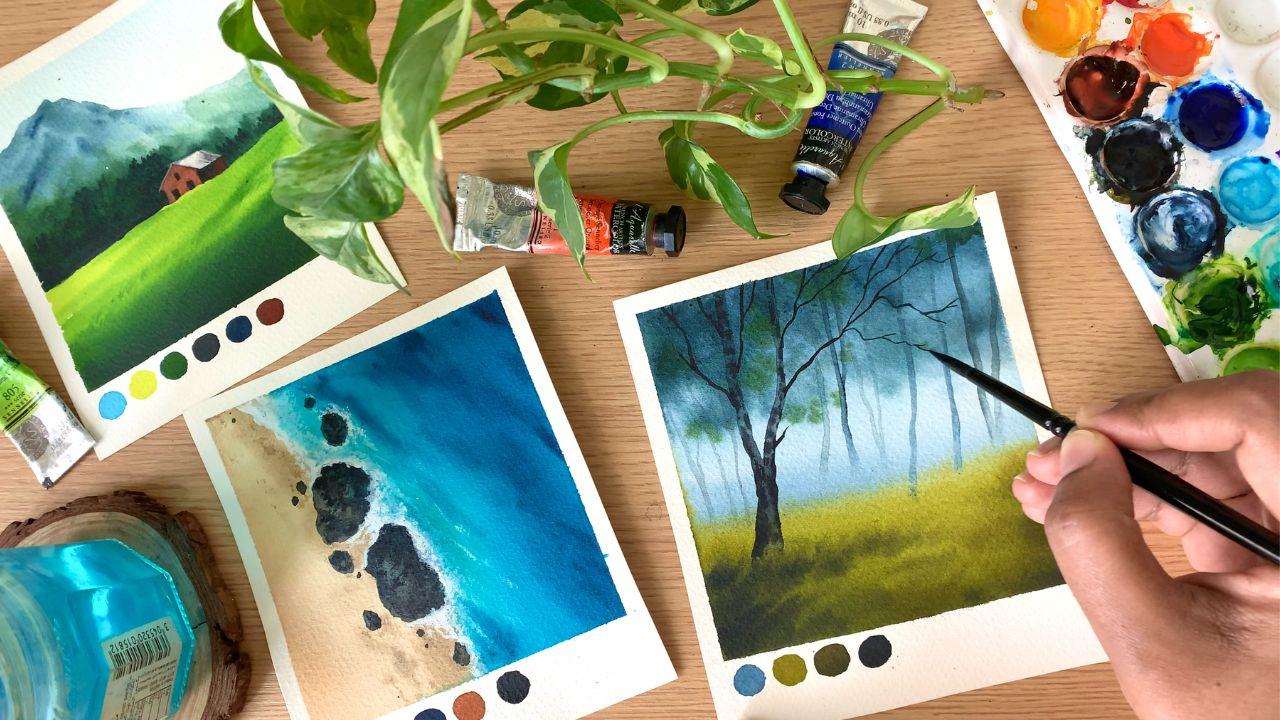
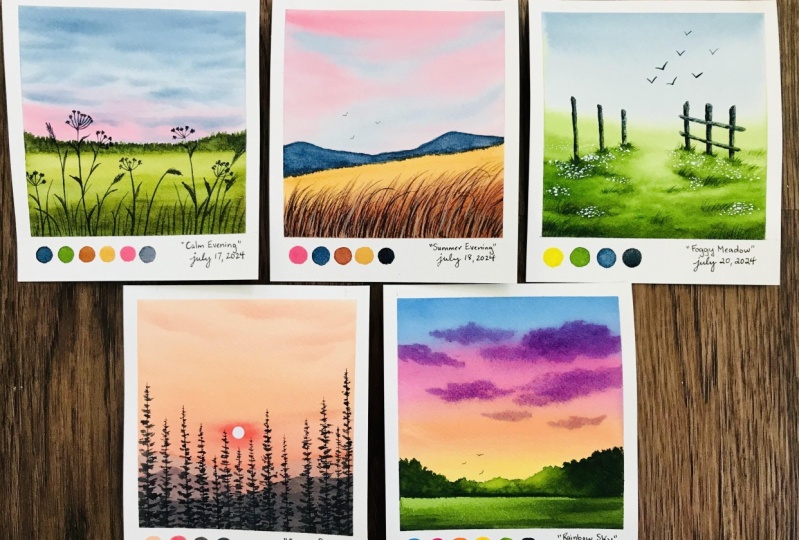
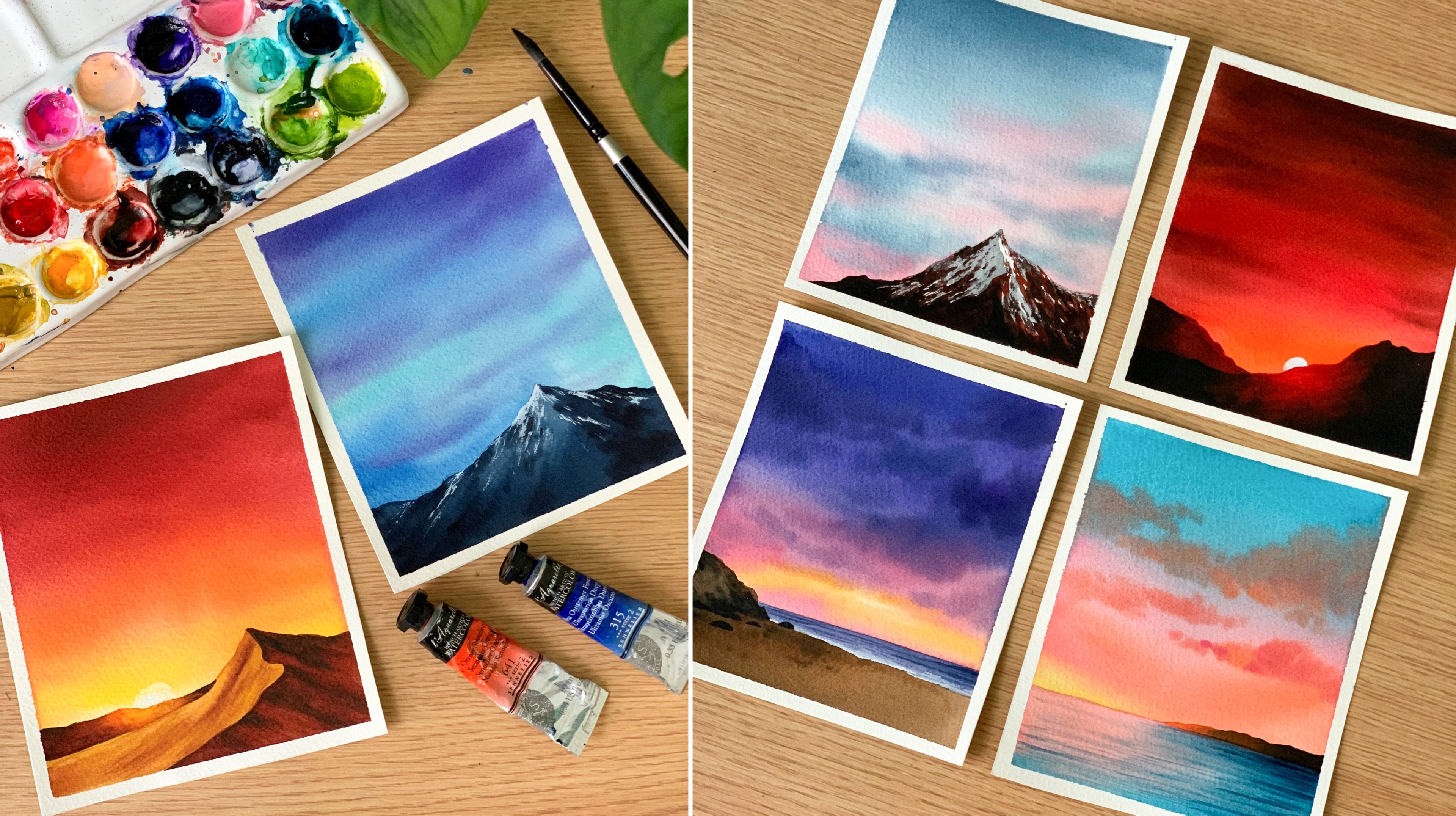
qué esperar. Antes de entrar en este viaje, permíteme mostrarte rápidamente algunas de
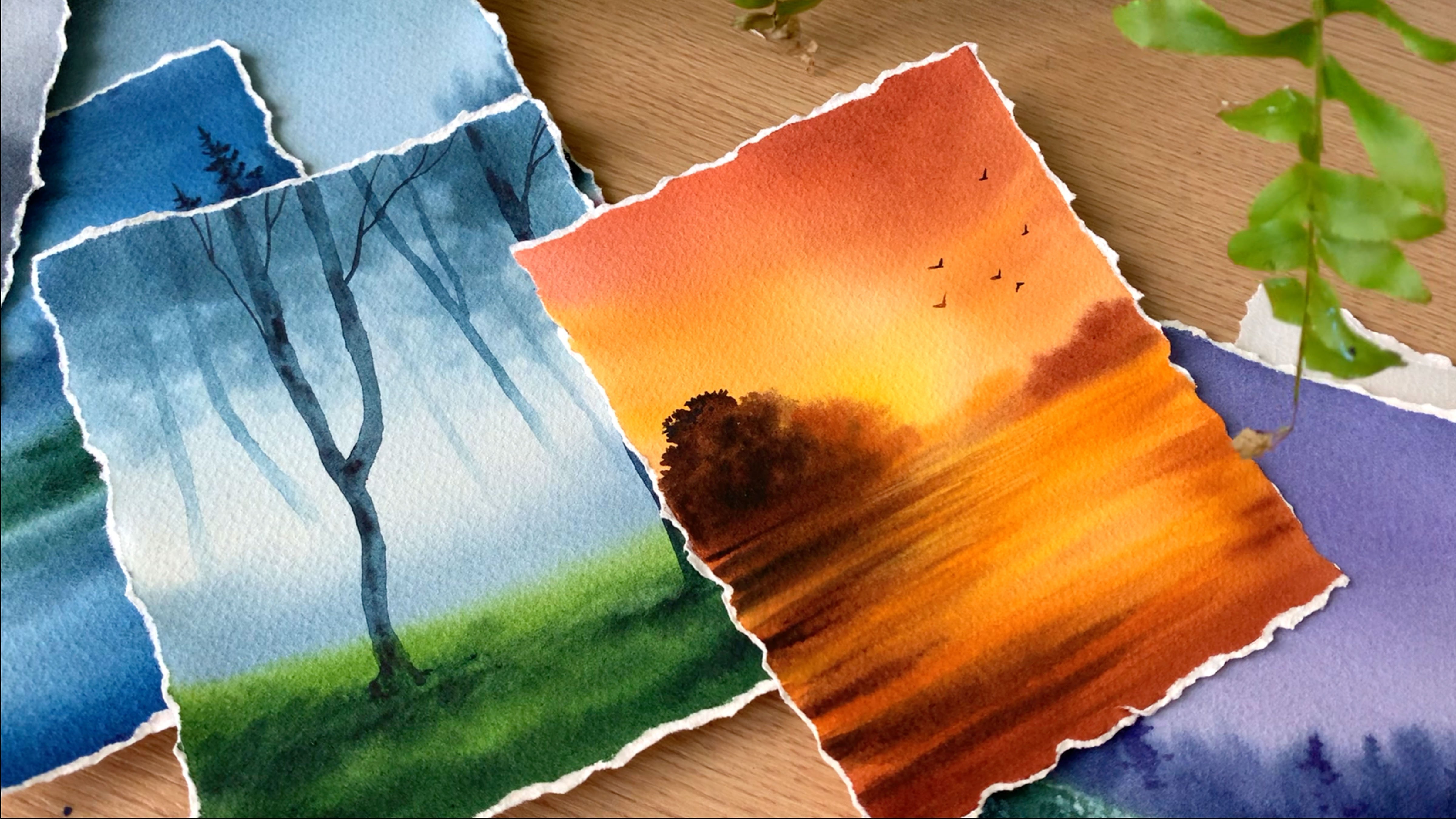
mis obras de arte favoritas.
Aquí hay uno. Realmente me encanta la forma en que ha resultado
éste, especialmente ese
efecto de niebla y la
coinación del color . Y ésta
es otra. Este es un escape realmente
rápido y ECC, que puedes hacer en
menos de 20 minutos Aquí hay otro.
Para esta pintura, el proceso es realmente emocionante. En esta obra de arte para
el fondo, simplemente
dejaremos caer un poco de
pintura sobre un fondo de mascota, y crearemos una textura. Y luego simplemente
agregaremos algunas líneas blancas a esas rocas y crearemos
una hermosa cascada. Entonces, sí, cada obra de arte
es realmente emocionante, aunque
son súper pequeñas, y con cada obra de arte, exploraremos
diferentes acuñaciones de colores, composiciones y temas Y la mejor parte es que, todas estas obras de arte se pueden hacer en menos de 20 a 25 minutos, lo que significa que si
eres alguien con una agenda ocupada y todavía quieres dedicar algún
tiempo a crear arte, te
puedo dar compañía
por los próximos 30 días. Entonces, si estás listo,
únete a mí enseguida. Vamos a crear 30 paisajes met
verticlor.
3. Materiales que necesitarás: Antes de comenzar,
echemos un vistazo a los materiales que necesitará
para este desafío de la NTIA Empezaré con el papel. Aquí está el papel que voy a usar
para este desafío de la NTIA Es de arcos. Es un papel de prensa
fría aticul Y es uno de 40 LB, lo que significa que el papel es lo
suficientemente grueso como para manejar múltiples capas
de pintura o agua. Entonces es 100% algodón. Arches es una marca que
llevo años usando, y me encanta este papel. Pero puede ir con cualquier papel vertical de grado
artista. Solo asegúrate de que el papel sea 100% algodón y también uno de 40 LB. La marca no importa, solo concéntrese en esas especificaciones. Ahora déjame mostrarte el tamaño
del papel que voy a usar. Es un tamaño pequeño a cuadros. Vamos a hacer
una colección de mini pinturas verticulares,
y este es el tamaño Es 121412 de esta
manera y 14 de esta manera. Para tener una mejor idea
del tamaño del papel, te
mostraré libre
de las pinturas. Entonces aquí estamos. Se puede ver la forma en que he
compuesto la pintura. Si dejas fuera el borde, la pintura será
más como un cuadrado, tal vez de 11 por 11 centímetros. Elige tu tamaño de papel, puede
ser un poco
más grande o más pequeño, pero no lo hagas demasiado grande y también trata de ir con una orientación
similar, ya que he compuesto todas
las pinturas de esta manera. A continuación, llegando a las acuarelas
para todas estas pinturas, estaré usando tubos de acuarela Voy a explicar sobre los colores al inicio
de cada pintura. Haremos un swatching
para tener una mejor idea. Puedes ir con tubos
vertculares o acuarela.
No importa. Intenta ir con el
color que es casi similar. Todo bien. Ahora, el siguiente elemento que
necesitarás es una
paleta de mezcla obviamente. Se puede utilizar cualquier tipo
de paleta de mezcla. Esta es una paleta de
mezcla de cerámica. Tiene tantas secciones
pequeñas y también dos grandes secciones
para mezclar los colores. Entonces, solo voy con cualquier paleta de
mezcla de un juguete. Puede ser de cerámica o plástico
o incluso un plato de cena. A continuación, echemos un vistazo a
los pinceles de acuarela. Para toda esta serie, estaré usando cinco pinceles
diferentes. El primero es
un cepillo plano de 1”. Voy a usar este pincel para aplicar
agua sobre el fondo. Simplemente vaya con cualquiera de
sus brochas más anchas para aplicar una capa de agua
sobre el fondo. El siguiente es
otro cepillo plano. Este es un cepillo plano
de media pulgada. Voy a estar usando este
sobre todo para mezclar los colores. Solo tienes que ir con cualquiera de tus brochas planas de tamaño
mediano. Ahora tenemos tres pinceles redondos
diferentes. El primero que ves aquí
es la talla número ocho. Entonces tengo la talla número
seis y la talla número dos. Usaré la
talla número ocho más grande para aplicar pintura sobre
el fondo. Los otros dos pinceles son
en su mayoría para detallar. Voy a usar la talla número
seis para los
detalles de tamaño mediano y la talla número dos es para todos los detalles finos. Todos estos pinceles son
de la marca silver brush. Eso resume todos los
pinceles que necesitarás. Hablamos sobre los colores, los pinceles y el papel. Ahora el siguiente material que
necesitarás son dos frascos de agua. Cuando se trabaja
con watercolo, es muy importante
tener dos frascos de agua Uno tiene que mantenerse limpio. Utilizaremos esta para aplicar una capa de agua sobre
el fondo, y también en lugares donde
necesitamos agua limpia. El siguiente es resolver
el dolor de tu cepillo. Ahora, llegando al
siguiente material, necesitará una cinta
adhesiva para fijar su papel en su tablero
o en su mesa de dibujo. Voy a usar una cinta de enmascarar de 1". Puedes usar cualquier cinta
que uses normalmente. Podría ser de 1 "o media pulgada. No importa.
Además, puedes fijar tu papel directamente sobre la mesa o sobre
un tablero de dibujo. A continuación, necesitarás un
lápiz y una goma de borrar. No tenemos
muchos bocetos. Solo hay
bocetos menores involucrados. Para eso, necesitarás
un lápiz y una goma de borrar. Ahora, por último pero nada menos importante, necesitarás una toalla de papel Usaremos esto para eliminar la cantidad sobrante de
agua de nuestro cepillo. Eso resume todos los materiales que necesitarás para
todo este reto Mantenlos listos, y
comencemos con este viaje.
4. Antes de comenzar: Antes de comenzar, quiero
hablar de algunos puntos
clave importantes. El primero es
sobre el tamaño del papel. Como ya sabrás,
vamos a utilizar un pequeño trozo de papel para todo
este reto. Entonces ese es el tamaño con el
que voy para tener una mejor idea.
Aquí hay una pintura. Este es más
como un rectángulo, el lado más largo es 14, y el lado más corto es 12. Yo recomendaría ir
con un tamaño menor de proporción
similar porque así es como he compuesto
todos los cuadros. Si quieres optar
por una forma cuadrada que sea un poco más grande,
eso está totalmente bien. Se puede ir con un tamaño similar. También puedes optar por una orientación de
retrato un poco más larga. Pero ten en cuenta, estas
pinturas no son tan detalladas, y no
tienen muchos elementos. Si optas por una talla más grande, podrías perder la
esencia de la pintura. Entonces mi recomendación sería
ir con un papel de tamaño pequeño. Puede ser cuadrada o rectangular. Eso depende totalmente
de ti. Eso es lo primero de lo
que quiero hablar. Lo segundo es
de arreglar tu papel. Puedes fijar el
papel en tu mesa o sobre
una tabla de secado. Si te has dado cuenta
en el fondo, tengo un borde más grueso y en los otros tres lados,
es un borde más delgado. He usado un borde
más grueso a lo largo la parte inferior para mostrar
los colores. Puedes usar el
grosor similar en todo tu papel. No necesita ser
más gruesa en la parte inferior. Además, no es necesario
agregar estas muestras. Puedes escribir el nombre
de tu obra de arte o la fecha o un abrigo o algo que te
lo haga más personal. Así es como voy
a arreglar mi papel, una cinta adhesiva más gruesa a
lo largo de la parte inferior, luego más delgada a lo largo de los
otros tres lados. Puedes usar cualquier
cinta de enmascarar que uses normalmente. Puede ser una cinta de pintores o una cinta washi o
cualquier tipo de cinta La cinta de enmascarar que estoy usando
aquí es una muy normal. Lo conseguí de una tienda de
papelería local. Así es como voy
a arreglar mi papel. Ahora llegando al tercer punto, que se trata de mantener tus
colores listos de antemano. Antes de comenzar
con su pintura, Antes de comenzar
con cada obra de arte, hablaré brevemente
sobre los colores. De esta manera, ya
sabes cuáles son los colores que necesitarás para
esa pintura en particular. Estaré haciendo un ejercicio de
chapoteo rápido para darte una mejor idea Antes de comenzar
con su obra de arte, asegúrate de tener todos los
colores listos en tu paleta. Lo digo principalmente porque hay pinturas
como esta, donde vamos a
pintar el fondo T en una co.
Empezaremos con el cielo. Entonces tenemos una línea suave aquí, y luego agregaremos
pintura en el fondo. El fondo NT se realiza
en una sola capa, lo que significa que
debes tener todos los colores listos en tu paleta. Porque tenemos que
aplicar todos los colores sobre el fondo
mientras aún está húmedo. Si pierdes ese
tiempo en el medio, es posible que no
puedas
obtener ese efecto brumoso Asegúrate de mantener todos los colores listos en tu paleta
antes de comenzar. Ahora, al igual que mantener
tus colores listos, también
es importante
trabajar con pinceles
limpios y paleta limpia. A veces con prisa, solía faltar
lavarme los pinceles. La próxima vez que lo elija, podría
haber algo de pintura
sobrante Solía estropearme el cielo, asegúrate de limpiar tus pinceles a fondo antes de
que cambies de un color a otro y asegúrate de que esté limpio
y listo para la acción. Ahora, hay una cosa más que
quiero hablar sobre los cepillos, especialmente sobre el cepillo de lavado. Solíamos aplicar código de
agua al fondo. Este es el pincel
que normalmente usé para aplicar código de
agua al fondo. Y no lo mezclo
con mi pintura. Lo uso solo para aplicar
agua. Por lo que es mayormente limpio. Pero si usas el
mismo pincel para aplicar agua sobre
el fondo, y también para pintar, antes de comenzar,
asegúrate de que esté limpio. Ahora, al igual que los pinceles limpios, también
es importante
tener una paleta limpia. Esta parte tiene dos grandes
divisiones para mezclar los colores, y también tiene tantas divisiones
pequeñas. Cada vez que termino
con mi pintura, limpio
mi paleta, usando un paño húmedo
o una vibra húmeda y la
hago limpia y lista
para la siguiente pintura. Si usas una
paleta sucia para tus obras, los colores terminarán
luciendo embarrados No obtendrás esos colores
frescos y vibrantes. Iways asegúrese de tener una paleta
limpia antes de comenzar Se puede ver lo rápido
que limpié mi paleta. Esta es una de las razones por las que me encantan las paletas
de cerámica sobre el plástico Pero eso no importa si
prefieres el plástico,
está totalmente bien. Trabajar con una paleta limpia
es todo lo que importa. Ahora, el punto final es sobre la importancia de tener
dos frascos de agua. Si puedes reemplazar tu agua rápidamente donde se está
ensuciando, está bien. Entonces puedes ir con
una jarra de agua. Pero para pinturas como esta, entre el proceso,
necesitamos agua limpia. Entonces, si tu agua
está fangosa o sucia, no
podrás
actuar rápidamente Para cuando vayas
y cambies el agua, la trastienda podría
haberse secado. ¿Bien? Por lo que es muy importante tener dos frascos de agua cuando se
trabaja con acuarela. Bien, así que hemos discutido
sobre los puntos clave. Sé que ya los conoces, pero solo pensé
en recordarlo. Bien, ahora es el momento de iniciar oficialmente un reto de
acuarela.
5. DÍA 1 - Hora dorada: Hola, queridos amigos, bienvenidos a un nuevo desafío
tclor de 30 días Aquí está nuestro primer cuadro. Es una hermosa tarde de verano. Ahora, primero, te llevaré a través de los colores
que necesitarás. Entonces podemos
comenzar rápidamente con el proceso. Necesitarás cuatro colores
para esta pintura, que es pinturas marrón grisáceo, luego algo de ocre amarillo
y una naranja amarillenta. Te voy a mostrar los colores para que
tengas una mejor idea Empezaré con los colores. Voy a estar usando para el cielo. El primer color es
db amarillo naranja. Es un hermoso
color naranja amarillento. Se puede ir con un
naranja o amarillo o un naranja amarillento.
Ese es un color. Si no tienes un
color similar en tu colección, simplemente
puedes agregar
algo de bermellón a cualquiera de los amarillos
que tienes, y puedes
crear fácilmente un color similar Este es amarillo
anaranjado de Shinhan. Ahora el siguiente color que
necesitarás para esta pintura es el marrón. Voy a usar el marrón permanente
de la filosofía del arte. Si tienes marrón, ve con eso, lo contrario,
solo puedes usar quemar Cena. Aquí está el color. Se llama marrón
permanente y
es desde la filosofía del arte. Es un marrón
rojizo muy bonito. Por otro lado, quemar
Cena es más amarillo deseo, pero por favor no te preocupes
si no tienes café, solo usa quemar Cena en su lugar. Ese es nuestro segundo color. El marrón es un color importante que
necesitarás para esta pintura. usaremos para el
cielo para la montaña, así
como para el metal. Ahora el siguiente color que
necesitarás es amarillo ocre. Estaremos usando ocre amarillo con un prado junto con
marrón y pinturas grises En la parte superior,
usaremos amarillo ocre, luego hacia el fondo para
que el color sea más tomador, introduciremos marrón
y también algunas pinturas grises Ahora, por si acaso
no tienes ocre amarillo, puedes crearlo fácilmente, agregar un poco de café o quemar cena Con cualquiera de los amarillos cálidos
has cogido como Cambo o amarillo primario o
amarillo delgado Solo agrega un poco de cena quemada
con cualquiera de esos colores. Eso era amarillo ocre.
Ahora, voy a ir con el color final
que es las pinturas grises. Utilizaremos pinturas
grises principalmente para agregar los tonos más profundos
para el prado, así
como en la montaña. Si tienes un marrón más oscuro en tu colección,
puedes usarlo directamente. En ese caso, no es necesario mezclar y crear un marrón más oscuro. Simplemente úsalo directamente
para la montaña, así
como para el meto No vamos a usar
pinturas actus grises. Estaremos mezclando eso con marrón para crear una versión más oscura. Ese es nuestro último color. Solo necesitamos cuatro colores
para esta pintura, amarillo
cadmio naranja, marrón, amarillo ocre y pantalla de pintura Si no tienes
exactamente los mismos colores, eso no es un problema. Sólo tienes que ir los colores que tienes contigo, que es
casi similar. Empecemos por
agregar el boceto. Necesitamos agregar la línea del
horizonte y también una montaña
al fondo. Eso es todo lo que necesitamos agregar. Voy a colocar
mi línea de horizonte un poco por debajo del centro
del papel ahí mismo. A continuación, voy a añadir
una montaña muy sencilla. Puedes ir a cualquier
forma que prefieras. No tiene que ser exactamente
de la misma manera. Bien, ese es mi sketch. Tenemos una montaña y la línea del
horizonte. Eso es todo. Ahora vamos a
comenzar con el cielo, y luego
pintaremos el prado y finalmente la montaña. Bien, entonces un inicio de ventaja. Ahora bien, estos son los dos colores que voy a usar para el cielo, que es marrón permanente
y naranja amarillo cadmio Voy a sacar algo de
pintura a mi paleta. Bien. Entonces, si no
tienes los mismos colores, puedes ir con cualquier color
que sea casi similar. Puede ser un naranja o amarillo, e intra de marrón, también
se puede usar burn sina. Tengo los dos colores
listos en mi paleta. Ahora, estoy empezando por aplicar una capa de agua sobre el cielo. Una agradable capa suave de agua. Estoy agregando el agua
a lo largo del contorno. Si puedes intentar liderar
la montaña actus. Pero si accidentalmente añades un poco de agua,
eso está totalmente bien No te preocupes por ello.
Mi cielo está uniformemente húmedo. Ahora para aplicar la pintura, voy a ir con pincel. Antes de comenzar,
asegúrate de que tu cepillo esté limpio. Ahora el primer color que voy a elegir es Cmium amarillo naranja Este es de color naranja amarillento. Puedes ir con naranja amarillo
permanente o cualquier color similar, o simplemente puedes
agregar algún escarlata o vermón con un poco de Y puedes
crear fácilmente un color similar. Ahora estoy empezando a aplicar la
pintura, es un tono medio. Estoy asumiendo que el sol
está por aquí, lo que significa que cuando estoy a
punto de llegar a esa zona, tengo que hacer que el
color sea más claro. Ahora mismo estoy usando
un tono medio. Ahora estoy recogiendo un poco de agua, tocándolo en una toalla de papel Por aquí, estoy haciendo el color un poco más claro. ¿Ves eso? Ahora, para el área restante, podemos aplicar un tono medio. Sólo sobre la montaña donde
estamos colocando el sol, tenemos que hacer el
color un poco más claro. El resto puede ser de
tono medio o tono más oscuro. Eso está totalmente
bien. Bien. Ahora estoy recogiendo más naranja amarillento y lo estoy agregando en la parte superior Bien. Entonces ese es Cuello naranja. A continuación podemos ir con marrón. Entonces voy a limpiar mi cepillo. Y entonces enseguida me estoy
cambiando a marrón permanente. Este es un marrón rojizo. Ahora estoy aplicando
eso en la parte superior. Marrón y naranja,
es un hermoso color coination
para pintar atardeceres Ahora usando el mismo color, voy a agregar algunas nubes para que el cielo se vea
más interesante. Primero, agrega marrón y planifica
eso con amarillo o naranja, que será el
color que estés usando. Después con el mismo pincel, agregue algunas nubes. Una vez que los hayas agregado,
d cepilla una toalla de papel, luego difumina muy suavemente
y dale un aspecto más suave Podemos agregar algunas nubes más. Con la misma sh, estoy
recogiendo un poco más café y estoy agregando
algunas nubes más. Se ve que sigo conservando ese tono más claro
más cerca de la montaña, donde estamos imaginando que estará
el sol Para el resto de la zona,
estoy agregando más nubes, estoy agregando tonos de metium Sigue agregando más
nubes si te
apetece o si estás
contento con el resultado, simplemente
puedes dejarlo actus. Así
ha resultado mi cielo. Estoy muy contento con el resultado. Ahora mientras tanto,
mientras el cielo se seca, podemos comenzar por el prado. Ya tengo algo de
marrón en mi paleta. Junto con eso, voy a necesitar un poco de ocre amarillo
y pinta gris Primero, déjame sacar algo de
pintura a mi paleta. El huele a ocre amarillo. A continuación, necesito pinturas grises. Mi ocre amarillo es de
Shinhan Pines gris es de Rembrand. Tenemos
los colores listos. Ahora podemos comenzar
con el prado. Es un área pequeña, así que
pensé en entrar directamente con la pintura sin
aplicar una capa de agua. El primer color que estoy
escogiendo aquí es amarillo ocre y lo estoy aplicando a lo largo de la línea
del horizonte Ir con el tono medio.
No lo hagas demasiado ligero. Ese es el color que estoy usando. Es ocre amarillo de Shinhan. Aplicar eso a lo largo de la línea del
horizonte y poco a poco ir con marrón
permanente y llenar el área restante. Comienza con el tono medio, luego gradualmente hacia
el área más baja, hazlo más oscuro. A lo largo de la línea del horizonte, tenemos un tono medio de ocre amarillo Entonces hacia el fondo,
el color es más. Ahora con el mismo
dolor, solo estoy agregando algunas líneas y algunas formas
para darle algo de textura. Y tal vez podamos aplicar un
tono mucho más taco en la parte inferior. El color que estoy usando en este momento es una mezcla de pantalla de pintura y marrón. También puedes usar el temperamento por quemadura. Bien, entonces la
capa base está lista. Ahora me voy a
quedar con este brushreide me voy con mi pincel más pequeño Esta es la talla número dos. Nuestra siguiente tarea es agregar algún patrón herboso
a este fondo húmedo Empiezo por escoger
un poco de marrón. Y luego solo voy a agregar
algunas líneas de mano libre sobre este fondo desde abajo hacia arriba. Ver eso. Ve con cualquiera de
tus pinceles más pequeños o un poco con la punta puntiaguda, y sigue agregando
algunas líneas herbáceas Pueden ser más largos
en la parte inferior. Si los estás agregando
más cerca del horizonte, hazlos un poco más cortos y además no uses un
taco toon por ahí. Solo sigue empujando y tirando esa pintura y simplemente agrega algunas líneas de mano
libre como esta. Cuando estoy agregando estas
líneas herbáceas en el fondo, no
voy a elegir ninguna pintura nueva Solo estoy haciendo uso de
esa pintura sobrante en mi pincel para que
no se vean demasiado prominentes. Pero hacia el fondo donde
tenemos ese taco Tunes, puedes agregar más pintura y
puedes agregar más líneas de tacos. Sigamos agregando
estos patrones herbosos y hagamos que nuestro prado
se vea exuberante y grueso Creo que ya he añadido
suficiente en la parte superior. Aquí no necesitamos mucho. Está muy lejos. Tenemos que enfocarnos más en
el área más baja, así que estoy recogiendo más café y voy a seguir agregando
más líneas en la parte inferior. A lo mejor puedes usar un tono más oscuro mezclando algunas pinturas
gris con marrón, o también puedes ir con tumber
quemado tal como está Bien. Sigamos agregando esas
líneas de mano libre en la parte inferior. Se puede ver el color. Es bastante oscuro y además estoy agregando mucho más
porque en la parte inferior, queremos que se vea
como exuberante y espeso. Ahora mismo, tus antecedentes
podrían haberlo intentado un poco. Eso está totalmente bien. seguir agregando esos patrones. El pincel que estoy usando aquí
es el tamaño número dos, y esa es la razón por la que puedo agregar líneas finas y nítidas. Aquí está el pincel. Tiene
una punta puntiaguda muy bonita. Intenta usar un pincel más pequeño o un pincel para la punta
puntiaguda para este ejercicio que
conseguirás esas líneas muy
nítidas y delgadas. Voy a añadir algunas líneas
más en la parte inferior. este momento, el
color que estoy usando es una mezcla de pinturas gris y marrón. Sólo he añadido un poco de pinturas grises. No es demasiado oscuro. Pero dependiendo del color
que tengas en el fondo, si quieres ir
por un taco mucho más
para , siéntete libre de hacerlo. Bien. Voy a añadir un poco más
a lo largo de la línea de fondo, y luego podremos ir
con la montaña. Así ha resultado. Estoy muy contento con las líneas y el color y la textura. Tomemos un breve
descanso y
volvamos cuando esto se haya
secado por completo. El fondo se ha secado. A continuación, podemos ir
con la montaña. Primero, vamos a
comenzar con la zona, que está más cerca del sol. Por ahí, tenemos que
introducir un tono más claro. Voy a ir con
el tono más claro
del dmu amarillo anaranjado Usa el mismo amarillo o naranja
que has usado para el cielo. Agrega unas gotas de agua
y conviértalo en
un tono más claro. Ahora estoy aplicando eso por aquí. Tengo que hacerlo aún más ligero, así que estoy
agregando más agua. Esto se ve bien. Vaya con
un tono realmente claro. Ahora con el mismo pincel,
voy a recoger café. Podemos aplicar marrón
al área restante. Ir con el
tono medio. Sólo cuando te estás
acercando al sol, tienes que hacer que
tu color sea más claro. El resto pueden ser anacots medianos. Bien. Ver eso. Estoy aplicando un tono medio de
marrón a cada lado. A continuación, estoy recogiendo un poco de naranja
amarillento. Estoy tratando de mezclarlo marrón con ese color amarillento ahí.
Limpiemos el cepillo. Podemos difuminarlo
con un cepillo limpio. Intenta conservar algo
de ese
tono más claro donde tenemos el sol. Entonces poco a poco cuando te
vayas alejando del sol, haz que el color sea más tomador Estoy recogiendo un poco más de naranja
amarillento y estoy tratando de
mezclarlo. Ver eso. Esa es la zona donde
tenemos el sol, vamos con un cepillo limpio
y difuminarlo suavemente para darle un aspecto más suave.
Así ha resultado. Ahora en el resto del área, podemos agregar más café
y más taker a Haber completado esa forma. Sólo nos
queda alguna zona en la parte inferior. Por ahí, tenemos que
introducir un detalle, lo
dejaremos
acidus antes de eso, voy a dejar caer
algunas pinturas grises cada lado. Para
hacerlo aún más. Solo a cada lado.
El resto permanece actus. Tenemos un
tono más claro en el centro, donde tenemos el sol, luego
algunos tonos medios a su alrededor. Después hacia el final,
tenemos algún tono de taco. Ahora tenemos que añadir pintura a
lo largo de la línea del horizonte. Estoy recogiendo el mismo
tacton de marrón. Primero, vamos a rellenar café
en esa área restante. Entonces podemos introducir
nuestro detalle. Es un dacton de café y estoy llenando
esa zona restante Una vez que hayas agregado pintura
a lo largo de
la línea del horizonte, el mismo pincel, vamos
a agregar un pequeño detalle. Todo lo que tienes que hacer es
seguir agregando algunas líneas diminutas y diminutas
usando esa misma pintura Esto se verá como esos patrones
herbosos muy lejanos. Si agregas la pintura
como línea recta, se verá un poco rara. De esta manera, se
verá más natural. Estamos tratando de mostrar esas líneas
herbáceas muy lejanas. Agrega pintura de manera similar. Son solo algunas líneas simples que estamos agregando cerca una
de la otra. No necesita
tener una forma perfecta ni nada. Esto está muy lejos. Con tu pincel más pequeño
o un pincel mediano, solo sigue agregando algunas
líneas cercanas entre sí, y eso es todo. ¿Ves eso? Se puede ver claramente
la diferencia. Siempre que estés
pintando un prado, nunca pintes tu horizonte
como una línea recta. Siempre usa este detalle. Al instante agregará
mucha diferencia a tu pintura. Ahora hay algunas
pequeñas brechas en el medio. Sólo estoy agregando pintura
y los estoy llenando. Y también estoy manchando la pintura. Hay mucha pintura la
estoy limpiando, y la estoy frotando
en una toalla de papel Ahora, con un cepillo limpio y seco, voy a manchar suavemente esta parte Bien, así
es como ha resultado. En realidad, en este punto, terminamos con nuestra pintura. Pero entonces si quieres realzar algunos de los detalles un poco más, puedes ir por un pincel más pequeño
y escoger un poco más marrón. Entonces puedes agregar algunas
líneas más a lo largo del horizonte. Para darle un aspecto un poco más fino, pero este tip es
completamente opcional. Si sientes que ya se
ve hermosa, no
necesitas volver a hacer esto. El pincel que estoy usando aquí
es la talla número dos, y tiene una punta puntiaguda mucho
mejor que la otra
brocha que estaba usando. Solo pensé en agregar
algunas líneas más aquí. Para darle un mejor aspecto.
Se pueden ver las líneas. Son mucho más
delgadas y delicadas. Bien. Así que ve el
tono más oscuro del marrón y agrega algunas líneas más usando un pincel más pequeño o un
pincel con punta de puntero. Pero justo como dije, alli este es completamente opcional. No es necesario agregarlos de nuevo si se ve lo suficientemente bien. Casi termino con eso, pero hay una cosa
más que
quiero hacer con el mismo color
y con el mismo pincel. Lo que está agregando un
poco más de
patrón herboso al meto Pero nuevamente, este paso
también es completamente opcional. Sólo si sientes que es necesario agregar algún patrón más herboso, puedes seguir adelante con este paso De lo contrario, puedes simplemente
dejarlo como está. El color que estoy usando
ahora mismo es un Daco marrón. He añadido algunas pinturas
grises con marrones, estoy usando una talla
número dos en pincel. Simplemente estoy agregando
algunas líneas de manos libres. En su mayoría en la parte inferior. Ver eso. Los estoy agregando de
abajo a arriba. Solo estoy agregando algunas líneas curvas de manos
libres. Siento que ahora se ve más
lleno y grueso. De todos modos, me queda algo más
de área en el lado izquierdo. Voy a añadir algunas
líneas más al costado. Con eso, terminaremos con el primer cuadro
de la serie. Honestamente, estoy muy emocionada
por los próximos días. Hay una amplia colección
de temas que vamos a explorar y algunas hermosas
combinaciones de colores también Bien, entonces voy a agregar las
últimas líneas por aquí. Con eso, terminamos
con nuestra tarde de verano. Si quieres agregar algunas aves en el cielo, podrías hacer eso. Puedes agregar un pequeño grupo de aves para realzar tu pintura. Todo bien. Eso es
todo por el día. Ahora es el momento de
despegar la cinta de enmascarar. Y aquí está nuestra hermosa noche
de verano. Espero que todos lo hayan disfrutado. Creo que fue
una pintura rápida, y todos ustedes están contentos con la
pintura que han creado. Pruébalo si consigo
probarlo y avísame si te gustó. Bien.
6. DÍA 2 - Lago Misty: Hola, amigos.
Bienvenidos al Día dos. Hoy, vamos a probar una mañana muy fácil una hermosa malhumorada La mejor parte de
esta pintura es que solo
necesitarás dos colores. Y además, puedes terminar esto
en menos de 15 minutos. Bien, así que echemos un
vistazo a los colores que harás. Los únicos dos colores
que necesitarás para esta pintura es indico
y pinta gris Para el fondo,
voy a usar indico. Entonces para los elementos fogron, usaré pinturas grises En realidad, si es necesario, puedes
saltarte pinturas grises y usar un dakotn off indico para los elementos
focron De todos modos, primero voy a
saborear indico. El que estoy usando aquí
es de filosofía artística. Es un hermoso dico. Si estás usando Indico
de una marca diferente, hay posibilidades de que se vea
un poco diferente, lo cual
está totalmente bien Algunos índicos se ven más
grisáceos que azulados. No te preocupes por
esas diferencias. Aún así te dará
una hermosa pintura. Bien, entonces eso es indico. Ahora el segundo color que
necesitarás son pinturas grises. Pero justo como
mencioné antes, si quieres ir
por un tono más oscuro de indico en lugar de pinturas
grises, eso está totalmente bien De esa manera, solo puedes usar un solo color para toda
esta pintura. Las pinturas grises que estoy usando aquí es de un prand
llamado Temprand Si no tienes pinturas grises, también
puedes usar negro. Bien. Esos son los dos colores que necesitarás para la pintura de
hoy, indico y pinturas grises Aquí hay una mirada más cercana de la
pintura y los colores. Ve rápidamente a mantener esos dos colores listos en tu paleta,
y vamos a probarlo. Bien, entonces tengo mi
papel, y los colores listos. Ahora, voy a empezar
por aplicar una cuna de agua sobre
todo el fondo. Usando mi cepillo plano de 1”. El color principal que necesitarás para esta pintura es indico. Espero que todos
lo tengan listo en su paleta. Si no tienes
indico en tu paleta, eso es
lo primero que tienes que hacer
antes de empezar a aplicar
agua sobre el fondo Mi fondo es nosotros Ahora, para pintar la capa base,
voy a usar mi fiebre plana. Este es un subidón plano
de media pulgada. Incluso un cepillo redondo funcionará, no
necesita
ser una fiebre plana, vaya con cualquier punta plana de
tamaño mediano. Ahora usando este pincel, voy a escoger algo de indico. Quiero un tono medio de en. Parece que esto es bastante oscuro. Necesito agregar más agua. Eso se ve bien. Ahora
voy a aplicar eso en la parte superior del
papel por aquí. Ese es el valor tonal con el
que empiezo. Puede ser un poco más oscuro
o más claro. Eso no importa. He limpiado mi cepillo. Ahora, voy a hacer el color más claro hacia el centro. Primero, voy a darle un toque
sobre una toalla de papel. Parece que hay mucha
agua y ahora estoy corriendo mi pincel hacia adelante y hacia atrás
y estoy haciendo que el color sea
más claro hacia el centro. A lo mejor podemos caer en un tono un poco
más brillante en la parte superior. Todavía tenemos un
tono más claro hacia el centro. Bien. Necesitamos un tono medio en la parte superior y hacia el centro, tenemos
que hacerlo más ligero. Ahora, a partir de este punto
desde el centro, vamos a agregar más
pintura, un tono medio, y luego lo haremos un poco más oscuro
hacia el fondo, el mismo pincel, estoy
recogiendo más indico, más como un tono medio Después hacia el fondo, voy a introducir
un poco más de pintura. En la parte superior e inferior,
necesitamos un tono medio, y en el centro, queremos
que el color sea más claro. Estoy recogiendo más pintura
Bea en la parte inferior, quiero que el color sea un poco más oscuro en comparación con el cielo. Esa es una primera parte
de la capa base. Hemos pintado el
cielo y el lago. Ahora, antes de que esta capa
base se seque, necesitamos agregar algunos elementos
más. Estoy manteniendo mi pincel plano a un lado, y estoy recogiendo mi pincel dibujado de
tamaño mediano. El pincel que voy a
usar es la talla número seis. Se puede ir a las seis
o cinco o cuatro. Se me cayó un poco de agua. No importa. Todavía está mojada,
así que puedo simplemente difuminarla. Ahora, con este pincel, voy a escoger un tono un poco
más oscuro de indico. Ahora, ves el Daco a,
vamos a agregar
en forma aleatoria a lo largo de la línea del horizonte en algún lugar por aquí para mostrar todas las plantas y árboles
en el fondo Si el dolor es demasiado acuoso, aplica una toalla de papel De lo contrario, se extenderá mucho y se volverá realmente difícil controlar la
forma en que se está propagando. Dabit en una toalla de papel. Cada vez que sientes que
el dolor es acuoso. Ahora, voy a
agregar en esa forma. No hace falta poner mucho esfuerzo y hacer que
parezca un árbol. Puede ser una forma
irregular muy simple como esta. Ahora vamos a limpiar el cepillo
y colocarlo sobre una toalla de papel. Ahora con ese cepillo limpio y seco, voy a manchar esta zona En la parte superior, tenemos una
forma irregular y hacia abajo, simplemente lo
estamos difuminando y estamos fusionando eso
en el fondo Esto creará un efecto brumoso. Para crear ese efecto brumoso, necesitamos contar algo de la
luz del espacio en el centro Ahora con el mismo pincel, estoy
escogiendo un poco más indico, un tono un poco más oscuro Voy a hacer esa
forma un poco más de discusión. Siento que el color
es realmente ligero. Voy a
presentarlo otra vez. Pero hacia el fondo,
a lo largo del horizonte, todavía
tenemos que retener
ese encendedor para. Esa es una forma.
He hecho que el color sea
más oscuro y además la
forma es más discutida Ahora estoy limpiando mi cepillo, y luego otra vez con un cepillo limpio y
seco, lo estoy manchando Sé muy gentil cuando estés
manchando la pintura. No pongas mucha presión. Bien, entonces ese es un fondo nebuloso de
mal humor. Ahora, hay una cosa
más que tenemos que
hacer antes de que se seque el
fondo. Sólo estamos agregando algunas
líneas en el lago. Usando el mismo pincel, estoy
recogiendo un poco más de inco luego voy a agregar al azar algunas líneas al
lago. No mucho. Los agregaré mayormente en
la parte inferior hacia la parte superior. Quiero retener todos
los dedos más claros para crear ese efecto brumoso Simplemente agregue unas pocas líneas
sobre ese fondo húmedo. Como mencioné antes, si
sientes que tu dolor es realmente acuoso, aplica una toalla de papel, no
debes entrar con
una pintura muy acuosa Si el dolor es demasiado acuoso, las líneas se extenderán y
perderán su forma He añadido algunas
líneas en la parte inferior. Después hacia arriba,
acabo de sumar una o dos líneas. Eso es. Ahora por fin, voy a limpiar mi cepillo, Dabit una toalla de papel Ahora con esa brocha limpia y seca
, quita algo de pintura
para mostrar ese horizonte. Deslice suavemente su pincel limpio y levante un poco de pintura. Puedes repetir el mismo paso hasta que estés contento
con el resultado. Ese es mi antecedente. Estoy muy contento con la forma en
que ha resultado. Ahora tendremos que
esperar a que esto lo intente. Estoy un poco impaciente, así que estoy usando una secadora azul
para acelerar el proceso Puedes usar una secadora azul o simplemente
puedes dejarla unos minutos y dejar
que se seque de forma natural. El mío se ha secado, y así
ha resultado. Realmente me encanta ese
efecto malhumorado que hemos creado. El color es realmente hermoso. Intego es uno de los mejores colores para crear un fondo malhumorado En fin, vamos
con el siguiente paso, y para eso, voy a
ir con un pincel más pequeño. Esta es la talla número dos. El color que estoy usando
aquí es pinturas grises. Con cualquiera de tus pinceles
más pequeños o una brocha con punta puntiaguda,
elige algunas pinturas grises. Bien. Ahora con este preshe vamos a agregar algunas
líneas herbáceas en la parte inferior Ese es nuestro siguiente paso.
Tenemos un trasfondo malhumorado Ahora vamos a agregar
el elemento de primer plano. Para este paso, es
bueno ir con un presh más pequeño o cualquier
brish con punta puntiaguda Empiezo con la
primera línea herbosa. Estoy planeando agregarlo
hacia el lado derecho. Pero puedes componer tu
pintura como quieras. Se puede agregar a la
izquierda o a la derecha, o tal vez en el centro. Bien. Ahora con este pincel, estoy agregando la primera línea. Se trata de una larga línea puntiaguda con
una ligera curva en el medio, para que luzca más
natural. Ver eso. La primera línea. Ahora estoy
sumando el segundo. A lo mejor podríamos agregar uno
más en el medio. ¿Ves eso? Esas son las líneas que estoy agregando. Pueden ser de punto largo, y agregarlos como
quieras. El color que estoy usando aquí es
pinturas grises es súper oscuro. Por eso se
ve como negro. Ver eso. Ahora he entrado con
una forma diferente. Este peso se
verá más natural. Algunas de estas líneas pueden ser largas, algunas de ellas pueden ser,
agregarlas de diferentes maneras para
que se vea más natural. Este es el único
elemento de primer plano que tenemos
en esta pintura Si quieres agregar más líneas, podrías hacer eso, o simplemente
puedes ir por un
grupo como este. Voy a agregar algunas líneas más, tal vez otro grupo a una derecha, y uno más pequeño a la izquierda. En primer lugar, extenderé esta línea. Siento que se ve
un poco raro. A partir de aquí, voy
a bajar eso. Siento que ahora se ve mejor. A continuación, voy a sumar algunas líneas
más hacia la derecha. Ahí queda algo más de
espacio. Va a ser
el mismo método. Ve con cualquiera de tus
brochas más pequeñas o una brocha con punta puntiaguda y agrega algunas líneas largas
en V. Solo necesitamos algunas líneas de mano
libre. Puedes agregarlos como
quieras. Pueden estar apoyados a
la derecha o a la izquierda, pueden ser punto o C. Voy a agregar algunas líneas
más de manera similar Voy a llenar ese tope. Si no te sientes seguro, puedes agregar primero una línea de lápiz, y luego puedes seguir
esa línea usando tu pincel. He añadido una larga fila ahí. Todavía tengo algo de espacio ahí
tal vez para una o dos líneas. Agreguemos otro,
y consigamos uno más largo. El último puede
ser uno más corto. Así ha resultado. Ahora, por fin, hay
un pequeño detalle
que quiero agregar a
algunas de estas líneas. Es más como un grano pequeño
en la punta de esas líneas. Puedes agregar algunas líneas a
cada lado, solo en la punta. Esa es la primera.
Junto con eso, solo
estoy agregando una hoja pequeña. Ahora a éste. Simplemente agrega
algunas pequeñas líneas diminutas a cada lado y haz que
parezca un grano o
tal vez como una flor. Entonces junto con eso, puedes
agregar algunas hojas como esta. Los pequeños. A continuación, voy a agregar ese grano
o flor a esta. A lo mejor voy a añadir una línea
recta primero, y después en la punta, voy a añadir esos granos. Es solo cuestión
de agregar algunas
pequeñas líneas diminutas a cada lado Es un detalle muy pequeño. Aquí hay una mirada más cercana. Se puede ver la forma
en que ha resultado. Así que a cada lado, sigue agregando algunas líneas diminutas. Pueden ser cortos en la parte superior y un poco más anchos a
medida que bajes. Luego agrega algunas hojas también. Eso es un detalle. Si quieres agregar un poco más,
podrías hacerlo. Voy a agregar un grupo más pequeño hacia
el lado izquierdo. También estoy agregando
algunas hojas más, una puede estar por aquí. Las hojas son solo
unas simples líneas gruesas con
punta puntiaguda, nada mucho. Sólo voy a
rematar esta hoja y luego agregaré un
grupo más pequeño hacia la izquierda. Estoy agregando eso por aquí. Si estás contento
con la pintura, puedes colorearla. No es necesario agregar
más líneas adicionales. Bien, con eso,
terminamos con nuestra pintura. Es muy fácil
en uno bonito. Apenas tardamos 12 minutos en
terminar todo el cuadro. Espero que a todos les haya encantado. Ahora voy a
despegar la cinta de enmascarar. Despégalo con cuidado en un tobillo para que
no te arranques el papel. Aquí está nuestro cuadro,
Moody Morning. Es una pintura realmente
hermosa. Esto se puede hacer en
menos de 15 minutos. Pruébalo para que lo pruebes, ya sea con los mismos colores o una combinación de colores
diferente de tu elección
7. DÍA 3 - Prado verde: Hola, queridos amigos.
Bienvenidos al día tres. Hoy, vamos a
pintar una exuberante pradera verde. Este es en realidad uno de mis favoritos de
la colección ENT. Realmente me encantan los colores y la sensación final de esta pintura. Entonces, como siempre,
empecemos por
mirar los colores que necesitaremos
para la pintura de hoy. El primer color que
necesitarás son pinturas grises. Para el cielo, voy a utilizar un tono
medio de pinturas grises. Y entonces donde sea que necesite usar dacoons estaré
usando pinturas grises Bien, ese es nuestro primer color. Realmente me encanta trabajar
con GrayKyanGrain. Es un hermoso coination
de color. Ahora, por si acaso
no eres fanático de las pinturas grises, puedes usar un tono medio de indico. Entonces ese es
nuestro color de puño. Ahora, el siguiente color
que les voy a
mostrar es el verde cadmio Solo necesitaremos un poco de este color para agregar
algunos reflejos. Se pueden ver estos patrones herbosos a lo largo del horizonte,
estos de aquí. También usaremos este color para agregar algo de textura
en los pinos. Ahora el siguiente es el verde savia. Si no tienes verde
cadmio ni
ningún verde claro, no
hay nada de qué preocuparte Saca un poco de amarillo limón, y luego mezcla un poco de
verde savia con él y eso te dará fácilmente
un hermoso verde claro. Ahora, llegando al siguiente
color que es indico. No podrás encontrar indico como lo es de la pintura Voy a estar mezclando
eso con un poco de crema para crear un valor tonal diferente
en el fondo Te voy a explicar más a medida que
pintes. Ese es nuestro último color. Vamos a necesitar cuatro colores
para esta pintura, pantalla de
pintura, verde aliado, crema de
savia y también en. Aquí hay una mirada más cercana de los
colores y la pintura. Creo que es una pintura absolutamente
hermosa, y estoy muy emocionada de
mostrarte el proceso. Así que vamos a probarlo. Bien, entonces tengo el papel aquí. Vamos a empezar por sumar
una línea con este horizonte. Así que define primero una línea de horizonte. Estoy agregando que un bth debajo
del envío del papel. Ahora, mientras estás pintando,
vamos a estar agregando algunos pinos lejanos al fondo
en
algún lugar por allá Solo tenemos que agregar primero la línea del
horizonte. Ahora vamos a
comenzar con el cielo y el color
vamos a usar el gris dolor. En lugar de pinturas grises,
también puedes usar indico si
lo prefieres Empiezo por recoger algunos pedacitos de
dolor y estoy agregando unas gotas de agua para
convertirlo en un tono medio Pero me acabo de dar cuenta de que no he aplicado una cuna de
agua sobre el cielo. Empecemos con
eso. Aplica un código de agua sobre el cielo. Deja una pequeña gorra sobre el horizonte para que no
tengamos que esperar
a que se seque el cielo. Podemos
comenzar directamente con el met. El cielo está mojado. Ahora
voy a volver con mi pantalla de pintura,
recogiendo más pintura. Ese es un valor tonal con el
que estoy coing. El pincel que estoy usando aquí,
una talla número ocho. Ahora, solo estoy aplicando
esa pintura al azar sobre el cielo, dejando algunas tapas
en el medio. Bien. ¿Ves eso? Vaya con
un medio a y aplique
al azar un poco de pedregado de pintura sobre el
fondo húmedo. ¿Ves eso? Cuando se seque,
se verá como un cielo nublado realmente suave y
hermoso. Simplemente deje caer algo de pintura
al azar sobre el fondo mientras deja
algunos huecos en el medio. Si quieres, puedes
usar un poco más oscuro para hacer que tu cielo
se vea más dramático. Siento que el color
no es realmente visible. A lo mejor podemos escoger un poco
más de pantalla de pintura y agregar algunas nubes más. Esto se ve mejor. Se puede ver la forma en que lo estoy agregando. Simplemente estoy agregando
algunas formas aleatorias sobre el fondo húmedo, y estoy tratando de
crear un cielo nublado. También agregaremos algunos en
la parte superior. Así
ha resultado el cielo. Ahora, mientras el cielo se seca, podemos comenzar por el prado. Tengo un poco de crema de savia
aquí junto con eso. También necesitarás
algunas pinturas grises. Empiezo por recoger una
buena cantidad de crema de savia. Estoy usando un medio para, y voy a aplicar eso en la parte superior de la pradera. Después poco a poco
hacia el fondo. Voy a tener que hacer el
color más oscuro, así voy a introducir pinturas grises. Bien. Voy a
empezar con la crema de savia. Utilice un valor tonal similar.
No lo hagas demasiado ligero. Vamos a agregar un poco
más de crema de savia. Después hacia el fondo,
aplicaremos pinturas grises
para hacerlo más oscuro. Eso es crema de savia. Creo que
ya he añadido suficiente. Ahora con el mismo brish
estoy recogiendo algunas pinturas grises. Voy a necesitar más. Ve con el taco a y
aplica eso en la parte inferior. Tenemos un bonito verde
en la parte superior y un dakot hacia abajo.
¿Ves eso? No necesita ser una mezcla
limpia y perfecta. Simplemente aplique esa pintura en la parte inferior. Esa es una capa base. Podemos agregar en unas pocas líneas usando
ese tomador para. Todo bien. Ahora, voy a mantener
este lado de presión, y voy
a cambiar a uno más pequeño. Entonces necesitamos agregar
algún patrón de hierba. De la misma manera como
lo hicimos para el primer cuadro. Este es el cepillo
que voy a usar. Es la talla número dos. Ahora ve
con un taco de tono crema. Estoy mezclando algunas pinturas
crear y crema de savia juntas para crear un taco para. Bien. Ahora con esa pintura, sólo
voy a agregar
alguna línea de hierba Sobre el fondo húmedo en sí, no hace falta
esperar a que eso se seque, seguir empujando y tirando de esa
pintura al fondo. Esto creará un resultado muy
suave, hermoso. Si esperas a que se seque
la pintura, no
va a tener ese campo
natural para ello. Las texturas se verán un poco
más artificiales que naturales. Bien. Entonces primero ve con estos patrones mientras el
fondo aún está mojado. Entonces después, si sientes que no
son muy prominentes, puedes ir por una ronda más. Puedes usar un daker
ton de crema y agregar poco más de patrón de hierba
al final cuando todo se
haya secado Ahora, voy a
agregar algunos patrones en el fondo también. Quiero decir a lo largo de la línea del horizonte. Puedes seguir agregando
esos patrones cubiertos de hierba hasta que sientas que
tienes una exuberante vegetación allí Voy a añadir algunos más. He tomado un poco más de tacot voy a agregar otra ronda
de patrón herboso Ver eso. Estoy usando un tono de taco y
los estoy agregando en la parte inferior. Tenemos un bonito tono medio en la parte superior y un dakot
hacia abajo Esto dará una
sensación de distancia. Si no juegas con esos
colores y valores tonales, no
podrás
conseguir esa sensación de profundidad en tu pintura Por ahora, esto es todo lo que necesitamos. Creo que ha
salido muy alto. Ahora tendremos que esperar a que
esto se seque por completo, y luego podremos
dar el siguiente paso. Eso es completamente correcto. A continuación, vamos a
agregar algo de paisaje en el fondo,
utilizando pinturas grises. Vamos a ir por un tono medio. Después agregaremos algunos pinos
lejanos. Estoy usando un pincel
número seis de talla. Ve con cualquiera de tus brochas de tamaño
mediano. Ahora estoy recogiendo algunas pinturas
más grises. Ya tengo un poco ahí, pero el color tiene que ser un poco más oscuro que
el fondo. De lo contrario, no será visible, pero no debería ser demasiado oscuro. Ahora, estoy empezando con
una forma muy básica. Estos árboles que estamos agregando
ahora mismo está en el fondo. Voy a añadir eso por aquí. A esto está en el fondo, no
necesitas preocuparte
mucho por la forma. Simplemente agrega una
forma rugosa como esta. En algunos lugares,
puede ser un poco más alto, y en algunos lugares,
puede ser más bajo. De esta manera, se
verá más natural. Por ahora, simplemente agrega
una forma como esta, usando un
tono medio de alfileres grises. Después recoge un poco de agua y hazla más ligera
hacia el fondo. Bien. Una vez que hayamos terminado con esto, agregaremos otra capa de pinos en primer plano, usando tonos más oscuros de verde Este no necesita
estar muy bien detallado. Simplemente puedes agregar
una forma en la parte superior, luego usando un poco de agua,
hacerla más ligera hacia la parte inferior. Entonces solo estoy agregando
algunas líneas más como unas espigas en la parte superior para que
parezca que hay
algunos árboles por ahí. Así
ha resultado. Ahora, sólo en algunos lugares, voy a añadir una
forma de pino. No está bien detallado.
Voy a agregar una línea. Entonces solo estoy agregando algunas líneas
zzag a cada lado, y eso es todo. ¿Ves eso? No necesitamos
agregarlos en todas partes. Simplemente elija algunos lugares
intermedios y agregue formas similares. Esto es solo para
potenciarlo un poco más. Sólo en algunos lugares,
introducir una forma de pino. Lo cual no
necesita ser bien detallado. Se pueden ver claramente mis árboles. Son solo un pino desordenado, y solo los estoy agregando en
la punta. Eso es todo lo que necesitamos. Podemos agregar algunos más
hacia el lado izquierdo. Aquí hay una vista mucho más cercana y se puede ver la forma en
que he agregado esos árboles. Creo que ya han agregado suficiente, así que voy a detenerlo aquí y lo voy a
dejar para intentarlo. Ahora la siguiente tarea es agregar
los árboles en primer plano, y para eso, voy a ir con mi talla número seis pincel Para pintar los árboles, usaremos diferentes valores tonales de verde En algunos lugares,
voy a usar un taco para. En algunos lugares,
usaré un tono medio. Empiezo escogiendo
algunas pinturas grises, y estoy mezclando eso
con verde para crear un dao voy a agregar
el primer árbol por aquí. Agrega una línea ahora
solo en la punta, sigue agregando algunas líneas za. Para este tap asp,
solo nos estamos enfocando en la
punta del árbol. No vamos a
mostrar todo el árbol. Ese es mi primer árbol. Sólo nos estamos enfocando en la punta del árbol. Ahora estoy recogiendo más pintura, y simplemente estoy agregando
eso por aquí. ¿Ves eso? Solo necesitamos enfocarnos en la
parte superior del árbol. El resto va a ser sólo
unos valores fronterales de verde. Simplemente vamos a llenarlo. Ahora voy a agregar el
siguiente árbol por aquí, que puede ser un poco más corto. Primero agrega una línea y luego sobre eso. Sigue agregando algunas
líneas en zigzag a ambos lados. De manera similar, estoy agregando
otra. Ver eso. Comience por agregar una línea recta. Luego en esa línea, siga agregando unas seis
líneas de acción a cada lado. Ahora voy a escoger más
pintura una más oscura a de crema, y voy a agregar eso por aquí. Bien. Sólo en la punta, tenemos algunos pinos hacia el fondo, apenas lo
estamos llenando. A continuación, estoy recogiendo un poco de
crema de savia, y estoy agregando eso. La idea básica aquí es
seguir cambiando de un
color a otro. Puedes usar un
tono metam de verde y también un tono de taco y seguir agregando algunos
pinos en la parte superior Solo una forma aleatoria, luego hacia la parte inferior, simplemente
puedes rellenar el color. Ahora, voy a agregar
otro pequeño pin prueba aquí. Es un alfiler muy sencillo. Comience por agregar una línea. Entonces a eso, agrega algunas líneas
zzag, y eso es todo. No hace falta que esté
muy bien detallado. Para crear el verde más oscuro, puedes hacer
algo de savia verde con indico o verde savia
con painsra Ahora mismo, he usado
sap creen con indico. Ambos te dan
diferente en verde, y esa es exactamente la
misma razón por la que estoy usando el verde savia y pinta
gris en algunos lugares. Después Sap green e indico
en diferentes lugares. De esta manera puedo lograr diferentes valores tonales
en el fondo La próxima vez recogiendo un poco de agua. Estoy haciendo el color más claro
y con ese tun más claro, estoy agregando otro
árbol aquí. ¿Ves eso? Es una mezcla de savia verde e intc el color que uso ahora mismo es
un poco más claro. ¿Ves eso? De esta manera podremos intentar introducir diferentes valores tonales
en el fondo, lo que
automáticamente aportará mucho
carácter realista a tu pintura Estoy usando el mismo
color. Es un medio para. Estoy agregando otro árbol ahí. Ver eso. Realmente se pueden
entender esas diferencias. Ahora hacia el fondo, estoy introduciendo
algunas pinturas grises. ¿Ves eso? Tenemos un tono
medio en la parte superior, y un tono más oscuro
hacia la parte inferior. Ahora estoy recogiendo un poco de crema y la estoy
agregando al fondo. Simplemente sigue jugando
con diferentes greens y tonos más oscuros. Lo estoy agregando en
el lado izquierdo de enter. Ahora va con una mezcla de
índico y crema de savia. Y voy a agregar eso en la piscina de
fondo a eso. Sólo sigue
soltando esa pintura. Confía en mí, no es
una tarea compleja. Pruébalo, entonces poco a poco
vas a llegar a
conocer lo fácil que es. Solo ve con tus intuiciones
y donde quiera que tengas
ganas de usar sub crema
agrega ese color, hacia el fondo,
asegúrate de agregar un dakot Porque
tenemos que introducir algo más de textura
cubierta de hierba Sólo si tenemos un
tono más oscuro en el fondo, esas líneas serán visibles. Ahora voy a llenar
toda esta zona en tono taco. Esa es una
parte inferior. Ahora, necesitamos agregar más pinos
en el lado izquierdo. Esa es nuestra siguiente tarea. Asegúrate de jugar con
diferentes valores tonales. Eso es lo que hace que tu
pintura se vea más bella. No utilices el mismo valor
tonal en todas partes. Por aquí, he usado un
tono más oscuro para este pino. Ahora voy a bucear
br en un poco de agua. Estoy haciendo el color
un poco más claro. ¿Ves eso? Ahora con ese tono más claro, voy a agregar el siguiente árbol. A lo mejor con el mismo valor tonal, podemos agregar uno más aquí Mira eso. Tan
hermoso derecho. Juega con diferentes
valores tonales de manera similar. Confía en mí, va a llevar tu pintura a otro nivel
entero, y además agregarlos en
diferente altura. Se puede decir tener
algunos árboles más altos en el extremo derecho, luego
al centro. Son más cortos. Ahora,
tal vez hacia la izquierda, lo
haré un poco más
alto como el lado derecho. Primero, voy a
aplicar algo de pintura ahí, simplemente
aplicando la pintura al azar. Es un tono crema Daco. Supongo que es una mezcla de
índico y crema de savia. Yo solo uso algo de
pintura en mi paleta. Bien. Ahora arriba, voy a agregar algunos daker también, y luego también necesitamos agregar algunos pinos en el
medio y con eso, terminaremos con
el lado izquierdo Estoy escogiendo algo de indico
y usando indico, solo
estoy dejando caer
algunos daker toons en solo
estoy dejando caer
algunos daker toons en la parte superior.
¿Ves eso? Solo deja caer algunos
dedos más oscuros aquí y allá. No hace falta que sea perfecto. Sólo estamos tratando de
crear una textura. No hay ninguna manera
o método en particular , es necesario agregarlos. Solo agrega algunos
puntos diminutos y algunas formas. Ahora con el mismo color,
voy a agregar algunos
pinos en
la parte superior. ¿Ves eso? Ir a diferentes alturas, igual que lo hicimos antes. Algunos de ellos pueden ser más altos y algunos de ellos pueden ser más cortos. A lo mejor podemos agregar algunos
en el extremo izquierdo por aquí. Agrega una línea. Luego agrega algunas
líneas exactas de desorden a cada lado, y ese es tu pino Bien, así que eso es
un trasfondo. Ahora, voy a mantener
este lado de presión, y voy a recoger
mi cepillo más pequeño. Esta es la talla número dos. Entonces estoy escogiendo un tono
oscuro de verde. El mismo color que usé en la parte inferior, casi
el mismo color. Ahora, con eso, voy
a agregar esas líneas cubiertas de hierba. Es la misma
técnica que usamos para la primera pintura,
si recuerdas. Agrega algunas líneas en la parte inferior. La técnica simple dará una impresión de la
hierba en el fondo. Si tienes una línea recta
del horizonte. Se verá un poco raro. De esta manera, se verá
mucho más natural. No te saltes este paso. Ve con el color,
que es casi el
mismo que el que has
usado en el fondo. Luego agrega estos patrones, usando un pincel más pequeño. Estoy casi medio hecho, y creo que aquí se puede
ver claramente la diferencia. En la otra mitad, es una línea simple y se
puede ver cuál se
ve más hermosa, lo que claramente dice que tenemos que hacer lo mismo
del
otro lado también. Hagámoslo rápidamente. Oh. Bien, ya casi terminé, y así
ha resultado. Hermoso. Ahora la siguiente tarea es agregar alguna
línea más cubierta de hierba en la parte inferior Este es completamente opcional. Sólo si quieres
agregar algunas líneas más aquí en la parte inferior,
podrías hacer eso. Para darle un aspecto más acabado. Anteriormente, agregamos esas
líneas cubiertas de hierba sobre un fondo húmedo. Ahora cuando agregues esos patrones
sobre un fondo más seco, se verá más definido Tendrá una mejor oveja. Esa es la única
razón por la que estamos haciendo esto. Estoy usando el mismo
color que usé antes. Es una mezcla de sap
creen y en, y solo
los estoy agregando en la parte inferior. El área más alta
puede quedarse acetus, agregarlos solo en la parte inferior, donde tienes las toneladas de tacos Pero nuevamente, este
paso es opcional. Si sientes que
hay suficiente textura y patrón de hierba ahí, no
necesitas
agregarlos de nuevo. Hasta ahora, me
encanta este cuadro. Me encantan esos pinos y la textura
que tenemos ahí. De todos modos, esta tarea está hecha. Ahora con el mismo valor tonal, solo
estoy agregando algo de
pintura en el fondo Siento que parece
una línea en el fondo. Sólo estoy fregando y agregando
algo de pintura por ahí. Bien, para que hayamos
terminado con nuestra pintura. Pero hay una cosa más
que me gustaría hacer, que es completamente opcional. Oh, está agregando algunos
toques finales usando un verde claro. Aquí está el color
que voy a usar. Es luz verde cadmio. Puedes ir con cualquier
verde claro o simplemente puedes agregar un poco de verde savia con amarillo
limón y crear
un verde más claro. Ahora, voy a elegir
un poco de esa pintura. Bien. Y estoy mojando mi
pincel en una toalla de papel Ahora con el pincel ligeramente seco, voy a agregar algunos
patrones al fondo. La pintura que estás usando no
necesita ser demasiado opaca. Se pueden añadir unas
gotas de agua. Ir con un tono medio para que no
quede demasiado prominente. Mi intención es agregar algunas texturas más
en el fondo, pero este paso es completamente
opcional, como dije antes. El color que estoy usando aquí es verde
cadmio claro y
he usado un tono medio Entonces solo estoy agregando
algunos patrones
al fondo de
una manera muy aleatoria. Aquí hay una mirada más cercana a todos
esos patrones que están agregando. ¿Ves eso?
No son demasiado prominentes, pero aún se pueden ver. Ir de manera similar. Si los vas a agregar,
no uses mucha pintura. Ve con
pintura mínima desnuda en tu pincel. Cuando los agregas en las áreas donde tienes un más oscuro
en el fondo, se ve realmente
hermoso. ¿Ves eso? Así que solo agrégalos de
manera aleatoria donde quiera que te apetezca, y asegúrate de no ir
luego pintura opaca, agrega unas gotas de agua, y recubre el color que
es una especie de tono medio. De esta manera, no
será demasiado prominente, simplemente
se fusionará
con el fondo. Ese es un lado derecho. De manera similar, voy a agregar algunos patrones a
la izquierda también. Estoy realmente impresionado
con esta textura. Honestamente, con tclar
no vamos por estas capas. Se trata principalmente de una técnica gashe
y cílica. Soy alguien que sigue
las reglas tradicionales de tcl. Para mí, se trata de disfrutar del proceso y crear
algo que permita. Si quieres agregar algo de
textura extra a tu fondo, puedes seguir este paso. De lo contrario, puedes
simplemente ignorarlo. Siento que esas texturas
realmente marcaron la diferencia, pero tal vez solo soy yo. En fin, voy a añadir un
poco más en la parte superior. Entonces con eso,
terminaremos con este paso. El color que estoy usando aquí
es verde cadmio claro. Es un tono medio, y cada vez que estoy
tomando la pintura, me estoy poniendo mi pincel
sobre una toalla de papel Sólo para estar seguros de que la
pintura no es demasiado acuosa. Quiero una pintura que esté
ligeramente seca, no del todo. Además el color no
necesita ser demasiado prominente. Esas son las cosas
que debes tener en cuenta a la hora de
agregar estos patrones. Ahora, por si acaso, si
sientes que son demasiado. En ese caso, sumerja su
cepillo en un poco de agua, y luego con un cepillo
ligeramente húmedo, aplique
suavemente esos patrones Ahora esto le dará
un aspecto más suave. Ahora, voy a escoger
un poco más de pintura, y voy a añadir algunas líneas de
hierba en el fondo Nuevamente, esta también es
opcional. Eso se ve demasiado brillante. Ve a la tonelada media de
cualquier verde claro que hayas capturado y agrega una ronda rápida de patrón de hierba solo
en el fondo ¿Ves eso? Aquí es donde tenemos verde más claro
en el fondo. Soy patrón de hierba allí. Esto le dará un aspecto
más acabado. Pero de nuevo, es
completamente opcional. Si ya estás contento con el fondo y el resultado, puedes
ignorar totalmente este paso. Cuando agregas estos
patrones usando un
verde claro dos sobre ese fondo de daco, hace que tu pintura
sea un poco más interesante. ¿Ves eso? Desde abajo,
agréguelos hacia la parte superior en ese fondo hacer. Es un truco bonito,
pero de nuevo, no es necesario. Ahora queda un poco
más de área. Voy a añadir algunas
líneas de hierba por allá también. El color que estoy usando
aquí es un tono medio. Por eso cuando
se está secando, se ve un poco más ligero. No estoy usando un tono opaco
grueso. Así ha resultado. Podría estar completamente sesgada, pero tengo que decirte que estoy
enamorada de este cuadro. A lo mejor es uno de los mejores
de la colección anti, y es diminuta, y
es hermosa. En fin, ahora es el momento de
despegar la cinta de enmascarar. Lo estoy pelando suavemente en un tobillo para que
tenga un borde limpio, y no me arrancaré el papel. Bien. Entonces ese es el último lado. Parece que
tengo un borde limpio. Entonces aquí hay una mirada más cercana para todas las texturas
y los detalles. Creo que es hermoso, y espero que ustedes también estén
amando su pintura. Si aún no
lo has probado, pruébalo, y avísame si te gustó.
8. DÍA 4 - Junto al mar: Hola, queridos amigos. Bienvenidos al día cuatro de pintar paisajes mini
acuarela. Nuestra pintura para el día es un paisaje de playa muy minimalista pero
hermoso. Todo el proceso
es muy sencillo, y no hay elementos
complicados. Empecemos por mirar
los colores que necesitaremos. El primer color que
necesitarás es el azul cilina. Ese es un color que voy a
usar para el cielo. Puedes ir con cualquier otro
color de tu elección. No hace falta que
sea azul cerliano. Puedes usar el azul Kobal o el
azul prusiano
o cualquier azul que hayas capturado Es un cielo muy sencillo. Empezaremos con
el tono medio, luego hacia el fondo, lo
haremos más ligero. Sólo tienes que ir con cualquier azul
que hayas atrapado para el cielo. Ahora el siguiente color que
necesitarás es la crema Coval. Ese es un color que
usaremos para el C. Primero aplicaremos este color
al final un fondo. Después para agregar algunas texturas, usaremos azul cerliu Esos son los dos primeros
colores que necesitarás, azul
Ciliin o cualquier otro
azul, luego crema Coval Ahora llegando al tercer
color, eso es la burna. Usaremos una cena realmente ligera de quemadura para la zona arenosa. Ahí se puede ver el color
. Es realmente ligero. Para eso, necesitarás
algo de cena quemada o marrón. Entonces ese es nuestro tercer color. Este es el balcren.
Es de Shinhin El siguiente color que
necesitarás es la crema de savia. El único
elemento de primer plano que tenemos en esta pintura son esas hierbas Ese es el único
elemento que tenemos aquí. Y para agregar esos patrones
herbosos, necesitaremos crema de savia No voy a estar usando sap creen acts, voy a mezclar un poco de
cena quemada con crema de savia, y voy a crear un color que es muy similar a la crema viva. Ahora, el color final
necesitarás como gris pin. No necesitamos muchas
pinturas grises solo en algunos lugares para crear
un temperamento por quemadura También para convertir el
verde en un dakot, agregaremos un poco de alfileres grises Ese es un color final
que necesitarás. Ahí tienes todos los colores. Por favor, no te preocupes si no tienes exactamente los mismos colores. Solo tienes que ir con cualquier color
que sea casi similar. Ve con cualquier azul para el cielo. No hace falta que sea azul cian. Mantén todos los colores listos,
y vamos a probarlo. Bien, entonces aquí estamos, tengo mi papel listo. Lo he fijado en mi mesa. A continuación, voy a
añadir un boceto rápido. Tenemos que sumar la línea del horizonte. Esa es mi línea de horizonte. Toda la parte superior
va a ser el cielo. A continuación, necesitamos agregar
una línea irregular para separar la
arena y el mar. Es una simple línea irregular. Puedes agregar eso como
quieras. El espacio intermedio, el mar y la parte inferior va a ser la zona arenosa. Por ahora, solo necesitas
agregar estas líneas simples. El resto, todas las
texturas y todo. Podemos agregarlos
posteriormente a medida que pintas. El boceto está listo. Ahora vamos a empezar
pintando el cielo. El primer color que
necesitarás es el azul cerliin, que es el color que
voy a usar Puedes ir con cualquier
azul de tu elección. Ahora estoy empezando
por aplicar una capa de agua sobre todo el cielo. Sólo una agradable capa suave de
agua, no agregues mucho. Y asegúrate de que
sea un abrigo parejo. Ejecute su cepillo hacia
adelante y hacia atrás, varias veces. Solo para estar seguros de que no hay
charcas de agua en el medio. Mi cielo está uniformemente húmedo. Ahora para aplicar la pintura, voy a ir con mi pincel número seis de
talla. Siempre asegúrate de que tu cepillo
esté limpio antes de comenzar. Ahora estoy empezando con
un tono medio de cerliin azul voy a aplicar
eso a la cima del cielo Ese es un tono medio
de azul ciliano. Ahora, sólo voy
a agregar algunas líneas ese fondo húmedo. Si quieres ir por un simple lavado
degradado,
eso está totalmente bien, o simplemente puedes agregar algunas
líneas a medida que llegas hacia el fondo sobre
ese fondo húmedo para que tengas algunas
tapas en el medio, lo que hará que tu cielo se vea
más natural y hermoso. ¿Ves eso? Simplemente agrega algunas líneas
sobre ese fondo húmedo, usando tu pincel entre medias
deja un poco de papel blanco. Esto te dará un cielo de aspecto muy
natural. Si quieres agregar algunas
líneas más, podrías hacerlo. Solo elige un poco más de pintura y agrega algunas
líneas más entre ellas. A continuación, aplique el pincel sobre una toalla de papel. Asegúrate de que no haya
mucha pintura en tu pincel. Ahora con esa brocha seca, solo uh esas pinturas para
darle un aspecto más suave. Es un cielo muy sencillo. Haz que tu fondo se humedezca, luego opta por un
tono medio de cualquier azul. Después comienza aplicando un tono
medio en la parte superior. Entonces, al llegar
hacia el fondo, introduce algunas líneas sobre el fondo húmedo mientras dejas algo de espacio en el medio.
Así ha resultado. Ahora, esperemos a que esto lo intente. El cielo se ha secado por completo. A continuación, vamos
a comenzar con el s. como mencioné antes, primero, vamos a aplicar
Coval creen esa tira de nivel Después introduciremos alguna
textura usando azul cerliano. Pincel de lodo con un
tono brillante de pantalla Coval, simplemente aplica ese color en el espacio que
tenemos entre ellas Podemos ver el
valor tonal que estoy usando. Es bastante brillante. Ir con un valor tonal similar.
No lo hagas demasiado ligero. No vamos a añadir
ningún otro elemento la línea del horizonte. Asegúrate de tener una línea
recta ahí. Aplica el dolor con cuidado y
hazlo en línea recta. Ahora, rellena el extremo inferior,
pasa tu pincel a lo largo ese contorno y llénalo
con cuidado. Ahora mismo, acabo de aplicar
un lavado sólido de crema bal. Ahora sobre esto, tenemos que
introducir algunas texturas, y para eso, voy a
volver con el azul cerliano De qué manera el azul que
has usado para el cielo, puedes
usar el mismo. Recoge algo de pintura. Ahora sobre ese fondo de cama,
agregue en algunas líneas. No necesitan
ser demasiado prominentes, ir al valor tonal similar, y agregar algunas líneas
aquí y allá El color principal tiene que ser la crema
Coval. No agregues mucho. Ten cuidado con eso. Solo necesitamos pocas líneas en el
medio. Eso es todo. Ahora bien, en cualquier momento, si sientes que esas líneas se
ven muy ásperas, vuelve a
recoger un poco de crema de carbón y luego difuminarla Esto le dará un aspecto más suave. Así ha resultado
. En caso de que tengas ganas de agregar algunas
líneas más, podrías hacer eso. A lo mejor voy a añadir
algunas líneas extra más. Bien. Quizá sólo
a lo largo del horizonte. Así ha resultado. Estoy muy contento con el
color y la textura. Ahora tendremos que
esperar a que esto lo intente. Ahora es el momento de
pintar la zona arenosa. Primero, voy a aplicar
una capa de agua. Me aseguraré de que mi
cepillo esté limpio. No lo fue. Había
algo de verde en él. Ahora está limpio.
Comience aplicando una suave capa de agua
sobre esa zona arenosa. Tenemos pintura en la parte superior, así que ten cuidado de dejar
un hueco en el medio. A lo largo de esa línea superior, deja una gorra diminuta, diminuta. Podemos llenar esa tapa mientras
estamos aplicando la pintura. Esa zona está uniformemente húmeda. Ahora el color con el que voy
a ir es burna. Iré con un tono más claro. Además, voy a cambiar mi
pincel por uno más pequeño. Creo que esta es mucho mejor. Esta es la talla número seis. De nuevo, asegúrate de que tu cepillo
esté limpio antes de comenzar. Ahora, ve con un tono claro
de quemadura sena o marrón. Estoy recogiendo un poco añadiendo
unas gotas de agua. Necesitamos un tono realmente claro
para que parezca arena. Ten mucho cuidado desde arriba. Sólo estoy agregando algunas líneas
hacia el fondo. ¿Ves eso? El fondo es
húmedo, por lo que las líneas se extenderán muy bien
en el fondo, dejando una textura muy suave. Desde la parte superior, simplemente introduce la pintura
hacia la parte inferior. No tiene ninguna forma
en particular ni nada. Solo agrega eso al
fondo húmedo. Eso es un pie de pie Hemos aplicado un tono
muy claro de pursina en el fondo Ahora, tenemos que ir con un tono un
poco más oscuro. Cuando digo oscuro, es
solo uno para no demasiado oscuro. Ahora apliquemos esa pintura
en la parte superior de manera similar. Si tu pintura es demasiado acuosa,
aplícala sobre una toalla de papel
antes de comenzar Ahora agrega en unas pocas líneas desde
la parte superior hacia la parte inferior. Bien. ¿Ves eso? Cuando estés agregando estas líneas, trata de dejar algunas
brechas en el medio. Entonces en el medio, tenemos
algo de tono más claro y también algo de tono medio. Ahora, voy a ir
por una ronda más. Y para eso, estoy agregando un poco de la pins gray
en la misma mezcla, un poquito de pinray Ahora con ese color, estoy agregando algunas
líneas más en la parte superior. Entonces solo estoy haciendo que el
color sea un poco más oscuro. De esta manera, tenemos
diferentes
valores tonales en el fondo, y hará que se
vea más natural No cubras toda esa área. Necesitamos un tono más claro, luego algo de tono medio y
también un tono ligeramente tomador Bien, entonces la
zona arenosa está lista. Ahora sobre esto, necesitamos
introducir esos patrones herbosos. Para eso, estoy recogiendo
más burn sa estoy agregando un poco de savia verde junto con ese color para
crear verde oliva. Si tienes verde vivo
contigo, puedes usarlo directamente. No es necesario
mezclar y crear. Aquí está el color que he creado mezclando savia verde y quemadura. Ahora, primero, voy a ubicar las áreas donde quiero
agregar esos patrones cubiertos de hierba El primero va
a estar del lado izquierdo. Bien. Bien, entonces por ahora, simplemente
estoy agregando una forma ahí. Entonces le voy a dar
un aspecto más fino. Asegúrate de que tu dolor no
sea demasiado acuoso. Si es acuoso, páselo en una toalla de
papel antes de comenzar. Esa es una primera sección. Ahora estoy agregando otro
hacia el lado derecho. este momento, no
tiene ninguna definición barata, lo cual está totalmente bien.
No te preocupes por ello. Por ahora, sólo estamos
indicando las ubicaciones. Estoy recogiendo un saco más
estoy agregando eso en la parte superior. Esto es sólo para introducir
otro valor tonal. Ahora agreguemos otro
en el centro por aquí. En este punto, tal vez no
estés realmente satisfecho
con tu pintura, que es totalmente
parte del proceso. Ahora, no
pienses en nada más, simplemente agrega esa forma básica, y solo localiza las áreas donde quieras agregar
esos patrones cubiertos de hierba También puedes extender
esos patrones un poco hacia el fondo para
darle un aspecto natural. Usando la punta de tu pincel, agrega algún pequeño
patrón hacia la parte inferior En este punto, tu
fondo podría haberse secado
completamente o
podría estar un poco húmedo. Para mí, el lado izquierdo todavía
está un poco húmedo. El lado derecho
casi se ha secado. Si tu fondo
sigue siendo muy húmedo, tienes que tener un poco de cuidado. De lo contrario, solo puede continuar con este paso.
No hace falta esperar. Ahora mismo, solo tenemos
una forma aleatoria ahí. A continuación, voy a recoger
más pintura, más verde oliva. Voy a introducir allí un patrón herboso más
parecido. Además, he cambiado mi
pincel por uno más pequeño. Esta es la talla número dos. Este pincel tiene una punta puntiaguda mucho
mejor para que pueda agregar estas
líneas muy bien. Ese es un primer cúmulo.
De manera similar, tenemos que agregar patrones herbosos a todos
estos racimos Tenemos uno en el centro. Entonces tenemos una más larga en el lado izquierdo. Es
un paso sencillo. Aquí no hay nada muy
complicado. Ve con cualquiera de
tus pinceles más pequeños y agrega algún patrón herboso Junto con eso, también
puedes agregar algunos
a la zona arenosa, que tiene que ser mucho
más pequeña. ¿Ves eso? Hacia el fondo,
donde tienes arena, introduce algunos patrones más pequeños, y hacia la cima, donde tienes el mar
de fondo, puedes agregar líneas más largas
y dramáticas. Si tienes un brish más pequeño o un brish con la punta del puntero, es mejor ir con eso para que puedas agregar estas líneas
nítidas y delgadas Aquí, solo sigo agregando estas
líneas curvas de mano libre en la parte superior Puedes agregarlos
en la cima del mar. Algunos de ellos pueden ser más largos. Puede pasar por el horizonte. Algunas de las líneas pueden ser más largas, y algunas de ellas pueden ser más cortas. Esas cosas son
totalmente de ti. Esto le dará un campo
más natural. Bien. Voy a añadir algunos más, después voy a terminar este cluster. Entonces tenemos que
volver y agregar algunas líneas más
usando un taco para. Ahora, cuando estés agregando
estas líneas de hierba, no
olvides agregarlas
en la parte inferior también Primero, podemos terminar
la parte superior. En la parte superior, estamos
agregando líneas más largas. Ahora con el mismo
pincel, voy
a agregar unos más cortos
en la parte inferior. ¿Ves eso? Este también
es importante para
darle un aspecto acabado. Agrega algunos a lo largo de la parte inferior. Usar un cepillo más pequeño
lo cual es realmente importante. De lo contrario, las líneas serán
realmente gruesas y prominentes. A continuación, voy a agregar un poco de pinturas grises en la misma mezcla. Usando ese
dakotun agregaré algunas líneas más para
darle un aspecto acabado En este momento, el color
es una melodía media. Ve al dakotun y solo
agrega algunas líneas extra. Además, el color no
necesita ser súper oscuro. Solo necesitas agregar un poco
de pinturas de gris a verde. Ahora voy a agregar algunas
líneas más también en la parte inferior. ¿Ves eso? Este grupo tiene un
aspecto mucho más pulido que los otros dos porque hemos
usado tos más oscuros. Ahora, de manera similar, voy a agregar algunas líneas
a este grupo también. Por último, tenemos que ir
con un grupo más grande. Ahora estoy sumando algunos
hacia abajo. Algunos pequeñitos. Ahora va con el último grupo. Si no agregas estas
líneas usando un tono más oscuro. Si solo lo dejamos
como tonos medios, no tendrá un aspecto acabado. Se puede
ver claramente la diferencia entre los otros dos
cúmulos y éste. Para que nuestra pintura se
vea completa, es muy importante ir con la ronda final
de línea de hierba No hace falta agregar mucho. Sólo unos pocos es todo lo que necesitamos. Mezcle algunas pinturas y crema de savia, vaya con un pincel más pequeño. Ahora agrega algunas líneas más
y rematarlo. Entonces eso está hecho. Ahora nos quedan dos tareas más. El primero es agregar algo de
textura en la zona arenosa. Estoy mezclando un poco de pintura
scray con marrón, y estoy creando un color que
es similar al de quemadura. Ahora, una vez que hayas tomado
la pintura, haz toalla de papel. Solo agrega pequeños patrones debajo de esa
cosa herbosa que hemos agregado ¿Ves eso? Solo agrega algunas formas
súper diminutas y algunas
aleatorias. Estamos tratando de
agregar algo de textura. Necesitamos estos patrones
solo por aquí, así que no te vayas por la borda y ten cuidado de
agregarlos en un tamaño más pequeño Pueden ser solo unos cuantos tops
y pequeñas líneas y formas. Y también tal vez
algunos patrones secos. Bien, eso es. Así ha resultado. Ahora, nos queda una tarea más. Para eso también voy
a usar el mismo color. Es una mezcla de marrón
y gris rosado. Primero, voy a agregar algunas
líneas, algunas más largas. He añadido dos, yendo
con el otro. A lo mejor podríamos agregar uno más. Puedes agregar tantas
líneas como quieras. No importa. Puedes
agregarlos en el asph derecho Sólo me estoy enfocando
en el lado izquierdo en este cúmulo en particular. Bien, entonces las líneas están adentro. Ahora en la punta de las líneas, voy a agregar un detalle, que es más como
pasto pampeano o plano Foxtel Simplemente agrega algunas líneas
o algunos granos en la punta de esa línea para
darle un mejor carácter. Ahora hagamos lo
mismo en el otro. Agrégalos solo en
la punta. Solo agrega algunas líneas a cada
lado, y eso es todo. No hace falta que sea perfecto. Son súper minúsculos,
y están muy lejos. Solo sigue agregando
algunas líneas diminutas a cada lado. Eso es. El pincel que estoy usando aquí
es la talla número dos. Tiene una punta puntiaguda muy
bonita. Ve con cualquier brish con punta puntiaguda para que
puedas agregarlos muy bien Bien. También puedes agregar algunas
líneas extra más, unas más largas. Todo bien. Con eso, terminamos con nuestra
pintura para el día. Es un paisaje
beat muy sencillo. Pruébalo si voy a probarlo. Es una pintura muy minimalista
y limpia. No hay muchos elementos. Entonces, ahora es el momento de
despegar la cinta de enmascarar. Bien, así que aquí está nuestro minimalista, hermoso paisaje de
playa. Espero que todos hayan disfrutado del proceso y les haya encantado el
dolor que han creado. Antes de concluir esto,
hay una tarea que quiero hacer. Para eso, estoy escogiendo un poco de quash blanco.
Esto no es otra cosa. Quiero cubrir esa
pintura azul a lo largo del borde. Quiero limpiar la frontera. Hay algunas,
hay algunas cosas en las que soy
muy particular. Conseguir una frontera limpia
es una de ellas. Si no pasa,
solo lo arreglo con un
poco de quash blanco, y solo
me hace feliz, ¿por qué no? En fin, aquí está la pintura
terminada. Espero que todos lo hayan pasado muy bien. Bien, así que eso es todo por el día. Muchas gracias por unirse. Volveré pronto con
nuestro próximo mini paisaje. Oh.
9. DÍA 5 - Amapola roja: Hola, mis más queridos amigos.
Bienvenidos al Día cinco. Nuestra pintura de significado
para el día es una flor de amapola roja brillante Realmente me encanta ese contraste
llamativo que tenemos aquí esa flor roja y
el fondo verde. Van muy
bien juntos. El proceso de pintura
es realmente interesante. En cierto modo, echemos un vistazo a los colores y luego
podremos llegar a eso. Como pueden ver
aquí, he usado una amplia gama de greens
para el fondo. Hay un
verde claro, un verde medio, y también un verde más oscuro. El verde claro que he usado
aquí es verde cadmio claro. Puedes ir con cualquier
verde más claro que tengas tarjeta. Si no tienes
un verde más claro, solo
tienes que simplemente
agregar un poco de amarillo limón con verde
Sap y puedes
crear fácilmente un verde más claro. No necesita ser exactamente
del mismo color. Solo tienes que ir con cualquier
verde más claro que tengas tarjeta. Ese es el primer color.
El siguiente es el verde savia. El verde savia es un color común, y espero que todos lo tengan. Es un hermoso verde.
Es un hermoso verde para pintar una exuberante vegetación, que ningún otro verde puede igualar Esos son los dos
greens que voy a usar. Una es la luz verde cadmio, que es la verde más clara Entonces es verde savia, que es el verde medio. Ahora, hay un color
más que
necesitarás para que tu verde
parezca más oscuro. Para eso, voy a estar agregando algunas pinturas grises
junto con crema Sab Básicamente, estaremos
aplicando una capa de agua sobre el fondo mientras
dejamos la flor. Si quieres aplicar
líquido de enmascaramiento sobre la flor, podrías hacer eso y
puedes preservar esa área. Luego sobre ese fondo húmedo, ellos sobre ese fondo húmedo, agregaremos aleatoriamente estos colores. Así es como vamos
a pintar el fondo. Ahora, junto con estos colores, también
necesitarás un poco de
guash blanco, o acuarela blanca Se pueden ver esas espinas y
algunos reflejos por aquí. Para eso, tubo necesitará algún guash
blanco o acuarela blanca Ahora, hay dos
colores más que necesitarás. Sobre es un naranja y rojo. Esos son los dos colores que
usaremos para la flor. Primero, swatch out naranja. Este color se llama naranja
brillante. Es de Shinhan. Es una naranja
audaz y hermosa. Si no tienes
un color similar, puedes ir con alimañas, o puedes ir con
cualquier tipo de naranja Bien. Vaya con un naranja brillante
para crear un contraste. Junto con el naranja, también
necesitarás un poco de rojo. Estos son los dos
colores que voy a usar, naranja
brillante y rojo Pyl A continuación, cuidemos el rojo. Este también es de un color
realmente brillante. Y por eso tenemos
un contraste llamativo aquí. ¿Ves eso? Es un rojo muy audaz, y se llama rojo Pyl Puedes ir con cordón rojo permanente
o cualquier otro cordón de lúpulo rojo. Esos son los colores que
necesitarás para la pintura de hoy. Necesitarás una variedad de verde y luego un rojo y naranja. Por favor, no te preocupes si no tienes
exactamente los mismos colores. Solo tienes que ir con cualquier color
que sea casi similar. Como mencioné, solo necesitamos un
poco de verde, naranja y rojo. Así que mantén
listos todos los colores. Vamos a probarlo. Bien, entonces tengo mi papel listo aquí. Ahora, el primer paso
es agregar el boceto. Necesitamos agregar una
flor de amapola y también un capullo. Primero, comenzaré por agregar
una línea una línea larga con curvas. Entonces eso es un tallo. Voy a añadir una
línea más similar para mostrar el grosor. Ahora a esto,
voy a añadir una flor. Voy a ir por una flor
muy sencilla. No es una forma complicada. También para que sea más fácil, estoy agregando la
pintura terminada aquí. Puedes echarle un vistazo a eso
y agregarle tu flor. Además, si quieres ir por una forma diferente,
eso está totalmente bien. No hace falta que sea
exactamente de la misma manera. Además, una
cosa más, puedes colocar tu flor donde
quieras. No hace falta que
sea hacia una izquierda. Se puede colocar en el
centro o hacia una derecha. Esas cosas son
totalmente de ti. La forma básica está lista. A continuación, voy a agregar dos pétalos
más por aquí. Estos serán los
pétalos en el frente. Entonces tenemos dos pétalos
justo detrás de eso. Esa es una forma con la que voy. Puedes modificarlo como
quieras. A lo mejor podamos estirar un
poco más
este pétalo para
darle una forma diferente. Ahora, a continuación, tenemos que
añadir el cogollo. Vuelvo a ir con dos líneas y luego una oveja en la parte superior. Eso es un boceto. Sólo voy por una
flor, y un brote. Si quieres agregar
un capullo más u otra flor, no
dudes en hacerlo. El boceto está listo.
Ahora, lo primero que vamos a hacer es
pintar el fondo. Para eso, necesitarás
diferentes tipos de verde. Voy a usar algo de color verde claro, pantalla y también
algunas pinturas grises. Tengo un verde claro, un
verde medio, y un más oscuro a. Ahora cuando tengas
los colores listos, aplica un agua caliente
sobre el fondo. Intenta dejar la flor y aplicar agua sobre
el área restante. Si quieres
aplicar cinta adhesiva sobre la flor,
podrías hacerlo. Es una flor grande, así que pensé
que sólo hay que
tener un poco de cuidado. No hay necesidad real de líquido
de enmascaramiento. Pero si prefieres de esa manera, puedes aplicar líquido enmascarante. Ahora, la misma h, estoy
recogiendo algún grano, este es crema de savia y lo estoy aplicando sobre
el fondo húmedo. ¿Ves eso? Simplemente agregando su pintura
sobre el fondo húmedo, y se extendería y
crearía una textura borrosa agradable Solo estoy aplicando al azar crema de
savia alrededor de la flor. Siguiente Estoy recogiendo
un poco de crema ligera, y lo estoy agregando de manera similar. El único lugar donde hay que tener
cuidado es el lugar
alrededor de la flor. El resto simplemente puedes caer en la pintura sin
pensarlo mucho. Bien. Simplemente siga cambiando de
un color a otro. En algunos lugares,
puedes usar crema de savia, y en algunos lugares,
puedes usar crema ato. A continuación, creo que voy a aplicar
pintura alrededor de la flor. Entonces voy a presentar también
algunos dakotons. Ahora mismo, he aplicado verde
cadmio y crema de savia, y así
ha resultado. Voy a recoger
más crema de savia. Primero,
rellenaré cuidadosamente el área
alrededor de la flor. Entonces podemos comenzar a agregar los dakotons Go con cualquiera de tus pinceles más pequeños
o de tamaño mediano, con el
que te sientes cómodo y
seguir cuidadosamente el contorno de la
flor y rellenar esas áreas Este es un trozo de papel muy
pequeño, por lo que podemos lograr terminar pintar al fondo
antes de que se seque. Si es un fondo más grande y si tienes
muchas más flores,
obviamente, tendrás que
ir por el líquido de enmascaramiento. De lo contrario, se convertirá en una tarea muy difícil
terminar todo antes de que se seque
el fondo. Haber terminado un lado. Ahora, me queda alguna zona en la parte superior y también
en la parte inferior. El pincel que estoy usando aquí
es la talla número ocho. Si quieres ir
por uno más pequeño, también
podrías hacerlo. También lo estoy aplicando
alrededor del tallo. El tallo no es
realmente importante. Si no eres capaz de retener
ese espacio, está bien, puedes simplemente llenar
la pintura encima de él, entonces podemos volver
con un verde más claro y agregarlo nuevamente.
Eso está totalmente bien. El único elemento importante
aquí es la flor. Intenta retener eso.
Para la flor, tenemos que introducir
algunos hermosos tonos
anaranjados y rojos. Si tiene algo de
verde, no se verá bien. Ten mucho cuidado al
aplicar pintura alrededor de la flor. El tallo, como dije
antes, está bien. De alguna manera podemos
lograr que se vea bien. Ahora, me queda algo
más de área por aquí. Rápidamente
llenaré ese espacio. Entonces podemos ir con algunas
pinturas grises e introducir algunos dakotons sobre
el mismo fondo para que se vea
más interesante Oh. Bien, como han aplicado pintura
sobre todo el fondo. Ahora con el mismo pincel,
voy a escoger algunas pinturas grises, y voy a mezclar eso con crema de
savia para crear
un tono más oscuro, y tenemos
que introducir ese color en algunas de las zonas antes de que el
fondo se seque. Sólo estoy usando un tono
dao de verde. Es una mezcla de pinsra
y un poco de crema de savia. Estoy dejando caer
eso al azar en el fondo
antes de que se seque. Bien. Aquí no hay regla. Puedes dejar caer tus
tonos de taco donde
quieras y puedes retener los tonos más claros,
donde quieras. Esas cosas son
totalmente de ti. Solo entra rápido y
agrega esas pinturas, como
quieras.
No te preocupes mucho. Cuando se seque, se
verá realmente hermoso. Por ahora, tu única
tarea es agregar esos diferentes
valores tonales al fondo Antes de que se seque, estoy muy contento con la
forma en que está resultando, pero siento que todavía faltan
algunos dakotuns Con un pincel más pequeño,
voy a recoger algunos ácidos de pintura para la piel y
voy a agregar rápidamente eso en algunos
lugares aleatorios para introducir esos dedos de taco. También agregaré algunos
alrededor de la flor. Ver eso. Simplemente agregando su
pintura y frota eso en el fondo
para darle un aspecto más suave. No hace falta agregar mucho,
agregar algunos aquí y allá. Agreguemos algunos hacia
el fondo también. Te quiero decir,
no necesitas seguir la misma manera como estoy agregando
estos tacotones o los greens Miran tu pintura. Dondequiera que sientas que
algunos tacotones
mejorarán el fondo,
agrégalos. No hace falta que sea exactamente el mismo lugar donde lo estoy agregando. Solo sigue agregándolos
al fondo rápidamente. Antes de que se seque,
queremos un fondo suave. Esos colores no deberían
verse demasiado ásperos. Bien. Además, si sientes
que ya está bien, no
hay necesidad de agregar
ningún tono extra de taco. Puedes dejarlo como está. Sólo porque estoy agregando más, no hace falta que hagas lo mismo. Para mí, tengo la
costumbre de exagerar las cosas a veces terminan bien
y a veces no lo hace Entonces no estoy muy segura de cómo va a entrar
esto. Este trasfondo se
ve muy bien, así que no creo que
deba arriesgarme. Debería llamarlo hora.
Hermoso. Realmente me encantan todos esos granos
que hemos creado aquí. La textura es muy agradable. Ahora cuando agreguemos la flor roja, se verá aún
más hermosa. Sólo a esta esquina, voy a añadir algunas pinturas
más grises. Con eso, voy
a llamarlo hecho. Ese es mi antecedente. Espero que todos estén
disfrutando del proceso y amando el cordial
trasfondo que están creando. Aquí está el mío. Con eso, estoy llamando hecho y lo
estoy dejando para que se seque. Bien, el fondo está listo. Se ha secado maravillosamente. Me gustan los colores y las texturas que
hemos creado aquí. Se ve muy bien. En fin, la siguiente tarea es pintar la
flor, y para eso, voy a utilizar
mayoritariamente dos colores, que es
naranja brillante y rojo Pyl Estos son los dos colores.
Son de Shinhan Solo tienes que ir con
naranja brillante y rojo brillante. Ahora, el primer
paso es aplicar naranja sobre toda la flor. Vaya tono muy brillante de naranja. Puede ser cualquier naranja o vermion. Ahora voy a aplicar
esto sobre la flor. Estoy dejando los pétalos en la parte posterior y me estoy
enfocando en la parte frontal. Ver el color.
Es un color naranja brillante. Este color en particular se
llama naranja brillante, y creo que el nombre
es muy exacto. Es una naranja audaz y
brillante. Ahora voy a aplicar
esto a la flor. Ir el valor tonal similar. No agregues mucha agua
y hazla ligera. Queremos un color brillante para la flor para que
destaque del fondo. Bien. Entonces como
mencioné, voy a dejar los
pétalos p como está por ahora. Una vez que terminemos la parte frontal, podemos pintar las otras dos. Bien, entonces voy a
pintar rápidamente la capa base. Después usando rojo. Tenemos que
añadir algunas texturas a eso. Oh. Oh. Bien, entonces esa es la capa base. He aplicado naranja
sobre la flor te. Ahora con el mismo descarado,
estoy recogiendo un poco de pan. Esta es de color rojo espiral. Ahora, desde abajo,
voy a agregar algunas líneas en la parte superior. ¿Ves eso? Esto es solo para
crear algo de textura. De lo contrario, se
verá llano y vacío. Antes de que la capa base se seque, usando el color rojo, agregue algunas
líneas a esos pétalos. También puedes agregar algunas líneas de arriba a abajo. Realmente me encanta
ese rojo brillante y naranja sobre
el fondo verde. De todos modos,
agreguemos algunas líneas más. Si sientes que hay
mucha pintura en tu pincel, aplícala
sobre una toalla de papel Para la capa base,
utilizamos naranja brillante. Ahora usando rojo, estamos
agregando algo de textura. No he añadido ninguna línea de arriba hacia abajo. Rápidamente agregaré algunas líneas. Entonces iré al toon
oscuro de rojo. De arriba a abajo también, agregue en unas pocas líneas
de manera similar. Ahora, con el mismo pincel, voy a escoger algunas
pinturas grises un poco. Entonces mezclaré eso con rojo para crear un rojo daco. Ese es
el color que estoy usando. Es una mezcla de pinturas de color
gris y rojo. Ahora con este color también, tenemos que introducir algunas
líneas solo en la parte inferior. A partir de aquí, agrega algunas
líneas hacia la parte superior. No necesitamos mucho.
El color principal tiene que ser ese rojo y naranja. Simplemente agregue algunas líneas desde
la parte inferior hacia la parte superior. Tenga cuidado con
el valor tronal. No debería ser demasiado oscuro. Bien. He limpiado mi cepillo. Con esa pintura en el
fondo mismo, solo
la
estoy empujando hacia arriba porque no
quiero que eso sea demasiado oscuro. Solo usa esa pintura
en el fondo y simplemente tira de eso
hacia la parte superior. Y agrega algunas líneas
de manera similar. Se puede ver lo
hermosa que está
resultando esa flor cuando estamos
agregando esos tonos de taco. En realidad es la magia
de diferentes valores tonales. Primero, usamos naranja
para la capa base. Después agregamos algunas
texturas usando rojo, y ahora estamos jugando
con un tono taco de rojo. A continuación, estoy recogiendo algunas pinturas
más grises, y lo estoy agregando en la zona
inferior. Ver eso. Para la flor de amapola, se
ve más oscura en la parte inferior. Eso es lo que trato
de hacer ahora mismo. Bien. Ahora voy a pintar estos dos pétalos
en la parte de atrás para eso, voy a ir con un poco de rojo. Y simplemente voy a aplicar esa
pintura a esos dos pétalos. No voy a añadir ninguna textura o detalle
extra. Puedes usar rojo o
una mezcla de rojo y naranja. Y simplemente llénalo. Si quieres, puedes agregar algunas texturas a esos pétalos, algunas líneas como hicimos antes. Pero siento que no es necesario. Es una pequeña sección. Como estamos usando un taco toon, parece que
hay algo de sombra en él. Siento que son estos colores suficientes, pero esa es totalmente mi opinión. Si quieres agregar algunos dakots
podrías hacer eso. Bien. Casi terminé con
este pato. Todo bien. Esa es nuestra flor. Ahora, nos queda el tallo
y también el cogollo. Lo cual es una tarea bastante fácil. El primer color,
voy a escoger el ligero verde y voy a añadir eso
en el lado izquierdo. Ve con cualquiera de tus
brochas más pequeñas o de tamaño mediano. Ahora sobre este tallo, aplica primero
una crema ligera. Incluso si no tienes
una línea limpia aquí o si hay algo de dolor
en el fondo, eso está totalmente bien. Aún puedes usar
la misma técnica, pero tendrás que
ir con un tono ligeramente opaco de verde. A continuación, estoy recogiendo un poco de crema de savia y estoy agregando esa crema ligera
nextra derecha No es necesario poner ningún esfuerzo
extra en la mezcla. Es sólo una línea delgada. Simplemente agrega tu color. Se
mezclarán automáticamente entre sí, y
eso es todo lo que necesitamos. No hay cerca de
poner ningún esfuerzo extra. Tenemos crema verde claro
y savia. A continuación, tenemos que ir al taco
mucho más verde. Tenemos que agregar eso
al lado derecho por aquí. Estoy recogiendo algunas pinturas grises. Ahí sólo tengo un pequeño alfiler. Creo que eso sería suficiente. Estoy mezclando eso con verde. Ahora estoy agregando eso en
el lado izquierdo. ¿Ves eso? Empezamos con
un color verde claro. Entonces usamos crema de savia y
ahora estamos usando una crema de taco. Y ese es un primer tallo. Ahora, de
manera similar, tenemos que pintar el cogollo y también el
tallo para ese. Así que voy a volver
con verde claro, y voy a agregar
eso al brote. Ahora podemos continuar la misma
pintura hacia el fondo. Vamos a agregar eso en el tallo. Ahora, con la misma prensa, estoy recogiendo algo de crema de savia. Ahora agreguemos eso al
tallo y también al brote. si acaso no tienes una forma limpia ahí,
eso está totalmente bien, como dije antes, ve
con un tono opaco, no agregues mucha agua a tu crema ligera y
simplemente agrega en la línea. Seguirá siendo visible. Ahora bien, por si
no es visible, lo que puedes hacer es agregar algo de acuarela blanca
o quash blanco, solo un poquito en tu crema ligera y
darle algún carácter opaco Eso es lo que puedes hacer,
pruébalo y avísame si
tienes alguna duda. He usado verde claro
y verde savia aquí. A continuación, tenemos que ir
con una crema más oscura. Estoy mezclando un poco de
verde savia con pinturas grises, y estoy agregando ese color en
el lado derecho del brote, así
como en el tallo. Ahora mismo,
simplemente hemos aplicado la pintura
sobre el tallo y
también sobre el capullo. Pero se puede ver que no
tiene un look acabado. Todavía parece que
falta algo. Primero, voy a añadir un poco de
pintura aquí en la parte inferior. Entonces podemos ir con
esos toques finales. Tenemos el tallo y
el brote en su lugar. Este casi se ha secado. No está completamente húmedo. Ahora para el detalle final, voy a necesitar un poco de gouache blanco Puede ser gouache blanco
o watcl blanco. Si tienes calificador ve con eso, solo
necesitamos un
poquito de pintura Voy a
exprimir un poco de gouache
blanco en mi paleta Entonces también
necesitarás un pincel más pequeño,
un pincel en miniatura o un pincel de detalle o cualquier
pincel con punta. Estoy usando un pincel
de tamaño número dos. Ahora, con este pincel, estoy
recogiendo un poco de guash blanco. No tomes mucha pintura,
elige solo un poco. Ahora con esa punta puntiaguda, primero
estoy agregando algo de
resaltado en el lado izquierdo. Ir con un grosor similar. No lo hagas demasiado opaco. Puedes agregar unas gotas de agua en guash blanco
o acuarela blanca W B que estás usando
y agrega una línea. No necesita ser
una línea continua. Se puede agregar una línea discontinua. Bien. Ahora de manera similar, volveré a agregar algunos
reflejos blancos en el asple de cogollo nuevamente
en el lado izquierdo Necesitamos retener las sombras
y el taco Tons
en el lado derecho, agregar el resaltado
solo a la izquierda. Ahora, hay una
tarea más que tenemos que hacer con agregar algunas líneas súper
diminutas a este tallo. Dale un reloj. Tienen que ser súper diminutas y súper delgadas. No sé realmente cómo se llaman
estas líneas. Se pueden ver en el tallo de algunas flores y también
algunas verduras. Ver eso. El grosor es algo con lo que hay
que tener mucho cuidado. Además, no
es necesario agregar mucho. Solo agrega algunos en el medio. Bien. Así que asegúrate de ir
con un cepillo más pequeño o
un cepillo de detalle o cualquier
pincel con punta puntiaguda. También puedes usar una pluma che ancha si sientes que es más fácil. De todos modos, este casi
está hecho. Ahora tenemos que agregar líneas similares en el otro tallo
y también el cogollo. Primero,
los agregaré en el tallo. Deja algunas brechas en el medio. No los agregues demasiado
cerca el uno del otro. Bien. El tallo está hecho. A continuación, voy a
agregarlos al brote. Los agregaré primero a lo largo de esa
forma, esa forma ovalada. Después agregaré algunos
sobre la superficie asp. Agregue rápidamente algunas líneas
a lo largo de esa línea exterior. Bien, así que ya está hecho. Ahora podemos agregar algunos sobre
la superficie del cogollo. Por favor, vaya al pincel de escritura
o a un cepillo más pequeño. De lo contrario, estas líneas se
verán realmente prominentes. Ahora apenas son visibles,
van de manera similar. Bien, así que eso es un capullo. Con eso, terminamos con
nuestra pintura para el día. Espero que todos hayan disfrutado del proceso y hayan logrado
terminar la pintura. Para mí, la parte más interesante es ese contraste llamativo. Antes de despegar
la cinta de enmascarar, estoy recogiendo alguna pantalla de pintura, y le estoy dando una
mejor forma aquí. Bien, eso es. Ahora es el momento de fijar
la cinta de enmascarar. Para ser honesto, no soy un gran
fan de pintar flores, pero tuve una pintura similar en mi desafío vertica de primavera Fue a mayor escala
con muchos más elementos. A lo mejor esa es la
única pintura floral con la
que realmente disfruté trabajar. Pensé en agregar
una versión
en miniatura en esta clase, aquí está. Espero que todos lo hayan disfrutado. Dale una oportunidad. Es
un proceso sencillo. La única parte complicada
sería dejar la flor cuando aplicas pintura sobre el fondo. Pero solo hay que tener
un poco más de cuidado. Eso es todo. No es
una tarea compleja. Solo tenemos que caer en
diferentes valores tonales de verde sobre el fondo, y van a crear
una buena mezcla Bien, así que eso es
todo por el día. Pruébalo si tuviera que
probarlo y avísame
si te gustó.
10. DÍA 6 - Mar aéreo: Hola, L. Bienvenido al día seis. Nuestra pintura para el día
es un impresionante paisaje marino. Este tiene que ser uno
de los paisajes marinos más fáciles y bonitos
que jamás haya pintado Rápidamente echemos un
vistazo a los colores. Vamos a entrar en el proceso. Para pintar el mar,
estaré usando tres colores. Empezaré con Cabal creen. Sólo usaremos un poco de pantalla de Cabal más cerca de la orilla El color principal es el azul
terqueso. Eso es Coval creen. El que estoy usando aquí es de Shin él. El siguiente color que
necesitarás es el azul Terquois, que es el color principal que
usaré para el mar Este es de Caballeros Blancos. Ahora, hay un
color más que usaré para agregar los tonos de taco que es indico. No necesitamos agregar
muchos dedos de los pies daker. Solo necesitamos sumar un poco mayormente hacia la esquina
superior derecha. Y para eso, voy a
usar un poco de indico. Esos son los tres colores que
usaré para pintar el mar, verde
Coval,
azul turquesa e intc El siguiente color que
necesitaremos es quemar cena. Usaremos un tono más claro
para pintar la zona arenosa. Usaremos un tono más claro de escena
quemada para pintar
el fondo Luego a eso, agregaremos algunas texturas usando un tono de taco. Que va a ser una mezcla
de Burna y pinturas grises. También usaremos pinturas
grises para las rocas. Ese es nuestro color final. Para pintar las rocas,
solo necesitaremos scray de pintura. Comenzaremos con la
metamtne como capa base. Después a eso, vamos a
introducir algunos textoes. Esos son los colores que
necesitarás para pintar Charolas. Vamos a necesitar
pantalla ovalada, azul turquesa,
indico, quemar Sina,
y pintar scray Mantén todos los colores listos,
y es darle una oportunidad. Bien, así que comencemos. Primero, tenemos que agregar
una línea irregular para separar el
mar y la arena. Sólo tienes que ir por una línea irregular. Podemos modificarlo
posteriormente a medida que pintamos. A continuación, voy a
colocar al azar algunas rocas. Voy a añadir los enormes. Voy a agregar uno por aquí. Ve con una
forma irregular para que se vea más natural. ¿Ves eso? Ahora, junto a esto,
agregaré uno más pequeño. Ahora, tal vez otro ahí. Agrégalos en diferentes
formas y tamaños. Puedes agregarlos como
quieras. No hace falta que
sea de la misma manera. A continuación, voy a agregar uno
más grande por aquí. Tenemos dos rocas más grandes. Ahora podemos colocar
al azar algunas más pequeñas, una ahí y otra aquí. A lo mejor podamos agregar
uno más por aquí. Espero que no sea
demasiado. Eso es un boceto. Tenemos la parte de arena y
la s. luego también algunas rocas. Ahora, primero, vamos
a empezar con el mar. Junto con eso,
también pintaremos el área de sante. Por último,
agregaremos las olas y la textura y también
pintaremos las rocas. Espero que ustedes
tengan los colores listos. Necesitamos
azul turquesa, verde cábala, y también algunos en Estos son los tres colores que
usaremos para pintar el mar. Entonces junto con
eso, también
necesitarás un poco de burnsina
y pinta gris Antes de comenzar,
asegúrate de tener todos
los colores listos. Una vez que los tengas
listos, aplica un código de agua en el extremo del papel. Bien. No hace falta
dejar fuera las rocas. También puedes aplicar agua
encima de ella. Bien, entonces el fondo
está uniformemente húmedo. Ahora ya podemos empezar a aplicar la pintura B me estoy
asegurando que mi pincel esté limpio, y estoy empezando
con el azul turquesa. Elige primero un tono medio. Ahora, aplícalo sobre el fondo húmedo. Estoy
empezando desde aquí. Y estoy agregando
azul turquesa casi a la mitad de los s.
utilicé un medio para primero. Ahora estoy escogiendo un tono
ligeramente taco, y lo estoy agregando
a esta esquina. Bien. A continuación, con el mismo pincel, voy a recoger
un poco de cobalcream voy a agregar eso
en el área restante No necesitas
limpiar tu cepillo, elegir cobalcream con
el mismo pincel y
agregarlo por aquí. Bien. Más cerca de las rocas. Estoy usando crema
Coval sobre
el área restante, he aplicado azul turquesa Hasta el momento, solo hemos usado azul
turquesa y crema Coval. Ahora es el momento de introducir tonos
más profundos. Primero, voy a usar un tono taco
del propio azul turquesa. Voy a caer en eso
sobre el fondo húmedo. Principalmente en el lado exterior, entonces podemos agregar algunas líneas de una
manera muy aleatoria. No agregues mucho hacia las rocas. Tenemos que retener
esa crema coval. Además, si tu pintura es agua,
aplícala sobre una toalla de papel. No dejes que se extienda mucho. Bien. El color que estoy usando en este momento es un tono más oscuro del propio azul turquesa. Poco a poco, voy a cubrir algún indico para introducir
algunos tonos más tomadores. En su mayoría bajo la esquina exterior. Siempre asegúrese de
cubrir la pintura, que no es demasiado acuosa Si es demasiado acuosa,
se extenderá mucho y cubriremos todos esos tonos
medios y tonos más claros Estoy recogiendo un poco más de pintura. Estoy agregando algunas líneas
más hacia
las esquinas exteriores de aquí. Se puede ver que estoy
agregando al azar algunas líneas. No tienen ningún tamaño o forma
en particular. A continuación, estoy recogiendo algún indico, e introduciré
algunos tacotones más Solo voy al No quiero agregar ningún
tacoton hacia la orilla. Solo voy a agregar algunos aquí para introducir un
tipo diferente de textura. Pueden ser una
línea discontinua o una línea gruesa o cualquier tipo de forma.
Eso es índigo. Ahora voy a limpiar mi grah estoy recogiendo un poco
de azul turquesa, más como un tono medio Entonces lo voy a manchar suavemente. Necesitas hacer esto
solo si sientes que esos patrones son muy
prominentes y demasiado ruidosos. De lo contrario, puedes
simplemente dejarlo acidus. No hace falta que
lo manche. Eso es un trasfondo. Por favor, asegúrese de no
usar muchos patrones. Es un
trozo de papel muy pequeño. No exageremos. Ese es mi antecedente. terminé con la C. A continuación, tenemos que pintar la parte de arena. Bien. Entonces estoy limpiando
mi cepillo y enseguida voy con un tono
más claro de quemadura cena. El pincel que estoy usando aquí
una talla número ocho, la misma brocha que usé
para pintar el mar. Ahora, apliquemos eso por aquí. Parece que los
antecedentes se han probado. Estoy recogiendo más agua y
estoy aplicando la pintura. El marrón y el azul no
necesitan mezclarse entre sí. Pueden verse como dos secciones
separadas. Eso no es un problema, así que
no te preocupes por ello. Entonces primero, aplica un tono
más claro de escena de quemadura sobre toda la zona Ahora, estoy recogiendo un
poco de pinturas grises, y estoy mezclando eso
con Burn Seiner Más bien un
tono umber quemado, pero no es demasiado oscuro. Ahora voy a
aplicar ese color sobre el fondo húmedo, más cerca del mar. Ver eso. Simplemente agregue algunas formas y líneas y algunos
pensamientos tal vez. Estamos tratando de
crear una textura. Solo agrega eso
al fondo húmedo. No hace falta
pensar en un complemento que en. Cuando lo intente, se
verá realmente hermoso. Juega con un valor tonal similar. No lo hagas demasiado oscuro. Eso es lo único con lo
que hay que tener cuidado. Sé que en este punto,
el fondo se ve súper desordenado, lo cual está totalmente bien. No te preocupes por ello.
Con el siguiente paso, va a verse
increíblemente impresionante. Eso es un trasfondo.
Hemos pintado el mar y también la parte de arena. Ahora tendremos que
esperar a que esto lo
intente antes de ir
con el siguiente paso. Entonces así es como se ha secado. Todavía se ve
un poco desordenado, pero va a cambiar
en los próximos minutos Bien. Entonces primero, voy
a escoger algunas pinturas grises. Empezaré con
el tono medio. Y voy a aplicar
eso a la primera roca. Simplemente siga ese contorno y rellene la forma y un tono
medio de pinturas grises. Puedes ir una por una o puedes pintar
todas las rocas juntas. Voy a aplicar un tono
medio de pinturas grises sobre tal vez dos o
tres rocas juntas. Después voy a añadir
los tonos más oscuros. De esta manera, podemos
rematarlo con bastante rapidez. Aquí hay una segunda roca. Estoy
agregando un tono medio. Ahora para el otro también. Ahora tenemos otro aquí. Entonces tenemos uno más grande. Simplemente siga el contorno y agregue en un tono medio de pinturas grises a toda esa forma. Puedes modificar la
forma si quieres. Opta por una forma irregular para
que se vea más natural. mitad de la roca está en el mar y la mitad
está en la arena. Ahora vamos a introducir los
tonos de taco con la misma prensa, estoy escogiendo un tono de taco lo estoy agregando
aleatoriamente a la roca. Bien. ¿Ves eso?
Simplemente agrega eso, no necesita
verse perfecto o no
necesita ser
mezclado con el fondo. Estamos tratando de
crear algo de textura. Si es rudo, es mejor. Comienza con el tono medio, aplícalo sobre toda la roca. Después agrega algún tono de taco
de una manera muy aleatoria. Ahora vamos con la
segunda roca más grande. Estoy agregando algunas texturas
usando un tono de taco. Ver eso. Mi idea es tener
algunos tonos medios
en el medio y también
algunos tonos tomadores. No me estoy preocupando demasiado. Simplemente estoy agregando ese
tono tomador al fondo. Tenemos algunas rocas más
pequeñas. A continuación, iré
con este de aquí. Ver eso. Ese se ha secado
completamente, lo cual está completamente bien. Es una roca muy pequeña, y aún puedes
agregar patrones de tacos. Ahora tenemos dos o tres pequeñas
rocas hacia el fondo. Vamos con eso.
Tenemos que aplicar un medio a. Eso es demasiado oscuro. Estoy aplicando un medio a sobre las rocas
restantes. Ahora tenemos uno más pequeño ahí, y también uno en la parte inferior. A continuación, voy a
añadir un poco más de textura a las rocas más grandes. Los otros se
ven bastante bien, pero para los más grandes, necesitamos agregar
algo más de textura, y para eso, estoy usando un tono
más oscuro de pinturas grises. Estoy escogiendo una pintura opaca. Ahora estoy poniendo mi
presión sobre una toalla de papel. Ahora, introduzcamos algunos patrones
secos en la roca. Esto es solo para
darles algo de textura extra. Agrega aleatoriamente algunas
texturas correctas a la roca, usando un tono más oscuro. Estas texturas harán que
se vea más realista. Esa es la primera gran roca. Ahora, de manera similar, agreguemos algunos patrones correctos
al otro también. En cualquier momento, si sientes que
tu dolor es acuoso,
mételo en una toalla de papel, antes de agregar estos patrones, y pueden ser súper aleatorios Podemos agregarlos
donde quieras. Ahora vamos con
las rocas más pequeñas. Tenemos dos en la parte superior
y pocos en la parte inferior. Estos son muy pequeños, así que solo puedes agregar
algunos aquí y allá. Ahora tenemos pocos en la parte inferior, pero ya están muy oscuros. Hay un truco que puedes hacer, sumergir tu cepillo en un poco de agua. Después con un pincel húmedo,
difumina un poco la pintura. Eso. Básicamente estás
levantando la pintura. Podemos hacer eso por aquí
también. Dondequiera que se sienta. Dondequiera que sientas,
falta algo de textura, ve con el pincel húmedo
y solo fango. Al hacer esto, en realidad estás
levantando la pintura. Con ello se introduce
algo de textura. Con eso, hemos terminado de
pintar las rocas. Nuestra siguiente y la
tarea final es sumar las olas. Para eso, o necesitarás guash
blanco o watercol blanco Voy a usar un
poco de guash blanco. He tomado algo de
pintura en mi pincel. No he añadido nada de agua. Es una pintura ic muy opaca. Ahora, primero, voy a añadir
una línea irregular. Estoy sumando la ola justo
donde tenemos marrón y alreen Sólo tienes que seguir esa
línea y sumar en una Confías en preocuparte
mucho, agregar una línea gruesa, una línea blanca gruesa. Se puede tomar eso a lo largo
del contorno de la roca, luego continuar hacia la zona arenosa. ¿Ves eso? Simplemente agréguelos
alrededor de la roca y luego
continúe y agregue en su línea hasta
llegar al otro extremo. Bien. El primer paso es
introducir esa línea. Entonces podemos agregar más texturas. No agregues mucha agua. Ir
con una pintura opaca. Puedes usar
gouache o acuarela, ambos funcionarán.
Haber agregado la línea. Ahora podemos introducir algunas texturas secas hacia el lado interior donde
tenemos el mar. El mismo pincel, solo estoy agregando algunas texturas secas para que se
vea así formando agua. Creo que es mejor
empezar desde arriba y luego llegar a en la parte inferior. Bien. También puedes modificar la
forma de tu ola. En la parte superior por aquí, voy a agregar un poco más de
pintura blanca para cubrir todo el desorden. Entonces voy a continuar con
eso hacia el fondo. Solo sigue agregando algunos
patrones secos hacia el lado interior. No he añadido nada de agua. Solo estoy recogiendo
los ácidos de pintura, y estoy introduciendo algunas
texturas secas en el fondo. Si tu pintura está
suelta o acuosa, no
podrás
obtener esos patrones de prueba Además, terminarás
levantando la pintura
del fondo. Por favor, asegúrese de
ir a la pintura seca para obtener el mejor resultado. puede ver lo hermoso que está resultando cuando
introducimos la ola. Esa es la razón por la que
te dije que está totalmente bien si el azul y el marrón se ven
como dos secciones separadas. Puedes ver cuán
fácil e inteligentemente
transformamos un fondo desordenado
en un hermoso Espero que ustedes estén
entrando al proceso. Ahora estoy recogiendo más pintura, y voy a añadir algunos patrones
más. Bien, así
es como ha resultado. Ahora, por si acaso quieres agregar algo más de pintura opaca, alrededor de las rocas,
podrías hacerlo. He tomado más pintura, y estoy agregando algunas
texturas alrededor de la roca. Haré lo mismo por
el otro asfal estoy recogiendo más pintura
directamente del tubo, y lo estoy agregando por aquí Es una gruesa pintura blanca opaca. No he añadido nada de agua. Apenas alrededor de la roca, estoy
introduciendo más pintura blanca. Para que parezca que hay algunas olas chocando sobre ellos. Podemos agregar algunos aquí
asfaltos a esta roca. Simplemente ve la pintura blanca, preferiblemente una pintura seca y agrega algunas texturas
alrededor de las rocas. Aquí tenemos otra pequeña roca. Hagamos lo mismo
para eso también. Sí, solo ve con algo de pintura blanca
opaca. Puede ser un quash blanco o
tclar blanco y agregar algunas texturas
al fondo. Puedes agregar un poco de pintura
blanca gruesa alrededor las rocas para que
parezca que hay
algunas olas chocando Después sobre el fondo, puedes agregar algunas texturas
como usar una pintura de viaje. No necesitan
ser demasiado prominentes. Solo agrega algunos
patrones sutiles. ¿Ves eso? Escoge un poco de pintura, no mucha y luego introduce algunas texturas como esta en el fondo. Así ha resultado. Ahora bien, si quieres
agregar algo más de pintura, podrías hacerlo. Agrega un poco más aquí.
Siento que no es prominente. Yo sólo voy por
una ronda más. Ahora una vez que termine con esto, voy a extender las olas
un poco hacia la arena. No necesitamos
limitar su forma, podemos hacerlos
fluir hacia la arena. Rompe esa ola y
agrega algo de textura blanca alrededor de la roca por aquí
donde tienes la arena. Podemos hacer lo
mismo del otro lado también. De esta manera se
verá más natural. Sí, echa un vistazo a tu
pintura y donde quiera que
te sientas, quieres extender la
forma de tu ola. Podrías hacer eso. Solo agrega algunas líneas blancas más alrededor de las rocas o
donde quiera que te apetezca. Bien. Ahora, hay algunos toques finales con los
que quiero ir, lo cual es completamente opcional. El primer paso es agregar algo
más de textura a la roca. Estoy limpiando mi cepillo y me voy con un tono muy
oscuro de pinturas grises. Es un tono súper oscuro. Una vez que he tomado la pintura, estoy poniendo en una toalla de papel Ahora estoy introduciendo algunas texturas más
secas en la roca. Usando un conducto realmente. eché un vistazo a mi pintura, y me pareció agradable agregar
algunos patrones más oscuros. Pero si sientes que ya
tienes suficientes patrones más oscuros, no
necesitas agregar más. Sentí que el mío se ha desvanecido y esa es la
razón por la que los volví a agregar. En fin, si eso se hace. Ahora el mismo color pinta gris, voy a agregar algunas rocas
diminutas aquí y allá. Mira eso, son súper minúsculos. Colócalos al azar
donde quieras. Estos son muy
pequeños, por lo
que no necesitamos agregar
texturas adicionales ni nada. Ve con un tono oscuro de dolor scray agrega algunas pequeñas formas
aleatorias como esta No necesita tener
ninguna forma en particular. Puede ser súper aleatorio. Voy a añadir uno
más al lado de esto. No quiero exagerar.
Con esto, lo estoy deteniendo. Ahora, hay una última
tarea más estoy limpiando mi cepillo, y voy a volver con ese color umper quemado que
creé antes, que era una mezcla de
pinturas grises y un poco de quemadura cena Bien Me he llevado esa pintura. Ahora estoy mojando mi pincel
en una toalla de papel Estoy introduciendo
algunas texturas en el fondo. Es
un tono más claro. Estas son solo algunas texturas
rápidas. Es sólo una simple mezcla de algunas pinturas grises y quemados escena Ve al encendedor para
aplicarlo sobre una toalla de papel. Asegúrate de tener una pintura seca. Entonces simplemente agrega algunas texturas alrededor de las rocas y
donde quiera que te apetezca. Eso es. Con eso, terminamos con
nuestra pintura para el día. Ahora es el momento de
despegar la cinta de enmascarar. Bien, mi querido amigo, así que aquí
está la pintura terminada. Fue rápido, y
creo que también es realmente
hermoso. Espero que todos lo hayan disfrutado. Muchas gracias
por acompañarme. Volveré pronto con
nuestro próximo mini paisaje.
11. DÍA 7 - Bosque de niebla: Hola, amigos. Bienvenidos hoy siete de pintar muchos paisajes
verticales. Hoy, estamos probando una pintura
monocromática. Todo el proceso es realmente precioso e incluso la pintura, y la mejor parte
es que
solo necesitarás algunas pinturas
grises para esta pintura. Jugaremos con diferentes valores
tonales de pinturas grises. Empezaremos por
el tono más claro, y ese es el color que
vamos a usar para el fondo. Algo parecido
al valor tonal. Bien. Y luego para los árboles, iremos con un tono medio, lo que significa que hay que agregar
menos agua y más pigmento. Utilizaremos un valor tonal
similar para pintar los árboles
en primer plano,
y para el detalle final, y para el detalle final usaremos un El scra de pintura que estoy usando para esta pintura es de remrant, El que ves
ahí mismo en Puedes ir con pinturas
grises o incluso antico para esta pintura o un color
diferente de tu elección Puede ser un marrón dao
o un verde Daco. Básicamente, puede ser
cualquier color donde
tengamos oportunidad de jugar
con diferentes valores tonales Aquí mismo, he añadido
satusf un tono más claro,
un tono medio, y un
tono taco de pinturas grises Para nuestro asph de pintura
usaremos una gama similar de valores
tonales para crear
ese efecto brumoso Mantén tu papel listo
y exprime algunas pinturas
grises en tu paleta, y vamos a probarlo. Entonces hoy, vamos a
probar una pintura monocromática, y el único color que
necesitarás son pinturas grises También puedes ir con indico. Bien, entonces ese es el único
color que necesitaremos. Jugaremos con diferentes valores
tonales de pinturas grises. Ahora, estoy empezando por
aplicar una capa de agua sobre el fondo
anterior. Aplica una buena capa general
de agua. No agregues mucho. Asegúrate de que sea un abrigo parejo. Espero que ustedes tengan el
color listo en su paleta. Puede ser
indico o pinta gris. Vamos a empezar a aplicar
la pintura enseguida. Y para eso, voy a ir con mi talla número ocho rush. Asegúrate de que esté limpio
antes de comenzar. Ahora, para empezar, vamos
a ir con un
tono más claro de pinturas grises. Agrega suficiente agua
y mantén lista la pintura. Ahora voy a dejar eso sobre el fondo húmedo de
una manera muy aleatoria. ¿Ves eso? Simplemente agregue algunas formas y algunos patrones
en el fondo. Mientras deja algunas
gorras en el medio. Se puede ver en algunos lugares,
tenemos un tono más claro. En el medio, hay algunas
gorras, algunas gorras anchas. Sólo en la parte superior,
he añadido algo de pintura. Es más como un tono
más claro a medio. Ahora podemos dejar caer
un poco más de pintura en la parte superior para introducir
algo de textura. Para esta pintura,
el único elemento que
vamos a agregar
son algunos árboles. En la parte superior para crear esa
textura como follaje. Estoy cayendo un poco más de pintura, usando un tono medio. Sólo hay que poner algunos puntos y algunos pequeños patrones diminutos. Nada mucho. Se
extenderá muy bien al fondo, dejando una textura suave. Agrégalos solo en la parte superior,
la parte inferior puede ser actus. No es necesario agregar ningún patrón
adicional en la parte inferior. Solo sigue agregando algunos
patrones usando un tono medio. Si pintas es demasiado acuosa, recuerda aplicar tu
pincel sobre una toalla de papel De lo contrario,
se extenderán mucho y será muy difícil controlar la forma en
que se están propagando. Bien. Entonces, para obtener un
mejor control, siempre
es bueno
trabajar con el dolor, que no es demasiado acuoso Voy a añadir algunos
más en el medio. Quizás usando un poco de tono
daker De esta manera, tenemos diferentes
valores tonales en el fondo, y automáticamente agregará mucha belleza a la pintura Así ha resultado. Creo que ya he añadido suficiente estoy limpiando mi cepillo y lo estoy
frotando en una toalla de papel Ahora, solo si sientes que tus
patrones son demasiado, puedes mancharlos suavemente
con un cepillo limpio. ¿Ves eso? No pongas mucha presión, sé muy gentil, suavemente esos patrones para
darle un aspecto más suave. Sólo si sientes que
son demasiado prominentes. De lo contrario, puedes
simplemente dejarlo actúa. Si tu fondo
sigue húmedo y si quieres agregar algunos patrones más,
podrías hacerlo ahora mismo. Así que echa un vistazo rápido y mira
si hay suficientes patrones. Bien, así que esos son mis antecedentes. Ahora podemos dejar
esto para intentarlo. Así ha resultado. Siento que debería
haber ido por un tono un poco más oscuro porque los colores son muy claros
ahora mismo cuando se secó. De todos modos, lo que está hecho está hecho. Ahora vamos al siguiente paso, y para eso, estoy coing con un tono medio
de gris rosado otra vez Para este paso, estoy
usando un pincel más pequeño. Esta es la talla número seis. Ahora, vamos a agregar
muchos árboles al fondo. Ese es el tipo de
valor tonal con el que voy. Voy a agregar el primer árbol. Es solo una línea gruesa
usando un tono medio. Ir el valor tonal similar. No lo hagas demasiado oscuro. Ahora,
agreguemos otro árbol. Puede ser una línea recta o
una línea ligeramente irregular. No pienses demasiado,
agrégalos donde quieras. Bien, ese es mi segundo árbol. Ahora voy a agregar otro
justo al lado de eso, o el mismo valor tonal Entonces poco a poco podemos
hacerlo más oscuro. Mientras agrego mi próximo árbol, también
haré un truco
usando una toalla de papel. Espero que todos tengan una toalla
de papel a su lado. Déjame terminar rápidamente
el tercer árbol, y luego podemos hacer la magia. Ahora con una toalla de papel, simplemente
estoy rozando el árbol Bien. ¿Ves eso? Esto es solo para crear
un efecto brumoso. La pintura se ve
más clara en el centro, y parece que hay
algo de niebla, y eso es un truco. Sólo una prensa suave
es todo lo que necesitamos, y tenemos que hacer esto mientras
el dolor sigue húmedo. Si se ha secado, la
pintura no se desprenderá, y no crearía
ese efecto brumoso Ahora, voy a agregar
otra bandeja por aquí. Usando un valor tonal similar. Es una forma irregular. Voy a añadir eso
en esta esquina. Ahora bien, si quieres aplicar
tu toalla de papel, y luego presiona suavemente sobre ella y quita un poco de pintura para
darle ese efecto brumoso Es un truco muy bonito que puedes crear fácilmente ese efecto
brumoso brumoso Ahora, agreguemos los otros árboles. Puedes agregar los árboles como
quieras y puedes colocarlos
según tu elección. No tiene que ser
exactamente de la misma manera. Una vez que hayamos terminado con
esto, iremos por un poco más de taco y
agregaremos otro conjunto de árboles. Voy a agregar el siguiente aquí. Nuevamente, usando el
mismo valor tonal. Ahora estoy recogiendo mi toalla de papel, y la estoy golpeando suavemente. Bien,
así ha resultado. Tenemos uno, dos, tres, cuatro, cinco árboles ahora, y
todo está usando un tono medio. Creo que se ve aburrido. Entonces para darle alguna dimensión
extra. Tenemos que introducir un tono un
poco más oscuro, y esa es nuestra siguiente tarea. Es exactamente el mismo ejercicio. Vamos a agregar
algunos árboles más, pero usando un tono ligeramente
más oscuro. Empecemos. Usando
el mismo pincel, este es el tamaño número seis. Estoy escogiendo un tono
ligeramente más oscuro de pinturas grises, no demasiado oscuras. Es solo un tono
más oscuro que el color que usamos antes. Bien. Si quieres, puedes probar el color
en un trozo
de papel desechado antes de comenzar. Voy a agregar
el árbol por aquí. Eso se ve súper oscuro. Bien, esto está bien. Ahora voy a continuar con
eso hacia la cima. Si te has dado cuenta, no he añadido ningún árbol que se superponga
entre sí. En la capa anterior de árboles, los
agregué con alguna gorra en el medio para que no tenga que esperar
a que se sequen. Pero ahora se han secado, lo que significa que
también puedo agregar algunos
árboles de ese lado . Eso es un árbol. Ahora estoy agarrando mi toalla de papel, y estoy recogiendo algo
de pintura del fondo ¿Ves eso? De manera similar, puedes agregar tantos
árboles como quieras. La idea básica aquí
es jugar con diferentes valores tonales para crear una
mirada misteriosa en tu pintura Primero ve con un tono más claro, luego puedes ir
con un tono medio, y luego tal vez un tono más oscuro. Ahora esta zona se ha secado. Voy a ir
con mi siguiente árbol usando un valor tonal similar Si tu fondo se ha secado, puedes agregarlos en
una onda superpuesta. De lo contrario, dale unos
minutos y déjalo secar. Sólo estoy agregando una línea gruesa
irregular. Agrega un árbol de manera similar. No lo hagas en
línea recta todo el tiempo. Algunos de los árboles pueden
ser de línea recta y tratar de darle un
carácter diferente a los otros árboles. Ese es mi próximo árbol. No necesitas
crear ese
efecto brumoso para todos los árboles Para esto, no voy a
recoger ninguna pintura, voy a añadir que sea como es. Ahora con el mismo valor tonal, voy a agregar
otro árbol por aquí Agrégalos en cualquier dirección. Todo es tu elección. También podemos agregar algunas
ramas a estos árboles. No es necesario agregar
sucursales para las que están en el fondo. Quiero decir,
los más ligeros. Puedes agregarlos solo en
los que están en primer plano. Por ejemplo, este de aquí. Creo que antes de
saltar a las ramas, podemos agregar algunos árboles más, y luego podemos
agregarlos de una sola vez. Voy a agregar el
siguiente árbol por aquí. O tal vez aquí. Hay mucho
espacio en el centro. Eche un vistazo a su pintura y donde quiera que sienta que hay mucho hueco en su pintura. Coloca el árbol por ahí. No hay mucho que pensar. Sólo tienes que ir por una línea irregular y darle un
grosor. ¿Ves eso? Ahora bien, entre estos dos, creo que puedo agregar otro
árbol, tal vez uno más grueso. Estoy recogiendo más pintura, el mismo valor tonal, y voy a agregar un árbol
voluminoso más grueso en el centro Empiezo con
una línea recta. Entonces agregaré algo de
grosor a eso. Bien, para que mi próximo árbol. Siento que debería haber agregado algunos árboles más
al fondo. Ya no hay suficiente, y algunos de ellos se
ocultaron medio cuando agregamos los
árboles en primer plano En cierto modo,
centrémonos en el resto. Entonces solo estoy agregando un poco más de
grosor a este árbol. Bien, así es
como ha resultado. Ahora, tendremos que esperar
a que estos se sequen. Quiero decir, los árboles. Mientras tanto, podemos agregar algo de textura en el fondo. Para eso, vamos
con pinturas grises otra vez porque ese es el único
color que estamos usando y no
sé por qué
lavé mi pincel. Ahora importa, estoy recogiendo un poco
más de pintura en mi pincel, y luego frotando mi
pincel en una toalla de papel Quiero una pintura que esté seca. Ahora, agreguemos algunas
texturas secas en el fondo. Sólo en la parte superior, donde
tenemos el follaje. Escoge un poco de pintura en un pincel, un tono medio de pinturas grises. Después muere un pincel
sobre una toalla de papel, haz que tu pintura se seque ligeramente y luego sigue creando algunas texturas secas
en el fondo. No necesitamos mucho,
solo los necesitamos en la parte superior. Ten cuidado, esos
árboles aún están mojados. Si pasas tu pincel
sobre esos árboles, podrías manchar la pintura.
Ten un poco de cuidado. Voy a añadir algunos hacia
el fondo también. Bien. Ahora, podemos agregar un
poco hacia el lado izquierdo. Este lado está bastante vacío. Entonces solo estoy fregando y agregando algunas texturas intentadas
en el fondo No es mucho. Y los estamos agregando
sólo en la parte superior, donde tenemos ese
tono medio en el fondo. Bien, así
es como ha resultado. Creo que se
ve bastante bien. Los árboles aún están mojados, así que tendremos que tomarnos
un descanso y
comenzaremos de nuevo cuando se
haya secado por completo. Bien, aquí estamos, eso se
ha secado por completo, y ahora podemos ir
con el siguiente paso. Adelante, estamos usando
pinturas grises nuevamente, un tono un poco más oscuro, y estoy usando una talla
número seis rush. Ahora, nuestra tarea es
agregar algunas líneas estas charolas,
alguna línea irregular. Pueden ser largas,
pueden ser cortas, pueden ser heterosexuales,
pueden ser súper aleatorias. Solo sigue agregando algunas líneas a estas charolas que
tenemos en primer plano Yo los que
hemos usado tono medio. Ve con un tono más oscuro de
pinturas grises y usa cualquiera de tus pinceles más pequeños o un
pincel con una buena punta, y luego simplemente agrega
algunas líneas al árbol para
darle algo de textura. Es solo líneas súper aleatorias. Agrégalos como si tu mano estuviera temblando. Ese es
el primer árbol. Se puede ver lo hermoso que se ve con esas texturas. Es un truco muy sencillo, pero hará que tu
árbol luzca más natural. Si no se agregan estas líneas, los árboles estarán muy
vacíos y aburridos. Ahora vamos con
el otro árbol. Solo sigue agregando algunas líneas al árbol. Pruébalo. Es una tarea muy satisfactoria, y verás
lo hermosa que va a resultar. No son más que algunas líneas. La mejor parte es que puedes agregar las líneas, como
quieras. Sólo tienen que caer
dentro de ese árbol. Eso es todo. Eso es lo único que hay
que tener en cuenta. Ahora de manera similar, agreguemos líneas a los otros
dos árboles también. Tenemos uno por aquí, y hay uno más
hacia el lado derecho. Ahora, estoy pensando en agregar un árbol
más hacia el lado izquierdo. Antes de ir al árbol, voy a añadir un poco de textura
correcta aquí. Y luego agregaré el árbol. Echa un vistazo a tu pintura, y si sientes que hay
algún espacio extra en el medio, puedes agregar uno o dos árboles. Y si está completamente empacado y no hay
espacio en el medio, no es necesario
agregar ningún árbol extra. Bien, entonces
voy a volver con ese tono medio de pinturas grises, y voy a agregar
un árbol por aquí. Este es completamente opcional. Sólo si sientes que
hay algunas brechas en el medio, puedes agregar un árbol más. En lugar de tono medio, usé un tono más oscuro para no necesitar
agregarle ninguna línea. Bien, ese es nuestro último árbol. Ahora nos queda una última tarea, que es agregar las ramas, para eso también, me falta
un tacton de pinturas grises Empezaré con el árbol mismo. Agrega las ramas,
sin embargo
sientes que puedes agregar
tantas como quieras. Esto obviamente agregará mucho carácter a tu pintura. No te saltes la adición de las sucursales. Es realmente importante. Estas ramas
harán que tu pintura luzca más completa
y más pulida. Ve con un pincel más pequeño y agrega en las ramas,
donde quieras. A continuación, voy a agregar uno aquí. Ve con una línea irregular y
haz que se vea más natural. El siguiente voy a
añadir aquí. Al principio, no estaba muy contento con este cuadro. Realmente no estaba segura de si
debía continuar o detenerlo. Pero ahora me encanta de verdad. Me alegro de haber continuado, no
me di por vencido. Me gusta mucho ese
follaje en la parte superior, esas texturas que hemos creado. Ahora por aquí, sólo estoy agregando una rama rota, así como así. Bien. Realmente siento estas ramas y
esas texturas en el árbol marcaron mucha
diferencia en la pintura. Creo que esa es la belleza
de las pinturas monocromas. Sólo al final, se
llega a ver la magia, porque al principio, solo
serán algunos tonos más claros. En la mayoría de los casos, no
habrá nada fascinante
ni emocionante. Hay que esperar hasta el
final para ver la magia. De todos modos, casi he terminado de
agregar las sucursales. Si sientes que hay
más espacios vacíos, puedes seguir
sumando las ramas. Aquí está el mío, y creo
que está en una buena etapa. No necesito agregar
ninguna sucursal extra. Bien, así que es hora de
despegar la cinta de enmascarar. Y aquí está la pintura
terminada. Disfruté absolutamente
el proceso. Espero que todos ustedes también lo hayan hecho. Es una pintura realmente
hermosa. Entonces, si aún no lo has probado, ya
sabes qué hacer, agarra un
poco de pintura y
pruébalo enseguida.
12. DÍA 8 - Cascada: Hola, queridos amigos. Bienvenido al día ocho de pintar paisajes mini
acuarela. Hoy, estamos pintando
una hermosa cascada. No hay
técnicas complicadas. Es una rápida. Empezaré con los
colores. El primer color que necesitarás es el verde Coval Ese es el color base que
usaré para pintar el agua. El Coval green que estoy usando
aquí es de Shin hun. El verde coval es de un color
hermoso, especialmente para pintar playas
tropicales y aguas turquesas Ese es nuestro primer color. Ahora para agregar algunos detalles y algo
de textura al fondo, estaré usando dos colores. Uno es azul turquesa. Este es de noveno blanco. Ahora junto con Azul Turquesa. También agregaré algo de
verde savia junto con eso, para crear un verde turquesa, y usaré ese color
aspll para agregar la textura Te voy a mostrar cómo crear
ese color a medida que pintamos. Necesitaremos verde Coval
y azul turquesa. Ahora echemos un
vistazo a los colores que necesitarás para el fondo
rocoso. Estaré usando dos
greens y pinta gris. Necesitarás un
verde más claro, también verde savia. Este es de cadmio luz verde. Puedes ir con cualquier
verde más claro que tengas. O simplemente puedes hacer un
poco de amarillo limón con savia y crear
un verde más claro. Este es el indicado. Se
llama luz verde cadmio El siguiente color que
llevarás es la crema de savia, que es uno de los colores principales llevarás para
el fondo. No vamos a estar usando
mucho verde claro. El color principal es la crema de savia. Utilizaremos la pantalla de luz principalmente para agregar algunos textos
y resaltados. Eso es todo. Tenemos una crema de color verde
claro y savia. Ahora para agregar las melodías de Daco, necesitarás pinturas grises,
que es nuestro color final Es una obra de arte muy rápida. Solo necesitarás menos de 20 minutos para terminar
esta pintura. Creo que es realmente hermoso,
sobre todo los colores. Realmente
te está dando esa vibra navideña. Eso resume todos los
colores que necesitarás. Aquí hay una mirada más cercana. Como mencioné Doli
empezaremos con Coval green Después para agregar las texturas, usaremos
azul turquesa y crema de savia. Después para pintar el fondo, usaremos verde savia
y pinturas grises mayormente para agregar algunas texturas, también
usaremos
algo de verde claro. Eso resume todos los
colores que necesitarás. Mantenlos listos y
vamos a probarlo. El primer paso es agregar una línea. La parte superior va a ser la roca y el fondo
va a ser el agua. Ahora, justo en el centro, voy a sumar dos líneas
para indicar la cascada. Estoy poniendo eso en el centro. Se puede colocar
hacia la derecha o hacia la izquierda. Es tu elección. Solo agrega dos líneas
para que sepamos dónde está
ocurriendo
la cascada. Eso es. El resto de los detalles los
podemos agregar ya que estamos pintando. Ahora, primero,
vamos a empezar con el agua y para
esa tv pre colores, Coalcreen
azul turquesa y crema de savia Nosotros cobalcreen para
la capa base, después tenemos
azul turquesa y savia creen
para agregar las texturas Manténgalos listos si aún
no lo tienes listo. Una vez que lo tengas listo,
comienza por aplicar una cuna de agua sobre
toda la parte inferior. Solo para aplicar una agradable capa
suave de agua. No agregues mucho. Ahora ves
mi talla número ocho basura, voy a aplicar
crema de cábala en toda el área Simplemente aplique e incluso lave este color sobre
todo el fondo. Bien. Es un color precioso. Parece que hay
algo en el papel. Estoy tratando de encubrir eso. Necesito agregar algo más de
dolor ahí, veamos. Bien, entonces está
cubierto. A lo mejor había un poco de petróleo o
algo en el papel. No estoy segura. En fin,
eso es la pantalla de carbón. He aplicado una tonelada media de cobalcreeno
todo el fondo Ahora, podemos comenzar a
agregar las texturas. Ahora voy a limpiar mi cepillo. Voy a escoger un
poco de azul turquesa. Bien. Ve con un tono medio, luego agrega un poco de crema de savia
con eso. ¿Ves eso? Ese es el color del que
estaba hablando. Simplemente mezcla algunos sapreen
con azul turquesa, y obtendrás un color
hermoso,
que es más como pavo real, azul, crema Pacock Ahora, voy a
aplicar algunas líneas sobre el fondo húmedo
usando ese color. Estoy empezando desde arriba, y estoy agregando algunas líneas a cada
lado. Sólo algunas líneas aleatorias. Bien. Si quieres
modificar el color y agregar un poco más de verde o
azul Cirquise, podrías hacerlo Ahora no agregues muchas
líneas al agua. El color principal tiene
que ser la crema bal. Ahora estoy limpiando mi cepillo, y con un cepillo limpio y húmedo, solo
estoy manchando las líneas
para darle un aspecto más suave Rápidamente, difuminarlo para que no
se vean demasiado rudos. Además, cuando estés
manchando la pintura, no pongas mucha
presión, sé muy gentil Ahora podemos agregar
algo más de textura. Estoy agregando un poco más de verde. Ves ese color,
voy a añadir algunas
líneas más en el medio. Puedes agregar estos patrones y líneas, como quieras. Solo concéntrate en el color
y no agregues mucho. El color principal tiene
que ser el verde carbón. Ahora me llevo un poco
más de taco a estoy agregando algunas líneas más a cada
lado para mostrar las sombras. Creo que esto se
ve bastante bien. No quiero sumar mucho y
tapar esa crema de carbón. Se ve muy bien. Con un cepillo limpio,
lo estoy manchando. Realmente me encanta el
color y la textura. No quiero exagerar. Realmente me gustan los
colores y la textura. Es una hermosa coinación de color que empezamos con crema de carbón Luego usando azul turquesa y una mezcla de
azul turquesa y verde. Agregamos algunas líneas y
luego la manchamos. Cuando estás manchando, también
puedes usar poco de cobalcream si eso ayuda A veces el fondo
puede estar un poco seco. En ese caso,
puedes escoger un poco de cobalcream en tu
pincel y luego engreírlo Así ha resultado
. Esa es la fuga. Ahora tendremos que esperar a que
esto lo intente y después de eso, podemos comenzar con la cima. Ahora mismo,
tomemos un breve descanso y dejémoslo para secarlo. Eso es completamente correcto. A continuación, podemos comenzar con
el fondo rocoso, y para eso,
necesitarás dos colores, verde
savia y pinturas grises. Mantén estos dos colores
listos en tu paleta y luego aplica un código de
agua sobre el fondo. Cuando estés agregando el
agua, ten cuidado, no agregues
agua al lago. Solo necesitamos un agradable gentil, no agregues mucha agua. A lo mejor puedas dejar
una gorra en el medio. Bien, entonces eso está completamente mojado. Ahora para aplicar la pintura, voy a volver con mi
talla número ocho en pincel. Empiezo
con pinturas grises. Podemos ir primero al tono
medio. Entonces poco a poco podemos
hacerlo más oscuro. Bien. Ahora,
simplemente voy a dejar caer esa pintura sobre el fondo de una manera
muy aleatoria. Ver eso. No hay ningún
orden en particular ni nada. Simplemente deja caer esa pintura. Más cerca de la cascada, simplemente
puedes agregar algunas líneas. Puedes limitar la adición de
pintura por ahí. De esta manera, podemos hacer
uso del papel blanco. Pero si accidentalmente añades algo de pintura por ahí,
eso está totalmente bien. De todas formas, vamos a usar un
poco de quash blanco por aquí. Ahora estoy recogiendo un taco voy a
agregar eso a lo largo del fondo. Ver eso. Es
mucho más tomador para. Ahora, voy a arrastrar
eso hacia la cima. Desde esa línea de fondo
con tu pincel, arrástralo hacia la parte superior. Tenemos un tono de taco
en la parte inferior, y lo estamos
arrastrando hacia arriba Podríamos hacer
lo mismo del otro lado, escoger algunas pinturas grises, agregar la línea y definir
esa montaña rocosa. Ahora solo arrastra tu pincel hacia la parte superior y extiéndalo
al fondo. Estoy tratando de salvar
la cascada. Veamos cuánto papel
blanco podemos ahorrar. Ahora voy a añadir algo de
pintura en la parte superior. ¿Ves eso? Puedes agregar descuidadamente algo de pintura aquí y allá.
No importa. Eventualmente va a
quedar realmente hermosa. Nuestra idea es crear algo de
textura en el fondo. No obstante, le agregas la pintura, se verá realmente hermosa. No te preocupes por las etapas
desordenadas en el medio. Sigues agregando la pintura. Creo que ya he añadido suficiente. A continuación, voy
a limpiar mi cepillo y voy a
recoger un poco de crema de savia. Ahora a los que están
entre espacios, todos esos papel
blanco que tenemos aquí, voy a agregar algo de crema de savia. Puede ser un tono medio. Simplemente agrega esa pintura. ¿Ves eso? Se puede ver lo
hermoso que está saliendo. Ahora agreguemos eso
del otro lado también. Los colores se están
extendiendo entre
sí ya que el fondo es húmedo y están creando una
hermosa textura por sí misma, y eso es exactamente
lo que necesitamos aquí. Usa algunas melodías más brillantes. De lo contrario, cuando se
prueben, se verán realmente descoloridas.
Ese es un primer paso. Ahora, si quieres
hacerlo más intenso, puedes seguir
soltando más pintura. Voy a escoger algún tono más
oscuro de pinturas grises. Entonces voy a añadir eso
en la parte inferior otra vez. Entonces tal vez podamos
volver con un poco de crema de savia como f y luego agregar
eso en el medio. Básicamente, la idea es
crear algo de textura aquí. Puedes seguir cambiando
de pinturas grises a crema de
savia y luego
agregarla como quieras. Aquí no hay ningún
orden o método en particular. Como dije antes, solo
necesitamos algo de textura
en el fondo. Sin embargo, te
apetece, deja caer tu pintura. Estoy agregando algunas pinturas
más grises. Para crear una
textura más rocosa en las esquinas, estoy usando un tono de taco, luego simplemente estoy agregando algo de
pintura en el medio también. Así ha
resultado. Creo que es realmente hermoso. Las texturas son increíbles. Voy a añadir un poco más. Tengo algunas pinturas
grises en mi pincel. Si es demasiado acuosa,
aplícala sobre una toalla de papel, y luego sigue agregando
algo más En cualquier momento, estás contento con los colores y el resultado. Puedes llamarlo hecho, o
simplemente puedes agregar algunas líneas más y textura al fondo. El fondo está
empezando a secarse, así que tenemos que ser muy rápidos. Solo estoy agregando algunas líneas en el medio para darle una
impresión de la roca. ¿Ves eso? De igual manera, agregaré algunas líneas del
otro lado también. El lado izquierdo es más brillante. Creo que no he añadido mucho más
verde del lado derecho, pero tiene su propia belleza, así que no tengo quejas Ahora voy a escoger un
poco más de pintura, y voy a añadir eso junto a
la cascada a ambos lados. De esta manera, podemos crear
un hermoso contraste entre los tonos blancos y
los más oscuros. Ahora, por
si acaso no pudieras retener nada del papel blanco en el centro donde tienes la cascada, no
hay nada de qué preocuparte. Volveremos con un gas blanco o
acuarela blanca para agregar la textura. No te preocupes en absoluto. Si no tienes ningún espacio en blanco en el medio. Si lo tienes bien y bueno, pero si no lo tienes,
eso también está totalmente bien. Ahora, estoy recogiendo un
poco de savia verde, y lo estoy agregando
en el lado derecho. Siento que el color
es opaco en algunos lugares. Dondequiera que sienta que es aburrido, estoy introduciendo algunas pinturas verdes
o algunas grises. Así ha resultado. Si quieres agregar
algunos tonos de taco más en el medio, podrías hacerlo. Porque con las acuarelas cuando
se seca, tiende a desvanecerse. Es bueno ir
con un tono de taco, especialmente cuando
quieres crear esas texturas
y patrones de tacos. Mi fondo está
empezando a secarse. No quiero agregar más
patrones y estropearlo. Voy a llamarlo hecho. Ahora, antes de
probar completamente, voy a agregar algunas
texturas en el medio, usando una crema ligera. Ya tengo algo de
pintura en mi paleta. Voy a escoger un poco. Puede ser un poco de
agua. necesita ser una pintura opaca. Si es demasiado acuosa, aplícalo
sobre una toalla de papel. Ahora, voy a
agregar algunos patrones en el medio. ¿Ves eso? Por aquí, el
dolor sigue húmedo. Solo estoy agregando
algunas formas
y líneas aleatorias al fondo. Para introducir algo más de textura. También puedes hacer esto sobre un fondo completamente
seco. Seguirá siendo
realmente hermoso. Sólo estoy agregando algunos aquí. Allá, el
dolor se ha
secado por completo , pero no importa. Podemos ir a la
prensa húmeda y difuminarla. Bien. Solo los estoy agregando en la parte superior de
una manera muy aleatoria. No voy a sumar mucho. agregar algunos a lo largo de la parte inferior donde tenemos negro
en el fondo. Se verá como
esas masas mojadas. Este lado está casi hecho. Ahora también podemos agregar algunos patrones
en el otro lado. Creo que se puede
ver claramente la diferencia. El lado izquierdo tiene más vivo, y el lado derecho se ve
bastante llano y vacío. Vuelve con un poco de
pintura verde y agrega algo de textura. De este lado como, algunos
lugares todavía están un poco mojados. El resto se ha
secado por completo, pero está bien. Aún puedes agregar tus patrones. Será una
hermosa combinación de texturas secas
y texturas húmedas. Creo que agregará mucha
belleza a tu fondo. Se verá más
natural y realista. Solo tienes que seguir adelante y agregar algunos reflejos y
texturas en el medio. Bien, entonces esa parte está hecha. Ahora el siguiente paso es agregar
la cascada y con eso, terminaremos con nuestra pintura. Para agregar la cascada,
necesitarás un poco de pintura blanca
opaca. Puede ser el
quash blanco o el ticar blanco. Voy a
exprimir un poco de
tcular blanco en mi paleta Sólo un poco.
No necesitamos mucho. Ya hemos visto la
ubicación de la cascada. Ahora, voy a limpiar
mi cepillo correctamente, y voy a recoger un
poco de guash blanco ¿Ves eso? No voy
a agregar mucha agua. Quiero una pintura opaca. Hay algún papel
blanco en el fondo, pero es muy desordenado En el mismo lugar, estoy
agregando un poco de calibre blanco. Es una pintura seca.
No voy a agregar mucha agua. Cuando usas una pintura seca debido a
esas texturas granuladas, se verá como
las salpicaduras de agua Para crear esa textura, ve con un dolor que no
sea demasiado acuoso Ahora puedes agregar algunas
líneas a cada lado. Parece que no
escribe completamente. Creo que es una buena idea tomar un breve descanso. Es
hora de un descanso. Volvamos todos cuando se
haya escrito por completo. Ahora se ha secado completamente. Estoy recogiendo algo de quash
blanco otra vez. Entonces con esa pintura seca, voy a agregar algunas líneas por aquí. Es más como una línea discontinua. No necesita ser una línea continua
gruesa. Puede tener esa textura seca y agregarla de manera rota. Ahora necesito continuar
la línea en la parte superior. Por aquí, la estoy haciendo un poco estrecha y hacia abajo, es un poco más ancha. Sólo tienes que ir a la misma pintura. No agregues mucha agua. Para crear la textura,
necesitamos una pintura seca. Ahora de manera similar, estoy agregando una línea
del otro lado asper. Ahora cuando estás
agregando esta línea, puede estar un poco lejos de la cascada para que
podamos ver el
fondo rocoso en el medio. Así ha
resultado. Ahora necesito arreglar la parte inferior. Se ve bastante desordenado. Voy a agregar más
pintura en la parte inferior. Recoge un poco de
pintura blanca agradable sin agregar mucha agua y agrega
eso en la parte inferior. Simplemente puedes
aplicar y aplicar la pintura por aquí. necesitamos una pintura opaca brillante Aquí necesitamos una pintura opaca brillante para crear ese carácter
formador. Sigue agregando la pintura. Ahora bien, si quieres agregar
algo más de pintura en la parte superior, podrías
hacerlo también. Echa un vistazo a tu pintura, y si fallas,
falta
algo de pintura por alguna parte,
solo agrega eso. A mí, creo que falta algo de
pintura en la parte superior. Voy a agregar eso otra vez. Entonces tendré que añadir un poco
más de pintura en la parte inferior. Ya casi terminamos
con nuestra pintura. Se puede ver
lo hermoso que ha resultado. Solo es cuestión de
agregar esa
pintura textaria blanca al fondo para crear la cascada Ahora, hay una
tarea más que tenemos que hacer antes envolverla con solo agregar poco más de pintura a
cada lado y
extenderla hacia afuera. Ver eso. Solo agrega una línea debajo de
ese fondo rocoso. Puede ser una
línea discontinua e ir
con muy poca cantidad
de pintura. ¿Ves eso? La línea no tiene que
ser demasiado prominente. Agrega eso de
manera rota y ve con una pintura seca. Haz eso solo una vez. No lo repases una y
otra vez. Más cerca de la cascada, esa línea puede ser un poco más gruesa y hacia cualquier
extremo, hacerla realmente delgada. Así
ha resultado nuestro cuadro. Si quieres agregar algo más de pintura
blanca o textura, podrías hacerlo ahora mismo. De hecho estoy muy contento con
la forma en que ha resultado, pero creo que puedo
agregar algo más de pintura justo donde tenemos
la cascada. Estoy escogiendo un poco
más de pintura blanca, y voy a añadir algunas líneas aquí, justo donde tenemos
la cascada. Bien. Agregar pintura blanca extra solo en el centro donde
tenemos la cascada. Que las otras áreas se mantengan actosas. No necesitamos mucha
pintura en ninguno de los extremos. Creo que voy a añadir una línea
más a cada lado. Hay algo de
pintura sobrante en mi pincel. Con esa pintura seca. Estoy
agregando una línea a cada lado. ¿Cómo una mirada a tu pintura? Si sientes que necesitas agregar algo más de pintura blanca,
podrías hacerlo. Ahora mismo, nuestro papel
es realmente pequeño, una cascada es suficiente. Si estás probando el mismo
cuadro a mayor escala, tal vez puedas introducir una cascada más hacia la
derecha o hacia la izquierda. En fin, estoy súper contento con
la forma en que ha resultado. Espero que a ustedes también les guste. Ahora despeguemos
la cinta de enmascarar. Bien, así que aquí está nuestra hermosa cascada
y aguas turquesas. Es un simple, consigue un cuadro
hermoso. Terminamos este en
menos de 20 minutos. Entonces, si aún no lo has probado, pruébalo y
avísame si te gusta.
13. DÍA 9 - Tarde morada: Hola, queridos amigos. Bienvenidos al día nueve de pintar mini paisajes
verticales. Nuestra pintura para el día es una simple pero hermosa noche de
niebla Solo necesitarás unos pocos
colores para esta pintura, y además podrás terminar esto
en menos de 20 minutos. De todas formas, comencemos por mirar los colores
que necesitarás. El primer color que voy
a probar es el violeta. Esta es
violeta permanente de S. Puedes ir con
cualquier violeta que tengas, o puedes mezclar y crear
tu propia violeta. Ese es el primer color.
Ahora, el segundo color que necesitarás es el rosa. Este es un bonito rosa basal. Si no tienes rosa,
puedes agregar algo de color blanco al agua con cualquiera
de los pigmentos rojos. Puede ser
rosa carmesí o permanente o de cualquier otro color. Esos son los dos colores
que usaré para el cielo, violeta
permanente
y rosa brillante. A continuación, necesitarás
dos colores más, que es indico y pinta gris Estaremos usando estos
dos colores para pintar el prado y también para
agregar los detalles finales. Primero, comenzaré con Itco
El indico que estoy usando aquí, es desde la filosofía del arte Es un hermoso intco azulado. Si estás usando índigo
de otra marca, podría verse un
poco diferente, y eso está totalmente bien. Ahora, el color final que
tenemos son las pinturas grises. Utilizaré este color para agregar
algunos dakotons en la parte inferior, y también para agregar esos detalles Quiero decir, los elementos del suelo fu. Eso es que algunos suben todos los colores que necesitarás para la pintura de
hoy. Aquí hay una mirada más cercana a
las muestras. Necesitamos violeta, un rosa Pasal, índigo y pinturas grises Bien, así que toma todos los colores, apriétalos en una paleta
y manténgalos listos. Bien, mi periódico
está listo aquí. Ahora, antes de comenzar, tenemos
que asegurarnos de tener todos
los colores listos. Para el cielo, voy
a usar violeta y rosa. Entonces junto con eso, también
necesitarás algo de indico y pinturas
grises para pintar el prado Asegúrate de tener todos los
colores listos en tu paleta. Cuando los tengas, empieza por
aplicar una capa de agua, usando cualquiera de tus brochas blancas. Aplica una buena capa general de agua sobre
todo el fondo. No agregues charcas de agua. Sólo necesitamos un abrigo brillante. Bien, entonces el fondo
está uniformemente húmedo. Ahora, voy a mantener
esta presión a un lado. Voy a ir
con mi fiebre plana. Este es un subidón plano
de media pulgada. El primer color que
voy a usar es let. Voy a empezar con un tono medio, y lo voy a aplicar en
la cima del cielo. Entonces a medida que voy bajando, voy a cambiar a rosa. Eso es un valor tonal, estoy usando. Ahora con un cepillo plano
o un cepillo redondo. Aplica eso en la parte
superior del cielo. Ir con el valor tonal similar. De lo contrario, cuando el
fondo se seque, los colores se
verán realmente opacos. Aplicar violeta en la parte superior. Ahora, limpia tu pincel y ve al segundo
color, que es el rosa. Estoy escogiendo rosa y lo estoy agregando desde
la línea del horizonte. Entonces iré hacia arriba, Mezclando violeta
y rosa juntos. Bien. Así que tenemos un bonito rosa
brillante en la parte inferior. Ahora hacia el centro,
estamos fusionando los colores. Bien, entonces esa es una capa base. Tenemos violeta en la parte superior
y rosa en la parte inferior. Ahora, voy a limpiar mi cepillo y voy a recoger un poco más de rosa. Quiero que la parte inferior
sea un poco más brillante. Estoy agregando un poco más de rosa. Creo que ahora se ve mejor. Ahora en el mismo fondo, antes de que se seque, necesitamos
agregar algunas nubes. Voy a mantener
este lado de presión, y me voy a cambiar a un Rmrush Este es el tamaño número seis Para agregar las nubes, estoy
recogiendo un poco de violeta. Ir la pintura que no
es demasiado acuosa. Si está acuosa, aplícalo sobre una
toalla de papel. Antes de comenzar a
agregar las nubes. No, sólo voy a
agregar algunas líneas
al cielo para crear las nubes. No voy a estar sumando mucho. Sólo necesito algunas
nubes lineales por aquí. Eso es todo. No quiero que el
cielo se vea demasiado dramático. Sólo voy a añadir una
gran nube por aquí. Eso es todo. Si quieres agregar más nube,
podrías hacerlo. No es un problema. Es
totalmente tu elección. Bien. A lo mejor voy a
hacerlo un poco más oscuro. Siempre que estés
agregando las nubes, siempre ve la pintura,
que no es demasiado acuosa Si es do acuoso, para cuando añadas la pintura al
fondo, se extenderá mucho y se
volverá realmente difícil controlar el
peso de esparcimiento Siempre es una buena práctica
verificar el
contenido de agua de la pintura. Si es aguado, aplícalo sobre una toalla de papel
antes de comenzar Podemos agregar una pequeña nube aquí. Bien, ese es mi cielo. Hay algunas
flores de agua en la parte superior. Voy a añadir algo de pintura ahí, y después empezaré
con el prado. Ese es mi cielo. Ahora, comencemos enseguida con el
prado. Primero, voy a mezclar un
poco de indico y violeta juntos para crear
un violeta más oscuro Ahora usando este color, voy a agregar algo de
paisaje en el fondo. Necesitamos una oscuridad de violeta y ahora simplemente añadimos algunas formas por aquí sobre ese fondo húmedo. Bien. ¿Ves eso? Ahora, continúe con eso
hasta el otro extremo. Ahora, tal como dije antes, si sientes que tu
dolor es demasiado acuoso, aplícalo sobre una toalla de papel
antes de comenzar De lo contrario,
se extenderán mucho. Parece que el mío
es realmente acuoso, así que lo estoy mojando
en una toalla de papel, y sigo con
el mismo ejercicio Solo tienes algunas líneas usando
la punta de tu pincel, y luego hacia el
fondo, solo extiéndala. Ahora, limpia el cepillo y con un poco de agua,
hazlo más ligero. Tenemos un cielo bonito y algunos
árboles al fondo. Ahora
lo estamos haciendo más ligero hacia el fondo para crear
un efecto brumoso Parece que mi pintura
estaba muy acuosa. No pude retener
mucho cielo rosado. En fin,
así ha resultado. Ahora, voy a mantener
este lado de presión, y voy
a cambiar a uno más grande. Este es el tamaño número ocho, y estoy recogiendo algunos en voy a agregar eso en toda
la parte inferior. Ir el valor tonal similar
y cerca del horizonte, dejar un hueco. ¿Ves eso? Tenemos algún
espacio en blanco entre donde se encuentran esos árboles de fondo
y el prado. Ahora hacia el área inferior, puedes hacer que el
color sea más oscuro Sólo a lo largo del horizonte,
necesitamos dejar un hueco. Entonces para el resto de la zona, puedes usar un tono más oscuro. Ahora hacia la zona más
baja, introduciendo alguna pantalla de pintura para hacerla aún más oscura. A lo largo de la parte superior, tenemos un medio
hacia y hacia el fondo, lo
hemos hecho muy oscuro. La capa base está lista. Ahora, voy a volver
con mi pincel más pequeño. Primero, voy a arreglar esta parte. Aún falta algo de
pintura. No estoy seguro de si voy a
poder arreglarlo. En fin, me estoy dejando caer
algo de pintura. Esto sucede cuando el agua de la cinta de enmascarar fluye de
nuevo a la pintura. Por lo general, solía limpiarlo,
pero hoy, se me olvidó. En fin, a continuación estoy recogiendo
un taco ton una violeta, voy agregando algunos
árboles en la parte superior. Aquí, la forma
no es realmente visible. Voy a agregar eso otra vez.
Dale una paliza adecuada Ahora el fondo
empieza a secarse, por lo que la pintura no flotará mucho. De esta manera, podemos retener una
buena gavilla agregar eso otra vez. Usando el mismo color
que preparaste anteriormente. Por aquí, podemos agregar un árbol más grande
porque se ha extendido mucho. De esta manera, podemos
cubrir la terapiawll. Esos son los árboles
de fondo. Ahora, con el mismo pincel, voy a agregar algunas
texturas hacia el fondo. Ahora mismo, acabamos de
agregar intc y pantalla de pintura. Sigamos adelante y
agreguemos un patrón herboso en la parte inferior para crear
algo de textura Con el mismo pincel, estoy recogiendo algunos pedregales de pintura
simplemente estoy agregando algunas
líneas en la parte inferior El fondo sigue húmedo. Las líneas que estás
agregando en este momento no
tendrían una
forma adecuada, eso está totalmente bien. Nuestra intención es
crear algo de textura aquí. No hace falta que parezca un patrón
herboso ni nada. Simplemente sigue arrastrando
un pincel hacia la parte superior y agrega algunas
líneas como esta Creo que iré
con un pincel más pequeño. Esta era la talla número seis. Voy a cambiar a mi
talla número dos rush. He tomado algunas pinturas
más grises, y vuelvo
a agregar esas líneas. Lo único que hay que
tener cuidado es retener esa línea
en el fondo. No agregues ninguna línea ni pintura
extra por ahí. Que se quede como está para
crear un efecto brumoso, esa línea es realmente importante Así ha resultado. Ahora dejémoslo para que se seque. Eso se seca completamente, y los colores se ven
un poco opacos que antes, pero eso es algo con verticular que no se
puede evitar En fin, volvamos
con la pantalla de pintura, y estoy usando el mismo pincel.
Esta es la talla número dos. Ahora vamos a agregar un montón de patrón
herboso a
este fondo nuevamente. Antes, estaba mojado. Ahora los estamos
agregando sobre un fondo
seco. Esta es la única tarea que nos
queda y tenemos que
sumar muchas de ellas para crear un prado
denso y espeso. Ve a cualquiera de tus pinceles más pequeños o cualquier pincel con punta puntiaguda, y luego sigue agregando estas líneas de manos libres para
crear ese exuberante prado. Pueden ser largos, curvilíneos,
puntiagudos, agréguelos, quieras,
agrégalos cerca uno del otro y haz que se vea
realmente denso y grueso. Bien. Comienza desde abajo y
luego simplemente rastrea tu pincel hacia la parte superior y crea
líneas delicadas. No sé, por alguna razón, siempre
empiezo por la derecha. Creo que es sensato
comenzar por la izquierda y venir
hacia la derecha. En cierto modo, tenemos que
sumar muchos de ellos. Todavía nos queda
la mitad del área. Me concentraré aquí
más que en cómo
está pensando mi cerebro . La mitad está hecha. Ahora voy a seguir agregando los mismos patrones
en el lado izquierdo. Ahora, déjame
decirte estos patrones, no
necesitan
ser súper perfectos. Simplemente sigue agregándolos, agrega tantos como puedas. Eso es lo que importa. Aquí necesitamos
crear una textura densa y
gruesa. Eso es todo. No te concentres
en todas y cada una de las líneas. Puedes agregarlos de una
manera desordenada. Eso no es un problema. Si puedes intentar ir
con un pincel más pequeño o
un pincel de detalle para conseguir esas
líneas finas y delicadas. Eso es lo único
que quiero recomendar. El descanso depende totalmente de ti. Puedes agregarlos como
quieras. Enfoca más a lo largo de la
parte inferior y hazlo realmente oscuro en la
parte inferior. Ya casi terminé. He añadido bastantes líneas, pero creo que la parte inferior
puede ser mucho mejor. Estoy recogiendo más pintura, y estoy agregando más líneas
solo en la parte inferior. Quiero que esta zona
sea muy oscura. Así ha resultado. Ahora, la misma pintura
y el mismo pincel, voy a añadir
unas líneas más largas. Agrégalos donde quieras. Se pueden extender algunas de las
líneas hacia el cielo. Ver eso. Agrégalos donde
quieras y agrégalos a cualquier altura. No hagas que todos
tengan el mismo aspecto. Pocos de ellos pueden ser largos y
pocos de ellos se pueden disparar, agregarlos de una manera muy aleatoria. Bien. Una vez que terminemos de
agregar estas líneas, necesitamos introducir un
detalle en la parte superior. Vamos a sumar rápidamente estas líneas. La línea que agregué
ahora mismo es una más alta. Ir en un patrón similar, hacer algunos de ellos realmente altos, algunos de ellos pueden ser más cortos. De esta manera, tu pintura
se verá más interesante. Ahora, voy a agregar algunos
más del otro lado, una vez que hayamos terminado con eso, podemos introducir
el detalle final. He añadido algunas líneas más largas. Ahora a la propina, voy
a agregar un pequeño detalle. Es más como un grano a
cada lado de esa línea. Estoy agregando un pequeño
detalle como un grano. Usa cualquiera de tus brochas más pequeñas o una brocha con punta puntiaguda. Ahora, simplemente agrega algunas formas diminutas cada
lado de esa línea. Sólo en la punta,
aquí hay una mirada más cercana. Puede ser como una hoja diminuta. ¿Ves eso? Ahora, agreguemos detalles
similares a este. Así es como hay que
añadir ese detalle. En el medio, también puedes agregar
algunas hojas. Hojas tan largas puntiagudas. Bien. Ahora continuemos
con los demás. Tenemos algunas
líneas más en el lado izquierdo. Ahora a la propina, voy a agregar ese detalle. Se le puede llamar un grano
o una flor o una hoja. Es un detalle rápido y sencillo. No hace falta pensar mucho. Simplemente agrega esas formas diminutas a cada lado y llena la punta. No hace falta que sea perfecto. En algunos lugares, puedes dejar un espacio extra para que
se vea más natural. Ahora voy a agregar un
detalle similar a este de aquí. Bien, así que adelante y donde quieras
agregar ese detalle, agrégalos y
remata tu pintura. Oh. En el medio, he
añadido otra línea. Ahora a la punta. Voy
a introducir ese detalle, junto con eso, voy a
añadir algunas hojas también. Unas bonitas hojas curvilíneas. Ahora, echa un
vistazo a tu pintura. Dondequiera que se sienta, hay
algunas brechas adicionales en el medio. Puedes introducir otra línea y agregar ese grano en la parte superior, tal vez solo puedas
agregar algunas hojas o algún patrón herboso,
lo que quieras Echa un vistazo a tu pintura. Y si sientes, necesitas
llenar esos vacíos, introducir algunos detalles más. Bien, entonces esa es una última tarea. Con eso, terminaremos
con este cuadro. A mí, siento que el
lado izquierdo está bastante vacío. Entonces voy a agregar algunas líneas
más allá. Bien. Bien, así que eso es todo. Con eso, terminamos con nuestra
pintura para el día. Es una puesta de sol simple,
a la vez que hermosa. Espero que todos lo hayan disfrutado. Para potenciarlo aún más, tal vez puedas agregar algunas
aves en el cielo. No voy por
ningún detalle extra. Ahora, voy a
recoger la cinta de enmascarar. Bien, así que aquí está nuestro
mini paisaje aticor para la T. Espero que a todos les
haya encantado. Es una pintura rápida. Si llegas a intentarlo,
pruébalo. Y avísame si te gustó.
14. DÍA 10 - Bosque de niebla: Hola, queridos amigos.
Bienvenidos al día diez. Nuestra pintura para el día es
una hermosa escena forestal. El proceso para esta pintura es realmente rápido y
muy emocionante. Vamos a pintar
todo el fondo de una sola vez. Empezaremos por la cima, luego llegaremos al prado. Después después agregaremos estos
árboles al fondo. A pesar de que es pequeña, es una pintura donde
aprenderás muchas técnicas. De todos modos, déjame explicarte rápidamente
los colores que necesitarás. Entonces podemos comenzar
con el proceso. El primer color
que necesitarás está en. Utilizaremos diferentes valores
tonales de intco para el fondo El indico que estoy usando aquí
es de filosofía artística. Puedes ir con cualquier
índigo que hayas cogido. Este es un índigo azulado. Ese es el primer color. ver diferentes
valores tonales de indico aquí. Ahora, al segundo color
necesitarás una crema de savia. No voy a usar ácidos de crema de
savia. Quiero algunos granos opacos para que
el metal cree eso,
estaré mezclando un poco de
ocre amarillo con crema de savia Déjame mostrarte cómo
crear eso. Estoy tomando un poco de ocre amarillo. Y con el mismo pincel,
estoy recogiendo algo de crema de savia. Ahora voy a mezclarlos juntos. ¿Ves eso? Ese es el color que voy a usar para el verdor Es una mezcla simple de ocre
amarillo y crema de savia. Ahora déjame sacarlo. Hay un color muy similar disponible con Daniel Smith. Se llama frío verde. Si tienes ese color
contigo, puedes usarlo directamente. No necesitas mezclar y
crear. Ese es un primer verde. Ahora, necesitarás
un verde más, que tiene que ser un
poco más oscuro. Para crear ese verde.
En lugar de ocre amarillo, estaré mezclando un poco de
quemadura sa con crema de savia Escoge primero un poco de crema de savia. Después agrega algo de
cena quemada en ese color. Esta mezcla te dará un color que se parece más al verde oliva. He mezclado un poco de cena quemada con crema de
savia aquí está el
color que he creado. Justo como dije
antes, si tienes verde
oliva contigo,
puedes usarlo directamente. No necesitas
mezclar y crear. Bien. También una cosa más, ya que estamos mezclando y
creando estos colores, el color puede variar
un poco
según la cantidad de verde y
quemar cena que estés agregando. Eso está totalmente bien. No hace falta que sea exactamente lo mismo. Esos son los dos
granos que usaremos. Es una mezcla de
ocre amarillo y pantalla. El segundo es una mezcla de
sapcreen y cena quemada. Ahora, hay un
color más que necesitarás, que es pinturas grises para pintar el árbol y para
agregar esas ramas, necesitaremos pinturas grises. Y ese es el color final. Es un proceso rápido y
no necesitas muchos colores. Es una pintura preciosa, y estoy muy emocionada de
mostrarte el proceso. Aquí hay una mirada más cercana
de todos los colores. Por aquí, he
mostrado las mezclas de colores, pero vas a poner intego, amarillo ocre, verde savia, quemar Cena y pinta gris Mantén todos los colores listos,
y vamos a probarlo. Entonces comencemos.
Vamos a pintar todo
el fondo de una
sola vez, como mencioné antes. Antes de comenzar,
asegúrate de tener todos los colores listos
en tu paleta. Espero que todos los
tengan listos. Ahora, estoy empezando por agregar una línea un poco por debajo
del centro del papel. Vaya a la
línea de lápiz realmente ligera. No lo hagas demasiado oscuro. Ahora aquí es donde
vamos a agregar nuestro árbol principal. Solo tenemos un árbol de tierra
completa. El resto está todo en
el fondo, y aquí es donde
voy a colocarlo. Ahora puedes agregar un boceto aproximado. No necesita ser
uno bien detallado. Podemos agregar todas las ramas
y todo a medida que pintamos. Por ahora, solo indica
la ubicación. Eso es un boceto. Ahora
podemos meternos en el proceso. Estoy empezando por
aplicar una capa de agua usando mi cepillo de lavado de 1 ", aplico una buena
capa general de agua, no agregues mucho y también pasa tu pincel varias veces y asegúrate de que sea una capa uniforme. Bien. Ahora, para aplicar la
pintura sobre el fondo, estoy escogiendo una talla número ocho rush y estoy comenzando con un tono
medio de intc Estoy aplicando eso en la parte superior. Di eso. Comienza con
el tono medio, luego hazlo más claro
hacia la línea del horizonte. Hay algo mal
con el papel. Ver eso. Algo se está desprendiendo.
En fin, ese es el cielo. Ahora voy a escoger un poco más de intc y voy a añadir eso en la parte inferior Tenemos un
tono medio en la parte superior, un tono más claro en el centro. Entonces otra vez, un poco de tono
medio en la parte inferior. Ahora con el mismo pincel,
voy a recoger poco de crema de savia y
voy a mezclarlo con en. Lo voy a dejar caer en
la parte superior del periódico. Esto es para crear
algo de textura en el fondo para que se vea como el follaje
de los árboles. Simplemente deja caer esa pintura. No necesita tener ninguna forma o patrón
en particular. Sólo sigue agregándolo.
Puedes usar un dacone en la parte superior, y luego un tono medio hacia la parte inferior. Voy a
añadir un poco más. Solo estoy agregando algunos puntos
y algunas formas pequeñas en fondo de
la cama para
crear esa textura. No estoy pensando mucho. Estoy agregando eso
antes de que se seque el fondo. Eso es todo. Bien. A continuación, estoy escogiendo
un tono más claro. Entonces voy a agregar algunos patrones
más por aquí. En la parte superior, tenemos
un tono más oscuro o un tono medio, luego
hacia la parte inferior. Sigo con ese patrón con un tono más claro.
Eso es un trasfondo. A continuación, podemos ir con el prado. Para eso, voy a mezclar un poco de ocre amarillo
con crema de savia No quiero usar
ese verde fresco. Por eso estoy agregando un poco de ocre
amarillo sobre crema de savia. Ese es un color que he creado. Ahora estoy aplicando eso
en el fondo. A lo mejor podemos agregar un poco
más de ocre amarillo. Este color se
parece más a un verde oliva. Si prefieres usar un verde fresco
brillante, en lugar de amarillo ocre, puedes agregar un poco de amarillo limón o cualquier otro amarillo con verde Ahora hacia abajo, quiero que el
color sea más oscuro. Estoy recogiendo un poco más de crema de savia. Entonces mezclaré eso
con cena quemada. Hay un color
llamado verde frío, que se parece más al
color que uso ahora mismo. Si tienes un color similar,
puedes usarlo directamente. No hace falta hacer savia
verde y ocre amarillo. En fin, para crear
el siguiente color, estoy agregando algo de
cena quemada con crema de savia. Esto nos dará un verde oliva mucho
más oscuro. Voy a añadir ese
color en la parte inferior. ¿Ves eso? Simplemente dejando caer esa pintura sobre el fondo
húmedo. Necesitamos un
tono más claro en la parte superior, y un tono más oscuro en la parte inferior. Dependiendo de la cantidad
de marrón que estés agregando, el color se verá ligeramente diferente, lo cual
está totalmente bien. No va a
afectar tu pintura. Ahora simplemente dejo caer esa pintura, agrego algunas líneas y
algunas formas al fondo para que
sea aún más oscura, agrego algunas pinturas grises, y repito el mismo
paso con ese color. Estoy agregando algunos aquí. Aquí
es donde tenemos el árbol. Ahora, agregaré algunos
hacia el fondo también. Se trata solo de algunas
formas y líneas aleatorias. Cuando se seque,
dejará una hermosa textura. Agrega algunas
melodías más oscuras en la parte inferior. También donde estás
colocando el árbol. Creo que ya he añadido suficiente. A lo mejor puedo agregar algunas formas más
pequeñas y puntos. Bien, así ha resultado el
trasfondo. Estoy muy contento con
la forma en que se ve. Ahora, antes de que se seque, tal vez
podamos aprovechar el tiempo, y podemos agregar algunas
texturas más usando un pincel más pequeño. Voy a ir con un pincel redondo tamaño
número seis, recogiendo alguna pantalla de pintura y
agregando eso en la parte inferior. Estoy agregando algunas líneas herbáceas justo donde tenemos
estos toons tomadores. No están bien detallados
y tienen una forma adecuada. Solo agrega algunos así para
crear algo más de textura. Podríamos añadir un poco más justo
donde tenemos el árbol. Quiero que esta zona sea más oscura. Cuando tenemos un
tono más oscuro por aquí, podemos omitir agregar muchos
detalles al árbol,
especialmente a las carreteras, y
esa es la razón por la que soy muy particular en agregar
algunos dedos de los pies de taker por aquí En fin,
así ha resultado. Tengo ganas de agregar algunos dedos
más taker en la parte superior parece que mi
fondo todavía está mojado Voy a volver con una mezcla
de indico y sub crema, voy a añadir algunos patrones más
aquí usando un tono taco Este es completamente opcional. Sólo si tu fondo aún
está húmedo, agrega algunos patrones, lo contrario,
déjalo como está. Me estoy enfocando sólo
en la línea superior, que está más cerca de
la cinta de enmascarar. El resto, voy a dejar
actos. Eso es. No quiero
exagerar y remar en ella. Al principio, tenía un
plan diferente para esta pintura. Pero cuando hice un juicio
, salió realmente hermoso. Es solo cuestión de agregar esas pinturas sobre
el fondo húmedo. A continuación, agregaremos algunos elementos de arena
arbórea en primer plano
cuando ésta se haya secado Tomemos un breve
descanso y
volvamos cuando el fondo se
haya secado por completo. El fondo está
listo. Ahora estamos llegando a la mejor parte
de este cuadro. Con esto agregando los árboles con esos árboles
al fondo, toda
la pintura
va a verse tan impresionante. ¿Estás listo? Todo
bien. Empecemos. El primer color que
voy a elegir es índigo. No quiero que el índigo
sea demasiado azulado, así que agregaré un poco de
pinturas grises junto con eso Ahora agreguemos un poco más de agua porque tenemos que
comenzar con un encendedor a la pintura ya está lista. Ahora, también
necesitarías una toalla de papel o un pañuelo facial. Yo recomendaría ir
con un pañuelo facial ya que es mucho más suave. Bien. Ahora estoy recogiendo la pintura, y voy a añadir el
primer rayo por aquí. Ese es un valor tonal
que tienes para CV. Ahora con un pañuelo facial, solo
me estoy quitando el fondo. Ver eso. Se puede ver con
qué facilidad creé ahí
un efecto brumoso Ahora vamos con
el segundo árbol. Estoy escogiendo la misma pintura. Es una mezcla de indico y
un poco de pinturas grises. El segundo árbol, yendo
por una forma diferente. Ahora regresando con
una toalla de papel. Lo estoy quitando suavemente en la parte inferior. Hagámoslo otra vez. Bien. Sé muy gentil y quítatelo. Podemos ver el hermoso
efecto que hemos creado aquí. De manera similar,
vamos a hacer lo
mismo por todos
los demás árboles
que vamos a agregar. A continuación, voy a añadir uno por aquí. Este es un poco más
oscuro que el otro. Ahora vamos a sacar algo de pintura. Ver eso. En algunos lugares, puedes
usar un tono más claro. Entonces en algunos lugares
se puede ir por un tono medio. Pero para todos los
árboles que estás agregando, quita algo de pintura
en la parte inferior, usando una toalla de papel
o un pañuelo facial. Tienes que hacer esto
enseguida después de haber
aplicado la pintura. De lo contrario, no se desprenderá. Hasta el momento he añadido cuatro árboles. Podemos agregar mucho más. Siguiente, voy a añadir a
la izquierda por aquí. ¿Ves eso? Ve por una forma irregular para que
se vea más natural. Puede ser ligeramente
curvilíneo o inclinado o cualquier forma que quieras ir con el
árbol de víboras de esa manera, luego doblarlo con una toalla de papel y Ahora, agreguemos otro. A lo mejor vamos por un más oscuro
para. Ese es el siguiente árbol. Es un poco
más oscuro que los árboles anteriores. Ahora hacia el fondo, agregaré un poco de agua y la
haré más ligera. Después podemos ir la
toalla de papel y levantar la pintura, hacia la parte superior, podemos continuar la forma
con un tono metium Eso. Esta es otra forma. Si estás usando un tono más oscuro, puedes hacerlo más claro
usando un poco de agua. Ahora de manera similar, agreguemos un árbol más usando
ese medio para. El color que estoy usando
aquí es el mismo. Es una mezcla de pinturas
gris e indico. Pero esta vez, no he
añadido mucha agua. Estoy a punto de llegar al fondo, así que estoy recogiendo un poco de agua. Con eso, estoy haciendo
esta parte más ligera ahora con una toalla de papel,
me la estoy quitando. Ahora, sigamos con un árbol. Podemos agregar algunas ramas más para que se vea
más interesante. Bien. Así es como
creas ese efecto de niebla. Puedes agregar tantos
árboles como quieras, pero repite el mismo paso. Donde quieras
crear ese efecto de niebla, toma una toalla de papel o un pañuelo facial y quita
un poco de pintura Así ha resultado. Ahora tenemos un árbol fogromo. Eso es lo que
voy a pintar a continuación. Voy a ir
con el mismo mezclador de pinturas gris e indico. Esta vez, el color
es un poco más oscuro. No he añadido ningún
árbol por aquí, así que no necesito esperar al fondo
para probar. Si has agregado algún árbol en la misma zona donde vas a agregar
el árbol fo ground, tendrás que esperar a que
tu fondo lo pruebe. Hacia el fondo, he
añadido una línea irregular. Y con la toalla de papel, me estoy quitando algo de pintura. He añadido el árbol justo donde tengo el tono más oscuro en el fondo para ocultar la
raíz y todos los detalles. Ahora con el mismo color,
voy a continuar el árbol. El pincel que estoy usando aquí
es la talla número seis. Ve con cualquiera de tus brochas de tamaño
mediano. No vayas por un cepillo más grande. Ahora, agreguemos un hermoso árbol. Ve con una forma irregular para
que se vea más natural. Solo tenemos un árbol
en primer plano. Hazlo lo más hermoso
posible. Ahora voy a extender esta
rama hacia la cima. Bien. ¿Ves eso? El color vuelve a ser una mezcla
de indico y pinturas grises. Empezamos con
un tono más claro. Entonces usamos un tono medio. este momento, el
color es un poco más oscuro que los
colores anteriores que usamos. Esa es una
forma básica del árbol. Ahora con el mismo pincel, voy a escoger un tono
más oscuro de alfileres gris. Entonces voy a caer en
algunas formas aleatorias y puntos sobre el árbol.
Mientras esté mojada. ¿Ves eso? En algunos lugares, se
puede agregar una línea. En algunos lugares, solo puedes agregar un punto o una forma irrecular Ahora bien, esto se extenderá muy bien
al fondo, creando una textura en el árbol. Si es de agua, aplícalo
sobre una toalla de papel, y luego agrega estas
líneas y patrones ¿Ves eso? Agrega en tu árbol y mientras el
fondo aún esté húmedo, agrega algunas líneas o algunas
formas a ese fondo. No necesita tener
ninguna forma
o tamaño en particular ni nada. Simplemente agrega esas formas
a la capa húmeda. El área más baja
se ve un poco rara. Voy a quitarme un poco de pintura. Cuando hicimos la capa base, agregamos algunos
dakotuns Esto fue principalmente para
cubrir la raíz, así que no necesitamos agregar
muchos detalles aquí. Solo estoy agregando un poco más de pintura, entonces la voy a quitar con una toalla de papel para retener
ese efecto brumoso Así ha resultado. Estoy bastante contenta con ello. El árbol de primer plano se
ve realmente hermoso. Ahora con el mismo pincel, voy a agregar algunas
ramas a esto. Ahora hay posibilidades, tu
fondo sigue húmedo, tendrás que
esperar algún tiempo antes de agregar las ramas. De lo contrario, pueden extenderse entre sí y vamos a
crear un lío. El mío se ha secado. Creo que puedo
proceder con las sucursales. El color que estoy usando
aquí es pinturas grises, y esta preciosa
talla número seis. Tiene una punta puntiaguda muy
bonita. Primero agregaré algunos dedos de taco. Entonces de esos dedos de taco
voy a agregar algunas ramas. Bien. Voy a empezar desde aquí. Ir con unas bonitas ramas largas
irregulares. Agrega tantos como quieras. Esa es una larga. Ahora
podemos agregar algunas ramas más. Añadirlos en cualquier dirección
es totalmente tu elección. Estás listo para seguir exactamente de la misma manera como lo estoy agregando. Ignora eso y
agrégalo como quieras. Ahora agregaremos algunos en la parte superior. Podríamos agregar uno aquí. Bien. Ahora agreguemos
otro por aquí. Para que tu pintura
se vea realmente interesante, agrega las ramas en diferentes
direcciones y formas. A continuación, voy a agregar uno aquí. Esto puede ser una rama rota. No voy a
mostrarlo del todo. Ahora voy a seguir adelante
y agregar algunas ramas más. Puedes agregarlos donde
quieras y como quieras. Todo bien. Entonces con eso,
terminamos con nuestra pintura. Me gustó mucho la paleta de colores y el estado de ánimo de esta pintura. El proceso te fue muy rápido, y espero que todos ustedes también lo
hayan disfrutado. En fin, ahora es el momento de
despegar la cinta de enmascarar. Y aquí está nuestro
panorama de medios automovilísticos para el día. Mira esos detalles
y la textura. Hermoso derecho. Si
estás aquí para probarlo, ya
sabes qué
hacer, pruébalo, y te avisaré si
te gustó. Todo bien. Así que muchas
gracias por unirme, y pronto volveré
aquí con nuestro próximo mini paisaje.
15. DÍA 11 - Cabaña en la ladera: Hola, queridos amigos.
Bienvenidos al día 11. Hoy, vamos a
pintar una cabaña en ladera. Es un lindo paisaje
verde. Me encanta este cuadro, y
es uno de mis favoritos
de la colección te. En fin, como de costumbre,
empecemos por mirar los
colores que necesitaremos. Para el cielo, estaré
usando azul cerliano. Voy a usar un
tono muy claro de azul cerliano. Puedes ir con cualquier
azul que hayas atrapado. Apenas se puede ver
ningún color en el cielo. Ir con un valor tonal similar. Puede ser azul Kobal, azul prusiano, azul turquesa
o cualquier azul de su elección.
Ese es el primer color. A continuación, voy a
hablar de los verdes. Para esta pintura, necesitarás tres tipos diferentes de verdes, un verde más claro, un
verde medio y una crema más oscura. El verde claro se elabora
mezclando crema de savia
y amarillo limón. Si tienes un color similar, puedes usarlo
directamente o simplemente mezclar poco de amarillo limón con crema de savia para crear un verde más claro. Ahora el segundo color que
necesitarás es obviamente gritar. Ese es nuestro verde medio. Todos los colores que he
salpicado hasta ahora,
cellin azul, amarillo limón y crema de savia Esos tres son de Shinhan. Puedes ir con cualquier
marca. No importa. Ahora, para oscurecer el verde, estaré agregando algunas
pinturas grises con crema de savia. Ese es nuestro siguiente color. Para el medio, en su mayoría
usaremos crema verde claro y savia. Sólo hacia el
fondo por aquí, vamos a introducir
un poco de verde más oscuro. Eso va a ser una mezcla de
pinturas gris y verde savia. Ahora, hay dos
colores más que necesitarás. Un adico Para la montaña, iremos con una
combinación de indico, crema de savia y grito de pintura En la parte superior, tenemos Itco
y hacia abajo, he usado más de crema Daco El índigo es nuestro siguiente color. En realidad se puede
usar un tono más claro de indico para el cielo No hace falta
exprimir un azul nuevo. Tenía algo de
pintura sobrante en mi paleta. Realmente no me doy cuenta de
usar Indico para el cielo, pero esa es una opción Ahora, hay un
color más que necesitarás. Encima es marrón, y
eso es para la cabaña. El que estoy usando aquí es marrón
permanente de la filosofía del
arte. Puedes usar sana marrón o quemada, o incluso carmesí o
cualquier naranja más oscura Comparado con las otras
pinturas que hemos realizado hasta ahora. Creo que hoy tenemos
algunos colores extra más, pero la pintura
no es tan compleja. Es una simple
y una hermosa. Aquí están los colores
que necesitará para cabaña de la ladera de
hoy.
Aquí hay una mirada más cercana. Necesitarás Colan
azul, amarillo limón,
sapuen, pinturas gris,
índigo Mantén todos los colores listos en tu paleta, y
vamos a probarla. Empecemos por
agregar el boceto. Tenemos que agregar una montaña
y también una cabaña lejos. Primero, agregaré
una línea irregular que muestra la parte del prado. Puede ser una simple
línea irregular, inclinada hacia un lado. Agrégalo casi en el centro. Ahora, agreguemos la cabina. Estoy agregando eso
justo en el centro. Comienza con el techo. Estoy
agregando una cabina muy sencilla. Si quieres agregar algunos
detalles más, podrías hacerlo. Esta es una cabina súper
sencilla. Ahora voy a agregar
el techo aquí. Bien. Estoy cambiando un poco la forma. Ahora voy a añadir las líneas
restantes y voy a rematarlo. Sea un poco consciente
del tamaño. No lo hagas dos pi. Ve con un tamaño similar o
hazlo aún más pequeño. De lo contrario, no
conseguirás esa sensación de distancia en tu pintura. Eso es lo único con lo
que hay que tener cuidado. Aparte de eso, es
una forma muy sencilla. Ahora agreguemos las puertas y
las aberturas de las ventanas, una ahí. Ahora podemos agregar una o dos puertas. La cabina está lista. Ahora
tenemos que sumar la montaña. Voy por una
montaña enorme y la estoy agregando por aquí. Ese es
el punto más alto. Ahora, voy a bajar eso. No es necesario rematar la forma hacia
el lado derecho. Usamos un tono más claro, así podemos simplemente dejar
esa línea tal como está. Los detalles restantes los
podemos agregar a medida que pintamos. Eso es un boceto.
Tenemos una montaña, una montaña enorme
y una pequeña cabaña. Ahora comencemos con el cielo. Primero estoy limpiando mi cepillo, y voy a
ir con un tono muy claro de azul cerliano Puedes usar cualquier azul
de tu elección, ir con tu pincel
o un pincel plano, y elegir un tono más claro
en tu pincel. Bien. No tengo suficiente
pintura en mi paleta, pero creo que esto
sería suficiente. Ahora aplica suavemente
eso sobre el cielo. Cuando esté aplicando la pintura, dejaré una gorra a
lo largo de la línea del prado. No voy a tocar esa zona. De esta manera, no necesitamos
esperar a que el cielo se seque. Podemos comenzar con el
prado de inmediato. Siento que el color
no es realmente visible. Tendremos que añadir un poco
más de azul en la parte superior. Sólo un poco. Voy a agregar
eso en la parte superior otra vez. Todo bien. Eso es un cielo. un tono medio o un tono
más claro en la parte superior. Después hacia el fondo, lo
hemos hecho aún más ligero. Ahora
voy a dejar que esto se seque. Mientras tanto,
podemos comenzar con el prado para pintar el prado,
voy a necesitar un poco de crema de savia, así
como amarillo limón. Déjame sacar los colores. Tendremos que convertir nuestro
verde en un verde más claro. Mezclaremos un poco de
amarillo limón con crema de savia. Si ya tienes una crema más ligera contigo, puedes
usarla directamente. Tengo crema de savia, amarillo limón, y algunos pines grises
en mi paleta. Esos son los tres colores que necesitarás para el siguiente paso. Ahora usando mi fie
número ocho rush. Estoy recogiendo un poco de amarillo limón. Ahora, junto con eso, agregaré algo de crema de savia para
crear un verde más claro. Ese es un color con el
que voy a empezar. He aquí una mirada más cercana
del color que he creado. Es una mezcla de savia verde
y amarillo limón. Ahora aplicaremos este color en
la línea superior del prado. Después poco a poco
hacia el fondo, haremos que el color sea
más oscuro
agregando verde savia
y pinta gris. Si sientes que tu color no
es lo suficientemente claro, puedes agregar un poco
más de amarillo limón, y luego hacerlo más claro. Necesitamos un verde fresco. Ahora agrega cuidadosamente eso
a lo largo de la línea superior. Es un hermoso verde claro, pero hay colores similares fácilmente disponibles en el mercado. Si tienes alguno de ellos,
solo úsalo directamente. Tengo un color llamado verde
hoja de Shen. Esa es muy
parecida a esta. En fin, esa es la parte superior. A continuación, con la misma prisa, voy a recoger
algo de savia verde, y voy a añadir eso
en la parte inferior. Ve el bonito tono brillante y aplícalo a lo largo
de la parte inferior. En la parte superior,
tenemos una bonita
crema brillante y hacia abajo, estamos agregando una crema mediana. Ahora para hacerlo aún
más atractivo, necesitamos introducir
tonos más oscuros en el fondo, especialmente en la parte inferior. Pero antes de agregar
esos tonos más oscuros, agregaré algunas líneas al fondo, mientras aún
está húmedo. Puedes usar el mismo
verde que creaste anteriormente y simplemente agregar algunas
líneas al fondo. ¿Ves eso? De lo contrario,
tu fondo se verá llano y vacío. De esta manera, estamos
creando algo de textura y algo de vida al fondo. Bien. Cuando estás pintando un
prado o un simple verdor, es muy importante
crear esas texturas
en el fondo De lo contrario, se
verá llano y aburrido. Simplemente agregue algunas líneas al fondo, mientras aún
esté húmedo. Pueden ser algunas
simples líneas aleatorias. No necesita tener ningún tamaño o grosor
en particular. Por aquí, los estoy agregando de
manera inclinada y los he agregado sobre el fondo
húmedo De esta manera, puedo
difuminarlo y le puedo dar un
aspecto más suave. Ahora es el momento de introducir los dacotones estoy recogiendo unas
pinturas grises y crema de savia, estoy agregando esa
mezcla en la parte inferior Bien. Mira que a lo largo de la parte superior, vamos a retener
esos tonos más claros, y solo hacia abajo, vamos a introducir
algunos dedos de taco para crear un contraste. Estoy contento con los dedos de los tacos. No quiero presentarles mucho. Voy a rápidamente Mucho
estas líneas en el fondo para darle
un aspecto más suave y más suave Eso me queda bien
. Ahora, hay una tarea más que tenemos que hacer. Voy a mantener esta presión un lado voy a ir
con un cepillo más pequeño. Esta es la talla número dos. Ahora con este pincel,
voy a agregar algunos patrones de hierba al fondo,
mientras todavía está húmedo He tomado un poco de crema de savia. Ahora, estoy agregando algunas líneas
diminutas al fondo ¿Ves eso? No lo hagas demasiado grande. No necesitamos esas
largas líneas curvas. Solo necesitamos algunas líneas
diminutas hoy. Por lo general para todos
los demás prados, creo que he entrado
con largas líneas curvas Pero hoy, no
necesitamos esas largas filas, hazlas lo más pequeñas posible. Además, no necesitamos muchas líneas, solo
necesitamos
un poco y tener mucho
cuidado con
el valor tonal, sobre todo cuando las
estás agregando en la parte superior, ve con un tono más claro No voy a sumar
mucho hacia la cima. Me enfocaré mayormente
en la parte inferior. Ir el valor tonal similar. Cuando los estás agregando
sobre un fondo más claro, hacia la parte inferior, el color
puede ser un poco más oscuro. Eso es. No voy a
sumar más hacia la cima. Ahora, voy a añadir algunos
más hacia el fondo. Entonces con eso,
terminaremos con un meto. Esto es solo para agregar algo de textura y vida al fondo. De lo contrario, se
verá bastante sencillo. Sí, solo agrega algunas líneas aquí y allá, la mayoría en la parte inferior. Cuando los agregues sobre
un fondo húmedo, no
van a ser demasiado prominentes. Se verá realmente
suave y sutil. Así ha resultado. Ahora el siguiente paso es
pintar las montañas, pero antes de eso,
tendremos que esperar a que esto
se redacte por completo Bien, entonces el prado se
ha secado por completo, y ahora podemos comenzar
con la montaña. Para la montaña, el primer
color que necesitarás es tic. Entonces necesitarás un
poco de crema de Sap. Esos son los dos
colores que necesitarás. Primero, saca estos
dos colores a tu paleta y
manténgalos listos. Ahora, el pincel que estoy usando
aquí es la talla número ocho. Estoy empezando por elegir
un tono medio apagado en. Ahora, agreguemos eso en la
parte alta de la montaña. Ese es el tipo de valor tonal con el que voy.
No es demasiado oscuro. Como usamos
melodías más claras para el cielo, el boceto sigue siendo visible, por lo que podemos aplicar un tono medio de indico siguiendo ese boceto Comience con un medio a.
Eso parece un poco oscuro. Ir el valor tonal similar y aplicar eso en la
mitad superior de la montaña Bien. Ahora hacia la derecha, podemos hacer que el color sea
un poco más claro. Recoge un poco de agua, y luego
haz que el lado sea más ligero. Tenemos un
tono medio en la punta de la montaña y hacia la derecha, es
un poco más claro. Ahora con el mismo pincel,
voy a recoger algunos gritos, y voy a mezclar eso con índigo ¿Ves eso? Ese es un
color que he creado. Es una mezcla de sacreno y tic. Ahora, lo estoy agregando hacia la parte inferior de la montaña. Simplemente agrega ese color
en el área restante. No necesita ser una mezcla
limpia ni nada. Estamos tratando de
crear algo de textura aquí, simplemente agregue eso en. Ahora, tal como hicimos
antes, hacia la derecha, vamos a hacer el
color más claro por aquí, usar un tono más claro
hacia la derecha. Ahora agrega cuidadosamente ese
color alrededor de la cabina. Sigue ese esquema
y llénalo. El lado está hecho. De igual manera, tenemos que rematar por
el otro lado. Una vez que hayas aplicado la pintura, sigue manchándola
entre sí. ¿Ves eso? Ahora, estoy escogiendo un tono
ligeramente más oscuro de indico y sobre este fondo
húmedo Estoy agregando algunas líneas. Introduce algunas líneas en el
medio para crear algún tipo de textura y sombras en
la montaña. ¿Ves eso? Agrega eso solo en la parte superior, hacia la parte inferior,
no necesitas sumar mucho. Ahora difuminarlo y
mezclarlo en el fondo. Ahora hacia la zona inferior, voy a introducir un tono
mucho más oscuro, sobre
todo a la
izquierda. ¿Ves eso? Es una mezcla de sapcreen
e intco Ahora solo agrega algunas líneas y algunas formas para que parezca que
hay algunos árboles por ahí Para la parte alta
de la montaña, se
utilizó un tono medio de indico. Luego hacia el centro, utilizamos una mezcla de sapcreen e intc Ahora estamos usando el mismo color en un valor mucho más oscuro. Ahora, apliquemos
eso cuidadosamente alrededor de la cabina. Realmente me gustan los
colores y texturas. Vamos a llenar rápidamente esta parte. Y entonces tal vez podamos agregar algunos árboles más del
otro lado también. De lo contrario, se verá
como dos lugares diferentes. Déjame terminar esta parte. Entonces tal vez usando un tono más claro. También podemos agregar algunos árboles
del otro lado . Todo bien. He añadido los tonos más profundos. Ahora estoy recogiendo un poco de agua. Ahora, lo haré más ligero
y lo voy a manchar
en el fondo, especialmente a la derecha ¿Ves eso? Por aquí, estoy usando un tono medio. Es la misma mezcla. Tengo que stdded
un poco Bien. Agreguemos eso hacia
el área más baja. Recogiendo un poco más de agua
y la estoy manchando. No necesita
ser una mezcla limpia. Simplemente puedes
manchar los colores. De lo contrario, se verán
como diferentes parches. Ve con la fiebre húmeda y difumina eso en
el fondo Sé muy gentil. No
pongas mucha presión. Así ha resultado. Hay muchos huecos en el
medio, lo voy a llenar. Ahora, creo que podemos agregar
algunos árboles más. En primer lugar, voy a añadir
algunos en el lado derecho. Es la misma
mezcla de color de crema de savia e Itkow estoy agregando algunos
árboles a lo largo del fondo Son solo algunas líneas las que se están sumando cerca unas de otras. Ir el valor tonal similar. Cuando estés agregando árboles en el lado derecho, no lo
hagas demasiado oscuro. Ahora, rellena esa línea. Ahora voy a añadir unos cuantos detrás de
la cabaña por aquí, y después me voy a ir al taco
Ahora con la misma prensa, voy a escoger
alguna melodía de taco. Yo sólo voy a elegir a Itko tal como está. Entonces agregaré pocos árboles
al fondo. Simplemente necesitas
agregar algunas líneas sobre ese fondo húmedo para parezca que
hay algunos árboles por ahí. No es necesario que
tengan una forma perfecta, simplemente agréguelas sobre
el fondo húmedo. Así ha resultado.
Ahora, voy a ir con un pincel más pequeño y voy a agregar algunos árboles más usando
un tono taco de indico. Simplemente agregue algunas
líneas al fondo. ¿Ves eso? No
necesita ser perfecto. Son solo algunas
líneas aleatorias, nada mucho. Podríamos agregar algunos en
el otro lado también. Y eso es todo. Entonces esa es nuestra montaña y los
árboles de fondo. Ahora, lo único que queda
es pintar la cabina. Pero antes de eso, tendremos que esperar
a que esto lo intente. Ahora, vamos al último paso. Que es limpiar la cabina. El primer color con el que voy
a ir es el marrón. Si tienes marrón, ve
con el tono medio de marrón o puedes ir con quemadura sina usa un medio para primero y aplícalo eso en
este lado de la cabina. Ir con el
tono medio. ser marrón o quemar sa. No hace falta que te preocupes por
esas puertas y ventanas. Los agregaremos al final. Por ahora, simplemente agrega un lavado sólido de color marrón en toda esa pared. A continuación, podemos agregar algunos tonos y sombras
más profundos. Para eso, voy a escoger
un poco de pinturas grises, y voy a añadir eso con
marrón para crear un dakotne No hace falta que esté demasiado oscuro, agregue una minúscula gota de pinturas grises. Ahora agrega esa larga
línea de techo para mostrar las sombras. A continuación, estoy creando un dakotne
mucho más de marrón mezclando algunas pinturas
gris y marrón juntas Voy a agregar eso
al otro lado. Para mí, el otro lado casi se
ha secado. Voy a irme enseguida. Si tu pintura aún está húmeda, tal vez puedas tomarte un descanso y agregar la pintura una vez que se
haya secado por completo. Le dijiste taco a y le agregaste algo de
pintura debajo del techo. Una vez que hayas agregado el
cepillo para tacos y escoge un poco de marrón. Vaya nuevamente al metimt y agregue eso
al área restante Empezamos con un Daco para. Ahora lo estamos haciendo
más ligero usando un poco de color marrón. Justo como dije antes,
si no tienes café, ve con escena de quemaduras para crear un dakot simplemente puedes agregarle
algo de pantalla de pintura O si has quemado el umber,
puedes usarlo directamente. Ahora la siguiente tarea que
queda es pintar el techo y también agregar
las ventanas y puertas. Pero antes de eso, tendremos que esperar
a que esto se seque. Ahora, comencemos con el techo. Estoy usando un
tono más claro de pinturas grises. Estoy agregando un poco de agua
y un poquito de pinturas grises. Estoy creando un encendedor para. Ahora, vamos a pintar todo
ese techo y un tono más claro de gris dolor. Ir el valor tonal similar. No lo hagas demasiado oscuro. Ahora llene todo ese techo. Ahora estoy recogiendo un poco
más de pintura un poco más oscura y voy a agregar
eso al lado derecho. Sólo por este lado, estoy introduciendo algunas
texturas y sombras, usando un poco más oscuro para. Por ahora, creo
que eso se ve bien. A lo mejor podemos agregar algunas texturas
más al final. Por ahora, voy a
volver con pantalla pin, y voy a agregar
las puertas y ventanas. Además de solo algunos rectángulos
diminutos. Ve con cualquiera de
tus pinceles más pequeños o un puente con punta puntiaguda. El que estoy usando
aquí es la talla número seis. Eso es una ventana. Ahora tenemos dos puertas.
Esa es la primera. Aquí está el
segundo. Todo bien. Tenemos las puertas
y ventanas adentro. Ahora con la misma pintura,
estoy arreglando esta esquina. La forma no era la
adecuada. Eso es una cabaña. Ahora necesitamos agregar las texturas
finales en el techo. La capa base tiene
casi hacia arriba. La misma prisa, estoy agregando algunas líneas en el
extremo derecho. Apenas unas líneas usando un tono
medio de grito de dolor. Ahora voy a sumergir mi
cepillo en un poco de agua. Entonces lo voy a tocar
en una toalla de papel. Con el sh húmedo, lo estoy manchando
suavemente. Quiero que esos patrones
estén ahí. No quiero deshacerme de él. Aquí hay una mirada más cercana. Ahora
antes de que lo terminemos, hay una última cosa que hacer. Que es la fijación de la línea del techo. Para eso, voy
a ir con una mezcla de guash
blanco y un
poco de marrón oscuro Primero, voy a arreglar esta parte. La forma no era la adecuada. Ahora voy a agregar la
línea del techo del otro lado. Es sólo una línea recta. Tenía algo de corte blanco sobrante en
mi paleta. Se ha secado completamente. No es una pintura recién
exprimida. ¿Ves eso? Simplemente lo mezclé con marrón, ese es el color que estoy
usando ahora mismo. No estoy usando actus blanco porque va a
ser demasiado prominente. Simplemente agregue un poco de marrón
en gas
blanco o verticl blanco luego agregue de línea Eso es. Esa es nuestra
pintura para el día. Espero que todos hayan disfrutado del
proceso y les haya encantado el resultado. Ahora es el momento de
sacar la cinta de enmascarar. Y aquí está nuestra hermosa cabaña en la
ladera. Se puede ver lo hermosos
que han resultado esos colores. Espero que todos se hayan divertido pintando este precioso
mini paisaje. Muchas gracias
por acompañarme. Volveré pronto con
nuestro próximo mini paisaje.
16. DÍA 12: cielo de algodón y azúcar: Oh. Hola, queridos amigos. Nuestra pintura para el día
es un cielo rápido de aticar. Es una hermosa combinación de
colores, y la mejor parte es que, puedes hacerlo en
menos de 10 minutos. Ahora echemos rápidamente
un vistazo a los colores, y luego podemos comenzar
con la pintura. Para el cielo,
necesitarás tres colores, dos colores para la capa base, y otro color
para agregar las nubes. Para la capa base,
usaré rosa y azul turquesa, y para agregar las nubes,
usaré violeta. Este es un rosa patel. Si no tienes rosa patel, puedes agregar algún aticor
blanco con rosa o carmesí o O simplemente puede ir con un
tono más claro de carmesí o rosa. El segundo color que
necesitarás es el azul turquesa. Empezaremos con el azul turquesa. Lo aplicaremos en la parte superior, usaremos un tono medio. Después hacia el fondo,
usaremos rosa. La capa base es una persiana
de azul turquesa y rosa. Ahora a eso para agregar las
nubes, estaré usando violeta. No voy a estar usando actos violetas. Voy a mezclar ese violeta con el rosa
para crear un morado pastel. Este es
violeta permanente de Shinin. Puedes probar y experimentar
diferentes colores. No hace falta que
sea exactamente lo mismo. También puedes usar actos violetas. No hace falta
mezclar rosa con eso. Te son los tres colores que
estaré usando para el cielo, rosa, T requiere
azul y violeta. Ahora necesitamos dos
colores más para las montañas. El primero es Indigo. Estaré usando este color para
la montaña de fondo. Añadiremos una
forma básica de la montaña, usando un tono medio de intco. Luego usando un tono tomador, agregaremos algunas
texturas a eso Ahora llegando al último
color, eso es paincray. Usaremos un tono más oscuro de scray de pintura para la montaña redonda
foc Ese es un
color final que necesitarás. Si tienes alguno de los colores que estoy usando
aquí, no te preocupes. Intenta experimentar
el mismo cielo con cualquier otra combinación
de colores de tu elección. Por ejemplo, en lugar
de azul turquesa, puedes ir con cualquier otro azul
y tal vez en lugar de rosa, puedes usar un
encendedor sobre un violeta. Eso resume los colores que necesitarás para la pintura de
hoy Aquí hay una mirada más cercana
de todas las muestra. Necesitarás un patel rosa, azul
turquesa y
violeta para el cielo Entonces para las montañas,
necesitarás indico y pinturas grises Mantén todos los colores listos en tu paleta y
vamos a probarla. Bien, entonces comencemos
con la capa base. Espero que ustedes tengan los colores listos en su paleta. Necesitamos un rosa basal, azul
turquesa y algo de violeta. Estos son los tres colores
que necesitaremos para el cielo. Bien, entonces comencemos
con la capa base. Para aplicar la pintura,
usaré un pincel plano. Pero antes de eso, voy a
aplicar una capa de agua. Usando mi lavado de 1 "bh. No aplicar un. solo
una buena capa general de agua es todo lo que necesitamos. Y ejecuta tu cepillo
varias veces en todas las direcciones para asegurarte de que
la capa de agua sea pareja. Todo bien. Mi fondo
es uniformemente húmedo. Ahora voy a mantener
este cepillo a un lado, y voy
a cambiar a un cepillo plano. Puedes usar una
brocha plana o una punta redonda. Ambos pinceles funcionarán. Antes de comenzar,
asegúrate de que tu cepillo esté limpio. Ahora, primero elige un
tono metium de azul turquesa, y aplícalo en
la parte superior del cielo Ve con un tono medio, no lo
hagas demasiado ligero. ¿Ves eso? Ese es el
valor tonal que voy con. Ahora podemos aplicar esta
casi la mitad del cielo. Eso es azul turquesa. Ahora estoy limpiando mi cepillo, y estoy recogiendo un poco de rosa. Este es un rosa patel. Si no tienes un Pasal rosa, hay dos cosas que puedes hacer Puedes agregar algún vertcar
blanco con carmesí o cualquier tipo de rosa,
o simplemente puedes usar
un tono más claro de rosa o carmesí Ahora voy a
mezclar estos colores. Tenemos un poco de azul turquesa en la parte superior y rosa en la parte inferior. Bien, esa es una capa base. El rosa y el azul turquesa son una
hermosa combinación de colores. Ahora podemos empezar a
sumar las nubes. Estoy manteniendo esta presión a un lado, y estoy cambiando a un cepillo redondo
más pequeño. Esta es la talla número seis. Ahora, para agregar las nubes, voy a ir por una
mezcla de violeta y rosa. Quiero un color que no sea demasiado oscuro y que además tenga algo de toque de
albahaca. Por eso estoy mezclando
estos dos colores juntos. Ver eso. Puedes agregar
un poco más de violeta. Eso se ve muy bien. Ahora, al ver este
color, voy a agregar las nubes a
este fondo húmedo. Puedes agregarlo como quieras. Al final va a resultar
realmente hermoso. Puedes agregar las nubes como
quieras. Ahora los estoy agregando sobre
el fondo azul. Mientras dejamos alguna
gorra en el medio, así podemos ver ese color
azul entre esas nubes. Agrégalos mientras el
fondo aún esté húmedo. No esperes más tiempo. Ahora bien, si quieres agregar un poco
más, podrías hacerlo. Cuando estás pintando
un cielo nublado, hay algunas cosas
que debes tener en cuenta. Lo primero
es la humedad de
la pintura que estás usando
para agregar las nubes Si es demasiado acuosa,
se extenderán mucho y no
tendrán forma alguna Si sientes que tu
pintura es para regar, aplica tu pincel sobre una toalla de papel antes de agregar las nubes De esta manera, se quedarán en
forma. No se extenderá mucho. la misma manera, ten mucho cuidado con la humedad
de tu fondo Si es demasiado acuosa
y si está demasiado húmeda,
espere unos minutos, tal vez como uno o dos minutos, tal vez como uno o dos minutos, y luego agregue las nubes
cuando el agua esté sedimentada Así
ha resultado mi cielo. Estoy muy contento con los
colores y las nubes. Pintar un cielo nublado se trata de elegir
los colores adecuados. Ve con alguna hermosa combinación de
colores y agrega las nubes mientras el
fondo aún está húmedo. Ahora dejémoslo para que se seque. Oh. Así que eso se
seca maravillosamente. Ahora para realzar el cielo, vamos a introducir algunos elementos en
el fondo. Primero, agregaremos una montaña de
fondo, luego introduciremos otra montaña en primer plano Para la primera montaña, voy
a ir con indico. Escogeré un tono medio con mi pincel número
seis tonos de talla. Ahora agregaré
primero una forma simple , luego la llenaré. Prepara un tono medio de indico y agrega una
simple línea de montaña Si quieres comenzar
con el boceto a lápiz, podrías hacerlo, o yo puedo enseguida,
ir con tu pincel. Agrega una montaña un poco
hacia el fondo. Esa es la forma con la que voy. Ahora voy a llenarlo
con el mismo valor tonal. No lo estoy haciendo
más ligero ni nada. Podemos usar el mismo valor
tonal y simplemente llenar toda esa
área inferior. Rápidamente llenarlo. Tenemos que introducir
algo de textura en esto antes de que se seque. Esa es la capa base. Si quieres modificar la
forma, podrías hacerlo. Dale una bonita forma irregular en la parte superior para que se vea más natural. Esa es la capa base. Ahora con el mismo pincel, voy a escoger un tono
ligeramente más oscuro de indico para introducir
algo de textura Los estaremos agregando
solo en la parte superior. Ahora, simplemente deja caer ese
tono más oscuro sobre el fondo. Ver eso. Simplemente agregue algunas
líneas o algunas formas pequeñas, principalmente en la
parte superior de la montaña. No agregues mucho.
Sólo necesitamos unas pocas líneas. Parece que la pintura
estaba demasiado acuosa. Lo estoy mojando en una toalla de papel, y estoy agregando algunas
líneas más de manera inclinada No agregues muchas líneas. El color principal aún tiene
que ser ese tono medio. Solo agrega algunas líneas en el
medio y eso es todo. Esa es nuestra montaña de tierra de horquilla. Ahora tenemos que
esperar a que esto se seque antes de introducir
la segunda montaña. Así es y puedes ver esas hermosas texturas
que hemos logrado aquí. A continuación, podemos introducir
la montaña foc. Para eso, voy a
ir con scray de pintura. Voy a usar un
tono más oscuro de scray de pintura. Al igual que hicimos antes, puedes comenzar con
una línea de montaña, agregar primero una línea, luego simplemente
puedes llenarla. Puedes comenzar con
un boceto a lápiz o puedes colaborar
directamente con tu pincel. Estoy pensando en ir
por un perfil más bajo a
la izquierda y hacia la
derecha, voy a hacerlo más alto. Puedes ir con cualquier
forma que prefieras. No hace falta que
sea exactamente lo mismo. la derecha,
lo estoy haciendo un poco más alto
por encima del costado. Hemos usado índigo para
la montaña de fondo, y ahora mismo estamos
usando pinturas grises. Es más como negro. Estoy usando un tono realmente taco. Se puede hacer que sea
ligeramente irregular. Me refiero a la línea,
la línea de montaña, para darle una sensación más natural. Entonces una vez que te hayas decidido las ovejas, podrás llenarla. El cielo se ve
realmente hermoso ahora. Antes sin ningún elemento
paisajístico, se veía bastante llano. Pero ahora cuando presentamos la montaña Bro y
la Montaña Fucran, se ve mucho más mejorada, y ese contraste es
realmente hermoso Para hacerlo más atractivo, si quieres agregar un grupo
de aves, podrías hacerlo. Bien, entonces esas son nuestras montañas y el
hermoso cielo de algodón de azúcar. Fue una pintura muy rápida, pero preciosa. Solo tardó
menos de 10 minutos terminar esta pintura de llantas. Ahora, antes de
despegar la cinta de enmascarar, tendremos que
esperar a que esto se seque. Bien, así que aquí estamos. El cuadro
se ha secado maravillosamente. Ahora despeguemos
la cinta de enmascarar. Soy un gran fan de pintar aticla
rápida como cielos. Creo que este ha resultado
realmente hermoso, considerando el tiempo que hemos
utilizado para esta pintura. Lo único que no estoy contento aquí es esa pintura
en la parte inferior. Voy a sacar algo de
gas blanco y lo voy a llenar. De esta manera, puedo estar 100%
feliz con este cuadro. Voy a llenar esto rápidamente. Espero que todos se lo hayan pasado genial pintando este precioso cielo
de algodón de azúcar. Es una hermosa combinación
de colores. Así que pruébalo ya sea con la misma combinación de colores o una
combinación de colores diferente de tu elección. Para ser honestos, pintar
cielos no es una tarea grande. Solo necesitas saber cuándo
caer en esas nubes. Tu fondo tiene que estar todavía húmedo cuando estás
agregando estas nubes. Entonces sí, todo lo que necesitas es un
papel de acuarela de buena calidad, Hans en la práctica.
17. DÍA 13: puesta de sol dorada: Hola, mis encantadores amigos. Bienvenidos al día 13. Nuestra pintura para el día es
una hermosa puesta de sol dorada. Es rápido y fácil, y no
requerirías muchos colores. El primer color
que necesitarás para esta pintura es un naranja
amarillento El que voy a usar
es mamá amarillo naranja. Ve con cualquier
naranja amarillenta que hayas capturado. El segundo es naranja
brillante. Es un
naranja mucho más brillante, más parecido al vermion. Entonces necesitarás marrón, y también algunas pinturas grises. Necesitamos todos estos cuatro
colores para la capa base. Para la parte superior del cielo, usaremos ese naranja
amarillento Entonces cambiaremos
al naranja brillante, que es un naranja mucho más
brillante que este. Eso es como color. Si no tienes
un color similar, puedes simplemente agregar algunos bichos en cualquiera de los amarillos
que hayas capturado El color puede ser
ligeramente diferente. Sólo necesitamos un naranja amarillento. También puedes usar naranja
amarillo permanente si
tienes ese tono. Ahora el segundo
es naranja brillante. En lugar de este color, también
puedes usar alimañas o cualquier otro
naranja brillante y audaz que hayas atrapado Ese es nuestro segundo color.
Ahora, hacia abajo, vamos a introducir tonos
más oscuros. Para eso, necesitarás
Café o quemar Cena, y también alguna pantalla de pintura. Esos son los siguientes dos
colores que necesitaremos. Voy a estar usando marrón permanente. Este es de la filosofía del arte
como un hermoso marrón. Ese es un tercer color. Ahora el color
final son las pinturas grises. Utilizaremos la regla de pintura para
agregar los tonos más profundos
en la parte inferior, y también para los detalles finales Bien, para que resuma todos los colores que
necesitarás para esto Hermosa hora dorada. Necesitarás un naranja
amarillento. Después otro naranja audaz
y brillante. Entonces para los tonos más profundos, necesitarás abajo
y pintar la pantalla. Aquí hay una mirada más cercana
de todas las salpicaduras. Es una obra de arte realmente rápida
y puedes terminar esto en menos de 15 minutos.
Vamos a probarlo. Bien, entonces tengo mi papel
y los colores listos aquí. Espero que los tengas listos, también. Entonces, una vez que los tengas listos, puedes comenzar
aplicando una capa de agua sobre todo el papel. Solo asegúrate de tus pinceles. Ahora sumerja eso en agua limpia y aplica un bonito sobre el papel. Entonces mi papel está uniformemente húmedo. Ahora para aplicar la
pintura, voy a ir con un pincel marrón de
tamaño mediano. Creo que iré
con la talla número seis. Antes de comenzar,
asegúrate de que tu pincel esté limpio,
aplícalo sobre una toalla de papel y asegúrate de que
no quede pintura sobrante Ahora el primer color con el
que voy a
empezar es mamá amarillo naranja. Estoy recogiendo algo de
pintura en mi pincel. Entonces voy a añadir un círculo
sobre el sobre el papel mojado. Al agregar el círculo,
el color comenzará a extenderse ya que el
fondo está húmedo. Eso está totalmente bien. Empezaré con
el círculo más grande. La parte blanca que nos
vamos ahora mismo es el sol y necesitamos
retener algo de él. Si tu pintura es demasiado acuosa,
póngala sobre una toalla de papel. De lo contrario, se extenderá mucho. Ahora bien, si no pudieras
retener nada
del papel blanco,
está totalmente bien. Porque si tienes mucha
agua en tu fondo. Además si tu pintura es acuosa, los colores se extenderán mucho, y será muy difícil controlar la forma en
que se está extendiendo Ahora mismo, tengo un
círculo en el centro. Pero entonces
no hay garantía de que
siga siendo peligroso. Empezará a extenderse. cuando termine el cielo, tal vez solo
quede un poco, lo cual está totalmente bien, podemos arreglarlo con algo de pintura blanca. Ahora alrededor de ese círculo, he añadido ese naranja
amarillento y se puede ver como ese
círculo está reduciendo su tamaño No importa, lo arreglaremos. Estoy agregando más
pintura en la parte superior. Hasta el momento, sólo he
usado naranja amarillento. Ahora poco a poco, iré con un naranja más oscuro y lo
agregaré hacia el fondo. Ahora hay un truco que
puedes hacer que es agarrar una toalla de papel y
recoger suavemente algo de pintura
del fondo para
retener el círculo Ver eso. Ahora voy a
ir con naranja brillante, y voy a agregar eso por aquí. Entonces tenemos un naranja
amarillento medio en la parte superior, ahora hacia abajo, y también un poco
alrededor del sol Vamos a añadir un naranja mucho
más brillante. Así que sigue arrastrando tu pincel desde cualquier lado
hacia el centro De una manera muy suave, no agregues mucha pintura. Necesitamos un fondo suave y
brillante. Apenas tengo sol ahí. Estoy usando mi toalla de papel puedo. Estoy tratando de
quitar algo de pintura. No quiero estropear el cielo, así que estoy siendo muy gentil. Creo que de alguna manera
tengo el sol de vuelta. Si no pudieras retener nada
del papel blanco,
está totalmente bien. Podemos arreglarlo con
algún corte blanco. A continuación, voy a
ir con algo de café, y lo estoy agregando
hacia el fondo. Se puede ver como los
colores se ven más intensos cuando
introdujimos el marrón. Vamos a agregar eso en toda
el área. Y luego poco a poco podemos
agregar algunas pinturas grises para hacerlo más
oscuro en la parte inferior. Eso es naranja amarillento, naranja
brillante y marrón Ahora con el mismo pincel, voy a escoger
algunas pinturas grises. Y voy a añadir eso en
la zona más baja. Se puede ver lo hermoso que está saliendo el
fondo. Empezamos con
una melodía más clara, luego nos ventilamos con
un tono metium, y ahora los colores
son mucho más oscuros Voy a añadir algunas melodías
más taker. Siento que el
tono más oscuro no es suficiente. Estoy introduciendo un poco más de
café y pinta gris en la parte inferior. Eso se ve bien. Ahora con el mismo
pincel, voy a agregar algunas líneas de hierba
al fondo Primero, podemos hacer uso de la pintura en el
fondo mismo. No es necesario
elegir ninguna pintura nueva. Ahora bien, si no hay suficiente
pintura en tu pincel, puedes escoger algo de
pintura obviamente. Estoy usando un toon más oscuro
de marrón aquí. Ver eso. Ahora, solo estoy agregando
algunas líneas a la punta. Ver eso. Solo busca algunas lindas líneas curvas y
agrégalas sobre un fondo húmedo Han pasado casi
como 5 minutos o un poco más desde que hemos
pintado el fondo. El contenido de agua en el
fondo podría haberse asentado, por lo que no se extenderá mucho. Sigue agregándolos desde
el fondo hacia el cielo. Por ahora, no le agregues ninguna
línea al sol, déjalo actuar es. No importa cuál sea la forma. El mío se ve bastante raro,
lo cual está muy bien. Podemos regresar con una ceniza
blanca y arreglarla. Así que eso no me
preocupa mucho. Sigue agregando algunas líneas
al fondo sin molestar al sol o esa zona en la que
quieras agregar el sol. Se puede ver el tipo
de líneas que estoy agregando. Es más como esa pampas, pasto o plantas de cola de zorra Agrega primero unas líneas simples. Luego en la punta, puedes
agregar algunas líneas adicionales más. Aquí es como ha resultado. Podemos agregar algunos
más. El único color que he usado hasta ahora es
un Daco hecho de marrón, que es una mezcla de
pinturas gris y marrón Y simplemente estoy agregando algunas
líneas al fondo. Algunas de ellas curvas, algunas de las matinas,
algunas de ellas coinciden. Así que en realidad no estoy pensando mucho. Simplemente estoy agregando
algunas líneas
al fondo mientras aún
está mojado. A continuación, voy a repetir el mismo paso con
unos pines grises. ¿Ves eso? Es de nuevo, algunas líneas simples, más como
algunas líneas curvilíneas de hierba Simplemente puedes comenzar
desde abajo y arrastrar tu pincel hacia la parte superior y agregar estas líneas
donde quieras. puede ver lo hermoso que ha resultado
comparado con el otro lado. De manera similar, tenemos que
agregar algunas líneas del otro lado también para
traer ese contraste. Voy a escoger más pintura, y voy a añadir algunas líneas
de abajo
hacia arriba. Ver eso. Simplemente seca tu pincel
y agrega estas líneas, tu fondo podría
estar todavía un poco húmedo, para que tengan un aspecto borroso, y eso es exactamente
lo que necesitamos Puedes tomar algunas líneas hacia el cielo para que se
vea más interesante, y en medio,
puedes agregar algunas hojas asper. Así
ha resultado. Si estás contento con el resultado, puedes llamarlo hecho o para hacerlo más
intenso y tenso. Puedes agregar algunas líneas más solo en la parte inferior
usando un taco toon. Bien, entonces eso es todo. Estoy
muy contento con el resultado. Lo único con lo que no estoy muy
contento es con el sol. Entonces lo que voy a hacer es, voy a sacar
algo de quash blanco, y le voy a dar
una forma adecuada Entonces primero, limpia tu pincel a fondo y asegúrate de que no quede pintura
sobrante en él. Después ve con algún
quash blanco o acuarela blanca. Y luego vuelve a agregar ese círculo. Dale una forma adecuada. Honestamente, cuando
empecé, pensé que podría retenerlo. No necesitaría ir con gah
blanco o articular blanco. Pero claramente no pude,
pero no importa, gah
blanco vino al rescate.
Esa es la capa base. Hicimos lo de la tA de una sola vez. Ahora tendremos que esperar a que
esto se escriba completamente, y luego podremos agregar
algunas líneas más usando un tono de taco sobre un fondo
seco. Tomemos un breve descanso. Bien, entonces eso es d
correcto completamente. Ahora, para darle un aspecto
más acabado, podemos agregar algunas líneas más. Quiero decir, algunas líneas más de hierba. Estoy usando un cepillo más pequeño aquí. Esta es la talla número dos, y estoy usando pinturas grises
actúa. Es un tono tomador. Bien. Ahora, de
manera similar a como lo hice antes, voy a agregar algunas líneas más al
fondo,
solo en la parte inferior. Antes de comenzar, solo
asegúrate de que tus antecedentes lo
hayan probado por completo. Si aún está mojado, espere
unos minutos más. Bien. Ahora, simplemente estoy agregando una línea, luego en la punta, estoy
agregando algunas líneas más. Es más como una planta roja
o una planta de cola de zorra. Comience agregando una línea
larga de Covey, luego en la punta, agregue
algunas líneas más. Ver eso. Algunos de ellos pueden ser más largos, algunos de ellos pueden ser más cortos, agrégalos donde
quieras y como quieras. Haz eso. La idea aquí es utilizar diferentes valores tonales de
marrón en el fondo Antes usamos un tono medio. Ahora estamos usando un tono de taco. Los patrones que agregamos antes
estaban sobre un fondo húmedo, y por la misma razón, todos
se ven un poco borrosos No tienen una forma
definida. Y ahora mismo,
los estamos agregando sobre un fondo seco, y se puede
ver claramente la diferencia. Las líneas son más
nítidas y detalladas. Puedes probar la
misma pintura con cualquier combinación
de colores de tu elección. Puedes ir con morado o
azul o cualquier otra combinación
de colores. Intenta usar un tomador toon
para lo que es un fondo. Y con el mismo tacoton, puedes agregar estas cañas
y Es una pintura maravillosa. Siempre que encuentres algo de
tiempo, pruébalo con cualquier otra
combinación de colores de tu elección. Ahora voy a agregar rápidamente algunas líneas más en
el lado izquierdo. El lado derecho se ve
bastante limpio. Parece terminado. Por este lado también,
voy a añadir una o dos líneas. Voy a añadir uno
aquí, uno más largo. Ahora a la punta. Estoy agregando
algunas líneas extra más. El pincel que estoy usando aquí
es la talla número dos. Tiene una muy
buena punta puntiaguda. Yo recomendaría ir
con un pincel más pequeño o un pincel de detalle para obtener el mejor resultado.
Se pueden ver las líneas. Son muy delgadas y delicadas. A lo mejor podamos sumar uno más
hacia la izquierda y con eso, voy a llamarlo hecho. Así que echa un vistazo a tu pintura. Si sientes que hay mucho
más espacio extra en el medio, puedes ir con
pantalla de pintura o un tono más oscuro de marrón y agregar algunas líneas más. Bien, así que ya está hecho. Ahora, antes de envolverlo, quiero agregar una línea
más cerca del sol, así que estoy limpiando mi cepillo, y voy con
un tono anaranjado Tengo un poco de amarillo
y naranja aquí. Sólo voy a mezclarlo. Es
más como un tono dorado. Ahora usando eso, estoy
agregando una línea aquí. Ahora en la punta, voy a
añadir algunas líneas más. Este es completamente opcional. En realidad estaba a punto de
despegar mi cinta de enmascarar, pero por alguna razón, tenía
ganas de agregar una más aquí. Esa es la última y esa es nuestra pintura para el día.
Espero que les haya gustado a todos. Es una obra de arte realmente hermosa, y nos llevó
menos de 15 minutos. Así que
pruébalo si consigo probarlo, y estoy muy seguro de que te
va a encantar el resultado. No es necesario
usar los mismos colores. Se puede ir con cualquier
combinación de colores de una elección. Al igual que mencioné antes, podría ser una combinación
de púrpura o azul o rojo o cualquier otra combinación
de colores. Bien, pruébalo. Es rápido, y
si lo estás probando, asegúrate de subirlos a la galería de proyectos. Me
encantaría verlas. Bien, así que eso es todo por el
día. Espero que a todos les haya encantado. Muchas gracias
por acompañarme. Volveré pronto con nuestro próximo mini paisaje acuarela. Oh.
18. DÍA 14 - Lago Misty: Oh. Hola, queridos amigos, bienvenidos al 14. Hoy, vamos a probar
otra pintura monocromática con solo un intco de un
solo color Es una pintura rápida y fácil
con mucho carácter, y es preciosa. Primero, comenzaremos
con el fondo. Vamos a agregar estos árboles
y el reflejo, y cuando esa capa
se haya secado, agregaremos la maceta. Haremos esta pintura en dos pasos y como dije antes, el único color que
necesitarás es intco. También puedes probar
la misma pintura con cualquier otro color
de tu elección. Podría ser pinturas grises o
cualquier otro color que te guste. Vamos a jugar con
diferentes valores tonales de Itco para crear la profundidad y el
carácter en esta pintura Ahora mismo, se ve
un tono medio. Estaremos usando esa sombra para el fondo para agregar esos
árboles y todo. Entonces usaremos un
tono ligeramente tomador para crear la textura Entonces usaremos un tono mucho más
tomador para agregar el puerto. Sí, así es como se compone la
pintura. Utilizaremos tres o más valores tonales
diferentes de Itco para crear la profundidad
y todas esas texturas A mi me encanta
pintar monocromático, sobre todo cuando
has probado muchas combinaciones de colores y
diferentes temas Es más como un proceso calmante
y relajante para mí cuando exploro un
solo color En fin, vamos
a darle una oportunidad. Es un proceso hermoso. Estoy muy seguro de que ustedes
van a disfrutarlo. Ahora antes de empezar, hay una cosa que
quiero mencionar. Según la marca y
el pigmento que están usando, tu índigo puede verse
un poco diferente. Por ejemplo, este índigo que
tengo aquí es de Shinhan. El número de pigmentos es diferente y éste es más grisáceo. Puedes echar un vistazo a
los números de pigmento aquí. Para los Shinhan, es P 66, y para filosofía, es PB 27, PB 15, y P seis Los pigmentos son diferentes, y esa es la razón principal por la que los colores se ven tan
diferentes entre sí. Esas ligeras diferencias
no van a afectar
tu pintura, así que no te preocupes por ello. Saca cualquier índigo que
tengas y vamos a probarlo. Bien, mi papel
está listo aquí, y el único color que necesitarás para esta pintura como Indigo. También puedes ir con pintura
scy si prefieres eso. Mantenga su papel listo y exprima un poco de color
en su paleta. Ahora, antes de empezar a aplicar
la pintura sobre el papel. Voy a añadir una línea casi en el centro
del papel. Por ahí, solo estoy agregando una línea recta,
que es el horizonte. Esta es solo una
línea de referencia para que entendamos cuándo debemos
hacer que el color sea más claro. Ahora, estoy empezando por
aplicar una capa de agua sobre el fondo de tA. Antes de comenzar, asegúrate de que
tu cepillo esté limpio. Bien. Ahora aplique un cuarto de galón general de
agua sobre el papel de la llanta, un cepillo en el
papel de nivel varias veces Solo para estar seguros de que la
t de agua es pareja. Bien, entonces mi papel
está completamente mojado. He aplicado un bonito cuarto de
galón de agua. Ahora, voy a mantener
esta presión a un lado, y voy
a cambiar a un cepillo plano. Estoy empezando con un tono
medio de int Co. Estoy aplicando eso en la parte inferior. En la parte inferior y en la parte superior, queremos que el color
sea un poco más oscuro, no demasiado oscuro, solo
un tono medio. Después hacia el centro,
haremos que el color sea más claro. He añadido algo de
pintura en la parte inferior. De igual manera, también podemos agregar
algunos en la parte superior. Hacia el centro,
tenemos un tono más claro. Es sobre todo el papel blanco. No he añadido ninguna pintura ahí. Ahora en la parte superior e inferior, tenemos un tono más claro
a medio de indico. Eso es un paso He usado un flatbruh aquí, y hemos hecho el color
más claro hacia el centro A continuación, necesitamos agregar
algo de paisaje a lo largo del horizonte y también
es reflejo. Entonces mantengo este cepillo
plano a un lado, y me voy con
un cepillo redondo. Antes de comenzar,
mantén un trozo de toalla de papel a
tu lado o un paño de algodón. si acaso estás
pintando esto a agua, puedes aplicarlo sobre una toalla de papel Ahora comencemos. Voy a ir con un
tono medio de Intego Tiene que ser más oscuro que el color que usamos en el fondo. Acabamos de pintar
el fondo y podría estar completamente húmedo. Creo que es una buena
idea esperar un minuto o tal vez
30 o 40 segundos. Si vas con
tu pintura en este momento, se extenderá mucho, y será realmente difícil
controlar el peso de untar. Creo que ya puedo intentarlo. Ver eso. Ese es un
color que estoy usando. Ahora, escribe sobre esa
línea que he agregado, y simplemente agregando una forma rugosa muy
simple. No se está extendiendo demasiado, lo que significa que el
contenido de agua se ha asentado. A lo largo de las fronteras exteriores, todavía
hay mucha agua. En fin, voy a
seguir adelante y añadir en la forma. Así que acabo de agregar una forma
simple en la parte superior. Dejando alguna gorra en el centro. Nuevamente, agregando una forma similar en sentido contrario con la misma pintura al
mismo valor tonal Hay algo de
espacio en blanco en el centro. Hay que retener
eso tal como está. Ahora podemos agregar más pintura o
modificar la forma. Ver eso. Sin embargo, estás agregando
la forma en la parte superior, tienes que intentar hacer que el
reflejo sea similar a ese. No necesita
ser exactamente el mismo, pero la forma general y
el tamaño deben coincidir. Ahora estoy escogiendo un toon mucho
más tomador de indico, y voy a agregar algunos toons tomadores
en medio para que Sólo estoy dejando caer
algo de pintura en el medio. Es un tono realmente tomador. Pero lo estoy dejando caer
en un fondo de casada. Sólo para crear algo de textura
y algunos valores tonales. También podemos agregar
valores tonales similares en la parte inferior para que el
reflejo se vea igual Así que simplemente me he caído
un poco de pintura. Ahora con el mismo pincel, lo estoy difuminando para
darle un mejor aspecto Ahora mismo es un desastre. A continuación, con el mismo pincel, voy a agregar
algunas formas pequeñas para que parezca árboles. Si pintas es demasiado acuosa,
aplícala sobre una toalla de papel, y luego simplemente agrega algunas
líneas hacia el fondo Empiezo con una reflexión. Entonces podemos agregar
líneas similares en la parte superior. Simplemente arrastre su brish
hacia abajo y agregue algunas líneas. Y en la parte superior también,
podrías hacer lo mismo. No hace falta que
esté bien detallado. Simplemente agrega algunas líneas en la parte superior y también hacia la parte inferior para
mostrar el reflejo. Entonces donde quieras
manchar la pintura, también
podrías hacerlo. Ver eso. Se puede ver
lo hermoso que ha resultado. Ahora bien, la única parte que es un poco desordenada es la parte central Para hacer eso, primero, voy a quitarme toda
la pintura sobre una toalla de papel, y voy corriendo un
pincel seco de un lado
a otro para darle una sensación más suave
y suave ¿Ves eso? No te vayas
al cepillo acuoso. Ir el cepillo, que está seco. Si quieres agregar más pintura, podrías hacerlo
también, pero no mucha. Todavía tenemos
que retener ese espacio más blanco en el centro para crear
un efecto brumoso Bien. Si quieres introducir algunos tacotones más
al fondo,
podrías hacerlo Mis antecedentes siguen mojados, así que solo estoy haciendo
uso de la situación. Estoy agregando un poco más de pintura
en el lado derecho. Sólo voy a
agregarlos a la derecha. No voy a
tocar el otro lado. Ahora lo estoy difuñando. Quiero crear
diferentes tipos de valores
tonales y texturas
en el fondo Es una pintura monocromática. La forma en que
va a salir tu pintura, depende
completamente de la forma en que estés agregando diferentes
valores tonales y texturas Así ha resultado.
A continuación, con la misma brocha, voy a agregar algunos
pinos en la parte superior. Cuando digo pinos,
van a ser formas muy sencillas. Agrega una línea, luego a eso, agrega algunas líneas exactas de
tenis pequeñitas De manera similar en el asple inferior. Usa una melodía media. No hace falta ir por un tono más oscuro, y luego no
necesita ser detallado. Solo en algunos lugares puedes
agregarlos y siempre que los estés
agregando en la parte superior, tienes que agregar otros similares en el asple inferior para
mostrar el reflejo Ver eso. Es
sólo una sola línea. Entonces sobre eso, estoy agregando algunas líneas desordenadas a
cada lado. Eso es. No está en absoluto detallado. No tiene por qué serlo. Solo elige algunos lugares aleatorios y
agrega algunos pinos. Ahora, por si acaso no
te sientes cómodo, agregando estos árboles,
eso está totalmente bien, puedes ignorarlo por completo. Ya tenemos algunas ovejas y texturas en el fondo Eso sería suficiente. En fin,
así ha resultado. Ahora tendremos que
esperar a que esto lo
intente antes de ir con
los detalles finales. Bien, entonces eso se
lee completamente. A continuación, vamos a agregar una embarcación, usando un tono oscuro de Itco. Entonces, usando mi pincel más pequeño, estoy escogiendo un tono muy
oscuro de intc Y voy a añadir el
barco por aquí. Lo estoy colocando un poco
por debajo de esa línea blanca, que es la línea del horizonte. Ver eso. Y ese es el
tipo de talla con la que voy. No es para escoger. Ten mucho
cuidado con el tamaño. Si lo haces dos
pick, tu pintura saldrá de proporción. Así que ve el tamaño similar o
hazlo aún más pequeño. Estoy empezando por la forma
básica del barco, y
aquí me falta un tono
taco de indico . Eso es un barco. Ahora voy a limpiar mi cepillo, y lo voy a aplicar
sobre una toalla de papel, solo para estar seguro de que no
es demasiado acuosa Con el tono medio,
voy a agregar el
reflejo de la embarcación. Ir con un tono medio. Ahora agrega una imagen especular de la embarcación usando ese tono
medio. ¿Ves eso? Realmente no hace falta
esperar a que se seque el bote. Puedes entrar con tu
reflejo de inmediato. Ese es el barco y
el reflejo. Ahora, por si acaso
sientes que el reflejo
es muy prominente, puedes usar una
toalla de papel y
simplemente colocarla muy suavemente. Ver eso. Sólo si
sientes que el color es muy prominente, puedes hacer esto. De lo contrario, esto es
completamente opcional. En fin, a continuación, voy a
volver con ese tono más oscuro, y voy a añadir
un diminuto ser humano. Aquí hay un hombre
sentado. Empiezo con una cabeza. Entonces estoy agregando una
U invertida y la estoy llenando. Hay una forma básica. Ahora tenemos que sumar la mano. Agrega una pequeña línea
hacia la izquierda. Después limpia tu cepillo y
ve con un tono medio de Intego y solo
extiéndalo en el bote Tenemos el barco y
un pequeño dolor humano. Ahora necesitamos agregar
la reflexión. Ve primero con forma de
U invertida, luego un círculo en la parte inferior. Bien. Ahora con el
mismo tono medio, estoy agregando una línea en la parte superior, una línea muy suave. Bien. Entonces eso es un barco
y el reflejo. No es necesario
agregar muchos detalles. Esto es todo lo que necesitamos. Ahora,
antes de terminar esto, hay una cosa más
que quiero hacer. Y para eso, voy a
ir con algún galga blanca. Puedes usar
calibre blanco o tic blanco. Vamos a agregar
algunas líneas sobre
el lago para darle un
poco de carácter extra. Solo necesitamos una minúscula
gota de pintura, así que solo voy a
tomarla directamente
del tubo mismo con
mi pincel más pequeño. Así que elige un poco de pintura. Podría ser blanco
gase o acuarela blanca. El brise que estoy usando aquí
un tamaño número dos. Ahora, voy a
agregar algunas líneas al lago de una manera
muy aleatoria. No son demasiado gruesos, y no
son demasiado blancos asp. Algunas líneas simples como esta. Es más como una línea blanca seca, que no es demasiado prominente. Agrégalos de manera similar. No lo hagas demasiado audaz. Yo solo al azar,
agrego algunas líneas aquí y
allá, y eso es todo. Voy a añadir uno más o tal vez dos más hacia el lado derecho. ¿Ves eso? Estas líneas son
un detalle muy sencillo, pero agregará
mucha profundidad a tu pintura. No te saltes esto. Pero asegúrate de no hacerlos
demasiado audaces y prominentes, agrégalos de manera similar. Eso es. Así
ha resultado. Esta fue una pintura muy sencilla. Tomamos menos de 15 minutos y solo usamos un solo
color con este indico. Creo que esta tabla es
una característica hermosa. De lo contrario, nuestra pintura
podría parecer un poco aburrida. En fin, ahora es el momento de
despegar la cinta de enmascarar. Ve a probar si llego a probarlo. Estoy muy seguro de que te
va a encantar el resultado, y no te tomaría
más de 15 minutos. Creo que puede
caber fácilmente en tu día. Me gusta mucho el fondo
y la reflexión. Aquí hay un cerrador. ¿Ves eso? Es una pintura muy sencilla, pero realmente se puede
ver la profundidad y el carácter aquí. A mí me encanta. Espero que a todos ustedes también les haya encantado. Muchas gracias por
acompañarme hoy. Volveré pronto con nuestro próximo mini paisaje vertical.
19. DÍA 15: noche de verano: Hola, queridos amigos. Bienvenidos hoy 15 de pintar
muchos paisajes verticales. Ahora aquí está el cuadro que hoy
vamos a probar. Es una hermosa tarde de verano. Entonces, como de costumbre, empezará
por mirar los colores. Entonces podemos comenzar
con el proceso. Entonces el primer color que
necesitarás es cualquier amarillo anaranjado. El que voy a usar
es um amarillo naranja. Si no tienes
una naranja amarilla, solo
puedes usar actos amarillos. Podría ser
amarillo ambo o amarillo. Bien, ese es el primer color. Se puede ver ese color
en el cielo por aquí. ¿Bien? Ahora, el segundo color
que necesitarás es el rojo. Este es rojo pirol. Sé que no se
ve que el ácido rojo esté en la pintura porque lo he
usado junto con el amarillo. Por lo que se ha convertido en una naranja. Bien. Si no
tienes rojo pirol, puedes ir con
escarlata o Entonces ese es nuestro segundo color. Ahora el siguiente color que
notarás son las pinturas grises. Por aquí, se ve un dakoton. En realidad es una mezcla de
rojo y pinturas grises. Puedes usar el
temperamento por quemadura o simplemente puedes mezclar poco de rojo con pinturas grises para
crear un taco toon de marrón Bien, entonces esos son los tres
colores que usaré para el cielo, amarillo, naranja, luego rojo, y también pinta gris. Ahora, llegando a toda la
tierra y al árbol, ya
puedes adivinar el color, voy a usar pinturas gris y
marrón para pintar la sección. Si no tienes café,
ve con quemadura Cena. Entonces junto con eso. También
necesitarás algunas pinturas grises para agregar los
tonos más profundos. También para el árbol. Bien, eso resume
todos los colores que necesitarás para la pintura de
hoy Entonces también necesitarás un
poco de blanco para agregar el sol, que es completamente opcional. Bien, para que resuma todos los colores que
necesitarás para la pintura de hoy Mantenlos listos en tu
paleta y vamos a probarlo. Bien, comencemos
agregando el boceto. Lo único que hay que
añadir es una línea irregular. Para mostrar el primer plano y separar
el fondo. Así que ve por una línea irregular. Puede ser más alto en un lado
y más bajo en el otro lado. Bien por ahora, solo agrega
una línea irregular. Podemos agregar el árbol y los detalles restantes
más adelante mientras pintas. Por ahora, esto es todo lo que necesitamos. Ahora, asegúrate de tener
todos los colores listos. Necesitamos naranja amarillento,
rojo, y pinturas grises Necesitamos estos tres
colores para el cielo. Asegúrate de tenerlos
listos antes de comenzar. Y cuando
los tengas listos, empieza por aplicar una capa de
agua sobre el cielo. Parece que hay algo de café. No importa. Yo
sólo lo extenderé. Bien, entonces aplica un
bacalao de agua sobre el cielo. Está uniformemente húmedo. Ahora para aplicar la pintura, voy a ir con
mi pincel redondo. Esta talla única número ocho. El primer color que voy a escoger es amarillo cadmio naranja Como dije antes,
puede ser
amarillo o naranja amarillento Ahora aplica eso en el centro. A continuación con el mismo pincel,
escoge un poco de rojo y
aplícalo eso en la parte superior. No necesita ser una mezcla
limpia. Simplemente aplícalo. Acabo de darme cuenta de que no tengo
suficiente rojo en mi paleta. Voy a necesitar
sacar algo de pintura rápidamente antes de que el
fondo se seque. Bien. Ahora voy a continuar. Voy a ir
con esa misma mezcla. Voy a tomar algo de rojo. Entonces agregaré un poco de
naranja amarillento junto con eso Y luego estoy aplicando
ese color en la parte inferior. Entonces esta es una naranja mucho
más intensa. Entonces mi idea es
controlar la naranja. En algunos lugares, quiero
que sea demasiado intenso. Y en algunos lugares, quiero
tener un sordo y un naranja claro. Estoy agregando algunas líneas aquí, y estoy reteniendo el
amarillo a la izquierda. Ahora estoy limpiando mi cepillo, y luego con el mismo pincel, estoy recogiendo algunas pinturas grises, y voy a mezclar eso con
este color que tenemos aquí. Podemos agregar un poco más. Y lo estoy
agregando en la parte inferior. Entonces mi idea es aplicar un tono
parduzco en la parte inferior. Puedes usar los actos de madera quemada, o puedes mezclar algunas quemaduras
o marrones con pinturas grises. De cualquier manera, solo necesitamos un
poco de tono de taco en la parte inferior. Eso es todo. Esa
es una idea básica. Usamos un poco de
naranja amarillento, luego algo de rojo. Y ahora estamos usando algunos
marrones en la parte inferior. Por aquí, siento que no es agradable. Sólo estoy agregando un poco más de rojo
para darle un mejor aspecto. Entonces así ha resultado el
cielo. Me gustan los colores
y esa mezcla natural. Necesito arreglarlo. Accidentalmente agregué algo de color marrón en el cielo. No importa. Voy con un cepillo limpio y lo estoy difuminando muy suavemente Bien, eso es un cielo. Ahora antes de dejar
esto para seco, hay una cosa más
que tenemos que hacer. Y para eso, voy a volver con una mezcla de
rojo y pinturas grises. Esta vez, el color es
un poco más daker. Y luego voy
a agregar algo de paisaje
en el fondo. Sólo a la izquierda, porque
del otro lado, ya
tenemos suficiente de marrón. Entonces esto podría no ser
visible aunque lo agreguemos. Sobre ese fondo húmedo, introduce algunas formas aleatorias para mostrar las plantas y
árboles en el fondo. Bien, entonces eso es un cielo. Estoy muy contento con los
colores y la planta. Al principio, mi idea
era diferente. Quería agregar un poco más de rojo, pero luego cuando hice un juicio, me encantó la forma en que resultó. De todos modos, ahora
dejémoslo para intentarlo. Bien, así que eso está completamente
seco. Los colores son un poco aburridos, pero en general, estoy contento
con el resultado. De todos modos, nuestra siguiente tarea es
pintar el primer plano. Y esa es una tarea fácil. Sólo tenemos que dejar
caer algunas pinturas grises y marrones sobre
el fondo. Para crear una textura
tipo rocosa. Bien, así que vamos a recoger
con pinturas grises. Estoy recogiendo suficiente
pintura en mi pincel. Y lo estoy agregando
aleatoriamente al fondo. Solo agrega algunas formas aleatorias. Se puede ir el valor tonal
similar. No uses un tono más claro. Puedes añadir la pintura
donde quieras. Puedes agregar algunos en la parte superior, algunos en la parte inferior
y algunos en el medio. Esto era pinturas de color gris. A continuación, voy a
cambiar a marrón. Primero limpiaré mi cepillo, y después estoy recogiendo un poco de
marrón con el mismo cepillo. Voy a agregar eso a
estos entre espacios. Sólo deja caer eso. Esto creará una textura
hermosa, y eso es exactamente
lo que necesitamos. Intenta ir con el tomador toon, no agregues mucha agua De lo contrario, no
habrá ningún contraste. En realidad puedes
ir en cualquier orden. Puedes ir primero con
marrón y luego pintar gris o ir con pinturas
grises y luego marrones. Ambos están bien, y puedes agregar la pintura como
quieras. Solo necesitamos un poco de marrón en
el medio y también un taco toon. Aparte de eso, aquí
no hay nada de qué preocuparse. Puedes agregarlo como quieras. Bien. Ahora, voy a
recoger más scray de pintura, y voy a agregar eso alrededor del fondo y también
algunos en el medio Así que echa un vistazo a tu pintura, y donde quiera que te sientas, no
hay suficientes
toons tomadores. Puedes agregar un poco más. Ahora, le estoy agregando
un taco toon en la parte superior y también
dándole una mejor forma. Nos queda algo más de área. Vamos a rellenar ese asp. Estoy recogiendo más scray de pintura, y estoy agregando eso por aquí También fijando la forma. Opta por una línea irregular para
que se vea más natural. Y eso es todo. Como estás pintando
una escena vespertina, no
necesitamos poner
mucho esfuerzo. Las cosas estarán bastante oscuras. Por lo que no es necesario
agregar muchos detalles. Pero si es necesario, puedes
volver con scray de pintura, un tono mucho más tomador y agregar algunas texturas más al fondo,
especialmente
en la parte inferior Entonces me he tomado una pintura seca, y estoy agregando algunas líneas más para crear un fondo de textura. Esto es completamente opcional. Sólo si quieres agregar más
texturas, podrías hacer eso. De lo contrario, está en buena forma. Bien. Ahora la siguiente tarea
es agregar el árbol. Me he llevado un cepillo más pequeño, este es el tamaño número seis. Empezaré por agregar
el tronco del árbol. Luego a eso, podemos agregar algunas ramas más pequeñas
usando un pincel más pequeño. Bien. Así que ve al taco
toon de pain scree, y podrás agregar el
árbol donde quieras Voy a
colocarlo en la parte superior. Pero antes de eso,
le voy a dar una mejor forma. Bien. A continuación, voy
a agregar el árbol. Voy a colocarlo por aquí. Primero, podemos agregar
el tronco del árbol. Estoy agregando una línea irregular. No agregue una línea recta. Agrégalo como si tu
mano estuviera tiritando, este peso se verá más
natural y realista Entonces ve primero por una línea gruesa, y una línea gruesa irregular. Entonces podemos ir con
el pincel más pequeño para agregar las ramas restantes. Entonces más ramas, más
hermoso será tu árbol. Téngalo en mente. Voy a añadir las ramas grandes mayores
con el mismo pincel en sí. Entonces iré con
un pincel más pequeño, tal vez la talla número dos, para agregar los más pequeños. Entonces sí, es un árbol
muy sencillo. Aquí no hay nada muy
complicado. Puedes colocarlo
donde quieras, y puedes agregar las
sucursales como quieras. A continuación voy a agregar una rama por aquí hacia abajo. Y entonces tal vez voy a añadir
uno más hacia la cima. Entonces ustedes no necesitan seguir exactamente
el mismo patrón
mientras agregan las ramas. Puedes agregarlos
donde quieras. La próxima vez, agregando uno por aquí. Bien, estas son las
principales ramas más grandes. Ahora voy a cambiar
a mi pincel más pequeño. Esta es la talla número dos. Y usando este cepillo, voy a agregar algunas
delicadas ramas delgadas al árbol de llantas. Voy a añadir todo lo que pueda para darle un carácter
hermoso. Creo que es mejor si uso un dakoton de marrón en
lugar de pinturas grises Creo que las pinturas grises son demasiado ruidosas. Por lo que acabo de agregar algunos
marrones con pinturas grises. ¿Ves eso? Ahora, con ese color, voy a agregar algunas ramas
finas y delicadas. Ahora bien, si te has
dado cuenta, estoy sumando todas las ramas
hacia el lado derecho. Eso es intencional. Quería que
pareciera que sopla algo de viento, algo de viento fuerte, y
los estoy agregando hacia la derecha para mostrar
la dirección del viento. Entonces hacia la izquierda, no voy a
estar sumando muchas ramas. Me enfocaré hacia
el lado derecho. Entonces el pincel que estoy usando
aquí es la talla número dos. Es de cepillo de terciopelo
negro plateado. Es un pincel precioso. Llevo años usando esto
y, sin embargo, tiene
una propina hermosa. Puedes ver las
líneas delicadas que estoy agregando aquí. También puedes usar un
cepillo de forro si lo prefieres. Para mí, por alguna razón, los pinceles de revestimiento no funcionan. A lo mejor es por
el pelo del cepillo más largo. Siento que no tengo
ningún control sobre él, pero he visto a muchos artistas
usándolos maravillosamente. Entonces, si
lo prefieres, puedes usar un cepillo liner o cualquier
pincel con punta puntiaguda. Bien. He agregado
bastantes sucursales. Ahora voy a sumar uno
más hacia el fondo. A lo mejor una rama rota más gruesa. Voy a añadir eso por aquí. Bien. Entonces, mientras más ramas agregues, más carácter tendrá
tu árbol, porque este es el único elemento
f suelo que tenemos, porque el resto es un
cielo simple y un fondo texturado Entonces creo que podemos agregar
algunas ramas más para darle más carácter. Pero depende totalmente de ti. Si sientes que
has agregado suficiente, solo
podemos dejarlo como está. Sólo estoy extendiendo estas
ramas y haciéndolas más largas. Y ya pueden ver, los estoy
agregando sólo para agregar un derecho a retener
ese carácter ventoso Bien. Ahora, creo que ya
he añadido suficiente. A continuación, hay una
cosa más que quiero hacer. Y para eso, estoy
limpiando mi cepillo. Y voy a añadir un
sol por aquí. Entonces saquemos
algo de galga blanca. Se puede utilizar galga blanca
o acuarela blanca. Solo asegúrate de no
agregar mucha agua. Queremos una pintura gruesa
opaca. Bien. Como solo necesito un poco, estoy sumergiendo mi pincel
directamente en el tubo, y estoy recogiendo algo de pintura
y agregando un círculo minúsculo Simplemente elige un poco de watcor
blanco o quash blanco y agrega una pequeña tarta Y ese es nuestro sol. Creo que el sol lo hizo parecer completo. También puedes agregar algunas
aves si te sientes como un grupo de pájaros diminutos. Así ha resultado. En realidad estaba a punto de
despegar la cinta de enmascarar, pero mi esposo acaba de comentar, puedo agregar algunas ramas más. Siente que no hay suficiente. Para él, voy a
agregar algunas ramas más. Si sientes que has agregado lo suficiente, no
necesitas agregar más. Pero creo que siempre hay
espacio para más sucursales. Entonces, si quieres agregar algún carácter
extra a tu árbol, sumemos juntos
algunas ramas más. Bien, entonces esto es todo. Ya he añadido suficiente.
Creo que he añadido. Ahora, sólo voy a hacer algunos de
ellos un poco más gruesos. Y entonces voy a llamarlo hecho, especialmente a estos de aquí. Creo que estos pueden ser un
poco más gruesos. Estas son las ramas principales. Entonces comparado con los
otros delgados. Esto puede ser un poco
más grueso. Realmente me encanta la forma en que
esta pintura está resultando. Lo único que me arrepiento es no ir con colores mucho más
brillantes para el cielo. Cuando se secó, se
ve un poco aburrido, pero no importa, eso es algo que tenemos que
esperar con el agua. Siempre seca
un tono más claro. De todos modos, esto es todo, he llegado a mi límite No quiero agregar
más sucursales. Vamos a despegar la cinta de enmascarar. Bien, entonces aquí hay una pintura
terminada. Creo que es un compinion de
color precioso, y todo ha
salido muy Espero que todos lo hayan disfrutado. Muchas gracias por unirse. Volveré pronto con nuestro próximo mini paisaje aticor
20. DÍA 16: noche tranquila: O O Ahí amigos, bienvenidos hoy 16. Hoy vamos a pintar otra simple puesta de sol
sobre una pradera preciosa. Como de costumbre, comencemos por mirar los
colores que necesitaremos, y luego podemos comenzar
con el proceso. El primer color que
necesitarás es indico y rosa. Esos son los dos colores
que he usado para el cielo. Si no quieres usar indico, puedes ir con cualquier otro
azul de tu elección Puede ser azul presciente o cualquier otro
azul. Solo necesitamos un
tono medio para el cielo. El que estoy usando aquí es
indico de filosofía artística, y ese es nuestro primer color Ahora, llegando al segundo color. Es un pistilo rosa. Si
no tienes ningún pasal rosa, solo
puedes usar un tono
más claro de carmesí o carmín o cualquier
tipo de rosa o Este es
rosa brillante de Shinhan. Es un hermoso rosa pasal. O simplemente puede agregar algo de
vertica blanca con cualquiera de los pigmentos rosa o rojo para crear un
color similar. Todo bien. Ahora llegando a la pradera, puedes ver diferentes valores
tonales de verde y marrón aquí Para la zona más alta, voy a usar una mezcla de ocre
amarillo y verde savia No quiero que los colores
sean demasiado frescos y brillantes. Por eso estoy mezclando un poco de ocre
amarillo con verde savia. Bien. El siguiente es Sap green. Entonces para el prado, primero, iré con una mezcla de ocre
amarillo y verde savia Entonces hacia el fondo,
queremos que el color
sea más oscuro y más texturado Y para eso, voy a añadir algo de cena
quemada con savia verde. Si prefieres usar verduras
frescas, no
necesitas mezclar
y crear este color. Se puede utilizar el ácido verde de savia. Ahora, voy a
swatch out quemar cena. Cuando mezclas Sap green
y quemes Cena juntos, obtendrás un hermoso color verde
oliva. Y creo que hemos usado eso en nuestra pintura anterior más segura. Bien. Entonces ese es Burn Cena. Ahora, hay un color
más que
necesitarás para agregar los tonos más profundos,
que es el gris de bolígrafos. También para esos elementos focron, usaremos pinturas grises, y ese es nuestro color final Entonces vamos a hacer esta
pintura en dos pasos. Una es la capa de fondo, donde pintaremos el cielo, el prado y los elementos de
fondo. Entonces cuando eso se haya secado, vamos a colaborar con los elementos
focron, lo que significa que antes de comenzar, deberías tener todos estos
colores listos en tu paleta Deberías tener algo de
indico, rosa pastel, ocre
amarillo, crema de savia, cena
quemada, y pantalla de pintura Manténgalos listos en tu paleta,
y vamos a probarlo. Entonces voy a empezar
añadiendo línea de horizonte. Eso es lo único
que hay que añadir. Agrega eso un poco por debajo del
centro del papel. Bien entonces la parte superior
va a ser el cielo, el fondo va
a ser el prado. Después a lo largo del horizonte,
agregaremos algunos paisajes lejanos. Bien, entonces esas son las cosas que
vamos a hacer
en el primer paso. Vamos a pintar toda la capa de
fondo de una sola vez. Bien. Entonces, antes de comenzar, asegúrate de tener todos los
colores listos en tu paleta. Para el cielo,
necesitarás algo de intco, así
como rosa basal Esos son los dos colores
que usaremos para el cielo. Después junto con eso
pusiste crema de savia, ocre
amarillo, quema Cena, y un poco de pantalla de pintura Mantén todos estos colores
listos en tu paleta. Luego, cuando los tengas listos, comienza por aplicar una capa de agua sobre
todo el fondo, usando cualquiera de tus
brochas limpias y anchas. Me falta un cepillo de lavado de 1”. Ahora estoy recogiendo
un poco de agua limpia, y la estoy aplicando en todo
el fondo. Asegúrate de que
no haya piscinas de agua. Sólo necesitamos un abrigo brillante. Así que ejecuta tu cepillo varias veces para asegurarte de que la capa
de agua esté parejo. Si hay mucha agua
en tu fondo, los colores comenzarán a
flotar y extenderse mucho, y no obtendrás un efecto de
decisión. Bien. Ahora mi fondo está uniformemente húmedo. Ahora voy a mantener
esta presión a un lado, y voy con
mi talla número ocho cepillo porque me
aseguraré de que esté limpio. Y luego elegiré un tono
medio de indico. No debe ser demasiado oscuro y tampoco debe ser
demasiado claro también. Así que ve con un tono medio de indico. Estoy agregando más agua. Parece que el color es bastante oscuro. Bien. Ahora voy a aplicar ese color en la
parte superior del cielo. Ese es un tipo de
valor tonal que estoy usando. A continuación, voy a limpiar mi cepillo y para
el área sobrante, voy a ir con rosa Bien. Escojamos un poco de rosa. Y lo estoy agregando
en la parte inferior. Y entonces poco a poco voy a
mezclar eso con indico. Entonces hemos usado un tono
medio de intco, luego he usado pintura, y me he ido con la mezcla suave Si quieres agregar más
pintura, podrías hacerlo. Si quieres que el rosa sea más brillante o el azul más brillante, puedes agregar un poco más de pintura. Está totalmente bien. Entonces
esa es una capa base. Tenemos algunos intco y rosa. A continuación, vamos a sumar algunas nubes mientras el
fondo aún está húmedo. Y para eso también, estoy
usando el mismo pincel. Y estoy escogiendo un tono
medio de intco. Si pintas es
para regar,
lo aplicas sobre una toalla de papel
antes de comenzar Ahora, simplemente agrega algunas líneas
sobre el fondo húmedo. No agregues mucho. Puedes
agregar algunos en la parte inferior, y tal vez algunos en la parte superior. Además no escojas mucha pintura y ve la pintura,
que no es demasiado acuosa Si es demasiado acuosa,
se extenderá mucho, y no se quedarán como nubes El fondo t
se estropeará. Intenta retener la mayor parte
del rosa en la parte inferior. No agregues muchas
nubes por allá. Puedes agregar más hacia la parte superior. Así
ha resultado el cielo. Primero, usamos teco y
rosa para la capa base. Después hemos agregado algunas nubes. Esa parte ya está hecha. A continuación, podemos comenzar a pintar el prado. Voy a limpiar mi cepillo. Y me voy con una mezcla de ocre
amarillo y verde savia. Quiero un color que sea más como verde oro o un verde oliva, lo que quieras colorearlo. No quiero usar actos verdes. Quiero un verde opaco. Bien. Esta es una mezcla
de ocre amarillo y verde
savia. Ese es un color. Ahora podemos empezar a aplicar
eso desde el horizonte, y luego aplicarlo un
poco hacia abajo. Bien. Ahora necesitamos hacer que
el color sea más oscuro. Para eso, voy a
agregar un poco más de savia verde, así
como quemar
a Cena en la misma mezcla. Bien. Entonces los colores que estoy
usando aquí son un poco aburridos. No quiero que
sean demasiado brillantes. Esa es la razón por la que estoy agregando ocre
marrón y amarillo
junto con el verde savia Así que Mx un poco de savia verde
y se quema en un conjunto y crear un color que se parece más al verde oliva. Esta tiene más marrón en ella. El verde no es muy visible. Se ve mayormente como
marrón, pero no importa. Podemos ir con otra
x con más verde. Por ahora, sólo voy a añadir este
color al fondo. Mi intención
no es una mezcla limpia. Quiero crear
diferentes tipos de valores
tonales y texturas Entonces por eso estoy agregando diferentes tonos de verde
al fondo. A continuación, voy a
recoger más savia verde, y voy a añadir ese asper. Bien. Mezclemos el verde savia con el mismo color,
ese color parduzco Y en el medio, podemos
agregar ese color también. Por lo que aquí no hay una
regla u orden particular. Simplemente puedes dejar caer
esa pintura sobre el fondo húmedo y
crear un fondo de textura. Bien. Se puede ver lo descuidadamente
que estoy agregando la pintura Realmente no me preocupa conseguir una
mezcla limpia ni nada. Solo quiero agregar
diferentes tipos de greens al fondo
mientras aún está mojado. A continuación, voy a ir
con un pincel más pequeño, y voy a escoger algo de indico. Ahora voy a mezclar un poco de dico con verde para
crear un tono más oscuro. Con ese color, voy a
agregar los detalles de fondo. Ver eso. Ve con cualquiera de tus pinceles más pequeños y agrega algunas
formas irregulares simples a lo largo del horizonte. Tenemos que agregar este detalle a
lo largo de la línea del horizonte Nt. El color que estoy usando aquí es
una mezcla de verde e indico. Ir con el
valor tonal similar. No lo hagas demasiado ligero. Ahora simplemente agrega una
gavilla aleatoria a lo largo del horizonte. En algunos lugares,
puede ser más alto, y en algunos lugares,
puede ser más corto. Esto hará que se
vea más natural. Han agregado eso a lo largo
de la línea del horizonte Nt. Ahora tal vez en cualquiera de los dos extremos, voy a hacerlo un poco más alto. Es una hermosa combinación
de colores, y puedes ver lo
staning que está saliendo. Temprano sin ningún elemento
a lo largo del horizonte, se veía bastante
llano y vacío. Pero ahora cuando agregamos estos
detalles a lo largo del horizonte, se ve más completo
y más hermoso. Bien. Ese es el cielo, el prado, y los detalles del
horizonte. Ahora, voy a agregar esa pintura de
izquierda en la parte inferior. Siento que el área más baja
puede ser un poco más oscura. Así que solo me estoy dejando caer
un poco más de pintura. Nuevamente de una manera muy
aleatoria. Ver eso. A lo mejor podemos agregar algunas
pinturas grises en la misma mezcla para que
sea más oscura. A lo largo del horizonte, quiero
un color que sea más como un tono medio y
hacia el fondo, quiero que sea más oscuro. Escojamos algunas pinturas grises. Agreguemos eso también. Sólo en la zona más baja. No lo voy a agregar en ningún otro lado. Bien. Así que hemos agregado algunas
texturas al fondo. Ahora tenemos que
darle un mejor aspecto. Entonces me voy a ir con
mi pincel de tamaño mediano. Esta es la talla número ocho. Lo he limpiado, y lo estoy
frotando en una toalla de papel. Ahora con un cepillo limpio y seco, solo
estoy mudeando estos
patrones muy suavemente No estoy poniendo
mucha presión. Ver eso. Ahora esos patrones están consiguiendo un aspecto borroso
y suave Antes, eran
mucho más prominentes. Bien. Así que una vez que hayas
aplicado la pintura, si sientes que son muy ásperas, puedes simplemente mancharla
con una brocha limpia y seca Puede estar seco o puede ser un
poco apisonado, pero no a acuoso. Bien. Entonces así ha resultado el
trasfondo. Se pueden ver esos diferentes valores
tonales de grano. Y solo porque dejamos caer
la pintura de manera muy aleatoria, aquí
hemos creado una
hermosa textura. La mayor parte de la
pintura está hecha. Tenemos el cielo, el prado y los detalles de fondo. Ahora, el siguiente paso es
agregar algunos detalles finales. Estaremos agregando algunos elementos
fcrowd. Pero antes de eso, tendremos que esperar
a que esto se seque. Bien, así que eso
ha muerto por completo. A continuación, vamos a ir
con los detalles finales. Y para agregar esos detalles, usaré un pincel más pequeño. Esta es la talla número dos. Ve con cualquiera de
tus brochas más pequeñas o con una brocha con punta puntiaguda. Ahora bien, el color que voy a
usar aquí es pinturas grises, ve con el dedo del taco. Ahora vamos a agregar algunas
plantas al fondo, así podemos comenzar
por agregar una línea. Una simple línea irregular. Ahora a eso, voy
a sumar algunas ramas. Sólo para que se vea
así ramificándose. Ahora a esto,
podemos agregar algunas hojas. Puedes agregar tantas
hojas como quieras. Voy a agregar uno por aquí, luego otro por
ahí. ¿Ves eso? No tiene la forma perfecta. Se puede agregar eso
de manera similar. Simplemente gira tu pincel y crea una línea ondulada y agrega algo de
grosor en la parte inferior. Eso es. Podemos agregar uno aquí. Ese es un primer paso.
Ahora a esto, voy a añadir una flor. No es una flor complicada. Tienes que agregar algunas líneas a
la propina primero. Hay algunas líneas simples. O. Dos, tres, y
tal vez uno más. Haber agregado cuatro líneas. Ahora en la punta, solo
estoy agregando algunos puntos diminutos y algunas
pequeñas gavillas. Ver eso. Puedes agregarlos cerca uno otro y crear allí un
grupo de flores. Solo sigue agregando algunos
puntos y algunas pequeñas vainas. Usando la punta de tu pincel. A lo mejor podemos agregar uno
más en el medio. Sobre eso también, estoy agregando algunos puntos y algunas pequeñas vainas Ver eso. Así es como
vamos a agregar la flor. Es un detalle sencillo, pero
puedes ver
lo hermoso que ha resultado. Ahora, siguiendo un proceso
similar, puedes agregar tantas flores y tantas plantas como quieras. Tenemos otra sucursal vacía. Podemos agregar una flor aquí. Primero, a partir de este punto, estoy sumando algunas líneas. Puede ser tres o cuatro o cinco. Luego en la punta, agrega
algunas hojas pequeñas cerca una
de la otra. Derecho simple. Solo necesitas seguir agregando estos puntos y pequeñas poleas, y se verá como
un grupo de flores Ese es el segundo.
Ahora de manera similar, vamos a agregar
algunas plantas y
flores más hasta que se vea completa. Ahora mismo,
solo hemos agregado uno, hay mucho más espacio. A lo mejor podemos agregar tres o
cuatro plantas adicionales más. Comienza añadiendo el
tallo y las ramas. Puedes agregar tantas como quieras, y F todas ellas, no
necesitas agregar las flores. A lo mejor puedas ir por
un detalle diferente. Puedes agregar algunas pequeñas líneas
diminutas en la parte superior. Hagámoslo por
éste. En la punta, solo
estoy agregando un patrón de
hierba Bien. Ahora vamos
con otro. Vamos a agregar eso por aquí.
Primero agrega el tallo. Entonces puedes agregar algunas
ramas a eso. Solo sigue agregando
algunas líneas irregulares. Intenta ir por el pincel más pequeño para que puedas obtener
esas líneas de crispanin Ahora en la punta, estoy agregando
pocas líneas hacia la parte superior. Entonces estoy agregando esos
diminutos patrones diminutos, y lo estoy llenando. Espero que ustedes sean
capaces de seguir. En realidad es una planta simple. Puedes usar lo mismo en
tus otras pinturas
así como un elemento de suelo completo. A continuación, voy a añadir
algunas hojas más. Otro ahí. Ahora podemos agregar algunas
más ramas y hojas y flores para
que se vea completa. Así que elige un poco más de pantalla de
pintura en tu pincel más pequeño y agrega líneas irregulares
y también algunas hojas. Agrega tantos como quieras. Aquí no hay límite.
Cuanto más, mejor. Vamos a agregar algunos a la izquierda. Por aquí, se ve vacío. Son sólo algunas líneas simples. Aquí no hay nada muy
complicado. Pero trata de ir por el
pincel más pequeño para obtener el mejor resultado. Ahora sobre esto, voy a agregar esas líneas a ambos lados. No voy a añadir una flor aquí. Ve con cualquier tipo de
detalle que prefieras. No siempre tiene
que ser una flor. Podría ser solo ref
para algún otro elemento. Ahora voy a agregar algunas
hojas muy al azar. Uno ahí. Puede
que haya otro aquí. Estas son hojas más largas. Sólo estoy tratando de
llenar todos los vacíos. Según tu pintura, puedes agregarlos
donde quieras. Sigue agregando algunas hojas o patrón de
hierba o flores. Creo que voy a añadir una
flor a la izquierda. Sí, primero agrega las líneas, luego agrega esas diminutas
tartas y patrones Entonces podrías agregar
algunas hojas más para que se vea completa. Y eso es todo. Esa es nuestra
pintura para el día. Me gusta mucho la forma en que ha resultado
una. Ahora, echa un
vistazo a tu pintura. Si sientes que hay
muchos huecos en el medio, puedes introducir otra planta u hoja o algo más. Además, tal vez
puedas agregar algunas
aves al cielo si lo prefieres. Eso es todo por el día. Ahora es el momento de despegar
la cinta de enmascarar. Y aquí estamos. Mira
esa hermosa pintura. Me encantan las texturas
y los detalles finales. Es una hermosa combinación
de colores. Pruébalo si
llego a probarlo. Estoy muy seguro de que te
va a encantar. Bien, así que muchas
gracias por unirse hoy. Volveré pronto con
nuestro próximo paisaje minicor.
21. DÍA 17: noche de verano: Oh. Hola, queridos amigos. Bienvenidos al Día 17 de pintar paisajes
mini aticor. Nuestra pintura para el día
es un hermoso cielo de pétalos. Es una suave tarde de verano. En fin, como de costumbre, echemos un
vistazo a los
colores que necesitamos. El primer color que
necesitarás es un rosa patel. El rosa pasal no es
un color común. En realidad es una mezcla de
pigmento rojo y un pigmento blanco. Si no tienes un rosa patel, puedes crear fácilmente un
color similar agregando blanco a coor con carmesí o
carmín o incluso rojo, o puedes ir el tono
más claro del
carmesí
o cualquier tipo de carmesí A éste se le llama rosa
brillante. Es de la sucursal inan. Junto con el rosa,
también necesitarás algún
indico para el cielo Voy a usar un tono muy
claro de indico. Pero en lugar de indico, puedes usar cualquier otro color
de tu elección. En cualquier otro color azul. Puedes usar azul choise, azul prusiano, azul cábala o cualquier otro
azul Para el asfalto de montaña, estaré usando indico. Ese es nuestro segundo color. Ahora hablemos de los colores que
necesitarás para el meto Es una tierra sumaria muy seca. El primer color que
necesitarás es amarillo ocre. Este es de nuevo de Shinhan. Espero que todos
tengan ocre amarillo. Ahora el segundo color que
necesitarás es marrón o quemar Cena, voy a usar marrón permanente
de filosofía del arte. Ambos colores funcionarán.
Si no tienes café, te
preocupes, solo
ve con escena de quemaduras. Por último, para agregar
los tonos más profundos, también
necesitarás
algunas pinturas grises. Se ve que he usado ocre
amarillo en la parte superior, y hacia abajo,
he hecho el color Así que las pinturas grises son el
último color que necesitarás. Bien. Entonces para el cielo, necesitarás dos
colores, indico y rosa Entonces para el prado veraniego, necesitarás ocre amarillo, marrón o quemado Cena, y luego también algunas pinturas grises Bien, para que resuma los colores que necesitarás
para la pintura de hoy Aquí hay un cerrador. Bien, así que mantén los colores listos
y vamos a probarlo. Bien, entonces comencemos
agregando el boceto. Primero, es necesario
agregar una línea inclinada para separar el cielo
y el prado Entonces estoy empezando eso desde aquí. Entonces voy a llevar eso a la cima. Simplemente agregue una
línea inclinada como esta. Ahora en la cima,
podemos agregar una montaña. No necesita ser una
enorme montaña majestuosa. Ve por uno sencillo. Eso es un boceto.
Tenemos el cielo, la montaña y
la pradera Summary. Ahora podemos comenzar con el cielo. Al igual que mencioné antes, necesitarás dos
colores para el cielo, el rosa
Basilea y el intc Primero, asegúrate de tener estos dos colores listos
en tu paleta, el rosa Basilea y el intc Ahora, una vez que los tengas listos, empieza por aplicar una capa
de agua sobre el cielo. Siempre aplique una capa general
no agregue mucha agua. Mi cielo está uniformemente húmedo. Ahora podemos comenzar a
aplicar la pintura. El primer color voy
a ir con un intco. Primero, asegúrate de que
tu cepillo esté limpio. Ahora, elige un
tono más claro de intco. Como mencioné antes,
no necesita ser intco. Puedes ir con
cualquier otro azul de tus chos, pero ir
con un encendedor. Eso es un valor tonal.
Me voy a mojar. Ahora, voy a
agregar esto al azar al fondo húmedo. Un poco ahí, un
poco en la parte inferior. Sobre el fondo húmedo, fran estoy acostado cayendo
en algún intco No importa qué azul
use, vaya de manera similar. Entonces hay algunas
brechas en el medio. Ahora sobre esas brechas, voy a introducir el rosa. Así que limpia tu pincel y
cambia al segundo color. Ahora, donde quiera que
tengas esos
espacios blancos , introduce algo de rosa. Puedes ir el
tono más claro o un tono medio. Simplemente deja caer esa pintura. Va a salir realmente
hermoso. Confía en mí. Cuando el fondo se seque, se verá realmente
suave y hermoso. Ahora no hay nada de qué preocuparse. Simplemente agregas rosa
al área restante. No es necesario poner mucho
esfuerzo en mezclar o manchar ni nada.
Solo agrega esa pintura. En este punto, tu cielo puede que
no se vea muy impresionante, pero créeme, la magia
está a punto de suceder. Sea paciente hasta que se seque
por completo. Ahora voy a escoger
un poco más de pintura. Entonces voy a añadir eso en el medio. Sólo para hacer que alguna
zona sea más atractiva. Vamos a agregar un poco aquí. Entonces en algún lugar a la cima
y tal vez a en la parte inferior. Dondequiera que quieras agregar
un poco de rosa, podrías hacer eso. No voy a
volver con indico. Lo que sea que tenga en el
fondo está bien anclado. No hace falta que los agreguemos de nuevo. Así
ha resultado el cielo. Sé que se ve un poco
desordenado, pero no te preocupes. cuando se seque,
va a resultar
realmente hermoso. Así que tomemos un breve descanso y volvamos cuando
esto se haya secado por completo. Ahí vamos. Se puede ver el cielo tranquilo y
pacífico que hemos creado. Por eso dije antes. Al principio,
podría parecer bastante desordenado, pero para cuando se seque, todo se verá
suave y hermoso Ahora comencemos con
el Resumen Mato, necesitarás ocre amarillo,
marrón, y pantalla Pen Primero, escogeré
un ocre amarillo, y lo agregaré a
lo largo de la parte superior Entonces a medida que me
acerque al fondo, voy a introducir
más tonos de taco. Ve con cualquiera de tus brochas de tamaño
mediano. El que estoy usando aquí
es la Talla número ocho, y estoy aplicando ocre amarillo casi en toda el área Accidentalmente dejo caer algo de pintura
al cielo. Nover mente. Volvamos con
el ocre amarillo y apliquemos eso
al fondo Al calificar esa línea inclinada, agregue la pintura
siguiendo esa línea A continuación, con el mismo pincel, estoy recogiendo un poco de café, y
voy a añadir eso en la parte inferior. Si no tienes café,
solo tienes que ir con cena quemada. No es un problema, y no
necesitas ir
por una mezcla limpia. Simplemente agrega esa
pintura en la parte inferior, y también ve hacia el centro. Ahora, con el mismo pincel, estoy recogiendo algunas pinturas grises, y voy a agregar eso a lo largo del área más baja para
introducir los tonos más profundos. Entonces tenemos
ocre amarillo en la parte superior. Entonces tenemos algo de café, y hacia el fondo, hemos
hecho que el color sea mucho más oscuro. Ahora, voy a
limpiar mi cepillo, y voy a recoger un poco
más de ocre amarillo Entonces sólo voy a
emparejar esta zona. Así que como dije antes, no
hace falta que
sea una mezcla limpia. Puedes crear algo de textura en el fondo agregando algunos tonos medios
y tonos más oscuros. Vamos a agregar
algún patrón de hierba sobre el mismo fondo Entonces, si tenemos más textura, se verá más
bella y realista. Todos tenemos algunos
tonos medios en el medio, algunos tonos más oscuros en la parte inferior. Ahora voy a mantener
este lado de presión, y voy a ir
con un cepillo más pequeño. Este es el
que voy a usar. Es la talla número
dos. Ahora voy a recoger algo de dolor chillón
y también algo de café Simplemente crea algún tono de
taco de marrón agregando algo de dolor scray
con marrón o quemadura Sina Ahora con esa pintura,
vamos a agregar algún patrón herboso
al fondo Enfocar mayormente en
la parte inferior, donde tenemos los tonos
medios y tonos
más oscuros, y
hacia la cima, más cerca de la montaña, no
necesitamos muchos patrones porque esa zona está bastante lejos y las líneas herbosas
no serán visibles Así que solo agrega algunos por aquí. Puedes agregar más en la parte inferior, donde tenemos los tonos de taco. Ahora sigue agregando
esas líneas cubiertas de hierba. Nuestros antecedentes aún están
un poco mojados. Eso está bien. Puedes seguir adelante
y agregarlos. Al final, agregaremos
alguna línea más herbosa cuando el fondo se
haya secado. Por ahora, no te preocupes mucho. Simplemente agréguelos usando un pincel más pequeño sobre
un fondo húmedo. Hazlos agradables y curvilíneos. Entonces sí, ve con el tono de
taco marrón y agrega algún patrón herboso
al fondo anterior Hasta que estés contento
con el resultado. Cuando los
estás agregando al fondo, más cerca de la montaña, ve con un tono metium o
un tono más claro, y
hacia el fondo, puedes hacer que el color sea más
taco. Agreguemos algunos más. Bien, entonces ya he añadido suficiente, y así
ha resultado. Ahora, tenemos que esperar a que esto lo
intente antes de dar el siguiente paso. Bien, entonces el prado veraniego se
ha secado por completo. A continuación, podemos pintar la montaña. Por la montaña, voy
a volver con intco. Voy a usar un tono ligeramente tomador. Bien. Entonces con mi presh de tamaño mediano estoy recogiendo algunos intco No es demasiado d y
tampoco es demasiado ligero. Ir con un valor tonal similar. Una vez que tengas el color, podemos aplicarlo sobre
la montaña ante. A medida que estás aplicando
intco encima del rosa, el color se verá
ligeramente diferente, y eso está totalmente bien Simplemente puedes aplicarlo sobre la montaña te,
siguiendo el esquema. Se puede ver el
valor tonal que voy con. No es demasiado ligero. Es
más en el lado más oscuro. Ahora aplica eso con cuidado
sobre toda la montaña. Hacia el fondo, voy a hacer el color un
poco más oscuro. Por ahora, simplemente aplica esa pintura sobre esa
forma que tenemos ahí. Luego hacia el fondo,
usando un tono de taco, introduciremos
un patrón herboso Esa es nuestra siguiente tarea. Estoy recogiendo un poco más de
indico con el mismo pincel. Entonces estoy agregando algunas líneas
diminutas a lo largo del horizonte. También hemos probado la misma técnica para algunas otras
pinturas. Es lo mismo.
Ve con cualquiera de tus pinceles más pequeños y ve
con un tono taco de indico. Ahora simplemente agrega algunas
líneas diminutas cerca una de la otra. El simple detalle agregará mucho carácter realista
a tu pintura. Es mucho mejor que
ir por una línea recta. Ve con cualquiera de
tus pinceles más pequeños y sigue agregando algunas líneas
diminutas No necesitan ser perfectos. Simplemente siga agregándolos
cerca uno del otro, y poco a poco va a
crear un patrón. Sólo en la parte inferior a lo largo del horizonte, introduce
este detalle. Parece que la montaña
ya comenzó a
secarse. No importa. Ahora, voy a ir al tono
un poco más oscuro. El patrón que agregué, no
es realmente visible. Entonces solo voy a
ir por un tono daker, y estoy repitiendo
el mismo paso otra vez Rápidamente estoy agregando
algunos patrones diminutos. la misma manera que lo hice antes, eso no era realmente visible. Tenía que hacerlo otra vez. Esta es en realidad una técnica
muy simple que puedes usar en tus pinturas. Siempre que estés agregando
detalles a lo largo del horizonte. En lugar de ir por una línea
recta y limpia, puedes introducir
algunas líneas diminutas y diminutas. Se verá como esos patrones
herbosos muy lejanos, y seguramente
impactará en tu pintura Sí, la próxima vez que estés
haciendo una pintura por tu cuenta, en lugar de ir por una línea recta del
horizonte, prueba este detalle. De todos modos, estoy girado con un paso, pero no estoy muy contento porque el color se ve
como un parche separado Realmente no se ha
mezclado con el fondo. Porque el color que solicité para la montaña ya
se ha secado, así que estoy recogiendo una melodía
media otra vez. Y lo estoy difuminando para
darle un mejor aspecto. Al principio, quería un tono
medio en la parte superior. Después hacia el fondo, quería un poco más de taco toon. Ese era mi plan, pero
éste se secó. Tengo que introducir otra capa para darle un mejor aspecto. Entonces tal vez pueda agregar algunos tonos más de
taco en la parte inferior. En fin, déjenme
terminar esto rápidamente y
veamos cómo
va a resultar eso .
Eso es una montaña. Estoy bastante contento con la
forma en que ha resultado,
pero quiero agregar un poco
más de tono de taco en la parte inferior, solo en la parte inferior. Solo estoy agregando algunos
tonos de taco a lo largo del horizonte, el resto, estoy reteniendo actus. Tenemos el cielo, la
pradera veraniega y las montañas. De hecho, terminamos
con nuestra pintura. Pero si es necesario, puedes agregar algún patrón más herboso en la parte inferior, usando un tono de taco Estoy recogiendo algunas pinturas grises. Y solo estoy agregando algunas
líneas más usando un taco toon. Este es completamente opcional. Si sientes que
ya se ve lo suficientemente
decente,
puedes saltarte este paso. Para mí, quería agregar
algunas líneas más nítidas. Anteriormente, los agregamos
sobre un fondo húmedo, por lo que las líneas no son
muy nítidas y perfectas. Por eso pensé en
agregar algunas líneas más. Bien. Los estoy agregando
sólo en la parte inferior. No voy a estar sumando
mucho hacia la cima. Así ha resultado. Ahora voy a limpiar mi cepillo. Ahora, hay una
cosa más que podemos hacer, que de nuevo es opcional. Está agregando más
patrones cubiertos de hierba usando ocre amarillo. Así que elige un poco de ocre amarillo en tu pincel más pequeño o cualquier
pincel con punta puntiaguda Ahora, agregue algunas
líneas cubiertas de hierba en la parte inferior. Esto es sólo para darle carácter
más sumario. Ahora mismo, tenemos
diferentes valores tonales. Solo si te
apetece, es necesario, puedes seguir adelante y agregar algún patrón herboso
usando ocre amarillo De lo contrario, puedes simplemente saltarte
por completo este consejo. Soy un gran admirador de este cepillo. Me está sirviendo bien
durante los últimos dos años. Desde que tengo este pincel, me encanta agregar estas líneas
cubiertas de hierba Obtengo lindas
líneas de manos libres con curvas usando esta. He probado muchos otros pinceles, pero este es el
único que funcionó para mí. Entonces lo guardo como un tesoro. En fin, esta parte también está hecha. He añadido algunas
líneas más herbosas usando ocre amarillo, y así ha resultado nuestra
pintura Espero que todos lo hayan disfrutado. Ahora es el momento de
despegar la cinta de enmascarar. Y aquí está la pintura
terminada. Es una hermosa combinación
de colores. Me gusta mucho el
prado de Sumery y el cielo rosa de Pasal. Van muy
bien juntos. Entonces, si ustedes tienen que probarlo, pruébalo, y
avíseme si les gustó.
22. DÍA 18: prado de niebla: Oh. Hola, queridos amigos. Bienvenido al día, 18 de pintar paisajes mini
acuarela. Nuestra pintura para el día
es una pradera preciosa con una barda y para
complementar la pintura Estaremos agregando algunas pequeñas
y diminutas flores blancas. Es una pintura hermosa
con un hermoso proceso. Entonces comencemos por
mirar los colores que necesitaremos. Entonces podemos ir directo
al proceso. El primer color que
necesitarás es indico, voy a usar un
tono muy claro de indico para el cielo Se puede ver que es un tono
muy claro. No hace falta que sea indico. Puedes ir con cualquier
azul de tus elecciones. Incluso puedes ir con
un tono más claro de gris si quieres
crear un cielo malhumorado Este es Indigo
de filosofía artística, y ese es mi primer color. A continuación, necesitarás
un verde más claro y también un verde medio. Para el verde más claro,
mezclaré un poco de amarillo limón
con verde savia, y ese es el
color que ves aquí. Si tienes algún otro tipo de verde
más claro,
puedes usarlo directamente. Solo necesitamos un
poco de este color para agregar a lo largo de la línea del horizonte. Entonces ese es un segundo color. El siguiente es Sap green, que es el
verde medio que voy a usar. Es un color común, así que
supongo que todos lo tienen. Este es de Shinhan. Bien, entonces tenemos Indigo,
un verde más claro, que es una mezcla de
verde Sap y amarillo limón, y luego tenemos actus verde
SAP. Ahora, el color final
son las pinturas grises. Usaremos ese color para agregar los tonos más profundos y
también para pintar la cerca. ¿Bien? Entonces para esta pintura, necesitarás color de piel, indico, amarillo
limón, verde savia, y pinturas grises Y me olvidé, también
necesitarás algún watcor blanco o estuche
blanco para agregar esas
diminutas, diminutas flores Bien, para que resuma los colores que necesitarás
para la pintura de hoy Es un cuadro hermoso con una paleta de colores muy limitada. Entonces, si ustedes están listos con los colores, vamos a probarlo. Para este cuadro, a diferencia de los
otros que hemos probado, necesitamos agregar el boceto. Primero, empiezo por
agregar una línea de horizonte, que está casi al
centro de mi papel. Agrega una línea de lápiz muy ligera. No lo hagas demasiado oscuro. Esto es sólo para una referencia. A continuación, podemos comenzar a
agregar la barda. Puedes agregar la barda donde
quieras y como quieras. Voy a ir por
una muy sencilla. Simplemente voy a añadir algunas líneas verticales y
también algunas líneas horizontales. Algunos de ellos pueden ser más altos, y algunos de ellos pueden ser más cortos. También pueden estar apoyados
en uno de los lados. No todos necesitan
ser heterosexuales. Ahora estoy sumando las líneas
horizontales. Tengo tres verticales
y dos horizontales. Ahora del otro
lado, simplemente
agregaré dos o tres
líneas verticales, eso es todo. Por ahora, solo necesitas
ubicarlos e indicar las posiciones. Podemos agregar el resto de los
detalles, pintura aspere. Ahí va a estar la
barda. Por ahora, solo necesitamos
indicar las posiciones, no hace falta
poner mucho esfuerzo. Esto es principalmente para que
entendamos dónde debemos poner
los tonos más oscuros. Ahora, por si acaso, si quieres agregar un poste de madera más, podemos agregar esa pintura aspere Así son los bocetos. Ahora estamos a punto de comenzar
con el proceso de pintura. Primero, comenzaremos con un cielo. Después iremos con
los granos y
pintaremos el
fondo del neumático de una sola vez. Mantén todos los colores
listos en tu paleta. Necesitarás un poco de indico, un poco de verde savia, un poco de
amarillo limón y pinturas grises Cuando los tengas
listos, comienza por aplicar una capa de agua sobre
el fondo de la llanta. Como siempre veo, solo
necesitamos un abrigo suave, no agregues mucha agua, y en tu cepillo varias veces para estar seguro de que la capa
de agua esté parejo. El fondo es uniformemente húmedo. Ahora para aplicar la pintura, voy a ir
con un pincel plano. El primer color que
necesitarás es un tono más claro de indico o cualquier azul o incluso gris Ahora estoy aplicando eso
en la parte superior. Ver eso. No vayas con un tono taco, ve con un tono medio
o un tono más claro. Estoy aplicando eso de
manera horizontal. Casi estoy llegando a
esa línea del horizonte. Es un cielo sencillo. No hay nubes ni otros detalles. Simplemente estamos aplicando
un tono parejo de Itko. A continuación, con el mismo pincel, voy a recoger algún grano. Tengo un poco de amarillo limón aquí. Voy a mezclar eso con grano
para crear un tono más claro. Ahora voy a aplicar ese
color justo al lado de indico. Asegúrate de que el color con el que
vas sea un tono más claro. No lo
hagas demasiado oscuro. Lo haremos más oscuro a medida que
nos acerquemos al fondo. Ese es el valor tonal que voy con. Es un tono más claro. Aplícalo justo donde
hayas parado indico. Después poco a poco, a
medida que bajes, escoge más savia verde, y agrega eso en la parte inferior. Tenemos un
verde más claro en la parte superior. Ahora estamos usando ácidos verdes de savia, y lo estamos
agregando al fondo. Bien. Ahora, voy a limpiar la cantidad sobrante
de
pintura sobre una toalla de papel, y voy a recoger un poco de color verde
más claro de nuevo. Y solo estoy agregando
unas líneas por aquí para darle algo de textura. No
busco una mezcla limpia. A continuación, con alguna pantalla de pintura, estoy haciendo el mismo
paso en la parte inferior. Quiero introducir algunos
tonos tomadores, solo en la parte inferior. El top, voy a dejar actuar. Yo sólo quiero unos tonos
más claros ahí. No quiero ningún tono tomador. Todavía estoy usando una fiebre plana. Creo que debería
cambiar a un undreh. Estoy escogiendo mi talla número seis unreh y voy
a agregar algunos verdes más
al fondo para
crear textura Sigue manchando la pintura, no necesita
ser una mezcla limpia Todo lo que necesitamos es algo de
textura en el fondo, para que se vea más
natural y realista. Si es una mezcla limpia,
tendremos que introducir
algún patrón de hierba Para esta pintura, no voy a
añadir ningún patrón herboso. Yo solo quiero crear
algo de textura ahí. No hay ningún
orden en particular ni nada, simplemente dejando caer tus
tonos tomadores en el fondo Ahora estoy recogiendo un poco
más de daker toon y lo estoy agregando justo
donde tengo las aletas Quiero que la sa sea más oscura, para que sea realmente agradable cuando agreguemos esas flores blancas. ambos lados, donde
tenemos las aletas, estoy agregando algunos toones taker Ahora estoy poniendo mi arbusto en una toalla de papel. Y
lo estoy difuminando. ¿Ves eso? No es para
nada una mezcla limpia. Estamos creando algo de
textura en el fondo. Creo que está
saliendo muy bonito. Espero que ustedes también estén
entrando al proceso. Si quieres agregar algunos
tacotones más en la parte inferior, podrías hacerlo, o tal vez más cerca de la cerca
o donde quieras. Solo conserva esas
melodías más ligeras a lo largo del horizonte. El resto depende totalmente de ti. Puedes agregar más melodías tomadoras o tonos
medios. No importa. Pero a lo largo del horizonte,
más cerca del cielo, necesitamos algunos tonos más claros. Ahora con el mismo pincel
para crear más textura, puedes agregar algún patrón minúsculo y
minúsculo herboso No hace falta que
sea demasiado prominente. Usa el mismo pincel
y el mismo color, y solo agrega algunas
texturas como esa. En realidad no necesitas
elegir ninguna pintura nueva. Simplemente puedes hacer uso de la pintura que tienes
en el fondo, y simplemente seguir agregando
algunos patrones como este. Apenas unas líneas
cercanas entre sí. Eso es todo. Ten en cuenta que no necesitan ser demasiado
grandes y demasiado prominentes. Todo lo que tienes que hacer es agregar
algunas líneas diminutas. Ver eso. Ve con cualquiera de tus
pinceles más pequeños o un pincel con punta puntiaguda y sigue agregando estas
diminutas líneas al fondo. Principalmente en la zona donde
tienes tonos tomadores. No vamos a
añadir más líneas cuando el fondo se
haya secado. Esto es. Este es tu momento. Si quieres
crear más textura y más carácter
para tu fondo, sigue agregando estas pequeñas
líneas diminutas donde quieras Creo que voy a agregar un
poco más usando un tono tomador más
cerca de la barda, y luego podemos llamarlo tono Mientras tanto,
no tomé ninguna pintura, pero ahora mismo he tomado un
poco de verde más oscuro en mi pincel, y estoy agregando algunas líneas más diminutas más
diminutas sobre el fondo Bien. Principalmente en la parte inferior, no
estoy agregando ninguno en la parte superior. Podemos agregar algunos
más cerca de la barda, y también en la parte inferior donde
tenemos esos toons habladores Pero otra vez, no
lo hagas demasiado prominente. No necesitan
ser demasiado gruesos de cerdo. Opta por líneas más pequeñas. Bien, eso es. Creo que está en buena forma. No quiero añadir más. Ahora, tendremos que
esperar a que esto lo intente. Entonces podemos pintar la barda y agregar las
diminutas, diminutas flores blancas Bien, entonces los antecedentes
se han probado por completo. A continuación, podemos comenzar
con la barda. Para este paso, el único color que necesitarás es la pantalla de pintura. Entonces estoy empezando con un tono
medio de pantalla de pintura. Primero aplicaremos un
tono medio sobre estos. Entonces podemos introducir
un tono más oscuro para darle más textura. ¿Bien? Elige un poco de pantalla de pintura en
tu pincel de tamaño mediano. El que estoy usando aquí
es la talla número seis. Creo que voy a empezar
con unas horizontales. Antes,
sólo habíamos agregado una línea. Ahora tenemos que
darle más grosor. Así que ve con un tono medio
y agrega una línea como esta. Ese es uno en la parte superior. Ahora tenemos otro en la parte inferior. Estoy agregando ese asp con
el mismo valor tonal. El color que estoy usando aquí es un tono
medio de pinturas grises, y estoy introduciendo primero
la forma. Ahora con el mismo pincel,
voy a elegir un tono un
poco más oscuro, y simplemente voy a agregar
eso a esta forma. En su mayoría en la parte inferior. Así que ve con el tackle toone e introduce
eso aquí y allá Esto creará una textura. Bien. Ahora de manera similar, agreguemos un poco de taco a uno
sobre el otro como f. la capa base aún está húmeda, y cuando estés agregando
estos toones de taco, se extenderá muy bien y
creará una textura allí Bien. Entonces solo agrega algunos patrones y algunas
ovejas usando un taco toone Bien. Eso es todo
lo que necesitas por ahora. Déjalo secar. Mientras tanto, podemos comenzar por el lado izquierdo. Tenemos algunos
postes verticales de madera en el otro lado. Entonces voy a regresar con un tono
metium de pinturas grises. Y después agregaré primero
la forma. Entonces podemos introducir
los tonos más oscuros. Así que ve la forma irregular para
que se vea más natural. El color que estoy usando
ahora mismo es un tono más oscuro, así que voy a recoger un poco de agua, y luego haré
el resto más claro. Voy a elegir un poco
más de tono tomador, y voy a añadir eso en
la parte inferior de aquí Ahora vamos con el otro. Puedes comenzar
con un tono medio y luego agregar nuevos tonos tomadores, o puedes ir por el otro lado Puedes agregar primero los dedos del
tomador, y por lo demás, puedes
introducir un dedo mediano Estoy agregando el tercero aquí. A medida que me voy, los estoy
haciendo más cortos. Por ahora, les voy
a dejar actos, y voy a volver
con un taco toone, y voy a sumar las verticales del otro
lado Estoy recogiendo un taco a uno, y voy a sumar
los vértices
del otro lado . Esa es
la primera parte. Ahora el centro,
y luego la parte superior. El color que me falta
ahora mismo es un dedo de taco. Ahora de manera similar,
agreguemos otro
justo al lado de eso. Oh Agrega eso como tres partes, donde sea que tengas la división
horizontal,
rómpala , y luego
agrega eso en la parte superior. Creo que hay
espacio para uno más. El color que estoy usando aquí, es solo un tono
más oscuro que el color que
usé antes. No
es demasiado oscuro. Estaremos agregando algunas
texturas a estas usando un tono más oscuro cuando
la capa se haya secado. Ahora voy a agregar
el siguiente por aquí. Si usamos el mismo valor
tonal para la división horizontal
y la división vertical, no tendrá impacto Intenta ir el
color, que es un tono más oscuro que el
color que usamos antes. Ese es el
tercero. Ahora, tal vez podamos agregar otro más pequeño hacia
una derecha. Siento que hay algo de
espacio por aquí. Entonces solo estoy agregando
uno más pequeño. Esos son los postes de madera. Acabamos de agregar las
formas usando un tono medio. No hemos agregado ninguna textura
o detalle a esto. Esa es nuestra siguiente tarea, pero antes de eso, tendremos que esperar
a que esto se seque. Eso es d completamente. A continuación, voy a
ir con un tono taco de p sc con mi pincel más pequeño. Estoy recogiendo la pintura
sin agregar mucha agua, y luego la estoy frotando sobre una toalla de papel para
crear una pintura seca Ahora usando eso,
solo voy a agregar algunas líneas y algunas texturas
a estos postes de madera. Estoy empezando por la izquierda. Estas son solo
líneas simples y algunas texturas. Puedes agregarlos como
quieras. Ve con el pincel más pequeño y trata de mantenerte dentro de esa forma. Eso es. Los patrones y las
texturas no importan. Puedes agregarlos como
quieras. Solo estoy agregando algunas líneas y algunas formas diminutas
usando esa pintura seca. Es una forma muy pequeña
y sencilla. No necesitamos agregar mucho. Sólo unos cuantos aquí y allá,
eso es todo lo que necesitamos. ¿Ves eso? Simplemente agrega algunas
líneas y algunas texturas secas. Ahora tenemos algunos más. Otra vez, estoy recogiendo algo de pintura. Y estoy agregando algunas líneas y algunas texturas secas para
darle más carácter. No agregues mucha agua,
C con una tri pintura. Si sientes que tu
pintura es acuosa, aplica pincel sobre una toalla de papel
antes de agregar estos patrones, y también trata de ir
con el tomador a De lo contrario, no va a aparecer. Se pueden ver esos patrones
y la diferencia que necesitan. Es un detalle muy sencillo.
Esto se puede hacer rápidamente. No necesitas pensar mucho, pero al instante agregará un carácter realista
a tu pintura. Ahora nos queda uno más, y también los
horizontales
agreguemos patrones similares
a esos también. Es solo cuestión de
agregar algunas líneas y algunas formas y tri
patrones a esa forma. No hace falta que sea perfecto. Simplemente puedes agregarlos. Es una tarea rápida y una tarea
sencilla. No te lo saltes. Realmente agregará
mucha belleza a tu pintura.
Esa tarea ya está hecha. Ahora la siguiente tarea es
agregar las flores. Vamos a añadir algunas
flores de manera muy aleatoria. Para eso, necesitarás ya sea quash
blanco o acuarela blanca Exprime un poco de
pintura en tu paleta. Necesitamos una pintura opaca. Si estás usando acuarela,
no agregues mucha agua,
trata de ir a la pintura espesa y
cremosa. He limpiado mi cepillo. Ahora estoy recogiendo algo de
pintura blanca con un pincel más pequeño. Ahora bien, las flores que
voy a agregar
al fondo, no
están bien moldeadas. Son simples puntos diminutos. Ve con cualquiera de tus pinceles
más pequeños o con una brocha con
punta puntiaguda y sigue agregando algunos pequeños
puntos cerca uno otro para que
parezca un grupo de flores Primero, los estoy agregando
más cerca de la barda, donde tenemos esos tonos
tucker Después de esto, agregaré
algunos al fondo también. Sólo para darle una continuación, también para que parezca que
hay algunas flores
en el fondo. Sólo toma un poco de pintura blanca. Puede ser de calibre
o acuarela blanca. No agregues mucha agua. Aquí se pueden ver esos puntos blancos , así que tienen que aparecer. Si agregas mucha agua, tu pintura se verá transparente y ese color blanco
no será prominente. No importa si
vas con ga o acuarela, intenta ir con una versión gruesa
y cremosa de la pintura. No
agregues mucha agua. Ahora voy a
agregar más flores. Se puede ver la
forma en que lo estoy agregando. Solo estoy agregando algunos pequeños y diminutos puntos cerca uno del otro estoy agregando como
diferentes grupos. Ver eso. Ese es un
lado derecho. De igual manera, tenemos que agregar algunas flores
en el lado izquierdo también, y luego algunas en el fondo. Si quieres probar un
color diferente para la flor, tal vez un morado o un amarillo o
un rosa, podrías hacerlo. Pero para mí, honestamente, creo que el blanco
sería el mejor color. Mantengámoslo simple y limpio. Pero si me preguntas,
mi siguiente preferencia sería violeta,
una violeta passel, solo
puedes agregar alguna acuarela
blanca o calibre con un violeta o morado, y puedes usar
ese asple de color Un violeta pastel muy claro, incluso eso quedará bien. En fin, voy a
seguir con el blanco, y voy a añadir algunas flores
más por aquí. Al igual que un sido,
solo es cuestión de
agregar algunos
pequeños y diminutos puntos cerca uno del otro Puedes ir con cualquiera
de tus brochas más pequeñas o con una brocha con punta puntiaguda. Entonces sin levantar la mano, sigue agregando estos
puntos. Eso es todo. Me estoy enfocando principalmente en el área más cercana a la barda y
también el fondo. Si quieres agregar algunas flores en la parte inferior,
podrías hacer eso. Ahora voy a
agregar rápidamente algunas flores más, y con eso,
terminaremos con este paso. Oh bien, entonces eso es todo. Ya terminé de agregar las flores. Ahora, antes de que
levante la cinta de enmascarar, estoy pensando en agregar
algunos pájaros en el cielo. Estoy limpiando mi cepillo, y me voy con un tono
medio de dolor scray Ahora voy a agregar algunos
pájaros simples en el lado derecho. Creo que voy a sumar cuatro o
cinco de ellos. ¿Ves eso? Es un pájaro muy sencillo. Puedes agregar tantos como quieras. Sólo voy a
agregar algunos usando
un tono medio de
scray de dolor. No es demasiado oscuro. A continuación, agregaré
algunos más pequeños. A lo mejor podemos agregar uno más,
y tal vez otro. Voy a añadir
uno más por aquí. Simplemente he añadido
algunas aves
al cielo para hacerlo un
poco más atractivo. Esa es nuestra pintura para el día. Ahora es el momento de
despegar la cinta de enmascarar. Todo bien. Entonces aquí está
la pintura terminada. Se puede ver
lo hermoso que ha resultado. Me encanta el efecto brumoso
y esas florecitas. Y creo que la combinación de
colores también
es realmente hermosa, sobre todo esas texturas verdes, realmente
me encantó,
e incluso la cerca. Entonces, si aún no lo has atado, ya
sabes qué
hacer, pruébalo. Y avísame si te gustó.
23. DÍA 19: puesta de sol naranja: Oh. Hola, queridos amigos. Bienvenidos al Día 19 de pintar paisajes
mini acor. Nuestra pintura para el día es
una hermosa velada de mal humor. Haremos esta
pintura en dos pasos. Primero, pintaremos
el fondo. Comenzaremos con
un naranja pastel, un rojo pastel, un marrón fangoso y algunos tonos de taco
en la parte inferior Ese va a ser
el primer paso. Después, cuando la
capa base se haya secado, agregaremos todos los detalles
restantes. Así va a ser
el proceso. Ahora echemos un
vistazo a los colores. El primer color que
necesitarás es un naranja basal. Lo que estoy haciendo aquí
es que haré alguna acuarela blanca con naranja para crear
una naranja pastel. Bien. Así que ve con cualquier naranja, podría ser incluso vermalina, mezclar un poco con acuarela
blanca, y ese es un color que
ves en la parte superior Aquí está. Si tienes un naranja pastel en tu
colección o cualquier color similar, puedes usarlo directamente. No necesitas mezclar
y crear este color. Bien así que esa es la primera. Ahora, llegando al segundo color, es una mezcla de rojo
y el mismo naranja. Ese es un color que se
ve en el centro. En el mismo color,
he añadido algo de rojo, y ese es un segundo color. Entonces necesitarás un pasil
naranja, también un pasil rojo. Ahora bien, el siguiente color que ves por aquí es en realidad una
mezcla de este color, y también un poco de indico. Entonces en esta mezcla, estoy
agregando algo de indico. ¿Ves eso? Si lo
haces más oscuro, el color se verá
más pardusco Entonces tenemos algo de
naranja pasal en la parte superior, luego un rojo pasal en el centro Después hacia el fondo. Estoy usando un color grisáceo, un gris fangoso, y luego
hacia el fondo, voy a introducir
algunas pinturas Para el árbol sphal
estaré usando pinturas grises. Ese es nuestro color final. Bien. Es una hermosa velada
malhumorada, y la paleta de colores
es muy interesante Vamos a pintar
todo el fondo en una C. Luego volveremos y
agregaremos los detalles restantes. Así va a ser
la pintura. Aquí hay una
mirada más cercana de los colores. Necesitarás tic blanco, naranja, rojo, índigo
y pinturas grises. Bien, así que mantén todos
los colores listos en una paleta y
vamos a probarla. Primero, asegúrate de tener
todos los colores listos. Necesitamos naranja y blanco, luego rojo, luego algo de
intego y pinta gris Necesitas estos muchos colores en tu paleta antes de comenzar. Vamos a
pintar la capa de
fondo anterior de una sola vez. Cuando tengas los colores listos, ve con cualquiera de tus
brochas blancas limpias y aplica una capa de agua sobre el fondo
anterior y hazlo uniformemente húmedo. No agregues mucha agua. Sólo necesitamos un abrigo brillante. Todo bien. Mi fondo
es uniformemente húmedo. Ahora comencemos a
aplicar la pintura. Esta es la presión
que voy a usar en la talla número ocho. Ahora, estoy empezando por el naranja. Estoy recogiendo algo de blanco y lo
estoy mezclando. Este es naranja brillante. Puedes ir con cualquier
naranja que hayas cogido. Ahora vamos a aplicar ese
color en la parte superior. Es una mezcla muy sencilla
de naranja y blanco. Tengo un color similar conmigo, pero pensé en mezclar y crear ya que la mayoría de ustedes
puede que no tengan este color. Aplica un poco de
naranja pasil en la parte superior. La naranja que estoy usando aquí
es naranja brillante. Puedes ir con cualquier
naranja que tengas. A continuación en la mezcla,
voy a agregar un poco de rojo. Parece que es demasiado brillante. Voy a agregar un poco de
blanco y naranja. Los colores pueden ser
ligeramente diferentes según la cantidad de
rojo o blanco que estés agregando. Eso está totalmente bien. Sólo tienes que
ir a la gama similar. Puede ser un poco diferente. A continuación, estoy agregando algo de
intco a la misma mezcla. No he limpiado mi cepillo. Ahora estoy agregando esa
pintura en la parte inferior. Entonces tenemos un poco de naranja en
la parte superior, luego un rojo pasel. Ahora usamos un marrón fangoso, que es una mezcla de rojo
pasal e Creo que el rojo es muy
menor. Voy a agregar eso otra vez. Comienza con la
naranja pastel, luego el rojo patel, luego en ese rojo pastel, agrega un poco de intco y aplícalo hacia
el fondo Eso es lo que hemos hecho hasta ahora. Ahora voy a
llenar esta
zona restante en este marrón fangoso Después poco a poco podemos
agregar tonos más oscuros. Ahora con el mismo pincel,
estoy escogiendo un poco más intco para hacerlo más
oscuro en la parte inferior Necesitamos introducir algunas
texturas y tonos más oscuros. Agrega más intco, y déjalo caer sobre el fondo,
solo en la parte inferior Ahora tenemos que
hacerlo aún más oscuro. Para eso, escojamos
algunas pinturas grises, y podemos agregar eso en la zona de moost inferior
más cerca de la cinta de enmascarar Se puede ver como los
colores empiezan a hacerse más oscuros e intensos, y eso es exactamente
lo que necesitamos. Empezamos con
un naranja más claro. Entonces introducimos algunos rojos, luego un marrón fangoso, y
algunos tonos tomadores ahora. Ahora, simplemente deja caer
algunas formas y algunas líneas aleatorias sobre el fondo para
crear algo de textura. Haz esto solo en la parte inferior. El resto puede permanecer actus. Ahora, antes de dejar
esto para intentarlo, hay una cosa más
que tenemos que hacer, que es agregar algo de
paisaje en el fondo. Ves ese mismo
marrón fangoso que creamos antes. Esta vez, es un
poco más oscuro. Ahora simplemente agrega algunas formas
por aquí. ¿Ves eso? Se verán muy borrosas cuando el fondo se seque. No esperes más tiempo. Tenemos que agregar esto cuando el
fondo aún está húmedo. En algunos lugares,
puedes hacerlo más corto, y en algunos lugares
puedes hacerlo más alto. Hacia cualquiera de los lados, los
estoy haciendo un poco más altos
en comparación con el centro. Simplemente agrega una forma,
mientras aún esté húmeda. Ahora bien, si quieres agregar
algunos tonos más oscuros, podrías hacerlo
ahora mismo mientras el fondo aún esté húmedo. No esperes más tiempo. Introduce algunos tonos tomadores,
donde quiera que te apetezca. Así ha resultado. Ahora nos
queda una tarea más antes de dejar
esto para intentarlo. O simplemente agregando un sol
justo en el centro. Limpia tu puente a fondo, luego aplícalo sobre una toalla de papel Ahora ve con algo de
pintura roja. Sólo un poco. No escojas mucha pintura. Si sientes que tu
pintura es demasiado acuosa, aplícala sobre una toalla de papel
antes de comenzar Bien. Así que toma muy poca
cantidad de pintura en tu pincel. Ahora, justo en el centro, introduce una forma, ve un rojo brillante y simplemente
agrega una forma por aquí. No hace falta que sea demasiado escogido. Entonces gentamuge
en el fondo. No necesita
ser una mezcla perfecta. Simplemente agrega algo de
pintura roja por ahí, y no necesita
estar en una forma perfecta. Bien. Encima de esto, vamos a agregar un sol cuando el fondo se
haya secado. Lo que estamos agregando ahora mismo
es el pegamento alrededor del sol. Simplemente agrega una forma como esta
con un tono más brillante de rojo. Cuando estés haciendo
esto, sé muy gentil. No pongas mucha presión y perturbe la capa de
fondo. Usa la punta de tu pincel y agrega suavemente un poco de
pintura por ahí. Bien,
así ha resultado. Ahora podemos dejar
esto para que se seque. Eso se ha secado por completo, y se ve tan hermoso. Ahora nuestra siguiente tarea
es agregar el sol, tener algo de pintura sobrante aquí. Es solo agua blancac. Se puede ir con
waterc blanco o estuche blanco. Ir con una pintura opaca. Solo si sientes que está demasiado seco, puedes agregar una gota de agua. Ahora agrega un círculo minúsculo
en el centro. Coloca tu círculo blanco
encima de la parte roja. Tiene que ser súper diminuta.
No lo hagas también. Tiene que permanecer dentro de
esa zona roja. Bien. Esa es una parte resplandeciente y
el sol. Hermoso derecho. Siempre que estoy usando
los colores Pasal para el cielo del atardecer, me encanta agregar un
resplandor rojo y sol blanco Siento que instantáneamente agrega
mucha belleza a nuestra pintura. En fin,
así ha resultado. A continuación, podemos comenzar a agregar
los árboles alrededor del sol. Primero limpiaré mi cepillo. Para los primeros árboles, podemos ir con un
tono más claro o tal vez un tono medio. Tengo algo de Pasal rojo
ahí en la misma mezcla. Estoy agregando algunas pinturas grises. Empecemos por
un color grisáceo, y para el resto de los árboles, podemos ir por un tono más oscuro Ahora, voy a agregar el
primer árbol por aquí. Empiezo por agregar
una línea irregular, y la estoy deteniendo por aquí, donde tengo el tono más oscuro, que no necesite mostrar las raíces y los detalles
restantes. Puedes colocar tus árboles
donde quieras. No necesita ser exactamente
de la misma manera. Comienza agregando una línea
irregular, ve primero con ese marrón fangoso y luego detiene tu árbol justo donde tienes
esos tonos tomadores. Ahora sobre esto, simplemente
agrega algunas ramas pequeñas. Intenta ir con cualquiera
de tus
pinceles más pequeños para obtener el mejor resultado. El que estoy usando aquí
una talla número seis. Tiene una punta puntiaguda muy
bonita. Puedo agregar estas
ramas con bastante facilidad. Pero tal vez iré
con un pincel más pequeño
al final para agregar esas
diminutas ramas diminutas. Eso es el tronco de un árbol
y las ramas. Ahora sobre esto, voy a
empezar a agregar el follaje. Simplemente sigue agregando algunos
puntos usando la punta de tu pincel y crea
una forma allí. El color es un
marrón fangoso o un gris fangoso. Puedes ir con cualquier
color de tu elección. Preferiblemente un tono medio. Para algunos de los árboles,
podemos trabajar con un tono medio. Entonces para algunos, podemos usar un tono más claro para crear
ese efecto de mal humor Si usas un
tono más oscuro para todos los árboles, no
podrás sentir
ninguna profundidad en tu pintura. Es muy importante jugar con diferentes valores tonales, especialmente si estás tratando de
crear un ambiente brumoso Para el resto de las ramas, usaré mi cepillo más pequeño. Estoy escogiendo el mismo color, y voy a añadir algunas
ramas diminutas. ¿Ves eso? Puedes agregarlos
donde quieras. No es necesario seguir exactamente
la misma forma o patrón para el árbol. Agrégalos donde quieras. Si quieres agregar
algún otro árbol, podrías hacerlo,
tal vez algunos pinos
o algo más. O simplemente puedes ir con
algunas ramas vacías. No es necesario
agregar el follaje. Esas cosas son
totalmente tu elección. Como profesor o instructor. Mi intención es sólo
darle indicaciones. Puedes usarlos como
quieras. Ahora me voy a ir
con el siguiente árbol. Nuevamente, estoy agregando
una línea irregular, y hacia el fondo, solo la
estoy fusionando
con el dedo No quiero mostrar las raíces y el resto de los detalles. Ahora podemos agregar algunas ramas diminutas, diminutas. Es
del mismo color. Es ese marrón fangoso.
Para estos dos árboles, he usado un tono medio. Voy a añadir un poco
más de follaje aquí. Entonces agregaré un árbol
más a la izquierda. Hemos agregado un árbol con follaje y otro con
sólo ramas vacías. Ahora voy a agregar
otro hacia la izquierda. He tomado un poco de
agua en mi cepillo. Ahora para esto, usaré un tono más claro
del mismo color que usamos
antes. ¿Ves eso? Este es mucho
más ligero que el anterior. Ahora podemos agregar algunas ramas. Intenta jugar con
diferentes valores tonales para crear ese
efecto brumoso en tu pintura, y también de crear una profundidad Se puede ver el color
que uso ahora mismo. Es mucho más claro que
el color que usé antes. Ahora con lo mismo, voy a
añadir otro aquí. Creo que debería haber
empezado con este color, luego pasar a un tono medio. De todos modos, solo lo agregaré ahora, mejor tarde que nunca Ahora estoy agregando el follaje. Ahora, para el siguiente,
creo que podemos ir
por un tono más oscuro. Utilizamos un tono más claro
así como un tono medio. Ahora podemos agregar uno o dos
árboles usando un tono más oscuro. Esa es nuestra siguiente tarea. Estoy pensando en agregar
un árbol más grande hacia el lado izquierdo, justo al
lado de este. Pero échale un
vistazo a tu pintura. Donde quiera que sientas,
hay mucho hueco, puedes agregar un árbol por allá. Estoy recogiendo más pinturas grises, y estoy oscureciendo el color. Entonces empiezo por
agregar una línea irregular. Y estoy deteniendo la línea cuando estoy tocando
esos toones más oscuros Bien. Ahora sobre esto, podemos empezar a sumar
las ramas. Ve con cualquiera de tus
pinceles más pequeños para obtener el resultado correcto. De lo contrario,
van a salir de proporción. Podemos agregar algunas ramas más, luego podemos agregar el follaje. Estas son ramas
delicadas muy delgadas, agréguelas de manera similar. Estoy extendiendo eso
un poco hacia abajo en los tonos más oscuros para que no necesite mostrar las raíces
y el resto de los detalles. Ahora sigamos sumando
las ramas en la parte superior. Ahora al follaje. Simplemente siga agregando algunos puntos pequeños y
pequeños y patrones
usando su pincel, preferiblemente uno más pequeño. No levante la mano,
solo siga agregándolos. Cuando sigas agregando esos patrones
cerca uno del otro, terminará
pareciendo el folato. Adelante y agrégalos. En el futuro, si estás
probando una pintura similar, tal vez interrumpas este árbol, puedes ir por pinos. Incluso eso va a ser muy agradable. Puedes crear un
ambiente malhumorado con algunos pinos, tal vez con una combinación de
colores diferente Así ha resultado. Creo que podemos agregar una
rama ahora hacia la izquierda, una rama un poco más larga. Creo que con eso,
podemos llamarlo hecho. Estoy recogiendo un poco más de pintura
para agregar otra rama. Voy a añadir eso por aquí. Aquí hay mucho espacio. Agrega una bonita rama larga
a cualquier lado que prefieras. Ahora a esto, le estoy
agregando el follaje. Este va
a ser mi último árbol. Pero si quieres
agregar otro, podrías hacerlo.
Eso no es un problema. Echa un vistazo a tu pintura. Dondequiera que falle,
hay mucho hueco, puede introducir un árbol más usando un tono medio
o un tono más claro. Esa es nuestra pintura
para el árbol. Si quieres,
puedes agregar algunas aves, tal vez un grupo de
pajaritos volando lejos. En fin, ahora es el momento de
despegar la cinta de enmascarar. Y así terminó de pintar. Es una hermosa combinación de
colores, y creo que también resultó
realmente hermosa. Espero que les haya gustado a todos. Mi parte favorita es
ese sol resplandeciente. Entonces sí, si aún no lo
has probado, pruébalo y
avísame si te gustó. Bien, así que muchas gracias
por acompañarme hoy. Volveré pronto
con nuestro próximo paisaje.
24. DÍA 20: cielo con arco iris: Hola, queridos amigos. Bienvenidos al Día 20 de pintar paisajes mini
aticor Nuestra pintura para el día es
un hermoso cielo arcoíris. Estaremos usando cuatro
colores para el cielo. No creo que hayamos
usado estos tantos colores en ninguno de los cielos hasta el momento. De todos modos, vamos a echarles un vistazo
rápido. El primer color que he
usado para el cielo es el azul. Este es el azul de Car. Puedes ir con cualquier
azul de tu elección. Puede ser azul prusiano, azul
Cabal, azul ultramarino o cualquier otro
azul O simplemente puedes quedarte azul
y usar asfalto violeta. Entonces ese es el primer
color que necesitarás. Estaremos usando eso en
la cima del cielo. Ahora, después del azul,
usaremos rosa para el cielo. El que he usado aquí es rosa
permanente de Shinhan. Este es el que voy a estar usando. Si no tienes
rosa, puedes usar carmesí o carmín o
cualquier otro También puedes usar Opera rose. Hará que el cielo sea más
dramático y brillante. Entonces ese es un segundo color. Ahora, después de la rosa, el siguiente
color que necesitarás es el naranja. Este es naranja brillante. Puedes ir con cualquier
naranja que hayas cogido. O simplemente puedes agregar
algo de amarillo con alimañas o escarlata para crear
un color similar Bien. Entonces tenemos
azul, rosa, naranja. Ahora, el último color que
necesitarás es el amarillo. Solo usaremos un
poco de amarillo para hacer
más interesante el cielo. Puede ser cualquier amarillo, amarillo
primario o gambollo, o
cualquier otro Este es el naranja
y el amarillo que estoy usando, naranja
brillante, y amarillo
cadmio claro Bien, entonces esos son los cuatro colores que
necesitarás para el cielo. Un azul de su elección, rosa o carmesí, naranja, y luego finalmente un amarillo Ahora, hay dos colores más que necesitarás para esta pintura, que es verde savia para el
prado y para el paisaje. Y luego para los
tonos más oscuros y los detalles finales, también
necesitarás
algunas pinturas grises. Entonces esto era gris savia. De nuevo es de Shinhan. Ahora bien, el color final que
necesitarás son pinturas grises. Si no tienes pinturas
grises, solo tienes que ir con placa. Estaremos usando eso para
agregar los tonos más profundos. Eso resume todos los colores que necesitarás para la pintura de
hoy Necesitarás cuatro
colores para el cielo, un azul de tu elección, rosa, naranja y amarillo. Entonces para el prado
y el paisaje, necesitarás savia
verde y pinta gris. Mantén todos los colores listos en tu paleta, y
vamos a probarla. Bien, así que comencemos. Nuestro cielo para el día es
un cielo brillante y colorido. Entonces, para empezar,
estoy agregando una línea, la línea del horizonte para separar
el cielo y el medio. Bien. Ahora vamos a tener algo de
paisaje por aquí. Solo puedes ir por un
boceto sencillo como este por ahora. Podemos alterar la forma
más adelante en cuanto a la pintura. Bien, así que eso es un boceto. Ahora empezaremos con azul, luego rosa, luego naranja, y algo de amarillo por aquí. Entonces espero que tengas todos los colores listos en tu paleta. Necesitamos todos estos
colores para el cielo. Entonces aquí está el azul
que voy a usar. Entonces tengo rosa permanente, naranja, y algo de amarillo. Tengo todos los colores listos. Ahora, voy a
empezar por aplicar una capa de agua sobre todo
el cielo. Aplica un agradable incluso en agua. Asegúrate de que el agua haya
llegado a todas partes. Mi cielo está uniformemente húmedo. Ahora comencemos a aplicar
los colores sobre el cielo. Para aplicar la pintura,
voy a usar una prensa redonda esta s
es la talla número ocho Primero lo voy a limpiar. Voy a empezar con un tono
medio de azul. El que estoy usando
aquí es Theil azul, ve con azul presim o cualquier
otro azul de su elección Ahora, aplica eso en
la cima del cielo. Podemos agregar un poco más.
Bien, entonces eso es azul. Ahora voy a limpiar mi cepillo. Y voy a ir
con mi segundo color, que es rosa permanente. Si no tienes rosa
permanente, puedes usar carmesí o carmín
o cualquier tipo de Bien. Ahora vamos a limpiar
el cepillo que pueda. A lo mejor podemos agregar algo
más de rosa, un tono más brillante. Bien, entonces hemos
aplicado azul y rosa, y ahí hemos mezclado. Ahora limpiemos el cepillo
y vayamos con naranja. Este es naranja brillante. Estoy agregando eso por aquí, dejando algo de hueco en el centro, y allá, voy
a introducir algunos amarillos. Se puede ver la forma en que me
ha dejado alguna gorra. Por ahí, podemos agregar amarillo. Limpiemos el pincel y vayamos al último color que es el amarillo. Para este cielo, estamos
usando cuatro colores. Empezamos con azul, luego rosa, naranja
y ahora amarillo. Mi pintura es un poco nutria, así que la estoy golpeando
en una toalla de papel, y la estoy manchando suavemente
para darle una mejor mezcla Esa es la capa base. Ahora, voy a mantener este cepillo a un lado, e iré con
un pincel más pequeño. Esta es la talla número seis. Primero para asegurarse de que esté limpio. Ahora, para agregar las nubes, voy a ir con
un color púrpura. Voy a mezclar y crear. Entonces estoy recogiendo un poco de rosa, y lo estoy agregando con azul. ¿Bien? Ahora, usando ese color, voy a
agregar al azar algunas
nubes al cielo. Principalmente en la parte superior. Si tu pintura es aguada,
aplícala sobre una toalla de papel
antes de comenzar Ahora, agrega tus nubes, como
quieras. Como mencioné, los estaré
agregando principalmente en la parte superior, donde tengo azul y rosa. No voy a estar sumando mucho
hacia el fondo, donde tengo naranja y amarillo. Debido a que violeta
y naranja y violeta y amarillo, son colores complementarios. Si usas violeta o morado
sobre naranja y amarillo, terminarán
creando un color fangoso Por eso me estoy enfocando
más en la parte superior. A lo mejor podamos sumar un poco hacia
abajo, no tanto. Sólo en la naranja para
darle una continuación. Estoy recogiendo un poco más de pintura, y voy a agregar algunas nubes pequeñas por aquí, y eso es todo. Ahora voy a añadir
algunos en la parte superior. A la zona azul. Me encantan los colores
y la mezcla. Ahora bien, ¿cómo va a su pintura? Si quieres agregar algunas
nubes más, podrías hacerlo. Pero trata de no agregar
ninguno en el fondo donde tengas amarillo,
déjalo ácido es. Puedes agregar un poco más en la parte superior o tal vez por aquí
donde tengas naranja. Bien. No voy a sumar mucho aquí. Yo solo quería darle una mirada
continua. Eso es todo. Todo bien. Así ha resultado
el cielo. Estoy muy impresionado. Ahora deja que esto se seque.
Mientras tanto, podemos comenzar con el prado. Voy a limpiar mi cepillo más grande. Y voy a usar crema de savia. Elige un tono metium
de savia verde en tu pincel y aplícalo
en toda el área O mientras
aplicas la pintura, deja una pequeña gorra
entre el cielo y el prado para que la pintura no
se manche entre sí Ir con el valor tonal similar. Creo que accidentalmente
toco el cielo. Ahora, algo de amarillo
viene al verde. No importa. Yo sólo voy a recoger una
toalla de papel y la voy a recoger. Porque de todas formas, voy a agregar algo de paisaje allá, así que no va a
afectar a la pintura. Bien. Ahora voy
a aplicar pintura de nuevo. Así que vaya el valor tonal similar.
No lo hagas demasiado ligero. Ahora con la misma prisa,
voy a escoger algunas pinturas grises para
agregar los tonos más profundos. Puedes escoger un poco de verde y mezclarlo con pinturas grises
para crear un verde más oscuro. Ahora, voy a aplicar eso
en la parte inferior por aquí. Y también voy a añadir algunas
líneas a la parte verde. Sólo para darle algo de textura. No voy a añadir ningún patrón
herboso ni nada. Sólo voy a añadir estos tonos
más oscuros y eso es todo. Primero aplique un tono medio fuera savia verde sobre toda el área. Después vaya el tono más oscuro. Se puede aplicar eso
en la parte inferior. Y también puedes agregar algunas líneas al fondo para
darle algo de textura. Entonces el cielo y el
prado están listos. Ahora tendremos que
esperar a que esto se seque antes de ir al paisaje. Eso se ha secado completamente. Los colores se ven
realmente hermosos. Ahora la siguiente tarea que tenemos es
pintar el paisaje a lo largo del horizonte. Y para eso,
necesitarás tres colores. En el centro donde
tenemos amarillo, usaremos un verde más claro. Entonces para lo demás, usaremos
savia verde y pinturas grises. Voy a empezar con Sareen. Ve con un tono medio, no agregues mucha agua. Ahora, primero, voy a añadir una línea. ¿Ves eso? Es una línea recta
simple. Después poco a poco, le voy
a dar una forma adecuada. Bien. Sólo estoy agregando algo de
pintura a cada lado. No voy a sumar mucho en el
centro donde tengo amarillo. Entonces ahora me estoy enfocando en
cualquiera de los lados. Hacia el centro, quiero
introducir un tono más claro. Por ahora, acabo de
agregar una forma básica. Ahora estoy limpiando mi cepillo, y estoy recogiendo algo de amarillo. El mismo amarillo que
uso para el cielo, y mezclaré un poco de verde con él para crear un verde más claro. Ahora por aquí, voy
a agregar ese verde más claro, sólo en el centro, donde tengo amarillo en el fondo. ambos lados,
voy a hacer el verde más oscuro y
sólo en el centro, voy a introducir
un verde más claro. Esto es solo para
que parezca que la luz del sol está
golpeando esos árboles o plantas. Sólo en el centro, ve
con la melodía más clara, y luego en la parte superior, agrega algunos pequeños patrones diminutos para que
parezca hojas. Ahora voy a
seguir con sacrem. Voy a añadir eso en la parte inferior. Sólo en la parte superior, quiero
conservar esa melodía más ligera. Hacia el fondo, voy a
introducir más tono taco. A continuación, estoy recogiendo
algunas pinturas grises. Voy a agregar eso
en los lados extremos. Podemos agregar algunos en la parte superior en medio y también en la parte inferior. Simplemente siga agregando algunos
puntos y algunas hojas sobre ese fondo y
difuminarlo en el verde Sólo en el centro, te
ret en esos tonos medios. A ambos lados, podemos
agregar más tonos de taco. Sigue agregando esa pintura, y haciéndola más alta a cada
lado para hacerla un poco
más interesante. Ahora, estoy agregando unas diez formas
diminutas en la parte superior, a en la parte inferior también. Estoy agregando algunas líneas quebradas. Ver eso. En la parte inferior, puedes seguir agregando
esas pequeñas líneas diminutas Como lo hicimos para
los otros cuadros. No hace falta que sea perfecto. No hace falta que
pongas mucho esfuerzo. Mientras estás agregando
esos patrones más oscuros, junto con eso, agrega algunas líneas
diminutas, eso es todo Este lado está casi hecho. Se pueden ver esos
diferentes valores tonales y el peso está buscando De igual manera, voy a seguir sumando
esos toons más oscuros, así
como esas
líneas en la parte inferior Ahora, sigamos
hasta el otro extremo. Por aquí, la pintura se ha secado. No importa, podemos arreglarlo. Podemos volver con un poco de
crema de savia y volver a mancharla. En cierto modo, no estamos
buscando una mezcla limpia. Queremos un fondo texturado, para que podamos seguir agregando una
pintura incluso cuando se haya secado Bien. En primer lugar, agrega estas líneas por aquí. Se puede ver lo rápido y
descuidadamente que los estoy dirigiendo. Como dije, no hace
falta que sea perfecto. Ahora estoy limpiando mi cepillo, y voy a volver
con verde Sap verde. Ahora con verde,
vamos a manchar esto. Simplemente pasa tu pincel sobre esos patrones de tacos
y difumina. En mi caso, se ha
secado completamente. Si el tuyo aún no se ha secado, no
necesitas hacer esto. Se puede ver la
forma en que ha resultado. Estoy difuminando suavemente esos patrones para
darle un mejor aspecto Podemos agregar algunos
patrones de tacos más en la parte inferior. Pero en la parte superior, conservar esos tonos medios
y tonos más claros. Sólo en la parte inferior, se pueden
introducir tonos más oscuros, y también en cualquiera de los lados. Pero en el centro donde
tenemos amarillo en el fondo, conservamos esos tonos más claros. Ahora, voy a volver
con un poco más de pantalla de pintura, y voy a introducir algunos tonos de taco a cada lado. Y también le voy a
dar una mejor forma. Creo que puedo hacerlo un poco más alto a la
izquierda y a la derecha. Eso es lo que
voy a hacer a continuación. Con el mismo pincel, estoy
recogiendo un poco más de pintura, y alteraré la forma
en los lados extremos. Este es completamente opcional. Yo solo quería hacer
esta área más alta. Solo estoy agregando algunas
pinturas más grises, y en la parte superior, estoy agregando algunos patrones diminutos para que se vea como hojas. De igual manera, haré lo mismo
del otro lado también. Bien. Estar agregando cualquier pintura en
la parte inferior o en el centro. Lo estoy dejando assts. Estoy bastante contento con el
peso como resultó. Estoy agregando estos toones
tomadores solo a
cada lado para
darle una mejor De manera similar, estoy agregando algunos toones taker
en el asph izquierdo Es un cielo realmente hermoso. A lo mejor puedas probar
lo mismo a mayor escala. Si lo
estás probando a mayor escala, tal vez puedas agregar algunos detalles
más sobre el meto No hemos agregado ningún
patrón herboso ni nada. Simplemente agregamos algunos
toones de taco en un terreno de paquete verde, pero tal vez puedas optar por
algunos patrones herbosos También puedes agregar algunas aves en el cielo para que sea
más interesante. Bien, así que eso es todo por el día. Habíamos hecho con
nuestro cielo arcoíris. Fue una pintura muy rápida. Espero que todos lo hayan disfrutado. Pruébalo si
llego a probarlo. Estoy muy seguro de que te
va a encantar. Si quieres hacer que
el cielo sea más dramático, puedes agregar más
nubes o simplemente puedes ir por una mezcla de cuatro
colores sin nubes. De todos modos, vamos a quitarnos la cinta de enmascarar y echar un vistazo
más de cerca a la pintura Bien, así que aquí está nuestra
pintura para el día. Es un cielo hermoso. Creo que la composición
es realmente hermosa. Mancharé algo de
pintura en este lado. Pero aparte de eso, estoy muy
contento con el cuadro. Si llegas a
probarlo, pruébalo. Yo me avisé si te gustó. Oh.
25. DÍA 21: puesta de sol en la playa: Hola, amigos. Bienvenido al día 21 de pintar muchos
en coor paisajes Nuestra pintura para el día
es un paisaje marino rápido. Mi parte favorita de esta pintura es la combinación
de colores. Entonces déjame presentarte
primero los colores. Para el cielo, estaré
usando tres colores,
dos colores para la capa base, que es silo azul del Sen. Y luego John Brilliant
número dos de Shinhan Esta
no es más que una naranja Pasal. Puedes ver el número de
pigmento aquí. P O significa pigmento naranja y PW significa pigmento blanco Entonces no es más que una
simple naranja Pasal. Te puedo mostrar como
crear ese color. Todo lo que tienes que hacer es agregar un poco de acuarela blanca con cualquiera de las naranjas que tengas. Debe agregar más blanco
y menos naranja en la mezcla. Puede ser cualquier naranja. Bien, entonces
escribamos. Ya tengo algo de naranja en mi paleta. Ahora, estoy exprimiendo un
poco de acuarela blanca. Ahora intentemos
mezclarlos juntos. Puedes ir a cualquier
naranja que tengas, elige un poco, solo un poco. Ahora con la misma sh, escoge un poco de vertic blanco y
mézclalos juntos. Ver eso. Se ve 100%
igual que el otro color. Ver eso. Todo lo que tienes que hacer es mezclar un poco de vertic blanco con cualquiera de las
naranjas que tengas Solo deberías estar agregando un poco de naranja y más blanco. Ahora bien, según la
naranja que estés usando, el color puede ser un
poco diferente, lo cual es totalmente fino. Sólo necesitamos una naranja pasal. Ahora, voy a probar a
John Brilliant número dos. Se puede ver lo similares
que se ven. Son casi lo mismo. Ese es el primer color que
necesitarás para el cielo. Ahora, junto con eso, también
necesitarás un azul. El azul voy a usar
un azul salu de senilar. Se puede ir con cualquier
azul tener tarjeta. Podría ser azul Precim,
azul cobal, azul ultramarino
o cualquier otro azul Necesitamos un dedo mediano tanto
para el cielo
como para el mar. Ese es
nuestro segundo color. Ahora, para agregar las nubes, necesitarás un Daco azul Quería trabajar
con colores mínimos. Pensé en mezclar algunas
pinturas grises con azul thalo. Si tienes algún indico en tu paleta,
puedes usarlo directamente No necesita ser una mezcla
de pinturas gris y alo azul. Simplemente mezclando estos dos colores, obtendrás un color que
es muy similar al intc ¿Ves eso? Ese es un color que
voy a usar para las nubes. Se puede ver el color. Es
muy similar a Intego Si tienes algún indico en
tu paleta, úsalo directamente, o puedes mezclar algún pedregado de
pintura con cualquiera de los azules que
estés usando para el cielo Pinta el pedregado del siguiente
color que necesites. También usaremos
este color para la tierra herbácea para
agregar los toons más oscuros Entonces para el cielo,
necesitarás un naranja pastel, azul
verde azulado o cualquier otro azul, y también algunas pinturas grises Ahora para la tierra herbácea, necesitarás ocre amarillo, y también algo de color verde savia Para la tierra herbosa, el
color que ves en la parte superior, es una mezcla de verde savia
y ocre amarillo Como estás pintando
una escena vespertina, no
quiero usar verdes
brillantes y atrevidos. Quiero un verde opaco
para el fondo. Por eso pensé en mezclar un
poco de ocre amarillo
con verde savia Bien. Tal vez pueda mostrarte
rápidamente cómo
mezclar y crear ese color. Así que elige un poco de ocre amarillo
y mézclalo con el verde Sap. Esta mezcla te dará
un hermoso verde, que se parece más al verde oliva. ¿Ves eso? Ahora, ese es un color que voy a usar
para la tierra herbácea Junto con esto, también usaré algo de color verde savia y también pinta genial para agregar
los toons más profundos Bien, para que resuma todos los colores que
necesitarás para la pintura de hoy Es un cuadro realmente rápido y
hermoso. Entonces sí, mantén todos los colores
listos en tu paleta. Puedes premezclar naranja basal
para facilitar el proceso. Bien, así que rápidamente
mantén todos los colores listos en tu paleta,
y vamos a probarla. Bien, voy a empezar. mi papel y los
colores listos aquí. Ahora, voy a empezar
por agregar el boceto. No es un boceto complicado. Solo necesitas agregar una línea, ¿cuál es la línea del horizonte? Voy a añadir eso por aquí. Primero, agrega una línea recta, un poco por debajo del
centro del papel. Ahora, justo debajo de eso,
agrega otra línea. Esta vez, es una
línea irregular, no recta. Simplemente agrega una
línea irregular como esta. Bien. Entonces el espacio
intermedio es el mar, y el fondo es la hierba. Bien, así que eso es un boceto. Tenemos el cielo, un poco de mar en el medio y
una tierra cubierta de hierba Ahora, ya echamos un
vistazo a los colores. Necesitarás un azul y también
un pasil naranja para el cielo. Este es el que voy a estar usando. Así que ten mis colores
listos en mi paleta. Entonces voy a
empezar por aplicar una capa de agua sobre
todo el cielo. Una agradable capa suave de agua. No agregues mucho.
Sólo necesitamos un abrigo brillante. El cielo está uniformemente húmedo. Ahora podemos empezar a
aplicar los colores. Al igual que mencioné
D, necesitarás un azul y un
naranja basal para el cielo. Ahora la presión que voy
a usar aquí es un flatbsh. Empiezo con
un tono medio de azul. Este es azul thalo. Puedes ir con cualquier
azul que hayas atrapado. No hace falta que
sea azul thalo. Podría ser
azul cobalto, azul prusiano, azul ultramarino o cualquier
otro azul Ahora usando mi cepillo plano. Lo estoy aplicando en
la cima del cielo. Vaya el valor tonal similar,
no lo haga demasiado ligero. He aplicado azul
casi la mitad del cielo. Ahora voy a limpiar mi cepillo, y voy a hacerlo
más ligero por aquí. Tenemos un tono mete en la parte superior, y lo he hecho más claro
hacia abajo. Creo que la parte superior puede
ser un poco más brillante. Entonces voy a agregar un poco
más de pintura solo en la parte superior y hacia abajo, voy a retener esos tonos
más claros. Eso es azul. Ahora podemos ir al segundo color, y para eso, estoy
usando un pincel más pequeño. Asegúrate de que tus pinceles estén limpios. Ahora, recoge esa
hermosa naranja pastel y aplícala a lo largo de
la línea del horizonte. Ver eso. Ese es el
color que estoy usando. Simplemente puedes mezclar
un poco de naranja con wacor
blanco y crear
un color similar Es un color hermoso para
usar en cielos basales suaves. Simplemente agrega esa
pintura al cielo. No hace falta que se ponga
mucho esfuerzo en la mezcla. Solo agrega algunas líneas
y déjalo actuar. Porque aquí mismo,
vamos a agregar algunas nubes, así que realmente no importa
si es una mezcla limpia o no. Esa es una capa base. Ahora sobre esto, voy a agregar algunas nubes usando un tono más oscuro. azul, estoy
agregando algunas pinturas grises para que se vea
más como indico. Eso es muy oscuro. Necesito
agregar más azul a la mezcla. Este color se parece más al indico. Si tienes índigo en una paleta,
puedes usarlo directamente. Aquí está la mezcla que he creado. Es muy parecido al indico. Ahora bien, si pintas es dos zarzas,
aplícalo sobre una
toalla de papel antes de comenzar a agregar las nubes.
Ahora comencemos. Justo por aquí donde
tenemos naranja y azul. Voy a agregar las nubes
usando un tono medio. Sólo estoy agregando algunas formas
grandes por aquí. Voy a añadir eso
hasta el otro extremo. Si tu pintura es acuosa,
aplícalo siempre sobre una toalla de papel. De lo contrario, se extenderá mucho, y será muy difícil controlar la forma en que se está extendiendo. Estoy agregando solo una
gran nube. Ver eso. Comienza ya sea de izquierda o derecha y
extiéndalo por el cielo. Quiero un cielo suave y pacífico. No quiero que
sea demasiado dramático. Solo estoy agregando una gran nube y tal vez algunas más
pequeñas a su alrededor,
pero no estoy agregando
demasiadas nubes. Ahora cuando se sequen, se
verán realmente hermosos. Ya casi terminé. Creo que rápidamente voy a difuminar los colores para darle un aspecto un
poco más suave ¿Ves eso? Estoy siendo muy gentil cuando estoy
manchando la pintura No pongas mucha presión. Sólo estoy tratando de darle
un aspecto más suave y mejor. Bien, entonces ese es mi cielo. Estoy muy contento con los colores y el peso
como resultó. Es un cielo suave y pacífico. Nuestra siguiente tarea es
pintar el mar, pero antes de eso, tenemos que esperar
a que esto se seque. El cielo se ha secado por completo, y se puede ver lo suave y
hermoso que ha resultado. Nuestra siguiente tarea es
pintar el mar. Y para eso, voy a
volver con el mismo azul, el azul Telo, que
uso para el cielo. Empezaré con un tono metium, y lo aplicaré primero
al NTC Después usando un poco de azul más oscuro, agregaré algunas
texturas y detalles. Ve por el mismo azul que
has usado para el cielo. Estoy usando un valor
tonal similar como este. Ahora estoy aplicando
eso a la t C, usando un pincel más pequeño. La línea del horizonte
tiene que ser recta. Ten un poco de cuidado cuando estés agregando pintura
a lo largo del horizonte. Necesitamos una línea recta aquí. Ahora hacia abajo, tenemos un contorno ahí. Sigue esa línea y llena
algo de azul dentro de ese espacio. El azul que estoy usando aquí es
Theil blue de senalar. Puedes ir con cualquier
azul de tu elección. Ve con la melodía media. No lo hagas demasiado
oscuro ni demasiado claro. Además, como es un espacio más pequeño, recomendaría ir con un pincel más pequeño cuando
estés agregando la pintura. El pincel que estoy usando aquí
es la talla número seis. Bien, entonces la
capa base está lista. Ahora, el mismo pincel,
voy a escoger un azul más oscuro. Ya lo tengo
ahí en mi paleta. Es una mezcla de pintura
scra y kilo plue. Es la misma mezcla que
usé para las nubes. Ahora estoy agregando algunas
líneas al mar, usando ese tono de taco. Mi pintura es un poco acuosa, así que la estoy poniendo
en una toalla de papel, y luego volveré a agregar
las líneas No necesitamos muchas líneas. Solo necesitamos unos pocos
aquí y allá. Solo tenemos un poco de
espacio en el medio. Así que ten mucho cuidado a la
hora de sumar las líneas. No agregues mucho. Ahora, tal como dije antes, si tienes indico en tu paleta,
puedes usarlo directamente No hace falta mezclar
azul y pinturas grises. Bien. Eso es una C. Primero, aplicamos una capa de alo azul. Después encima de ella,
agregamos algunas líneas
usando un azul más oscuro. Ahora tendremos que
esperar a que esto también se seque antes de dar el siguiente paso. Bien. Ahora es el momento de
dar el paso final, que es pintar
la tierra herbácea Para eso, necesito un verde opaco
y para crear ese verde, voy a mezclar un poco de
ocre amarillo con verde savia Entonces estoy recogiendo un poco de
ocre amarillo y verde savia, y los mezclaré para crear ese color que
se parece más al verde oliva Si tienes verde oliva,
puedes usarlo directamente, o simplemente puedes mezclar un verde savia ocre
amarillo Ver eso. Ese es un color importante voy a usar para
la tierra herbácea Entonces junto con eso, también
usaré algo de crema de savia y también algunas pinturas geniales para
introducir los tonos más oscuros. Mezclar un poco de ocre amarillo
y crema de savia juntos. Y añádalo a la
parte superior de la tierra herbácea. A medida que lleguemos hacia el fondo, voy a introducir grano más
medio y más oscuro. Por ahora, simplemente agrega la
pintura al fondo. No necesita
ser una mezcla limpia. Estamos tratando de crear
algo de textura aquí, para que puedas agregar la
pintura como quieras. Ahora le estoy agregando un poco de
crema de savia encima de ella. Ver eso. Comienza con el color, que es más parecido al verde sauce Entonces puedes agregar algo de
savia verde en el medio. Eso es lo que he
hecho de este lado. De igual manera, tengo que aplicar pintura en el otro lado también. Vuelve con una mezcla de ocre
amarillo y verde savia, y voy a añadir eso por aquí Después poco a poco
hacia el fondo, agregaré algo de savia verde
y también algo de verde más oscuro. Bien. Entonces esa es una parte superior. Ahora con el mismo pincel,
voy a recoger algo de crema de savia. Y voy a añadir eso
en la parte inferior. Simplemente puedes seguir empujando
y jalando los dolores
al fondo y crear
un fondo texturado No necesita
ser una mezcla perfecta. Bien. Ahora voy a
dejar este cepillo a un lado. Con mi talla número
seis en pincel, voy a escoger
algunas pinturas grises, y voy a mezclar eso con Sap green para crear un verde más oscuro. Sólo necesitamos un verde más oscuro. Puedes mezclar indico o
pinturas grises con verde savia. Ahora, voy a agregar eso
hacia la parte inferior de la tierra herbácea. Ver eso. Simplemente deja caer esa pintura
sobre el fondo. Al igual que dije
antes, no
necesita ser una mezcla
perfecta adecuada. Pero mis antecedentes casi
se han secado. Con mi otro pincel, estoy
recogiendo un poco de savia verde, y la voy a obscenizar un poco De lo contrario, se quedará ya que
es como algunos parches ásperos. Inteligelo con un pincel más grande si tu fondo
se está secando. Ahora agreguemos algunos tonos
más tucker. Agréguelos mayormente en la parte inferior, y hacia arriba,
retenga ese grano de olivo. Simplemente empuja y tira
un poco de pintura en el fondo para crear
algunas texturas en el medio. Y eso es todo. Así ha resultado el
trasfondo. Ahora con el mismo
pincel, voy a agregar algún patrón herboso para
darle un mejor acabado. Ahora, por si acaso no
quieres agregar esos patrones herbosos,
eso está totalmente bien Creo que ya tenemos
suficientes texturas ahí, así que el patrón herboso
es completamente opcional De todas formas, pensé
en agregar algunos en el medio para darle un aspecto
más completo. Con un tono más oscuro, solo estoy
agregando algunos golpecitos herbosos. Solo hay algunas líneas ásperas. No estoy poniendo mucho esfuerzo, y estoy agregando algunas líneas curvas de mano
libre para introducir más textura Estas líneas las estoy
agregando ahora mismo, no
es muy visible ya
que estoy usando un tono medio. Creo que voy a tener que
ir con un tono tucker. Escojamos algún tono daker, y podemos agregar
algunos patrones más Solo hay algunas líneas de cala a mano
libre, nada complicado aquí, y no
necesitan ser perfectas. Mi fondo
todavía está un poco húmedo. O que está completamente bien. No busco líneas nítidas
y bien detalladas. Yo sólo quiero algo de textura
en el fondo. Eso es todo. He añadido
suficiente usando un tono medio. Ahora hacia abajo, creo que debería ir
con un daker toon De lo contrario, no será visible. Entonces con la misma reh, estoy
recogiendo algunas pinturas más grises, y estoy mezclando eso con verde Ahora voy a agregar alguna línea más herbácea solo en la parte inferior El resto se ve bastante bien. Ahora los puedes ver claramente. Antes, no eran
realmente visibles. ¿Ves eso? Simplemente agregue algunas líneas de curva de
mano libre. Puede ser en cualquier dirección. Pero trata de ir el
pincel más pequeño o un pincel con la punta puntiaguda para que los
puedas agregar muy bien. ¿Ves eso? Hermoso, correcto. Me encanta la combinación
de colores. Siempre que estoy pintando tardes, siempre
me encanta ir con ol verde en lugar de
verde brillante y verde savia. Creo que esos colores al instante sacan a
relucir ese
modo vespertino en la pintura. Para ser honestos,
lo que más me gusta de esta pintura es obviamente la combinación de colores.
De veras me encanta. De todos modos, rápidamente agregaré
algunas líneas más herbáceas, y luego podemos llamarlo. Para mí, la combinación de colores e incluso la composición me está dando una vibra de vacaciones de verano en la
playa. A mí también me gusta mucho el cielo. De todos modos esa es nuestra
pintura para el día, espero que ustedes estén contentos
con la forma que ha resultado. El naranja basal y el azul, ambos
van
muy bien juntos. Es una hermosa combinación
de colores para pintar un cielo tranquilo. Así que
pruébalo si consigo probarlo. Déjame saber tus
pensamientos al respecto. Todo bien. Ahora es el momento de
despegar la cinta de enmascarar. Y aquí está nuestro hermoso paisaje de
playa para el día. Espero que a todos les haya encantado. Bien, así que eso es todo por el día. Muchas gracias por unirse. Volveré pronto con nuestro próximo mini paisaje vertical.
26. DÍA 22: Cielo azul nublado: Hola, queridos amigos. Bienvenidos a otro día de pintar
muchos paisajes verticales. Nuestra pintura para el
día es un hermoso cielo azul, nublado en prados
y montañas. Es un paisaje rápido, que puedes terminar en
menos de 15 minutos. Entonces, como siempre,
empecemos por mirar los
colores que necesitaremos. El primer color que
necesitarás es un azul. El que voy a usar
aquí es azul cilina. Si no tienes azul seran,
puedes ir con azul Cobal, azul
ultramarino, azul prusiano o cualquier otro
azul Entonces ese es el primer
color que necesitarás. Ahora, junto con eso,
también estaré usando un
color más para el cielo. O el dolor scre. Necesitaremos un tono más claro de pantalla de
pintura para agregar la sombra para las nubes. Ese es el segundo color
que necesitarás para el cielo. Una pantalla azul y pintura. Ahora el siguiente color importante que necesitarás para esta
pintura es el verde. Estaré usando el
verde savia para el prado, así
como para la montaña. Bien. Entonces el siguiente
color es el verde savia. Ahora, para que el verde sea más claro. Ahora a lo largo de la
parte superior del prado, voy a necesitar un tono más claro, y para crear ese color, estaré agregando un poco de
amarillo limón con crema de savia. Entonces ese es nuestro siguiente color. En la parte superior,
usaremos un verde más claro, y hacia abajo, lo
haremos más ligero. Si tienes un verde más claro contigo, puedes
usarlo directamente. No es necesario mezclar
amarillo limón y crema de savia. Ahora hay un color
más que
necesitarás , que es Indico. Para la montaña de fondo, estaré usando una mezcla de azul
cerliano e intco,
luego para la montaña Fucron, crema de savia
Ave y también crema de savia
Ave Bien, para que resuma los colores que necesitarás
para la pintura de hoy Necesitarás un azul
de tu elección, luego pinta gris, crema de jabón, amarillo
limón e intco. Bien, así que mantén todos
los colores listos en tu paleta y
vamos a probarla. Bien, entonces comencemos
con el boceto. Para este cuadro, necesitarás agregar dos juegos de montaña, uno en el fondo y
otro en primer plano Entonces primero, agregaré una línea
irregular para
mostrar el prado. Y ahora podemos comenzar
con la primera montaña. Este es el que está en
la tierra fue. Ahora estoy agregando otro aquí,
uno más corto, eso está
en la tierra del enemigo Eso es un boceto.
Necesitamos dos conjuntos de montaña y una
línea irregular para mostrar el prado. El boceto está listo. Ahora espero que tengas los colores
listos en tu paleta. Para el cielo, necesitarás
azul y pinta gris. Puede ser cualquier azul. Ahora, cuando tengas los colores
listos en tu paleta, puedes comenzar a aplicar una capa de agua sobre todo el cielo. Solo necesitamos una capa brillante
de agua. No agregues mucho. Estoy dejando fuera las montañas y estoy agregando agua
solo en la cima. Bien, entonces el cielo está uniformemente húmedo. Ahora, para aplicar la pintura, voy a usar mi pincel fuerte fi
número seis. Primero, asegúrate de que
tu cepillo esté limpio. Ahora, voy a comenzar con
el tono medio del azul. Entonces Nosotros azules que estás usando. Comienza con el tono medio. Pintar un cielo puede ser un
poco t rocoso para los principiantes. Entonces te recomendaría darle un reloj antes de que lo intentes. Me he llevado un poco de
azul en mi pincel. Ahora, como voy a aplicar la pintura, voy a dejar algunas
formas en el medio, que van
a ser las nubes. Ver eso. Ve con cualquiera de tus brochas de tamaño mediano y mientras
aplicas la pintura, deja algunas formas en el medio. Ahora voy a dejar
otro en el fondo. Este es un papel muy pequeño, así que no necesitamos
muchas nubes. Solo necesitamos una o
dos más grandes, o unas pocas
nubes más pequeñas, eso es todo. Bien. Así que trata de co un pincel más pequeño o un pincel de tamaño
mediano. De esta manera tienes un mejor control en la forma en que estás
agregando la pintura. Si es un
cepillo más grande, todas las poleas terminarán volviéndose demasiado grandes. He limpiado mi cepillo. Ahora, voy a ir con un tono
más claro de pinturas grises, un tono realmente más claro. Así que agrega suficiente agua y convierte
eso en un tono más claro. Entonces esa es una especie de
valor tonal con el que tenemos que ir. Ahora, a lo largo de la
parte inferior de la forma, agrega algunas sombras, usando un tono
más claro de pinturas grises. Tienes que hacer esto muy rápido mientras el fondo aún
está mojado. Ahora, hagamos lo mismo por las otras formas que nos
quedan ahí. Por aquí, también, necesito
agregar algunas sombras. Ver eso. Sólo
cuando añades las sombras, tus nubes se verán
tridimensionales. De lo contrario, se
verá bastante plano. Se puede ver la inst
diferencia que hicieron esas sombras. Si quieres que
sea más prominente, puedes agregar algunas sombras más. Estoy agregando algunas pinturas más grises a lo largo del fondo. ¿Ves eso? Hagamos lo mismo con
los demás. Tienes que ser muy rápido y agregar las sombras mientras tu
fondo aún está húmedo. Bien, así
es como ha resultado. Hemos hecho un
hermoso cielo nublado. Entonces, cuando estés agregando la pintura, tendrás que dejar
algunas formas en el medio, O, que eventualmente se
van a
convertir en nubes cuando
agreguemos las sombras. Bien. No es tan complicado, pero si
lo estás probando por primera vez, podría ser un poco rocoso. Ahora, deja que el cielo se escurra. Mientras tanto, voy
a empezar con el meto. Para aplicar la capa base, usaré mi pincel más grande. Esta es la talla número ocho. Ahora voy a
empezar con crema de savia. Escojamos un
tono medio de crema de savia. Apliquemos eso
en el fondo. Bien. Entonces en este momento, el color he
usado un verde savia. Ahora en esto, voy a agregar un poco de amarillo limón
para que sea más ligero. Voy a añadir eso
en la parte superior. Ver eso. Así que agrega una línea irregular en la parte superior e introduce un
poco de verde más claro. Bien. Ahora tenemos que caer
en más tonos tomadores, sobre todo en la parte inferior Y para eso, estoy recogiendo
algunas pinturas grises. Para obtener un mejor control, usaré mi pincel más pequeño. Estoy recogiendo algunos gritos de pintura, mezclando eso con crema de savia, y voy a agregar eso en la zona inferior más cercana
a la cinta de enmascarar Simplemente déjalo caer en el fondo para crear algunos tonos y texturas
más oscuros. Haz esto mientras el
fondo aún esté húmedo. Simplemente deja caer algunos tonos
más oscuros aquí y allá y difumina eso
en el fondo No necesita
ser una mezcla limpia. Esas líneas pueden quedarse actus. Sólo estamos tratando de
crear algo de textura aquí. Bien. Entonces así
ha resultado. Ahora con el mismo
pincel, voy a agregar algún patrón herboso para
darle algunas más texturas
y carácter No necesitan ser perfectos. Simplemente agregue algunas líneas
al fondo, algunas líneas de mano
libre. El pincel que estoy usando aquí
es la talla número seis. Tiene punta puntiaguda. Entonces no creo que necesite
cambiar a un cepillo más pequeño. Pero si prefieres ir con un pincel más pequeño,
podrías hacerlo. Tal vez la talla número
dos o incluso cero. No voy a recoger ninguna pintura nueva. Sólo estoy haciendo uso de la
pintura de fondo. Simplemente estoy empujando
eso a la cima y estoy creando estos patrones
herbosos ¿Ves eso? Los necesitamos
sólo en la parte inferior. Puedes dejar la parte superior en actus. Siento que el color podría haber sido un poco más claro
hacia la parte superior. Ahora mismo, parece sacren. No parece
un verde más claro. En fin, no hay vuelta atrás. Sí, voy a seguir
añadiendo el patrón herboso. Estoy recogiendo un poco más de taco toon, y voy a añadir algunos
más solo en la parte inferior. La parte superior está un poco bien. No necesitamos muchos
patrones por allá. Entonces solo agrega unos cuantos
más en la parte inferior, y luego podemos
dejarlo para probarlo. Bien, entonces el cielo y el
prado se han secado por completo. A continuación, podemos pintar la montaña
de fondo. Primero limpiaré mi cepillo. Ahora voy a
ir con una mezcla de cerliin azul y
un poco de La razón por la que no estoy usando indico actus porque quiero que el color sea un
poco más brillante Si utilizo actus indico, será un azul más
opaco y Daco Por eso estoy agregando algo de azul
cerliin con esto. Ese es un tipo de color que voy a
usar para la montaña. Ahora, voy a aplicar
eso a esta montaña tA, siguiendo ese esbozo. Se eso. Simplemente sigue el contorno y rellena eso con el
color que has creado. También puedes usar azul
ultramarino para la montaña si quieres que se
vea más Esa es una montaña de fondo. Ahora, antes de ir con
la montaña Focron, tendremos que esperar
a que eso se seque Pero mientras tanto,
creo que podemos agregar algún patrón más herboso
al prado Siento que esos patrones no
son para nada visibles. Entonces me voy con
unas pinturas grises. Solo estoy agregando algunos
patrones en la parte inferior, usando ese tono de taco. Este paso es
completamente opcional. O si quieres agregar
algún patrón más herboso, podrías hacerlo De lo contrario, sólo puedo
ignorar el paso. Bien. Voy a añadir algunos
más hacia la izquierda, después lo dejaré para intentarlo. Siempre que estés
siguiendo un tutorial, no
necesitas
seguir
todos y cada uno de los pasos que está haciendo tu
instructor. Puedes tomar tus propias decisiones y cambiar tu pintura de
acuerdo a la forma que más te guste. Bien. Así que he añadido un poco más de patrón
herboso por aquí Creo que hizo que se viera mejor. Antes, se veía
un poco incompleto. Sí, eso está hecho.
Ahora, la única tarea que queda es pintar
la montaña fo tierra. Antes de eso, tendremos que esperar
a que esto se seque. Bien. Ahora es el momento de pintar
la Montaña Fu tierra. Eso es lo único que queda. Para ello, usaré
índigo y verde savia. ¿Bien? Ahora voy a
hacer un poco de índigo y verde
savia juntos para
crear un verde más oscuro. Podemos agregar un poco más de intco
para hacerlo más oscuro. Ahora, voy a aplicar
este tono más oscuro en la parte alta de la montaña de una
manera muy aleatoria. Después poco a poco voy a añadir un poco savia verde también para
crear más textura. Ahora mismo, el color que ves es una mezcla de savia verde e intco. Estoy agregando eso en la parte
alta de la montaña. Simplemente estoy engañando el
esquema que tenemos ahí, y estoy agregando ese tono más oscuro ¿Ves eso? Solo agrega eso
al azar. Ahora, limpia tu cepillo
y ve con savia verde. Y aplicarlo
al fondo. Ver eso. Tenemos un
dakoton en la parte Ahora estamos usando ácido sacren es. Ahora, hacia la zona más baja. Tenemos que presentarle de nuevo a
ese daker green. Pero antes de eso, exprimiré algunos
sacros en mi paleta No me queda ningún dolor. La pintura. Ahora voy
a volver con Sac. Voy a añadir un poco más de pintura. Siento que lo que he
añadido es realmente ligero. No había suficiente pintura
en mi paleta. Bien. Entonces empecé
con un Daco green, que era una mezcla de
indico y Y ahora mismo estoy
usando Sab grin actus. Ahora, hacia la línea de fondo, también
quiero introducir un Daco, así que estoy recogiendo un poco más de
indico. Mezclando eso con verde. No, lo estoy agregando suavemente a
lo largo de la
línea de fondo de la montaña. De lo contrario, no podrás
diferenciar entre
el prado y la montaña ya que los colores
son casi los mismos. A lo largo de la línea de fondo, agregue algunas líneas y algunos patrones
diminutos, diminutos. Entonces difumina eso
en el fondo. Ver eso. Sólo estamos tratando de
crear algo de textura aquí. No necesita
ser una planta perfecta. Agrega un daco toon engañando
ese contorno del prado. Después arrastra tu pincel hacia
la parte superior y difumina hacia el fondo.
Eso es todo lo que necesitamos. Solo necesitamos algunos greens en el medio y algunos tonos
más oscuros también. Ahora bien, si quieres modificar
la forma de tu montaña, podrías hacerlo ahora mismo. Por aquí, estoy pensando en
hacerlo un poco más alto. El resto se ve bastante bien. Entonces, echa un
vistazo a tu pintura, si quieres caer en
algunos tonos más oscuros. O si quieres modificar la
forma de tu montaña, podrías hacerlo ahora mismo. Así
ha resultado mi pintura. Mi parte favorita de
esta pintura es el cielo. Realmente me encantó el peso
que ha resultado. En fin, ahora es el momento de
despegar la cinta de enmascarar. Entonces aquí está la
pintura para el día. Fue una muy rápida. Terminamos esto en
menos de 15 minutos. Espero que todos hayan disfrutado el proceso y la
pintura que han creado. Si estás aquí para
probarlo, pruébalo y avísame si te gustó.
Oh. Oh
27. DÍA 23: nubes de ópera: Hola, queridos amigos.
Bienvenidos al Día 23. Nuestra pintura para el día es un cielo hermoso con
algunas nubes rosas de Opera. Entonces, como siempre, empecemos por mirar los
colores que necesitaremos. El primer color que
necesitarás es un rosa Pasal. Este es de color rosa brillante. El rosa pasal es uno de los colores principales que
necesitarás para esta pintura Si no tienes un pasel
rosa, está totalmente bien. Puedes
crear uno fácilmente agregando algún aticor blanco con rojo
o carmesí o carmín Bien, entonces ese es el primer
color que necesitarás. Ahora el siguiente color que
necesitarás es el naranja. No voy a usar actos naranjas. Estaré mezclando naranja con rosa para crear una
especie de color melocotón, que es el color que ves
en la cima del cielo. Primero sacaré naranja, luego te mostraré cómo
mezclar y crear ese color El que estoy usando aquí se
llama naranja brillante. De nuevo es de Shinhan. Es un hermoso color naranja brillante. Bien. Si no tienes
ningún tipo de naranja, puedes usar armalina,
en lugar de este color Ahora, voy a mezclar un
poco de naranja con rosa. Según el color que te guste, puedes agregarlos
en cualquier proporción. Bien. ¿Ves eso? Esa es una mezcla de rosa y naranja. Si agregas más
rosa a la mezcla, el color será más rosado En la cima del cielo,
estaré usando este color, luego hacia el centro,
usaré el rosa. Ahora, hacia el
fondo del cielo, voy a usar un color que es más como un pasil púrpura Y para crear ese color, mezclaré un poco de
violeta con rosa. Eso significa que el siguiente color
que necesitarás es el violeta. Este es de nuevo
de Shin hein. Se llama violeta permanente. Al igual que el naranja, no voy
a usar actus violeta. Voy a mezclar eso con rosa. Ver eso. Escoge un poco de violeta. Mezclar eso con rosa. Ver el color. Es
un Pasal morado Según la proporción
de colores que estés agregando, si agregas más violeta, se verá más voletista Y si le agregas más rosa, tendrá una especie de tono más
púrpura. ¿Bien? Entonces esas cosas
son totalmente de ti. Realmente no importa. Ahora, el siguiente color
que necesitarás es rosa
ópera o rosa Opera, que es un rosa Nonish muy
brillante Este también es de Shinhan. Entonces primero, crearemos nuestra capa base usando naranja
pastel, rosa
Pasal. Y Pasal morado Luego a eso, agregaremos algunas nubes usando
este rosa brillante. El siguiente color que necesitarás es indico para la montaña
en primer plano Estaremos usando una mezcla
de índico y violeta. Ese es el color final que
necesitarás para esta pintura. Según los colores que tengas contigo, puedes
cambiar los colores. Si quieres saltarte el uso de
naranja, eso está totalmente bien. Solo puedes usar rosa
y violeta para tu cielo, y luego puedes agregar las nubes. Te son los colores que necesitarás. Necesitarás un rosa
pasil, naranja,
violeta, rosa de la ópera e índigo Mantén los colores listos en tu paleta y vamos a probarla. Bien, así que
ya echamos un vistazo a los colores. Espero que ustedes
lo tengan listo en su paleta. Para esta pintura, realmente
no necesitas un boceto. Podemos agregar las montañas
mientras estamos pintando. Bien, entonces
comencemos con el cielo. Una vez que tengas los colores listos, comienza por aplicar una capa de
agua sobre todo el papel. Ve con un cepillo limpio y aplica
suavemente una capa de
agua sobre el papel de la llanta. Ejecute su cepillo varias veces solo para estar seguro de que
la capa de agua. Bien. Entonces solo necesitamos un abrigo
brillante, no agreguemos mucho. Entonces mi cielo está uniformemente húmedo. Ahora voy a ir con
mi talla número ocho en pincel para aplicar la pintura. El primer color con el que voy
a empezar es el rosa. Voy a aplicar el rosa casi
en el centro del cielo. Bien. Así que justo por
aquí, me estoy aplicando el rosa. Ahora, hacia
arriba, voy a introducir un color más anaranjado Bien. Entonces con el mismo pincel, voy a recoger un poco de naranja, y los mezclaré juntos. Este es más
como un color melocotón. Bien. Ahora apliquemos
eso en la parte superior. Entonces hacia el centro,
tenemos un rosa, y en la parte superior, tenemos un color que es
más como un melocotón. Bien. Ahora voy
a limpiar mi pincel, y voy con el tercer
color, que es el morado. Voy a aplicar un poco más de rosa, y después poco a poco voy a añadir un poco de violeta junto con rosa. Escoge un poco de violeta,
mézclalo con rosa. De esta manera, podemos
crear un pasel morado. Ese es un color que estoy usando. Ahora voy a aplicar esto a
lo largo de la parte inferior. En la parte superior, tenemos
un color melocotón. Entonces tenemos un poco de rosa, y ahora estamos aplicando
un pasel morado No tengo suficiente
rosa en mi paleta. Entonces estoy exprimiendo un poco más. Entonces como mencioné antes, esta es
rosa brillante de Shinhan Si no tienes rosa basal, puedes mezclar y
crear uno fácilmente. Solo agrega un poco de aticor blanco con cualquiera de los pigmentos rojos
o rosados Podría ser carmesí o
rojo o rosa o de cualquier color. Solo agrega un poco de
aticor blanco junto con eso. Y podrás crear un color muy similar a este. Bien, entonces estoy corriendo mi
brish de un lado a otro para mezclar los colores.
Así ha resultado. Ahora, a esto, voy a agregar algunas nubes usando rosa ópera. Opera Pink o rosa de ópera
es una rosa Nonish brillante. Si no tienes ese color, solo
puedes usar
carmesí o Ahora con el mismo pincel, estoy
recogiendo alguna rosa de ópera. Y voy a agregar algunas
nubes en la parte superior. Ver eso. Es un color muy
brillante y atrevido, más parecido a un color neón. No voy a estar agregando
muchas nubes. Estoy planeando agregarlos
solo en el lado derecho, pero puedes agregar tantas
nubes como quieras. Ver eso. Puedes agregar las nubes como
quieras. Solo hay que agregarlos mientras el fondo aún está húmedo. Eso es lo único con lo
que hay que tener cuidado. Además, la pintura
no debe ser demasiado acuosa. Ahora estoy escogiendo un tono mucho
más audaz, y estoy agregando algunas nubes más para hacerlo más interesante Bien. Se puede ver lo
bonito que es ese color, y va muy bien
con ese color turba que tenemos en el fondo.
A mí me encanta. A lo mejor voy a agregar algunos más, y luego lo llamaré hecho. Si quieres que tu
cielo luzca más dramático, puedes agregar más nubes. Puedes agregar algunos en la parte superior, algunos en la parte inferior,
donde quieras puedes agregar tantos como quieras. Para mí, quiero agregar
algunos solo de este lado. Quiero conservar la mayoría de los colores de
fondo. Bien. Entonces voy a agregar algunos más usando un tono mucho más brillante. ¿Ves eso? Ahora, el color es
más vibrante que antes. Entonces sí, sigue agregando las nubes, como
quieras, mientras el
fondo aún está mojado. Si está empezando a secarse, creo que sería una buena
idea detenerlo ahí. Bien, así es como ha resultado mi
cielo. Estoy muy contento con la
combinación de colores y las nubes. Ahora tendremos que
esperar a que esto se seque antes de ir
con el siguiente paso. Bien, el cielo se
ha secado por completo, y los colores se
ven realmente hermosos. A continuación, vamos a empezar a
sumar las montañas. Estaremos agregando tres
capas de montañas, dos en el fondo y
una en el suelo enemigo Para las montañas backer, usaremos melodías medianas, y para la del suelo F, usaremos una melodía más oscura Puedes entrar directamente
con tu pincel o puedes comenzar con
un boceto a lápiz si eso es más fácil para ti. Entonces voy a agregar
un simple boceto de la montaña,
el de fondo. Estoy agregando eso
donde tengo morado. Bien. Así que ve con un simple
boceto de una montaña. Para que sea más fácil, estoy adjuntando aquí el
cuadro terminado para que puedas seguir
el mismo boceto o modificarlo en consecuencia. Entonces esa es la siguiente montaña. Entonces tenemos uno en el medio. No estoy muy seguro de que
puedas ver el boceto. En cierto modo, puedes echar
un vistazo a la imagen aquí y agregar tu
boceto antes de comenzar. Ahora, para la primera montaña, voy a usar el mismo
color que antes usábamos. Mezcla de rosa y violeta. Este es el
de fondo. Sobre esa montaña,
voy a aplicar este color. Bien. Así que simplemente
sigue el esquema y agrega en ese tono medio. Si quieres ir
por un
color diferente , eso está totalmente bien. Esta es una mezcla
de violeta y rosa. El mismo color que
usamos para el cielo. Bien, entonces esa es
la primera montaña. Puedes modificar la
forma como quieras. No hace falta que
sea exactamente lo mismo. Ahora, una vez que esto se haya secado, estaremos agregando otro
justo delante de esto, y luego tendremos que esperar
a que eso
también se seque para agregar la montaña cron
Fok Bien, así que deja que esto seque y podemos volver
y agregar el siguiente. La primera montaña se
ha secado por completo. Ahora vamos al segundo. Y para eso en
el mismo color, voy a agregar un
poco más de violeta y un poco de indico para
hacerlo un poco más oscuro No hace falta
agregar mucho indico, solo un poco es todo lo que necesitamos ¿Bien? Entonces ese es un tipo de color que voy a usar para
la segunda montaña. Si es necesario, puede comenzar
agregando un contorno con su lápiz y luego rellenar
ese espacio usando este color. Así que el color que estamos
usando en este momento es un poco más oscuro que el
color que usamos antes. Para eso, no
agregamos ningún indico. Era solo una mezcla
de violeta y rosa. Pero en esto, le hemos agregado un poco más de indico para
hacerlo más oscuro Como dije antes, el
color puede ser un poco diferente. No hace falta que
sea exactamente lo mismo. Puede ser más
oscuro o más claro. Bien. Entonces esa es mi
segunda montaña. Entonces para esta pintura, estamos usando tres
capas diferentes de montaña. Para el de fondo,
el color tiene que ser más claro. Entonces para el siguiente,
puedes ir con un tono medio. Y para el final, el
que está en primer plano, puede utilizar un tono mucho más oscuro Bien. Así que una vez
que hayas agregado la pintura, puedes recoger un poco de agua
y hacer que el resto sea más ligero. Esa es nuestra segunda montaña. Ahora tendremos que
esperar a que esto se seque, y luego podremos
ir al final. No voy a rellenar pintura
en toda la
zona de la izquierda, porque allá,
voy a hacer más alta la
montaña. Ese espacio será tapado. Simplemente lo dejaré como está. En fin, con eso, nuestra
segunda montaña está hecha. Ahora tendremos que
esperar a que esto se seque antes de ir a
la capa final. Bien, entonces eso es lo
correcto por completo. Ahora podemos ir a la capa final. Y para eso, en la misma mezcla, voy a agregar más indico. Sólo si jugamos con
diferentes valores tonales, podremos crear una profundidad
en nuestra pintura De lo contrario, se
verá realmente aburrido. Así que elige más indico y agrega eso con el
color que creaste anteriormente Este es mucho
más oscuro que el color que usamos antes. Ahora con ese tono más oscuro, agreguemos la capa final. Puedes ir con cualquier forma
que prefieras a la izquierda, yo la estoy haciendo más alta, luego hacia la derecha, la
estoy haciendo más baja. Entonces solo estoy llenando eso con
el color que creé. No voy a añadir ninguna
textura ni nada. Simplemente estoy llenando eso. Ve con una línea irregular
para hacerlo más realista. Bien. Ahora
simplemente voy a rellenar eso. A lo mejor pueda usar un poco de agua
y la haré más ligera. Sólo un poco más ligero. Esa es
nuestra montaña de tierra fo. Si quieres puedes caer
en algunos tonos más oscuros usando indico para
crear algo de textura De lo contrario, puedes
simplemente dejarlo actúa. Lo único con lo que
no estoy muy contento es
con la segunda montaña. No estoy nada contento con la forma en que he
aplicado la pintura. Se puede ver claramente un
contorno en la parte superior. Me refiero a esta parte en la parte superior. Allí se puede ver un esquema. Debería haber sido
una mejor mezcla. De todos modos, estoy contento
con el resto, así que sólo voy a ignorarlo. Ahora podemos dejar esto para que se
seque y después de eso, podemos despegar
la cinta de enmascarar. Bien, así que eso lo ha
intentado completamente. Ahora podemos despegar
la cinta de enmascarar. Tal vez
también puedas agregar algunas aves para que tu pintura
se vea más interesante. Se puede agregar un grupo
de pajaritos volando a su nido. Todo bien. Entonces así ha resultado el
cuadro. Hay una cosa más
que puedes agregar a esta pintura a una derecha. A lo mejor puedes agregar uno o dos pinos usando pinturas grises. De todos modos, aquí hay una mirada
más cercana al cielo, que es mi parte favorita
de esta pintura, especialmente esas nubes de rosas de
Opera De todos modos, eso es todo por el día. Muchas gracias por unirse. Volveré pronto con nuestro próximo mini paisaje vertical.
28. DÍA 24 - dunas de arena: Hola, queridos amigos.
Bienvenidos al Día 24. Hoy, vamos a pintar
un paisaje desértico rápido. Es una pintura rápida, y
el proceso es muy divertido. En fin, echemos un vistazo a los colores que
necesitaremos antes de comenzar. El color principal que necesitarás para esta pintura
es amarillo ocre Ese es un color que usaremos para las melodías de arena.
Es un color base. Luego a eso para agregar los tonos
más profundos y los tonos medios. Usaremos marrón
y pinturas grises. Entonces el primer color y el color principal que
necesitarás es amarillo ocre Bien. El que estoy usando
aquí es de Shinhan Ahora llegando al siguiente
color. Es marrón. Si no tienes café, también
puedes usar burn sa. Este es
marrón permanente de la filosofía del arte. Ese es nuestro segundo color. Estaré usando este color para agregar los tonos medios y
también los tonos más profundos. Ahora, hay un color
más que
necesitarás , que son las pinturas grises. No voy a estar usando
pinturas de ácido gris es. Estaré mezclando un poco de eso con marrón para crear
un tono más oscuro. Estos son los tres colores que necesitaremos para las melodías de arena, amarillo ocre, marrón
o quemado cena, y también un poco de pinturas grises Bien. Ahora bien, el siguiente color
que necesitarás es el azul, que es el color que
he elegido para el cielo. Si quieres ir por
un color diferente para tu cielo, eso está
totalmente bien. Pensé en ir
con un cielo azul. Puedes ir al suave cielo de Pasal
o incluso a un cielo de sentido brillante. Entonces esas cosas son
totalmente de ti. Sólo me voy a
quedar con el azul, y este es azul Cilian Eso resume los colores que necesitarás para la pintura de
hoy Para las melodías de arena,
necesitarás tres colores, amarillo Ocre, marrón o quemado
Cena, y pinta gris Entonces para el cielo,
estaré usando azul. Puedes ir con cualquier
color de tu elección. Mantén todos los colores
listos en tu paleta, y vamos a probarla. Todo bien. Entonces tengo mi papel listo aquí e incluso los colores. Ahora el primer paso es
agregar el boceto. Tenemos que agregar un gran cuerdo. Así que empieza por agregar una
montaña sencilla, una montaña puntiforme. Bien. Ahora a partir de este tip, tenemos que añadir una línea
irregular. Esta línea es realmente importante. Tiene que ir en una forma curvilínea muy
agradable, una línea de flujo libre Bien. Ahora voy
a agregar otro en el fondo.
Eso es un boceto. Cuando estás pintando una melodía san, esta línea irregular
es realmente importante. Es de acuerdo a esa línea, vamos a sumar nuestros
tonos más profundos y tonos medios. A ambos lados, a
medida que estamos pintando, agregaremos algunos
tonos más profundos y tonos medios. El boceto es realmente importante. Tómate tu tiempo y
agrega tu boceto. Ahora bien,
lo primero con lo que voy a empezar es con un tono arena. El cielo podemos pintar después. Ahora para aplicar pintura
sobre la melodía de arena, voy a ir con mi
talla número ocho ronruh Primero, me estoy
asegurando de que esté limpio. Entonces voy a comenzar
con ocre amarillo, después agregaré café, y
también algunas pinturas grises Ahora tenemos que
pintar la melodía de arena como dos secciones distintas. Primero, iremos con éste. Entonces una vez que eso se haya secado,
podemos ir los otros dos. Primero, escogeré
un poco de ocre amarillo en mi talla número
ocho cepillo ron. Voy a aplicar eso
en toda esta sección. Ve con la melodía media. No lo hagas demasiado
ligero. Ahora, sigue cuidadosamente esa forma y
agrega tu pintura. La capa base es ocre amarillo. Estoy aplicando un tono medio. Sobre toda esa forma. Ahora, poco a poco, voy a empezar a
aplicar algunos tonos medios. Por este lado, solo estoy
agregando algunos tonos medios. No voy a añadir
ningún tono de taco. Este es mi lado más ligero, y del otro lado,
voy a introducir más tonos de taco. Ese es un plan. Eso es amarillo ocre. Ahora voy a mantener a un lado esta
presión. Lo voy a limpiar adecuadamente, y lo estoy manteniendo a un lado, y con mi talla
número seis para presionar, estoy recogiendo algo de café, un tono medio de
marrón, no demasiado oscuro. Ahora, sobre este fondo húmedo, voy a agregar algunas líneas. Entonces a partir de esa línea irregular, es necesario
agregar estos tonos de
taco hacia el fondo de
manera inclinada. ¿Ves eso? Así que simplemente agrega algunas
líneas mientras tus bolsas están todavía mojadas, luego
limpia tu cepillo, vuelve a
recoger un poco de ocre
amarillo y difuminarlo para darle un acabado
más suave y terso Se puede ver que esas líneas se
ven mucho más suaves ahora. Antes, eran bastante rudos. Ahora bien, si quieres agregar
algunos tonos más ducker, podrías hacer eso,
pero no demasiado oscuro. A lo mejor podemos agregar
algunas líneas en la parte superior. El resto se ve bien. Así ha resultado. Primero aplica amarillo ocre
sobre todo el fondo. Después agrega algunas líneas inclinadas
sobre ese fondo, ya sea usando un
tono medio de marrón o queme sa Ahora tendremos que
esperar a que esto se seque antes de ir con las
otras dos secciones. La primera sección
se ha secado completamente. A continuación, podemos ir los otros dos. Yo iré primero al de arriba. Al igual que lo hice antes, voy a empezar
con ocre amarillo Este es mi
número de talla eron fresco. Estoy aplicando ocre amarillo
sobre toda la zona. Al igual que como
hicimos el primero. Pero para éste, voy a añadir tonos
más profundos.
Eso es sólo la diferencia. Primero, tu tarea
es aplicar el
ocre amarillo sobre esa forma Después con cena ya sea
marrón o quemada, tenemos que añadir
algunos tonos medios. Esa es una capa base. Ahora
vamos a recoger un poco de café. Estoy usando el mismo pincel. Ahora voy a agregar algunas líneas sobre ese fondo húmedo. Necesitas agregar estas líneas mientras tu fondo aún
esté húmedo. No debes vencer
por más tiempo. Esas líneas tienen que
ser lisas y suaves. Para resolverlos, hay
que agregarlos. Mientras tu fondo aún
esté húmedo. Estoy agregando esos
tonos medios en la parte inferior primero. Ahora estoy escogiendo un poco
más para hacerlo más oscuro. Estoy considerando que
este lado tiene muchas sombras
y tonos más profundos, y el otro lado,
que no podemos ver es tener más
tonos más claros. Solo hay que agregar
algunas líneas más usando un tono más oscuro de marrón
sobre ese fondo húmedo. Una vez que
los hayas agregado, podrás limpiar tu cepillo y difuminarlo. Estoy usando mi otro cepillo.
Este está limpio. Ahora con ese cepillo limpio y seco, estoy difuminando suavemente estas líneas, para darle un acabado más suave
y terso. Si miras las
imágenes de las melodías de arena, puedes ver que las líneas son
muy suaves y fluyen libremente. Para tener esa impresión, estamos difuminando estas líneas Si no lo difuminamos, se
verán demasiado atrevidos y rudos. Una vez que hayas aplicado
tus tonos más oscuros, que son solo algunas líneas, puedes ir con un
pincel limpio y difuminarlo Cuando estás manchando la pintura, tienes que ser muy gentil No pongas mucha presión. Ahora, estoy pensando en agregar algunos tonos más tomadores
mayormente en la parte inferior El mismo pincel, estoy recogiendo
un poco de pinturas grises, sólo un poco, y estoy
mezclando eso con marrón. Ahora voy a agregar esto a
lo largo de la parte
inferior aquí para que esas
sombras sean más prominentes. Estoy arrastrando mi brise hacia la cima para introducir
algunas líneas inclinadas ¿Ves eso? Mi fondo casi se
ha secado. Rápidamente lo voy a difuminar. De lo contrario, se
verán realmente rudos. Voy a añadir una línea más aquí. Para enfatizar esas sombras. Ahora voy a recoger mi otro cepillo, y lo voy a manchar rápidamente. Para que sea más fácil, tal vez
puedas escoger un poco
de ocre amarillo Esto hará que el proceso sea
mucho más fácil, sobre todo si tu
fondo está empezando a secarse. Esa es una segunda sección. Ahora de manera similar,
voy con la siguiente sección, que es una mucho más de poleas Primero, voy
a limpiar mi cepillo. Va a ser
exactamente la misma técnica, pero este lado es más rápido. A lo mejor tenemos que ser un poco
más rápidos que antes. Estoy empezando de nuevo con un ocre
amarillo. Estoy aplicando eso en el
extremo de tu lado derecho. Aplica con cuidado la pintura a lo largo esa línea irregular y rellena
esa forma que tenemos ahí. Después poco a poco,
vamos a cambiar a marrón. Vamos a añadir algunos tonos medios. También agregaremos
algunos tonos tomadores. Este es nuestro lado más oscuro donde están cayendo todas las
sombras. El otro es
el lado más ligero. Por lo que he aplicado
ocre amarillo a toda la zona. Ahora, con mi otro pincel, pincel redondo de
tamaño número seis, voy a agregar
algunos tonos más oscuros. Escoge
primero un poco de marrón o quema Sena, que será el
color que estés usando. Ahora, agreguemos algunas líneas todas al fondo de
manera inclinada Estoy empezando desde aquí. Primero, agregaré algunos tomos daker
a lo largo de esa línea irregular Entonces junto con eso, voy a
añadir algunas líneas como esta. Puedes agregarlos, como
quieras. Puede ser líneas más gruesas
o más delgadas. Eso no importa, pero
tienen que estar inclinados hacia abajo. Esa es una de las cosas mayores. El ángulo de estas líneas
son realmente importantes. ¿Ves eso? Ahora, agreguemos
algunos hacia el asp inferior. Así que simplemente sigue agregando esas líneas sobre
el fondo húmedo. En este punto, se
verá realmente desordenado, lo cual está totalmente bien Ahora voy a volver
con mi otro cepillo. No lo he lavado.
Ahora con ese pincel, estoy difuminando suavemente estas
líneas para darle un lo más suave Entonces había algo de
pintura sobrante en mi pincel,
algo de ocre amarillo, y eso
está haciendo que la tarea de difuminar sea realmente fácil. Podemos agregar algunas líneas
hacia el fondo, también. No hay
líneas en la parte inferior. Estoy recogiendo un poco más de café. Voy a agregar algunas
líneas más hacia el fondo. Ahora, cuando estés
agregando estas líneas, trata de dejar algún
hueco entre ellas. No los agregues demasiado
cerca el uno del otro. Necesitamos ver ese color
amarillo ocre en el medio, estos tonos más oscuros. Intenta agregar tu pintura
de manera similar. Ahora podemos difuminarlo. Así que voy a volver
con mi otro cepillo, y voy a mancharlo
suavemente No estoy poniendo
mucha presión aquí. Estoy siendo muy gentil. Así ha resultado. Creo que podemos agregar algunos tonos
más profundos. No es suficiente. Tenemos que añadir algunos
tonos más profundos como el top. Bien. Así que voy
a volver con mi otro pincel y voy
a recoger un poco más de color marrón. Se pueden ver los
tonos más oscuros en la parte superior. Del mismo modo, voy a
sumar una línea en el medio. ¿Ves eso? Esto se
romperá sobre Santón. Tenemos una sección en la parte trasera y
otra en la parte delantera. Al igual que hicimos antes, nuestra única tarea es agregar estas líneas y luego difuminarlas
lentamente. Si sientes que tu
fondo está empezando a secarse, puedes simplemente detenerlo ahí, o puedes seguir agregándolos, y luego puedes ir con un poco de ocre
amarillo y difuminarlo. Estoy recogiendo más marrón y un poco de pintura gris
para que sea más oscura. Ahora voy a añadir
algunos en la parte superior. En cuanto al final, cuál es el fondo. Por un lado, quiero que el marrón
sea cada vez más oscuro. Se puede ver que mi fondo no
está realmente mojado. Está empezando a secarse.
Aún así los estoy agregando porque creo que
está bien
mezclarlos o difuminarlos
usando ocre amarillo Aún podemos
conseguir un mejor resultado. Sólo estoy manteniendo
esta presión a un lado. Ya terminé de agregar los tonos daker. Ahora me estoy cambiando
al ocre amarillo. Se eso? No voy a recoger
mucha pintura solo un poco. Ahora, con un pincel con
el ocre amarillo, estoy difuminando suavemente
estas líneas. Ver eso. Solo estoy usando la
punta de mi pincel, y no estoy poniendo
mucha presión aquí. Lentamente y con cuidado. estoy difuminando. Bien. Casi terminamos
con esta sección, y se puede ver lo
hermosa que ha resultado. Todos esos pliegues y
tonos más profundos en las melodías de arena. Se ve realmente hermosa. Aquí hay una mirada más cercana.
Ahora, donde quiera que se sienta, las líneas se ven ásperas. Puedes escoger un
poco de ocre amarillo, y puedes mancharlo. ¿Ves eso? La sección inferior
es realmente hermosa, pero todavía tenemos algunas líneas
más duras aquí. Solo estoy empujando y jalando esas líneas para
darle un acabado más suave. Bien, así
es como ha resultado. Esas son nuestras hermosas melodías de arena. No puedo decirte lo mucho
que estoy contento con el resultado. Ahora tendremos que
esperar a que esto se seque, y luego podremos ir con el cielo. Así que tomemos un breve descanso y volvamos cuando esto se
haya secado por completo. Bien, así que terminamos
con las melodías de arena. A continuación, vamos
a ir con el cielo. Antes de comenzar,
asegúrate de que tu cepillo esté limpio, porque hemos usado
yelluw y brown Con el mismo pincel,
si elegimos azul, se convertirá en un color fangoso Bien. Entonces primero,
voy a aplicar una capa de agua sobre el cielo. Voy a aplicar sólo en la parte superior. No voy a agregar agua
más cerca de la montaña. Quiero decir, las melodías de arena. Bien. Entonces la parte superior está mojada. He dejado algún
hueco en la parte inferior. Ahora, con mi pincel fi
número ocho, estoy recogiendo un poco de azul cylin Al igual que mencioné antes, puedes ir con cualquier
color de tu elección. No hace falta que sea azul. Ahora, en mi caso,
como estoy usando el azul, estoy aplicando un tono medio
en la cima del cielo, medida que voy bajando, lo
haré más ligero. Entonces he aplicado algo de
pintura en la parte superior. Ahora estoy recogiendo mi toalla de papel, y estoy mojando mi pincel sobre ella para eliminar la
cantidad sobrante de pintura Ahora con el mismo pincel, estoy agregando algunas
líneas al fondo. Entonces quiero unos
tonos más claros en el medio, que es un papel blanco. No quiero aplicar
azul en todas partes. En el medio, se pueden
ver algunos espacios en blanco, lo que hará que mi cielo se vea
más realista y hermoso. Ahora con el mismo pincel, voy a aplicar
un tono más claro de
azul a lo largo de la parte inferior. Entonces mezclaré
eso en el cielo. Por aquí, no hemos
aplicado agua alguna. Está completamente seco. Ten cuidado al
aplicar la pintura. Pasa tu pincel,
a lo largo del contorno. Es un tono más claro de azul, y voy a mezclarlo
en el fondo. Al principio, tenía planes de
ir con un cielo diferente. Entonces pensé en
mantenerlo sencillo. Pero ahora después de
haber aplicado el azul, siento que debería haber
usado amarillo y rosa. De todos modos, he
aplicado la pintura. Ahora estoy difuminando suavemente
eso en el fondo. Así ha resultado. Ahora, hay una
cosa más que quiero hacer. Voy a
levantar algo de pintura usando un pincel limpio para darle a mi
cielo un aspecto más natural. este momento, no pude retener mucho espacio en blanco en el medio. Con un pincel limpio,
estoy quitando algo de pintura de manera lineal. ¿Ves eso? Este paso agregará algunas
nubes lineales al cielo. Técnicamente, estamos
quitando la pintura
del fondo y dejando ahí
un espacio vital. Voy a añadir una o
dos líneas aquí, y después seguiré
levantando la pintura. Este paso es
completamente opcional. No necesitas quitar
la pintura si realmente no estás preparado para ello. Ahora estoy limpiando de nuevo mi cepillo, frotándolo sobre una toalla de papel Entonces voy a
levantar un poco más de pintura
de arriba para agregar esas nubes
lineales. Este es un paso muy
interesante. Puedes darle una oportunidad, tal vez
en un trozo de papel de desecho, y puedes usarlo en
tus futuros cuadros. Te dará esas nubes de aspecto
natural. En cierto modo, eso es todo. Ya terminé con nuestra
pintura para el día. Ahora esperemos a que esto se seque. Bien, mis queridos
amigos, aquí estamos. Terminamos con nuestros
magníficos sanunes. Ahora voy a
despegar la cinta de enmascarar. Estoy muy contento con el cielo, e incluso los santuns, los colores se ven
realmente hermosos Espero que les guste la
pintura que han creado. Si estás aquí para
probarlo, pruébalo. Y si quieres probar
un color diferente para tu cielo, siéntete libre de hacerlo. Bien, así que aquí están nuestros
preciosos santunes. Se pueden ver esas sombras
y tonos más profundos. Encantadora. Bien, así que eso es
todo por el día. Muchas gracias por unirse. Volveré pronto con el próximo mini paisaje acuarela. Oh.
29. DÍA 25: puesta de sol en la playa: Hola, mis encantadores amigos. Bienvenidos al día 25. Hoy, vamos a probar
una hermosa puesta de sol en la playa. Este es uno de mis favoritos
de la serie de llantas. Me encanta lo simple
y hermoso que es. En fin, comencemos por
echar un vistazo a los colores. Como pueden ver para el cielo, he usado tres colores. El primero
es el amarillo Nápoles. Este es más
como un Pasal amarillo. Déjame mostrarte la
muestra de este color. Entonces este color es
una combinación de pigmento
amarillo y
un pigmento blanco. Por eso se ve
como una patel amarilla. Pero si no tienes
ningún amarillo Pacel, puedes usar cualquier otro
amarillo que hayas atrapado Para mí, quería que los
colores fueran bastante aburridos. No quiero que sean brillantes. Por eso usé
un Pacel amarillo. Este es amarillo indio. Es un poco
más brillante que el amarillo Nápoles. Ahora bien, si comparas el
amarillo indio y el
amarillo Nápoles juntos, solo el amarillo Nápoles tiene un pigmento blanco junto
con el pigmento amarillo. Este es solo
un pigmento amarillo, lo que significa que con solo agregar algún aticor blanco con cualquiera de
los amarillos que has capturado, puedes crear un amarillo Nápoles Ese es el primer color. Ahora
llegando al segundo. Se puede ver un poco
de rojo en la parte superior. Ese es rojo espiral. No voy a estar usando actus rojo. Es un rojo muy brillante y atrevido. Voy a estar mezclando un poco de
amarillo Nápoles junto con eso. Para crear un color
que sea más como un rojo pastel o un color melocotón. ¿Ves eso? Esa es una mezcla de amarillo y rojo
Nápoles. Ese es el segundo color que
voy a usar para el cielo. Nuevamente, si no quieres
agregar acuarela blanca, simplemente
puedes usar cualquier
amarillo que hayas captado, y luego el segundo color puede
ser un tono más claro de rojo. No necesitas mezclar
eso con el amarillo Nápoles, o puedes ir por una combinación de
colores diferente para tu cielo, incluso eso depende totalmente de
ti. Ese es un segundo color. Ahora, el tercer color que
ves en la parte superior es indico. Estaré usando un tono
más claro de indico para la cima del cielo También para el s,
estaré usando indico. Este es indico
desde la filosofía del arte. Ese es el tercer color que
necesitarás para el cielo. Si quieres probar una combinación de
colores diferente para tu cielo, eres absolutamente
bienvenido a hacerlo. Ahora el siguiente conjunto de colores que
necesitarás son algunos marrones. Para la parte de arena,
estaré usando una mezcla de quemadura Cena
y pinturas grises. Voy a mezclar estos dos
colores juntos para crear un color que es
más como quemado amper. También puedes usar el ácido ámbar
quemado es. Esta es la escena de quemaduras. Ahora para la montaña
rocosa de fondo, estaré usando marrón. Para mí, me encanta usar el
marrón para las montañas. Pero si no tienes café,
solo tienes que ir con escena de quemaduras. Se puede ver la diferencia
entre estos dos colores. Burn Cena es más amarillento, mientras que el marrón es más rojizo Eso es sólo la diferencia.
Ahora el último color que necesitarás son pinturas grises. Para agregar todos los tonos más profundos, estaremos usando pinturas grises. Eso resume todos
los colores que
necesitarás para este hermoso paisaje de
playa Es rápido. Pero comparado con las otras pinturas
que hemos hecho hasta ahora. Este tiene algunos pasos adicionales
más, pero voy a
guiarte a través del proceso de NTA.
No te preocupes en absoluto. Por ahora tu única tarea es
mantener todos los colores listos
aquí en tu paleta. Necesitarás Nápoles amarillo
o amarillo, algo de rojo, indico, quemar Cena o marrón, y también algunas pinturas grises Mantén todos los colores listos en tu paleta y
vamos a probarlo. Primero, voy a
comenzar con el boceto. Podemos agregar una línea de horizonte un poco por debajo del
centro del papel. Ahora voy a agregar
una línea irregular aquí para separar la
orilla y el mar. Sólo estamos mostrando
una franja del mar, así que no la hagas demasiado ancha. A continuación, vamos a sumar las montañas. Esa es
la primera. Ahora junto a eso,
voy a agregar uno más grande. Ir la forma irregular para
que se vea más natural. Ahora podemos agregar otro minúsculo
justo al lado de eso. Intenta ir del tamaño similar.
No lo hagas demasiado picoteo El boceto está listo. Ahora espero que ustedes tengan los
colores listos en su paleta. Vamos a necesitar algo de amarillo Nápoles, luego algo de rojo y también
algún indico para el cielo Mantén esos tres colores
listos en tu paleta. Y cuando los tengas listos, aplica un código de
agua en tu cielo, usando cualquiera de tus pinceles limpios. Simplemente aplique una capa general, no agregue mucha agua. El cielo está uniformemente húmedo. Ahora voy a cambiar
a mi otro cepillo. Esta es la talla número ocho. Este es el primer color que
voy a usar Naples Aal. Ya lo tengo en mi paleta. Ahora voy a aplicar eso hacia el fondo del cielo. A lo largo del horizonte, aplica Naples Salon o cualquier
amarillo que prefieras. Bien. A continuación con el mismo pincel, voy a recoger un poco de rojo, y voy a mezclar eso
con amarillo Nápoles. No hace falta que
limpies tu cepillo,
escoge un poco de amarillo Nápoles,
luego un poco de rojo. Mézclalos juntos. Ver eso. Es un color precioso. Tal vez más como
coral, no melocotón. Si agregas más amarillo,
se convertirá en durazno. Ahora es más como coral. Esa es una mezcla de
Naple ello y rojo. Estoy agregando eso justo
al lado del amarillo. Ahora podemos limpiar nuestro cepillo
y podemos ir con indico. Estoy usando un tono medio. No es demasiado oscuro
ni demasiado claro. Ahora en la parte superior, estoy
agregando este color, y lo
mezclaré suavemente con el rojo. No necesita
una mezcla limpia. Sólo tienes que ir por una mezcla áspera. Puede haber algunas líneas o algunas irregularidades,
lo cual está totalmente bien. Tenemos algún indico en la parte superior, luego un patol rojo y algo
amarillo en la Ahora, usando el mismo pincel, voy a agregar una
o dos rayas
al cielo para crear algunas nubes De nuevo es un
tono metiano de indico. Sólo estoy agregando una o
dos líneas por aquí. Los estoy agregando sólo
en la parte roja. No voy a agregar ninguno
en el lado amarillo. Esa es una parte superior del cielo. Ahora voy a limpiar mi cepillo, y voy a cambiar de nuevo al rojo, la misma mezcla de
amarillo y rojo Nápoles. Ahora, usando ese color,
voy a agregar algunas nubes hacia
el fondo. Ver eso. Solo agrega algunas líneas al
cielo mientras aún está húmedo. No te deshagas del amarillo
anterior. Necesitamos algo de amarillo en el
medio. Eso es un cielo. Estoy bastante contento con las
nubes y la mezcla, e incluso la combinación de colores. Si quieres agregar algo
más de drama a tu cielo, puedes agregar algunas nubes más. Pero sólo cuando tu
fondo aún está húmedo. Si está empezando a secarse, es una buena idea
mantenerse alejado de él. En cierto modo, así ha resultado
el cielo. A continuación, vamos a
pintar la parte de arena. Mientras tanto, el cielo se
secará, así podremos continuar. El color que
voy a usar es una mezcla de quemar Cena
y pintura scray Voy a crear
un color que se parece
más al umber quemado Si has quemado el umber,
puedes usarlo directamente. Bien. Así que elige primero algunos
quemados lo suficiente, luego mézclalo con
algunas pinturas grises. T crea un marrón choque opaco. Bien. Ahora voy a aplicar eso en el área de niveles que
tenemos en la parte inferior. Puedes comenzar con un tono medio o no hacerlo demasiado ligero. Ese es un color que estoy usando. Es una mezcla de
pantalla de pintura y escena de quemaduras. Ahora, simplemente rellena esa zona
i en este color. Después, poco a poco, podemos comenzar a agregar más texturas
y detalles a eso. Por ahora, solo necesitas un lavado
sólido. Ahora sobre esto, voy a agregar
algunos tonos más profundos. Estoy escogiendo un poco
más de pantalla de pintura, mezclando eso con la escena de
quemaduras, puedo Ahora bien, si pintas es demasiado acuosa,
aplícalo sobre una toalla de papel,
eso se ve demasiado oscuro. Eso está bien.
Rápidamente lo haré inteligente. Con mi otro pincel,
sólo voy a presumirlo. Solo necesitamos algunos tonos más oscuros y algunas texturas
en el fondo. De lo contrario, se
verá llano y vacío. Simplemente como algunas líneas y algunas texturas sobre
el fondo. Pueden ser algunos puntos
y algunas líneas. Tienes que hacer esto mientras
tus antecedentes aún están mojados. ¿Ves eso? No
necesitan verse perfectos. Solo sigue agregándolos
sobre el fondo húmedo. Así ha
resultado. Ahora, tal vez podamos agregar algunas texturas más
usando un tono más oscuro. Estoy recogiendo un poco más de
pantalla de pintura y escena de quemado, y los estoy mezclando juntos. Es un tono mucho más oscuro. Ahora con ese color, estoy agregando algunas líneas más y algunos
puntos más al fondo. Principalmente en la zona superior. ¿Ves eso? Creo que esta
se ve bastante bien. Ya no necesitamos agregar. Ahora, antes de dejar
esto para intentarlo, hay una cosa más
que quiero hacer. Vuelvo a elegir el
mismo color. Es un tono medio. Ahora, voy a agregar una tira en el medio. A lo mejor voy a arreglar
primero a las ovejas . Ahora, escribe sobre eso. Estoy agregando una
tira larga como esta. Usando ese
color marrón. Ver eso. Entre el mar
y la orilla, simplemente agregue una
línea irregular como esta. No necesita tener una
forma perfecta o no
necesita ser recta. Sólo necesitamos una línea
irregular ahí. Bien, así es
como ha resultado. Ahora tendremos que
esperar a que esto se seque. Y después de eso, podemos pintar
el mar y las montañas. Bien,
así ha resultado. A continuación, voy a
volver con indico. Iré con un tono medio. Ese es un color que voy a
usar para el s. Ahora, voy a aplicar eso sobre estos entre
espacios que tenemos aquí. Simplemente aplique ese color
en esta sección. Es un tono medio de índico. Aplica eso con cuidado. Siguiendo
las líneas que tenemos ahí. Ahora, para la sección inferior, voy a empezar
con el rojo primero. Después a ambos lados,
voy a agregar algo de indico. Cuando digo rojo, no
voy a usar actos rojos. Solo necesito ese
rojo opaco que creé antes, que es una mezcla de
amarillo Nápoles y un poco rojo. Sólo voy a elegir
ese color otra vez. Es una tira muy delgada, así que trata de ir con
el pincel más pequeño. Ahora aplica eso en esa
pequeña área que tenemos ahí. Es un rojo más claro. Ahora
con el mismo pincel, voy a escoger algo de indico. Sólo un poquito,
y voy a añadir eso a cada lado. Ver eso. Tenemos algo de rojo en el centro, luego algún indico a cada lado Eso es. Ahora tendremos que esperar
a que eso se seque. Dale algo de tiempo y
déjalo secar completamente. Ahora voy a volver con un tono medio de indico otra vez. Voy a agregar algunas
líneas al fondo. Sólo algunas
líneas rugosas desordenadas. Eso es muy oscuro. Estoy agregando un poco de
agua. Con eso, vuelvo a agregar algunas
líneas más al fondo. Sólo algunas líneas desordenadas y ásperas. No hace falta que sea perfecto. En el medio, si puedes, trata de
poner un poco de azul más claro. Así ha resultado. También podemos agregar algunos a cada
lado, y eso es todo. Eso es un c. Primero, aplicamos un tono más claro de
indico sobre el fondo Luego agregamos algunas texturas
desordenadas usando un tono más brillante de indico Ahora la siguiente tarea es
ir a la montaña, pero antes de eso, tendremos que esperar
a que esto se seque. Para las montañas,
voy a usar el marrón. Puedes usar escena marrón o quemada, comenzar con el tono metium
o un tono ligeramente daker, y aplicarlo primero sobre
el más grande ¿Ves eso? Es un color muy
bonito. Me encanta usar este
color para las montañas. Este es de la filosofía del arte. Se llama Brown permanente. Como las formas son bastante pequeñas, creo que podemos
pintarlas todas juntas. Añadiendo el mismo color
al otro también. Y éste también. Es
un lavado sólido de color marrón. Ahora con el mismo pincel, voy a escoger
algunos scray de pintura, para agregar algunas texturas
y tonos más profundos Simplemente agrega algunas líneas
y algunas formas en ese fondo de cama,
y eso es todo. Ver eso. Solo necesitamos
crear algo de textura ahí. No necesita estar bien
detallado o no necesita
ser perfecto. Están
en el fondo. Están muy lejos. Solo necesitamos agregar algunas sombras
y tonos más profundos. Eso es. Si quieres agregar algunos tonos más profundos
o si quieres modificar la forma,
podrías hacerlo. A lo mejor podemos alterar un poco
la forma. Intenta ir por una forma irregular para que se vea más natural. Si quieres, también puedes agregar algunos tonos
más profundos. Me encanta el peso
está saliendo. Antes, era aburrido. Pero ahora cuando
agregamos esa montaña, se ve mucho mejor. Aquí hay un hermoso contraste. Eso es una montaña. Ahora con el mismo color,
voy a agregar el reflejo
de las montañas. Justo después del mar, tenemos una franja de tierra
entre una tierra húmeda, y ahí es donde voy
a agregar el reflejo. Estoy usando el mismo color otra vez. Es una mezcla de marrón
y pinturas grises. Entra dentro de tu cepillo más pequeño. Ahora, simplemente agregue algunas líneas
sobre estas entre el espacio. Línea tan irregular. Algunos de ellos pueden ser más largos. Algunos de ellos pueden ser más cortos. ¿Ves eso? Solo agrega algunas líneas exactas.
Ese es el segundo. Ahora para el siguiente también, estoy agregando un poco de
reflexión por aquí. Ver eso. Al instante hizo
mucha diferencia, ¿verdad? Con todos estos pequeños detalles, nuestra pintura empieza a
verse cada vez más bella. Me encanta.
Eso es un reflejo. Ahora voy a limpiar mi cepillo, y lo voy a aplicar sobre una
toalla de papel Ahora con esa pequeña pintura
sobrante, voy a agregar algunas
texturas más en la parte inferior Este es completamente opcional. Si ya tienes
suficientes texturas ahí, puedes
ignorar por completo este paso. Entonces con esa pequeña pintura, estoy agregando algunas texturas dr
para darle más carácter. Bien, entonces ese es Denton. Ahora estoy limpiando de nuevo mi cepillo. Y queda una última tarea. Para eso, estoy recogiendo un
poco de dolor blanco. Se puede ir con
acuarela blanca o dolor blanco. Solo necesitamos un poco e ir con cualquiera de tus pinceles
más pequeños. Luego agrega una
línea irregular por aquí. No hace falta que sea perfecto. Puede ser una línea seca quebrada. Ver eso. Sólo para introducir un poco más de textura y
carácter al mar. Estamos agregando algunas líneas
usando pintura blanca. Vaya una pintura opaca, no le agregues mucha agua. Bien, eso es. Así ha resultado
nuestro cuadro. Mi parte favorita
de esta pintura es la montaña y
el reflejo, y realmente espero que
ustedes también la hayan disfrutado. De todos modos, ese es nuestro
cuadro para el da. Ahora es el momento de
despegar la cinta de enmascarar. Y aquí está la pintura
terminada. Es un paisaje de playa precioso. Pruébalo si consigo probarlo. Es rápido, y estoy muy seguro de que te va a
encantar el proceso. Bien, así que eso es
todo por el día. Muchas gracias por unirse. Pronto volveré aquí
con nuestro próximo paisaje
vertical de hombres . Oh.
30. DÍA 26 - Cielo turquesa: Hola, mis más queridos amigos. Bienvenido al Día 26 de pintar mini vert
coolor paisajes Nuestra pintura para el
día es una simple, un cielo hermoso con una
pequeña casita. Mi parte favorita de
esta pintura es un cielo. Es hermoso, y es
muy fácil de pintar. Entonces, el primer color
que necesitarás para este cielo es una patel naranja Estaré agregando un poco de vertica
blanca con naranja para crear este
color. ¿Ves eso? Entonces esa es una mezcla simple
de naranja y blanco, y ese es un primer color
que necesitarás para el cielo. Es una naranja
basal muy ligera. En tu mezcla, agrega más vertica
blanca que naranja. Bien, ese es un primer color
que necesitarás para el cielo. Ahora, junto con
esto, el siguiente color que voy a usar
es el azul turquesa. Para la mayor parte del cielo, vamos a usar el azul. Después hacia el fondo,
agregaremos este pétalo naranja. Para agregar la nube Taple
estaremos usando naranja patel. El segundo color
necesitarás un azul tycise. Iremos con un tono medio, y lo aplicaremos casi
a las tres cuartas partes del cielo, y luego iremos
con naranja basal. Ese es un segundo
color. Ahora, llegando al siguiente conjunto de colores, que son algunos verdes. Tenemos un prado
en primer plano, y también algo de vegetación
en Para eso, iré con dos tipos
diferentes de greens. Uno es un verde más claro y el otro
es un verde medio. Para crear un verde más claro, mezclaré un poco de
ocre amarillo con verde savia Ese es el color
que ves en la parte superior. Ese es nuestro siguiente color. Lo voy a sacar en un trozo de papel de
desecho Esa es una mezcla de
ocre amarillo y verde savia. Dependiendo de la cantidad de ocre
amarillo que estés agregando, el color se verá un poco diferente y eso está
totalmente bien Quiero que el verde
esté un poco aburrido. No quiero que eso sea demasiado brillante ya que estamos pintando
una escena vespertina. Solo tienes que ir a la mezcla de ocre
amarillo y verde
savia para pintar tu prado Ese es un color que
voy a usar para la parte superior, hacia la parte inferior, voy a usar un poco de actus verde savia, y para los tonos realmente más profundos, estaré usando pinturas grises. Entonces el prado es una
combinación de tres colores, ocre
amarillo,
verde savia, y pinturas grises Para esos árboles y
plantas de fondo, estaré usando los mismos colores, pero eso será en su mayoría
melodías medianas y tonos más oscuros. El siguiente color que
necesitarás son pinturas grises. Si tienes colores como el
verde dorado o el verde oliva, puedes usarlos directamente. No hace falta hacer
amarillo ocre con verde. Bien. Entonces esos son
los colores que necesitarás para el prado
y la vegetación Ahora, hay un
color más que necesitarás para el pequeño techo de aquí,
y ese es marrón. Puedes ir con carmesí o
bermellón o cualquier otro
color que prefieras, o simplemente puedes ir con
marrón Bien. Es una cabaña súper diminuta y no necesitamos
mucha pintura para eso. No exprimir mucho. Bien, para que resuma todos los colores que
necesitarás para la pintura de hoy Necesitarás un naranja pastel y azul turquesa para el cielo. Entonces para el prado
y la vegetación, necesitarás amarillo ocre y verde
savia y pinta gris, y luego un poco de
marrón para el techo Mantén todos los colores listos en tu paleta y
vamos a probarlo. Bien, entonces tengo
mi papel listo aquí. Ahora, voy a empezar
con el boceto. Para este cuadro, estoy colocando la línea del horizonte algunos aquí. Entonces la mayor parte de esta pintura
va a ser el cielo. A continuación, podemos agregar algunas
formas irregulares a lo largo del horizonte. W no es realmente necesario. Podemos agregarlos o
modificarlos a medida que estamos pintando. Ahora bien, la razón principal por la que estoy
agregando estos paisajes es porque voy a agregar una
pequeña cabaña en el centro. En el medio, me voy dejando algo de espacio y ahí es donde
voy a colocar la cabaña. Es una minúscula
. Está muy lejos. Por lo que no es necesario
agregar muchos detalles. Solo necesitamos esa
línea de techo y una forma simple. Alrededor de eso, estaremos agregando un poco más de paisaje.
Bien, entonces eso es un boceto. Mantenlo listo, y espero que también tengas los colores listos
en tu paleta. Para el cielo,
necesitarás un poco de naranja pastel, y para crearlo,
exprimiré un poco de acuarela blanca
en mi paleta. El segundo color
necesitarás un azul sircise, que ya
tengo en mi paleta Entonces esa es la acuarela blanca. El resto de los colores
ya están ahí en mi paleta. Entonces estoy empezando por aplicar una
capa de agua sobre el cielo. Antes de aplicar el agua, asegúrate de que tus pinceles estén limpios. Ahora aplica una bonita capa general de agua sobre todo el cielo. Como siempre digo,
no agregues mucho. Sólo necesitamos un abrigo brillante. Bien. Se puede salir de la casa, y se puede aplicar agua
en el resto de la zona. Para que quede uniformemente húmedo. Ahora, para aplicar la pintura, voy a ir con mi número de
talla en pincel. Primero, lo lavaré y me
aseguraré de que esté limpio. Ahora, primero,
voy a empezar con un ron medio de azul turcise Voy a aplicar eso a
tres cuartos del cielo. Después poco a poco
iré con naranja pastel. Bien. Así que ve el tono medio del azul
turquesa o
cualquier azul que prefieras. Ahora aplica eso a
la cima del cielo. Ir el valor tonal similar. No lo hagas demasiado
claro ni demasiado oscuro. Bien. Entonces ese es un tono medio. Ahora voy a limpiar mi cepillo. Hacia el fondo, lo
haré aún más ligero. Y ahí es donde voy
a introducir naranja basal. Tal vez podamos volver a agregar un poco más de
limpieza y
hacerlo más ligero. La mayor parte del cielo
va a ser azul turquesa, y sólo vamos a añadir un poco de naranja
hacia el fondo. Ahora, vuelve a limpiar tu pincel, luego elige un poco de naranja y
mézclalo con mucho blanco. Necesitamos una muy ligera
de naranja basal. Ahora aplica eso en la parte inferior.
Es un color precioso. Me encanta usar eso
para cielos basales suaves. Bien. Ahora vamos a
mezclarlo con el azul. Es decir, azul turquesa. Sé muy gentil. No
pongas mucha presión. A lo mejor podemos agregar un
poco más de naranja. Voy a añadir eso otra vez. Entonces
la capa base está lista. Ahora vamos a
agregar algunas nubes sobre el mismo fondo.
Si bien aún está mojado. Para agregar las nubes asfales, voy a ir
con naranja basal Si tu pintura es
para regar,
tómela sobre una toalla de papel
antes de comenzar. Ahora, ves ese color simplemente agrega algunas nubes
al fondo. Puedes ir con cualquier tipo
de forma que prefieras. Se puede ver que el color se está convirtiendo un poco en un color fangoso W está totalmente bien. Para
cuando se seque, se verá realmente hermoso. Si estás usando actus naranja, será más
como un verde fangoso Pero ahora mismo, estamos usando
una mezcla de naranja y blanco. Será más como
un naranja grisáceo. No se convertiría mucho
en un color fangoso. Así es como he
añadido las nubes. A lo mejor podemos agregar algunos más
para hacerlo más dramático. Entonces solo voy a
agregar algunas
nubes más grandes a la parte azul. No voy a estar tocando
la parte inferior. Yo sólo voy a dejar que actúe. Yo sólo quiero un poco de naranja
pasil llano ahí. Ahora en la parte superior,
voy a agregar algunas nubes más de nuevo
con el mismo color. Entonces estoy recogiendo un poco más de naranja, mezclando eso con el blanco. Ahora voy a agregar
algunas nubes más. Entonces dependiendo del
color que quieras, puedes agregar un poco más de
blanco o un poco más naranja. Así
ha resultado. Es un cielo muy suave
y sencillo. Ahora cuando se seque, se
verá aún más bella. Entonces tomemos un breve descanso, podemos volver y esto se
ha secado por completo. Bien, entonces eso se seca, y se puede ver lo hermosas que
han resultado esas nubes. Se ve muy suave y esponjoso. Bien. A continuación, vamos
a ir con el prado. Y para pintar eso, voy
a ir con una mezcla de ocre amarillo y verde savia Quiero un verde opaco. Entonces, primero
escojamos un poco de ocre amarillo Y a eso, voy
a agregar algo de savia verde. Puedes mezclarlos en cualquier
proporción, no pienses mucho. Solo necesitamos un color
que sea similar a este. Ahora voy a agregar eso a
la pradera anterior. Hay un color que
se llama oro verde, que creo que está
en Daniel Smith, y que es muy
similar a esto, o también puedes ir
con verde oliva. Solo haz un poco de ocre amarillo con verde
savia y crea este color Ahora, casi sobre
la zona anterior, se
puede aplicar este color, sólo hacia el fondo. Vamos a introducir
algo de savia verde y también algo de daco verde El resto es todo este color. Hemos utilizado el mismo color
para muchas otras pinturas. Es un hermoso color para
usar en prados vespertinos. Ahora, hacia el fondo, voy a aplicar un
poco de crema de savia. Después poco a poco voy a introducir algunas pinturas
gris asfal para
hacerlo más oscuro. No
prueben la parte superior. Deja ese
color amarillento como está, solo hacia el fondo,
puedes aplicar un poco de crema de savia A lo mejor podemos agregar
algunas líneas más para traer más textura. Yo algunas líneas aleatorias como esta. De lo contrario, se verá
muy llano y vacío. Ver eso. Simplemente agregue algunas
líneas sobre el fondo húmedo. Se mezclará automáticamente entre sí y creará
una mezcla natural. Bien. Entonces así
ha resultado. Creo que ahora es el momento de
introducir algunos tonos
más oscuros, y escojamos algunos
dolores c para eso. Estoy mezclando eso con verde. Ahora, lo estoy agregando a lo largo
de la zona más baja. Sólo si introduce esos valores
tonales, quiero decir, diferentes valores tonales, tu pintura se
verá más bella Empezamos con
un verde más claro, luego introducimos un
poco de verde savia. Ahora estamos usando un verde mucho
más oscuro. Ves la diferencia,
hasta el cielo se ve
mucho más hermoso ahora cuando
tenemos ese contraste. Entonces cada pintura es un juego de tonos más claros
y tonos más oscuros. Sólo si tienes ese equilibrio, tu pintura se
verá más hermosa. Estoy agregando
en algún lugar en la parte inferior. Para esta pintura, la
estoy dejando limpia. No voy a agregar
líneas herbáceas ni texturas adicionales Si quieres agregar
algo más de textura o líneas al fondo,
podrías hacerlo. Estoy agregando una línea a lo largo del
horizonte más cerca de la casa, y tal vez una o dos
líneas adicionales también. No tanto. Eso es. No más
líneas herbáceas ni texturas adicionales. Así ha resultado. Ahora podemos dejar
esto para que se seque. Bien, entonces
todo se ha secado. Ahora, nuestra siguiente tarea es
pintar la cabina. Y para eso, voy a
ir con un pincel más pequeño. No estoy planeando
pintar la pared. Voy a dejar
eso en papel blanco. Pero para el techo,
voy a usar algo de color marrón. Ahí tenemos un techo minúsculo. Ahora aplica un poco de color marrón
siguiendo esa línea de techo. Como esta es súper pequeña,
y está muy lejos. No voy a añadir
muchos detalles. Simplemente voy a pintar el techo, y tal vez al final, podamos agregar la puerta o la abertura de
la ventana. Bien. Sólo voy
a sumar sólo eso. El resto lo cubriremos
en el paisaje. Habrá algo de vegetación
apoyándose en la cabaña, para que podamos cubrir el
resto, usando esa Por ahora, esto es todo lo que necesitas. Ahora, deja que se seque.
Mientras tanto, voy a comenzar con el
paisaje, y para eso, voy a
volver con la mezcla de ocre amarillo y verde savia Primero escojamos un poco de savia verde. Entonces estoy mezclando un poco
de ocre amarillo con eso. Para crear ese verde opaco. Para que el color sea
un poco más oscuro, podemos agregar un poco de
asph marrón o quemar sina Esto te dará
un color que es muy similar al verde oliva. Ahora, usando ese color que
he creado. Primero voy a agregar una línea. ¿Ves eso? Entonces es una mezcla de amarillo
ocre y verde. Si sientes que tu color
es realmente claro, puedes agregar un poco
de marrón o quemar escena para hacerlo un
poco más oscuro Ahora, en las formas aleatorias de
aquí para parecerse a los árboles
y plantas en el fondo. ¿Ves eso? Ir a la talla similar. No lo hagas demasiado
grande. Ahora agreguemos un poco más de ocre amarillo y
apliquemos eso en el medio Espero que puedas ver la diferencia
de color aquí. El primer color que usé
fue un poco más oscuro. Ahora he añadido más ocre
amarillo a la mezcla,
y el color es
un poco más claro Espero que ustedes sean capaces de
ver la diferencia. Ahora, voy a continuar
con ese tono más claro, que es una mezcla de
ocre amarillo y el verde En el medio, también podemos introducir
algunos tonos más oscuros. Juega con estos
diferentes valores tonales. Hacia el fondo, puedes
introducir ese tono medio. Después a lo largo de la parte superior,
cambia a un tono más claro, que es una mezcla de
amarillo ocre y verde Cuando juegas con
diferentes valores tonales, se verá más
natural y hermoso Ahora voy a elegir
alguna pantalla de pintura, y voy a agregar
algunos tonos más profundos a esa misma área. Así que solo estoy agregando algunos
puntos y pequeños patrones en el fondo para introducir
un tono más oscuro. ¿Ves eso? Puedes agregarlos
donde quieras. Aquí no hay ningún
orden o papel en particular. Todo lo que necesitamos son diferentes valores
tonales de verde. Eso es todo. Agreguemos
algunos en la parte inferior. Y también en el medio. No estoy muy seguro
si ustedes son capaces ver los diferentes
colores que tengo aquí. Déjame acercar la cámara. Bien. Aquí hay un mejor look. Simplemente sigue agregando
algunos tonos más oscuros. Pueden ser algunos puntos diminutos o algunas formas pequeñas e
introducir esos tonos de taco. Ahora, de manera similar, tenemos
que pintar también el otro lado. Ya terminamos con el
lado derecho. Estoy empezando desde aquí. El techo ya se ha secado. Primero, voy a ir
con ese tono de taco, y voy a agregar ese
paisaje alrededor esa casita,
envolviéndola Ver eso.
Por eso dije antes. Está totalmente bien si ahí no
tienes una forma adecuada. Cuando sumamos el paisaje, podemos tapar esos como. Ahora mismo, el color
que estoy usando es una mezcla de pinturas gris y verde.
Es un tono más oscuro. Ahora poco a poco, iré con un verde medio y
luego un verde más claro. Sí, éste es solo
de introducir esos diferentes valores tonales Puedes comenzar con
un verde más claro o un verde más oscuro.
No importa. Aquí mismo, estoy usando primero
un verde más oscuro, y estoy agregando una línea
a lo largo del horizonte. Junto con eso,
agregaré algunas formas diminutas y diminutas. Después iré con
una crema mediana, y luego hacia arriba, agregaré una crema más ligera, que es una mezcla de
ocre amarillo y crema de savia Esto no tiene por qué ser perfecto. Es una forma muy pequeña
y está muy lejos. Voy a limpiar mi cepillo, e iré con
un verde medio. Se puede utilizar sap actus verde. O si prefieres un
verde opaco como los anteriores, puedes agregar un poco de
ocre amarillo y marrón al verde
Sap y usarlo en su lugar Ahora voy a ir
con ese verde medio
con una mezcla de amarillo
och verde Sap, y un poco de marrón, sólo un poquito, y voy a añadir algunas
formas a lo largo de la parte superior. Este es un paso muy sencillo. No hay regla ni nada. Simplemente agregando su pintura. Solo necesitamos algunos tonos más oscuros
y tonos medios en el medio. Para crear esas texturas de
aspecto realista, si vas con un
solo valor tonal, se verá bastante aburrido Para introducir esas
texturas y carácter, siempre
es bueno jugar
con diferentes valores tonales He añadido esos tonos medios. Voy a añadir un poco
más a ella a la izquierda. Entonces continuaré
con un tomo de taco. Entonces con el mismo pincel, voy a
ir con punta de taco,
y agregaremos un poco de
pantalla de pintura a la misma mezcla. Y con eso, de
nuevo voy a agregar algunas diminutas formas
diminutas al fondo. Así que solo necesitas seguir
tocando tu pincel contra el papel y agregar estos diminutos puntos,
donde quieras. No encubras los greens de los
neumáticos al fondo,
déjalos en el medio. Esto hará que tu pintura
luzca más bella. Bien. Entonces eso está hecho. Ahora nos queda una última tarea, que es agregar las
aberturas de ventanas para la casa. Y para eso, voy a
volver con pantalla de pintura. Y voy a
añadir dos líneas diminutas a la pared de aquí. Eso es todo. Se puede hacer una abertura cuadrada o
una abertura rectangular. Sólo estoy agregando dos líneas diminutas. Estos están muy lejos, así que
no necesitamos poner
mucho esfuerzo. Eso es todo lo que necesitas.
Cualquier ola con eso, ya
terminamos con nuestra
pintura para el ta. Ahora es el momento de
despegar la cinta de enmascarar. Y aquí estamos. Ese es nuestro pequeño pequeño y un hermoso cielo. Me encanta esta combinación de colores. Es un cielo muy sencillo,
pacífico. No hay muchos detalles. Pero creo que
resultó realmente hermoso. Entonces, si aún no lo has probado, ya
sabes qué
hacer, pruébalo y avísame si te gustó.
31. DÍA 27: puesta de sol brillante: Hola, queridos amigos.
Bienvenidos al Día 27. Nuestra pintura para el
día es otra puesta de sol. Creo que esta es una paleta de colores al
atardecer, que hemos presenciado
muchas veces como una pintura simple, pero realmente interesante. En fin, comencemos por
echar un vistazo a los colores. Voy a empezar con el cielo. Entonces el color que ves en la parte superior, es un tono claro apagado indico,
luego hacia abajo Yo he acostumbrado al naranja pastel. Entonces comencemos con indico. Este es indico azulado y
es de filosofía artística. Solo necesitamos un
tono más claro de indico y lo
estaremos aplicando casi a las
tres cuartas partes del cielo Y luego hacia el fondo, introduciremos
una naranja basal. El primer color que
necesitarás es indico. Ahora, llegando al segundo color. Justo como dije,
es una naranja Pasal. Ahora voy a hacer alguna acuarela
blanca con naranja para crear una naranja pasel Hicimos esto para otras pinturas también en el mismo proceso. Solo mezcla un poco de naranja
con waterclor blanco, y crea una
naranja pasel de Tiene que ser una melodía más ligera. tu mezcla, deberías estar agregando más blanco
y menos naranja. Bien. Entonces ese es un segundo color. Entonces en la parte superior,
tenemos algo de indico, y hacia abajo, voy a aplicar un
poco de naranja pasil Ahora, para que el cielo sea
más interesante, también
estaré aplicando
algunos ácidos anaranjados. Esta es la naranja
que voy a usar. Se llama
naranja brillante de Shinhan. Voy a probar
ese color ácidos para ver el brillo
del color Se puede ver ese
color por aquí. Este es
naranja brillante de Shinhan. Ve con cualquier
naranja brillante que tengas. Si no
tienes ese color, solo
puedes usar ermalina Bien. Entonces ese es el siguiente color. Ahora, hacia el
fondo del cielo, también
estaré agregando algo de
rojo para hacerlo más intenso. Este es rojo pyl. Puedes ir con cualquier rojo o simplemente
puedes usar escarlata. Bien. Entonces esos son los colores
que necesitarás para el cielo. Empezaremos con un tono
más claro de indico, luego un naranja Pasal y
hacia el fondo También agregaremos un poco de
naranja y rojo más brillantes. Ahora el siguiente color que
necesitarás es café o cena quemada, que es el
color principal que vas a usar para el paisaje
como para la parte inferior. Para variar, hoy no vamos
a usar ningún green. El siguiente color que
necesitarás es café o quemar Cena. Ahora, para sumar todos los tonos
más profundos, obviamente, necesitarás algunas pinturas grises, y ese es nuestro color final. Bien, para que resuma todos los colores que necesitarás
para esta puesta de sol resplandeciente Es una pintura realmente
hermosa, y el proceso también es
realmente emocionante, especialmente esa
parte resplandeciente y el sol Así que ya, mantén todos los colores
listos en tu paleta. Aquí hay una
mirada más cercana a los colores. Necesitarás un poco de
indico, un poco de naranja pastel, una escena naranja brillante, roja, marrón o quemada,
y pintar gris Bien, así que agarra todos los colores, y vamos a probarlo. Bien, tengo mi papel listo. Empiezo por agregar
una línea de horizonte. Digo a continuación el
aroma del papel. Ahora vamos a tener algo de
paisaje por aquí. Podemos agregarlos a medida
que estamos pintando. Ahora, junto con eso, también estoy agregando algún
poste de madera en el medio, solo para que sea un poco
más interesante. Estoy agregando uno ahí y
otro justo al lado de eso. A lo mejor podemos agregar uno
más hacia la izquierda. No voy a
sumar la horizontal. Sólo voy a añadir estas líneas
verticales. Eso es. Ahora por aquí
cuando estemos pintando, agregaremos algunos
toons más oscuros y todo eso Esa es una k. Es una
bastante simple. Ahora preparemos los colores. Voy a necesitar un poco de acuarela blanca
para hacer naranja pastel. El resto de los colores ya están
ahí en mi paleta. Entonces primero, comencemos
sacando un poco
de acuarela blanca. Ahora, voy a
comenzar por aplicar una capa de agua sobre el cielo, usando un pincel más grande, y para aplicar la pintura, usaré un pincel de
tamaño mediano. Así que aplica una buena capa general de agua sobre todo el cielo. El cielo está uniformemente húmedo. Ahora voy con
mi pincel número
ocho de talla para aplicar la pintura. Primero me
aseguraré de que esté limpio. El primer color al que voy a ir es un
tono más claro de indico. No uses un tono más oscuro. Vaya con un tono más claro. Bien. Ahora apliquemos
eso al cielo. Estaré aplicando este color casi tres cuartos del cielo. Ir con el valor tonal similar. No lo hagas demasiado
oscuro. Bien. Creo que podemos bajarlo un poco más. Bien. Ese es un
tono más claro de indico. Ahora voy a limpiar mi cepillo, y lo voy a aplicar
sobre una toalla de papel Y luego estoy recogiendo algo de naranja y estoy mezclando eso con el blanco. Ver eso. Es un tono más claro. Hay más blanco en
la mezcla que naranja. Ahora voy a agregar
eso a lo largo de la parte inferior. Comienza desde abajo y
ve hacia arriba y luego mezcla eso con
indico. Ver eso. No necesita
ser una mezcla limpia. No pongas mucha presión. En fin, vamos a
agregar algunas nubes encima de ella. Esto es todo lo que necesitas. A continuación, estoy escogiendo
un naranja más brillante, y lo estoy agregando
a lo largo de la parte inferior. Entonces la parte inferior, quiero
que sea demasiado intensa. Ahora mismo, he
añadido un poco de naranja. Ahora, estoy limpiando mi
pincel sobre una toalla de papel, y estoy escogiendo un poco
de naranja más claro, y estoy manchando los colores
para darle un aspecto más suave Bien. Así
ha resultado. Ahora, hay una tarea más
que tenemos que hacer para eso. Estoy escogiendo algo de
rojo, un rojo más brillante. Si es demasiado brillante,
puedes agregar un poco de naranja. Ahora agrega eso a lo largo
de la línea de fondo. Ver eso. En realidad estoy aplicando la pintura debajo de
esa línea del horizonte. Estoy empujando
eso hacia abajo para que no me
deshaga de la naranja. En fin, creo que podemos
añadir un poco más de naranja. No hay suficiente en el cielo. Entonces estoy recogiendo un poco
más de naranja brillante, y lo estoy agregando una vez
más al cielo
porque quiero que la parte
inferior sea más intensa
en comparación con la parte superior. Aquí es donde tenemos el sol. Esta zona será más
brillante y prominente. Así ha
resultado. A continuación, vamos a empezar a
sumar las nubes. Para eso, voy a hacer
algo de naranja con indico, más naranja y menos indico Ahora, usando ese color,
voy a agregar las
nubes al cielo. Si pintas esta
estiba agua, la
pones en una toalla de papel
antes de comenzar. De lo contrario,
se extenderán mucho. Ahora voy a agregar las
nubes usando ese color. Entonces el color que estoy usando
aquí es una mezcla de un poco de indico
y mucho naranja Ahora puedes empezar a agregar las
nubes como quieras. Los estoy agregando en la zona
donde tenemos naranja albahaca. Entonces voy hacia
la cima. Ver eso. Cuando los estoy agregando,
deliberadamente estoy dejando
algunos huecos en el medio, tu cielo se verá
más natural y más hermoso si tienes ese color
azul en el medio. No agregues muchos de ellos
cerca el uno del otro. Siempre que sientas que tu
pintura es demasiado acuosa,
aplícala sobre una toalla de papel De lo contrario, no
tendrán una forma adecuada. Se extenderán mucho
al fondo, y será muy difícil
conservar la forma de las nubes. Así que he añadido
bastantes nubes,
y de verdad me encanta. Se puede ver
lo hermoso que ha resultado. A lo mejor podamos sumar un poco
más hacia el fondo. Y eso es todo. Entonces
ese es un cielo precioso. Ahora podemos dejar
esto para intentarlo. Y después de eso, podemos
comenzar con la parte inferior. Entonces el cielo se ha secado por completo. Ahora nuestra siguiente tarea es
pintar el suelo. Para eso, estaré
usando dos colores, marrón y pinturas grises. Empiezo con el marrón. Iré con un tono
medio a más oscuro. Y voy a aplicar eso
en la parte superior. Después hacia el fondo, voy a introducir tonos
más oscuros. Si no tienes
café, solo tienes que ir con quemar Cena, ambos
colores funcionarán. Puedes ver el
valor tonal que estoy usando aquí. Es bastante brillante.
Bien. Entonces eso es marrón. Ahora con el mismo pincel,
voy a recoger algunas pinturas grises, y voy a aplicar eso
a lo largo de la parte inferior. De nuevo es un dakoton. No es demasiado ligero. Quiero que los colores sean muy
oscuros e intensos. Eso es marrón y pinta gris. Ahora bien, si hay
mucha pintura en tu pincel,
aplícala sobre una toalla de papel, y luego agrega algunas líneas de cada lado hacia el centro Queremos retener algo de
color marrón en el centro, y la parte inferior a cada
lado tiene que ser más oscura. A lo mejor puedas agregar un poco
de naranja en el centro. Estoy usando mi otro pincel y
estoy recogiendo un poco de naranja. Estoy agregando eso encima del
café, sólo en el centro. No hace falta que
sea demasiado anaranjado, agrega un poco por allá porque
ahí es donde
vamos a agregar el sol Así que también podría haber algo de luz solar reflejándose en el
suelo. Solo agrega un poco de naranja
solo en el centro. El resto puede ser todo
marrón y tonos más oscuros. Se puede ver que
no es a las naranjas. Sólo tenemos que hacerlo
un poco más ligero. Eso es todo. Esa es una capa base. Ahora, voy a aplicar algunos tonos más tomadores en las zonas donde voy
a introducir la barda Con el mismo pincel, estoy
recogiendo algunas pinturas grises, y estoy agregando al azar algunos tonos
tomadores al suelo Tenemos dos postes de madera ahí
y uno en el otro lado. Eso es. Esas texturas
pueden quedarse como están. No necesitas hacerlo
inteligente para mezclarlo. Deja que sea así,
y déjalo secar. Bien, entonces eso se
seca por completo. A continuación, vamos a agregar el
paisaje al fondo. Y para eso también, estaremos usando mayormente marrón
y pinturas grises. En el centro, donde
vamos a colocar el
sol por aquí, introduciremos algunos colores
anaranjados y rojizos Entonces para el resto de la zona, simplemente
iremos con
marrón y pintaremos gris. Así que ve con cualquiera de tus brochas de
tamaño mediano o una brocha más pequeña. No queremos que estos
paisajes sean para. Queremos un paisaje bajo. Así que la primera vez estoy
escogiendo un poco de naranja con mi talla
número seis cepillo solar, y voy a agregar una
forma justo en el centro. Sólo una pequeña forma irregular. En la parte superior, puedes agregar
algunas formas y
patrones diminutos para que
parezca que hay algunas
hojas o algo ahí Ahora estoy cogiendo algo de rojo y lo estoy agregando
hacia abajo. Entonces en la parte superior,
tengo un poco de naranja y hacia abajo
y a cada lado. Estoy agregando un poco de rojo. Bien, eso es. Ahora
podemos ir con marrón. Ahora voy a agregar
eso a cualquiera de los lados. Sólo en el centro
donde tenemos el sol, queremos que los colores sean
más rojizos y anaranjados Entonces a cada lado,
vamos a ir con marrón
y pinta gris. También podemos agregar un poco hacia
el fondo. Sólo en la parte superior, queremos
conservar ese tono rojo
y naranja. El resto es todo marrón. Ahora vamos a cepillar tabú
sobre una toalla de papel, y vamos a mancharla suavemente
para darle un mejor acabado Esa es la parte central. Estoy
bastante contento con los colores. Ahora voy a volver con marrón y voy
a llenar el resto. Creo que junto con el marrón, también
agregaré algo de
pintura s cray para hacerlo más oscuro y
usaré ese tono tucker para
el resto de la zona Sólo en el centro, quiero
esos tonos parduscos y rojizos El resto va a ser más oscuro, y también me voy a dejar
ese poste de madera. No voy a añadir nada de
pintura a eso. Estoy dejando algunas brechas
entre donde sea que tenga esas maderas y postes.
Ahora vamos mucho. Conserva esos tonos rojizos y
anaranjados en el centro, luego sobre el resto del área, ve con un
marrón más oscuro y llénalo. Aquí, también, tenemos
un poste de madera. Parando ahí mismo y
después continuaré después de ese poste de madera.
Esa es la parte central. Esta es la mayor parte. El resto va a ser
sólo tonos más oscuros. No necesitas pensar mucho cuando estás pintando el resto. Primero, haz esta parte, el centro, donde tienes esa porción
resplandeciente Por lo demás, solo puedes
ir con pinturas grises,
o puedes ir al
marrón más oscuro y simplemente agregar
algunas formas como esta. Vaya la forma irregular, no la haga la misma
altura en todas partes En algunos lugares,
puede ser más alto, y en algunos lugares,
puede ser más bajo. Esto agregará un
valor más realista a tu pintura. Ahora voy a continuar. la derecha, estoy planeando
hacerlo un poco más alto y hacia la izquierda, voy a hacerlo más bajo. Ese es mi plan. Puedes
agregarlos como más te guste. La razón principal por la
que estoy haciendo esto es porque quiero retener
algo del rojo en el cielo. Si lo hago así de alto a
la izquierda también, terminaré cubriendo todas esas piedras rojizas en el cielo Realmente me encanta el centro y el peso está saliendo. Ahora sigamos
con la izquierda. Justo como dije
antes por aquí, voy con patrones muy
pequeños. No lo estoy haciendo más alto
como el lado derecho. No quiero tapar la
hormiga ni el rojo y el naranja. Bien. Entonces esta va
a ser súper minúscula. Bien, así que ese es un paisaje
de fondo. Creo que el cuadro está en
muy buena forma en estos momentos. Los colores son muy bonitos. Ahora la siguiente tarea es agregar el sol y también
esos postes de madera. Podemos agregar el sol ahora mismo, así que limpia tu cepillo, y
después de esto como seco, podemos agregar el poste de madera. Ahora, para agregar el sol,
voy a escoger un
poco de waclar blanco Ya me quedan algunos en mi paleta, que
utilizo para el cielo. Entonces estoy escogiendo eso. No necesitamos mucha pintura solo
un poco es todo lo que necesitamos. Puede ser guash blanco
o waclar blanco. Ahora agreguemos el sol. Voy a colocarlo
justo en el centro, y va a ser súper minúsculo. ¿Qué es esto? Ir con
un tamaño similar. No voy a mostrar todo
el círculo. Es más como un medio círculo. Sólo estoy mostrando la parte superior. ¿Ves eso? Esa es una talla con la que
tienes que ir. No lo hagas tope, y
no necesitamos un círculo completo. Muestra solo un medio círculo justo donde tienes
esa parte resplandeciente Ahora la única tarea que queda es
pintar esos postes de madera, pero antes de eso, tendremos que esperar
a que esto se seque. Ahora vamos al paso final, que es pintar
esos postes de madera. Para esto, comenzaremos primero
con naranja, y lo agregaremos en las
áreas más cercanas al sol. Entonces iremos con
marrón y pinta gris. Comienza con un poco de naranja o alimañas y agrégalo
en el lado interior Entonces este es el lado que
está más cerca del sol. Ahora para el asfal, estoy agregando un poco de naranja
en el lado interior Ahora, vamos a dorar. Entonces con el mismo pincel,
estoy recogiendo un poco de café. Puede ser café o quemar cena. Ahora, agreguemos eso
justo al lado naranja, y vamos a mancharlo. No necesita
ser una mezcla limpia. Simplemente puedes darle una
mezcla rugosa o una mancha áspera. Bien. Entonces eso es
naranja y marrón. Agreguemos marrón
al otro asp. Y luego podemos cambiar a pinturas grises para agregar
los tonos más profundos. Sólo para el poste de madera
que están más cerca del sol, hay
que comenzar con naranja o rojo y agregarlo
hacia el lado interior, que está más cerca del sol. Esto dará una impresión de la luz del sol que cae
sobre esos postes de madera, y obviamente, agregará mucho carácter
a tu pintura. A continuación, estoy recogiendo
algunas pinturas grises, y voy a agregar
eso hacia el fondo, así
como hacia
el lado exterior. Agrega algunas pinturas
grises en la parte inferior, y también a la derecha. Ver eso. También estoy modificando
la forma. Ese es el primer poste de madera. Necesito manchar el color. Pero antes de eso, agregaré algunas pinturas cray a
esta también Ahora, la estoy frotando
en una toalla de papel, y la estoy manchando para que no
se vea como una línea Sigue manchando los colores para
darle una mejor textura. Eso es. Los dos primeros postes
de madera están hechos. Ahora tenemos uno más por recorrer. Para esa, no voy a
usar ningún naranja o rojo. Voy a ir con marrón. Voy a añadir eso en
el lado interior. Me refiero a la izquierda, luego
a la derecha, simplemente
voy a agregar algunas pinturas grises porque esta está
bastante lejos del sol, y no va a haber mucha
luz solar cayendo sobre él. Primero, puedes agregar marrón
a toda la forma. Después escoge algunas pinturas grises
y agrega eso en la parte inferior, y también a la derecha. Estoy agregando algunos
scy de pintura en la parte inferior y también a la derecha. Eso es. Si quieres que tu
pintura se vea más interesante, tal vez puedas agregarle algunas
cuerdas o rop, o tal vez puedas agregar algunas
aves volando sobre el cielo Esas adiciones, puedes
agregar a tu pintura, para darle más carácter. Ahora, antes de que lo llame terminado, voy a modificar la forma
del paisaje en el lado derecho. Sólo haciéndola un
poco más alta. No lo sé, por alguna razón, solo
tenía ganas de hacerlo. Este es completamente opcional. Si estás contento
con tu pintura, puedes llamarla terminada o
puedes agregar algo de follaje
en la parte superior también, tal vez en algún lugar por
aquí o en la parte superior. Eso es todo por el día. Nuestra pintura está en buena forma. Creo que podemos llamarlo hecho. Ahora podemos despegar
la cinta de enmascarar. Y aquí hay una hermosa puesta de sol
resplandeciente para el día. Realmente me encanta el cielo
y la parte resplandeciente. Ha resultado
realmente hermoso. Entonces solo es cuestión de usar los colores correctos donde
tengas el sol, ve con esos tonos medios
y tonos más brillantes,
y no van a ninguno de los lados, van con algunos tonos más oscuros. Es una técnica bastante simple. También puedes usar la misma técnica en tus futuras
pinturas. Entonces, si aún no lo has probado, hazlo,
avísame si te gustó.
32. DÍA 28: cielo tormentoso: Hola, queridos amigos. Bienvenido al día 28 de pintar paisajes
mini ticar Hoy, vamos
a probar un cielo tormentoso. Sé que pintar cielos puede
ser un poco desafiante, especialmente para un Binner, pero este es bastante fácil En cierto modo empecemos por
mirar los colores que necesitaremos. Para el cielo tormentoso, el único
color que he usado como indico. Jugaremos con diferentes valores
tonales de Itco para crear
ese cielo dramático Ahora bien, el indico que
voy a usar para esta pintura es de Shinhan Este es más como
un índigo grisáceo. Por lo general, para todas las demás
pinturas que he hecho hasta ahora, el índigo que utilicé es
de filosofía artística. Este es más azulado, mientras que este de Shinhan, es más como un índigo grisáceo, así que hay un poco de diferencia en el pigmento que han usado, y por eso los
colores Si sientes que nuestro índigo
es más azulado, puedes agregarle un poco de pantalla de
pintura. El siguiente color que
necesitarás es el amarillo limón. Se puede ver un
verde más claro por aquí. Es una mezcla de
amarillo limón y verde savia. Entonces ese es nuestro siguiente color. Sólo en la parte superior, más
cerca de esa vegetación, agregaremos un verde más claro El resto va a ser un verde
medio y un verde más oscuro. Entonces el siguiente color que
necesitarás es sacren. Ese es nuestro verde medio, y luego para hacerlo más oscuro, estaré agregando
algunas pinturas grises. Entonces para hacerlo más oscuro, también necesitaremos algunas pinturas grises, así que ese es nuestro siguiente color. Es una pintura muy sencilla con una paleta de colores muy sencilla. Solo necesitamos estos cuatro
colores, indico para el cielo. Amarillo limón, verde savia y pantalla para el dolor para el
prado y la vegetación Esos son los únicos cuatro
colores que necesitarás. Ahora, para agregar esos
diminutos nacimientos diminutos en el cielo, también
necesitarás
algún watercor de perno o blanco como, estos de aquí. Bien, para que eso resume todos
los colores que necesitarás para pintura de
hoy. Aquí
hay una mirada más cercana. Indico para el
cielo, amarillo limón, verde
savia y gris
para el resto de los detalles Así que mantén todos los colores
listos en tu paleta. Vamos a darle una oportunidad. Comenzaremos añadiendo una línea para separar el
prado y el cielo. Voy por una línea inclinada. A partir de aquí, voy a bajar un poco
la línea. Se puede ir en
línea recta o una línea inclinada. Depende totalmente de ti. Ese es el tipo de
línea con la que voy. El fondo es el prado, y la parte superior es
el cielo obviamente. Ya
hablamos de los colores. Este es el indico
que voy a usar. Es más un indico más oscuro. Si el tuyo es más azulado, puedes agregarle un poco de pantalla para
el dolor. Ahora bien, este es el único color
que necesitarás para el cielo. Entonces, cuando tengas
la pintura lista, comienza por aplicar una capa de
agua sobre todo el cielo, usando cualquiera de tus brochas limpias. Siempre asegúrate de que tu cepillo
esté limpio antes de comenzar. Y además no
agregues demasiada agua. Sólo necesitamos un abrigo brillante. Mi cielo está uniformemente húmedo. Ahora podemos comenzar a
aplicar la pintura. Para eso, voy a ir con mi talla número ocho en pincel. Asegúrate de que tu cepillo esté limpio. Ahora vamos a comenzar con
un tono más claro de indico. Aplicaremos un
tono más claro en la parte superior. Después poco a poco hacia el
fondo, lo haremos más oscuro. Este es el indico que estoy
usando. Es de Shinhan Es un indico ligeramente más oscuro, no muy azulado. Es
un poco grisáceo. Creo que voy a empezar
desde abajo y luego ir hacia arriba. Hacia el fondo, estoy usando
un tono ligeramente más oscuro. Ver eso. Primero, aplica tu
pintura a lo largo de esa línea. Es más de un
tono medio o más oscuro. No es demasiado ligero. Podemos seguir aplicando
este color y graduarnos hacia la cima.
Podemos hacerlo más ligero. Bien. Entonces estoy recogiendo el
mismo valor tonal otra vez, y lo estoy agregando
en la parte inferior Entonces, hacia el fondo, quiero un cielo
muy oscuro, nublado, malhumorado Y hacia la cima, quiero
agregar más de nubes. Por eso estoy agregando más tono de
taco en la parte inferior. Bien, esa es la parte inferior. Ahora voy a hacerlo
más ligero hacia la cima. Así que recogiendo un poco de agua limpia, y la estoy haciendo muy
ligera hacia la parte superior. Agrega tu pintura de manera similar, más clara en la parte superior y
más oscura en la parte inferior. Ahora sobre este fondo,
vamos a agregar la nube. Así que estoy manteniendo este cepillo a un lado, y voy a ir con
mi talla número seis reh Tengo mejor control con
este cepillo que el otro. Ahora estoy escogiendo un dedo ligeramente
taco de intco, y estoy empezando a agregar las
nubes al fondo En la parte superior, tenemos
un tono más claro. Ahí es donde estoy agregando nubes. Estoy dejando algo de espacio en el medio donde se puede
ver ese tono más claro. Si tu pintura es demasiado acuosa,
aplícala sobre una toalla de papel De lo contrario,
se extenderán mucho. Ahora, en el medio, puedes
usar un toon mucho más tomador para agregar las nubes para
darle un aspecto más dramático Cada vez que sientas que tu
pintura es realmente agua
, ponla sobre una toalla de papel, cuál es el contenido de
tu pintura es realmente importante cuando estás
agregando las nubes, agua, se extenderán mucho y no se quedarán en forma Han agregado al azar algunas
nubes al fondo. Ahora, agregaré algunas
nubes más oscuras hacia el fondo. Puedes seguir modificando
la forma de tus nubes. Haz esto mientras tu
fondo aún esté húmedo. No esperes más tiempo. Por aquí, podemos
agregar unos más oscuros ya que tenemos un
tono más oscuro en el fondo. De lo contrario, no será visible. En la parte superior, podemos
ir el tono medio. Sólo estoy agregando un poco más de
pintura en esta esquina. Y estoy introduciendo algunas nubes
más por aquí. Intenta retem algo de
ese espacio más ligero. Si lo cubres todo,
terminarás sin tener nubes, ten mucho cuidado de dejar ese tono más claro
en el fondo cuando estés agregando las nubes. Estoy agregando un poco más por aquí. En cualquier momento, si te
sientes feliz con tu cielo, puedes detenerlo ahí. hecho de que esté agregando más tonos más
oscuros y más nubes, no significa que
tengas que hacer lo mismo. Eso es muy oscuro.
Yo sólo lo haré. Quería
hacerlo más dramático, así que solo estoy agregando
algunos takatons más, pero no estoy muy seguro de
si esa fue una buena idea Se ve demasiado oscuro. Rápidamente la voy a enfurecer antes de
que se salga de control Entonces solo estoy empujando
y jalando esa pintura hacia el cielo y la estoy
extendiendo. Ahora no se ve tan mal. Oh, estaba muy oscuro. Se ve un poco raro
en la parte inferior. Hay una línea por aquí, así que solo estoy extendiendo
eso también. Y si, ese es un cielo tormentoso. Estoy muy contento con el cielo. La única razón por la que
no uso
demasiado esta indica es porque
tiene propiedad granuladora No soy para nada fanático de los
waclars de granulación. Y esa es la razón
principal por la que
siempre me quedo con el
de la filosofía del arte. No tiene una propiedad
granulante. Y por eso, me encanta. De todos modos, eso es un cielo, ahora dejémoslo para que se seque El primer paso está hecho, el
cielo se ha secado maravillosamente. Ahora, el segundo paso es
pintar el prado. Y para eso, voy a
empezar con un verde más claro, que va a ser una mezcla de amarillo
limón y verde savia. No necesitamos mucha
melodía más ligera. Solo necesitamos un poco
para agregar en la parte superior. Hacia el fondo,
iremos con verde
savia y un verde más oscuro. Y por si acaso, si
tienes un
verde más claro contigo,
puedes usarlo directamente. No es necesario mezclar savia
verde con amarillo limón. Este es mayormente amarillo limón. Sólo he añadido un
poco de savia verde. A continuación con el mismo pincel, voy a recoger
más de crema de savia. Entonces voy a añadir eso
hacia el fondo. Solo quiero retener un poco de amarillo limón en la parte superior. El resto va a ser
verde medio y verde más oscuro. Sigue añadiendo unos tonos
más oscuros y tonos medios hacia la parte inferior. Mientras conserva un poco de tono
más claro en la parte superior, puedes agregar algunas líneas y algunas texturas
al fondo. No necesita
ser una mezcla limpia. Puedes añadir la pintura, como
quieras. Ahora voy a recoger crema de savia, y voy a agregar
eso en la parte inferior. Los colores siguen
luciendo muy claros, queremos hacerlo más oscuro. Escojamos algunas pinturas grises. Vamos a agregar eso en la parte inferior. Sólo si creas
ese contraste, tu pintura se
verá más hermosa. Ahora mismo podemos ver si
tenemos un tono más claro en la parte superior, luego algunos verdes medianos
y verdes más oscuros. Ahora voy a agregar algunas
líneas al fondo. Voy a usar mi otro cepillo. Ahora estoy recogiendo algo de savia verde. Estoy agregando algunas líneas
al fondo. Puedes colocarlo sobre
una toalla de papel y mancharlo para darle
un mejor acabado Sí, es un paso bastante sencillo. Hay que comenzar
con un tono más claro. Después una melodía media y un
tono más oscuro hacia el fondo. Luego usando tu
verde medio y verde más oscuro, agrega algunas líneas
al fondo. Si sientes que esas
líneas son demasiado, si son demasiado
prominentes, puedes mancharlas con un cepillo
limpio y seco Estoy agregando algunas líneas más
en la parte superior a cada lado. Yo sólo quiero un poco de verde
más claro en el centro. Puedes seguir
repitiendo el mismo paso hasta que estés contento con la
textura y los colores. Si sientes, hay
mucho verde más claro, ve con el verde medio
y agrega algunas líneas más. Y si sientes que no hay suficientes tonos más oscuros
en la parte inferior, puedes ir con un poco más de
pantalla de pintura y agregarlo nuevamente. Entonces mi idea es
tener sólo un poco de tonos más claros y
más de tonos más oscuros. Sólo a lo largo de la cima,
más cerca del cielo, me ha dejado algún tono más claro. El resto es más
de tonos más oscuros. Así ha resultado. Estoy bastante contento con los colores y el
peso se ve. Ahora, dejémoslo para que se seque. Bien, entonces eso está seco. Ahora vamos al paisaje
de fondo. Y para eso, estoy empezando
con pintar chillón primero. El pincel que estoy usando aquí
es la talla número seis. Ve con cualquiera de tus brochas de tamaño
mediano. Ahora, primero, voy a agregar una línea irregular a
lo largo del horizonte. Se puede ir bien una
línea recta o una línea irregular. A mí, siento que una línea irregular hará que se vea
más hermosa, pero depende totalmente de ti. Entonces estoy agregando una línea irregular
desordenada como si mi mano estuviera tiriéndome Y el color que estoy usando
aquí es pinturas grises. Solo puedes agregar si recuerdas para algunas
de las otras pinturas, comenzamos agregando algunas líneas diminutas y
diminutas cercanas entre sí
para que
parezca que hay
algo de hierba en el fondo. Puedes seguir la
misma técnica aquí, pero no voy a ir en
tanto detalle. Esta es una línea mucho
más áspera. Ahora en la parte superior, introduciendo una forma aleatoria, usando
el mismo color. Justo después de esto,
voy a co con crema de savia, y voy a agregar eso en la
parte superior. Ese es un tono más oscuro. Ahora con la misma h.
voy a recoger algo de crema de savia. Ahora, continuemos esa forma
irregular con el verde. Ver eso. En la parte inferior, tenemos un
tono más oscuro, y en la parte superior, estamos usando crema de Sap. No estoy muy seguro de si los
colores son realmente visibles. Todo
parece un verde más oscuro, pero eso está bien. Vamos a continuar. En la parte inferior, tenemos
pantalla de pintura y en la parte superior. Estamos usando Sap creen. Sigamos igual
hasta el otro extremo. En algunos lugares,
puedes hacerlo más alto, y en algunos lugares
puedes hacerlo más bajo, para que se vea más realista. Puede ser un
patrón más grande en el medio. Esas cosas son
totalmente de ti. Puedes modificar la
forma como quieras. Entonces aquí, lo he hecho
un poco más de discutir. Ver eso. Ahora tal vez hacia el otro extremo, lo
haré más corto. Estoy volviendo
a pintar la pantalla, y sigo agregando
esas diminutas líneas diminutas. Voy a hacer esto hasta
el otro extremo. Después voy a introducir
algunas formas usando pinturas crema primero, y después voy a
cambiar a crema de savia. Bien, eso es pantalla de pintura. Ahora voy a
escoger un poco de crema de savia, y voy a seguir añadiendo
esa forma en la parte superior. No hace falta
pensar demasiado. Solo sigue agregando esa forma. Es sólo una forma irregular. Puedes agregar algunos patrones diminutos y
diminutos en la parte superior para que se
vea más hermosa. Lo sé ahora mismo, todo se ve igual,
verde y pinta. Todo se ve
como un más oscuro para. Realmente no somos capaces de
ver la diferencia. Pero eso está bien. No
te preocupes por eso ahora. Una vez que hayamos terminado con esto,
iremos con un tono más claro, y agregaremos algunas
texturas
a esto, para darle un aspecto más
realista. Bien, esta parte ya está hecha. Ahora con el mismo pincel, estoy recogiendo un poco de amarillo limón, y voy a mezclar eso con verde. Bien. Ahora, con esa pintura, voy a agregar algunos
pequeños patrones diminutos al paisaje
que tenemos en el fondo. Solo necesitas seguir agregando algo
de tt y algunos patrones diminutos
a esa vegetación No hace falta que sea perfecto, y no hay ningún
papel particular que tengas que seguir. Solo agrega eso en el medio. En este punto, podría parecer un poco desordenado, pero
eso está totalmente bien Es parte del proceso. Ahora bien, toalla de papel Bera, y luego con un cepillo ligeramente
seco, simplemente golpéala. Esto dejará ahí una
hermosa textura y patrón. Ver eso. Tenemos un
tono más claro en la parte superior, luego algunos tonos medios en el
medio y un
tono taco en la parte inferior. Creo que se puede
ver claramente la diferencia que hizo antes era
muy sencilla y vacía. Ahora hay algunas texturas
realistas ahí, y eso es exactamente lo que
estamos tratando de hacer. Ahora bien, lo único que hay que
tener cuidado es que, esto hay que hacer mientras tu fondo
aún esté un poco húmedo. Si se ha secado completamente, no
podrás presumirlo. Eso es algo con lo
que hay que tener cuidado. Eso es. Con eso, terminamos con un paisaje
de fondo. Ahora,
queda una tarea más con solo agregar los pájaros, y eso es completamente opcional. Sólo si quieres agregar un
poco más de carácter a tu pintura,
podrías hacerlo. De lo contrario, puedes
simplemente ignorarlo. Ahora, para agregar los pájaros,
voy a recoger
algunos de agua blanca. Puedes ir al
clar de agua blanco o al quash blanco. Los pájaros van
a ser súper minúsculos. Entonces la bh
con la que voy a ir es la talla número dos. Estoy recogiendo la pintura
directamente del tubo. Ahora voy a agregar pocos pajaritos
pequeñitos bajo el cielo, usando blanco qué clar Voy a
colocarlos donde tengo las nubes más oscuras por aquí. Ve con el pájaro súper diminuto. Puedes agregar tantos como quieras. Cuando los agregues sobre
un fondo más oscuro, se verá realmente prominente. Ver eso. Es un pájaro simple súper
diminuto. Ahora voy a
agregar el segundo. Añadiendo otro por
aquí. A lo mejor algunos más. Son súper diminutas.
C en un tamaño similar. No lo hagas demasiado
grande. Por lo general, utilizamos pinturas geniales
para agregar las aves. Pero para esta pintura como
el cielo es bastante oscuro, eso no va a ser visible, y esa es una razón por la que
estamos usando el blanco aquí. He añadido bastantes aves. Creo que resultó bueno. En fin, ese es nuestro
cuadro para el día. Ahora es el momento de
despegar la cinta de enmascarar. Y aquí está nuestro magnífico
mini paisaje para el día. Me encanta el cielo y
esos pajaritos. Y hasta los colores
de la pradera. Creo que es una pintura preciosa. Pruébalo si
llego a probarlo. De todos modos, eso es todo por el día. Muchas gracias por unirse. Volveré pronto con
nuestro próximo mini a co paisaje.
33. DÍA 29: Noche junto al mar: Hola, mis encantadores amigos. Bienvenidos al Día 29. Nuestra pintura para el día es una colorida
puesta de sol junto a la playa. Es una
combinación de colores encantadora y un EC 12. En fin, como siempre,
empecemos por echar un
vistazo a los colores. Para el cielo, he
usado tres colores, un violeta en la parte superior, luego un poco de rosa en el medio y un poco de amarillo en la parte inferior. Entonces el cielo es una
combinación de colores de tres colores. El violeta que voy
a usar es de Shin. Este es violeta permanente. En lugar de violeta, también
puedes usar azul, si eso es lo que prefieres. Esta es una violeta muy
hermosa. También puedes usar morado o cualquier otro color
de tu elección. Entonces ese es el color. Ahora, el segundo color es el rosa. Este es un rosa basal
nuevamente de Shinhan. He usado este color
para otras pinturas aspe. Estoy adivinando que estás
familiarizado con este color. Si no tienes
ningún tipo de rosa, puedes usar carmesí o cuidar Se puede usar un
tono más brillante o un tono más claro. O simplemente puedes
agregar un poco de blanco a cour con carmesí o carmín o cualquier tipo de
pigmento rojo o cercano para obtener Ahora, el siguiente color que
necesitarás es el amarillo. El que voy a usar
aquí es el amarillo Nápoles. De nuevo es un amarillo Pasal, pero puedes ir con
cualquier amarillo que prefieras No hace falta que
sea un amarillo pasal. Puedes usar ellow indio, amarillo
cambo o
cualquier otro Bien, entonces esos son los tres colores que
usaré para el cielo. Ahora, para la C también, estaré usando rosa y violeta. Ahora los siguientes dos
colores que necesitarás es marrón y pin s gris. No tengo suficiente pintura aquí, pero sólo voy a
agregar solo con eso. Este es marrón permanente. En lugar de marrón, también
puedes usar quemar Cena. Ahora el último color que
necesitarás es pines gris. Usaremos este color para agregar todos los portoons y
los detalles finales Eso resume los colores que necesitarás para la pintura de hoy Puedes cambiar y modificar
los colores como prefieras. No necesita ser
exactamente la misma combinación de colores. Como dije, en lugar de violeta, tal vez puedas ir con un
brillante o rosa o incluso azul. Aquí están los colores
que necesitarás, violeta, rosa y amarillo para el cielo, luego marrón y pinta gris
para el resto de los detalles. Mantén todos los colores
listos en tu paleta, y vamos a probarla rápidamente. Antes de comenzar, necesitamos
agregar un boceto rápido y sencillo. Tendrás que añadir
la línea del horizonte, que está un poco por debajo del
centro del papel. A continuación, es necesario agregar
una línea irregular, justo debajo de esa para separar
el suelo y el mar. Así que ve por una línea irregular. Puedes agregar eso como
quieras. Para mí, lo estoy haciendo un
poco más alto a la derecha. Bien, el espacio que
tienes en el medio es un s. Esto es todo lo que necesitas.
Eso es un boceto. Ahora, asegúrate de
tener los colores listos en tu paleta
antes de comenzar. Entonces necesitarás
cualquier tipo de amarillo, luego algo de rosa y también
violeta para tu cielo. Ahora, cuando tengas
los colores listos, empieza por aplicar una capa de
agua sobre todo el cielo. Solo necesitamos un
general de agua, no agregues mucho y tu
cepillo varias veces. Solo para estar seguros de que la
capa de agua esté parejo. Si también estás usando el mismo
pincel para pintar, hay posibilidades de que haya algo de pintura sobrante
en tu Entonces, antes de empezar,
asegúrate siempre de que esté limpio. Muy bien, entonces mi
fondo está uniformemente húmedo. Ahora, para aplicar la pintura, voy a ir con mi
talla número ocho en pincel. Primero, me estoy asegurando de
que esté limpio. Bien. Ahora, el primer color
que voy a elegir es el violeta. Voy a ir con el tono medio, y lo estoy aplicando
en la cima del cielo. Usa un tomo más brillante. De lo contrario, cuando el
fondo se seque, los colores se
verán un poco apagados. Bien, entonces eso es una especie de valor
tonal que me estoy mojando. A continuación, voy a
limpiar mi pincel, y voy a cambiar al
segundo color, que es el rosa. Puedes usar rosa o carmesí o
carmín o rosa o
cualquier color Bien. Ahora voy a agregar
eso justo al lado de violeta. Ahora, tendremos que
mezclar estos dos colores. No corras tu puente hacia abajo, Ve solo hacia arriba para que
el rosa se mantenga limpio. Bien. Si quieres escoger un poco más de rosa,
podrías hacerlo. Ahora corre rápidamente tu pincel, solo hacia una parte superior y
obtenemos una mezcla limpia. Ahora volvamos a limpiar el pincel, y luego podemos ir con nuestro
tercer color que es el amarillo. En mi caso, es amarillo Nápoles. Como dije antes, puedes
ir con cualquier amarillo que
prefieras , o incluso naranja. Ahora estoy agregando eso en la parte superior y voy a
mezclarlo con el rosa. Entonces esa es nuestra capa base. Ahora, por
si acaso quieres agregar algo más de pintura al
cielo, podrías hacerlo. Sólo estoy agregando un poco más de
amarillo en la parte inferior. Entonces creo que podría agregar un
poco más de rosa también. El rosa no es muy brillante. Especialmente en la
izquierda por aquí. Ahora, voy a correr mi pincel una vez más hacia la cima. Bien, entonces esa es una capa base. Hemos creado una
mezcla de tres colores. A continuación, tenemos que sumar las nubes. Y para eso, voy a volver
a ir con violeta. Y antes de empezar, me estoy asegurando de que la pintura no
sea demasiado acuosa Me he llevado un poco de
violeta en mi pincel. Ahora sobre este fondo húmedo, voy a agregar en algunas nubes. Puedes ir con cualquier tipo
de valor tonal que prefieras. Puede ser un
tono medio o un tono más oscuro. Y agrega las nubes
donde quieras. Por favor, no agregue nubes en la parte amarilla porque el amarillo y el violeta son
colores complementarios en la rueda de colores. Entonces, si los mezclas juntos, terminarán
creando una x fangosa,
así que debes enfocarte en los ADS
donde tenemos rosa y violeta. así que debes enfocarte en los ADS donde tenemos rosa y violeta Escojamos un poco más de pintura, un tono más oscuro y agreguemos
algunas nubes en la parte superior. Si quieres crear un drama, siempre
es bueno jugar con diferentes valores tonales cuando
estás agregando las nubes Por aquí, tenemos que
ir al tono del taco. De lo contrario, no será visible. Pero sobre rosa, está bien. Se puede utilizar un tono medio. Podemos agregar algunos más por aquí. Es una hermosa combinación
de colores. Si estás probando el
mismo cielo a mayor escala, tal vez puedas comenzar con el azul. Se puede ir con azul, violeta, rosa y luego amarillo. En fin, voy a agregar
algunas nubes más en la parte superior. Siempre que agregues nubes, la humedad de tu papel
es realmente importante En cualquier momento, si sientes
que está empezando a secarse, es un buen momento para
dejar de agregar más nubes. Así
ha resultado mi cielo. Ahora tendremos que
esperar a que esto se seque. El cielo se ha secado por completo. A continuación, podemos comenzar con el s, y para eso también, voy a usar
rosa y violeta. Empiezo con el rosa. Primero, voy a aplicar eso
en toda esta área. Después poco a poco voy a introducir algunas violetas para
darle más texturas. Ve con rosa o carmesí
o cualquier color que estuvieras usando. Aplica eso en esa pequeña
tira que tenemos en el medio. El pincel que estoy usando
aquí, talla número seis. Ve con cualquiera de tus brochas de
tamaño mediano para tener un
mejor control. Ahora, con el mismo pincel,
voy a recoger un poco de violeta. Si es de aguado,
dáselo sobre una toalla de papel. Se puede escoger un tono medio. Ahora, simplemente agrega algunas líneas de cada lado y
también en la parte inferior. ¿Ves eso? Una vez que hayas
agregado esas líneas, puedes aplicar una toalla de papel y eliminar la
cantidad sobrante de agua, y luego simplemente puedes
esparcirla o mancharla. Creo que podemos agregar
algunas líneas más. Estoy recogiendo un
poco más de violeta. Estoy agregando algunas
líneas más al fondo. Cuando estés agregando estas líneas, no agregues mucho,
todavía necesitamos un poco de rosa
en el fondo. Ten mucho cuidado con eso. Puedes agregarlos
desde cualquiera de los lados y también algunos en la parte inferior. Entonces así es como ha resultado. Ahora, nuestra siguiente tarea es
pintar el suelo, pero antes de eso, tendremos que esperar
a que esto lo intente. Bien. Entonces tomemos un breve descanso y volvamos después de que esto se haya secado por completo. Bien, entonces hemos pintado
el cielo y el mar. A continuación, tenemos que
pintar el suelo. Y para pintar eso,
vuelvo a cambiar a mi talla
número ocho pincel, y los dos colores que necesitarás son marrón y pinta gris. Puede ser quemaduras en o marrón. Ambos colores funcionarán. Entonces estoy empezando con el marrón, estoy escogiendo un tono más oscuro, y lo estoy aplicando
al fondo. Ver eso. Entonces el marrón es más rojizo, mientras que, por otro lado, la escena de
quemaduras es más amarillenta.
Eso es sólo la diferencia. Para mí, por alguna razón, prefiero usar escena marrón
o quemada Sólo cuando estoy
pintando una zona de arena, como una orilla del mar o
un paisaje de playa, prefiero ir con marrón Aparte de eso, para la
mayoría de mis cuadros, prefiero usar escena marrón
o quemada Bien. Así que he
aplicado café en toda el área. Ahora, con mi otro pincel, talla número seis, voy
a agregar en algunos tonos tomadores Ahora bien, este es un cay casual muy
simple como un paso con cualquiera de tus brochas de
tamaño mediano o más pequeño Elige algunas pinturas
grises, un tono más oscuro, y simplemente déjalas caer sobre el fondo húmedo para
crear algo de textura. No necesita ser perfecto. Puedes agregar los tonos más profundos, como
quieras, sobre
todo en la parte superior. Ver eso. Simplemente cae en
esos tonos más oscuros. Podrían ser algunas
formas pequeñas o puntos o cualquier cosa. Estamos tratando de
crear una textura aquí. Entonces no hay reglas que
deban seguirse. Simplemente puedes seguir
soltando ese tono más oscuro. Si bien el fondo aún
está húmedo, agregue unos pocos en la parte inferior, y también en la parte superior, todavía
necesitamos tener
algo de marrón en el medio. Así que no te deshagas
de eso por completo. Bien. Así es como he aplicado
los daker toones. Estamos pintando
una escena vespertina. Intenta quedarte con
tonos medios y toons daker. No lo hagas demasiado ligero. Voy a dejar caer algunos toones de taco
más, agregando
al azar algunos más Y luego una vez que
termine con esto, voy a agregar
algunas montañas al fondo,
algunas más pequeñas. Primero, voy a escoger algo de color marrón. Se puede dejar
una línea de horizonte actus o para darle algún carácter
extra. Se pueden agregar algunas pequeñas
montañas muy lejanas. Esa es una talla
con la que voy. Es la primera. Use quemar Cena o marrón y
agregar primero en la forma. Puedes componer tu
pintura, como quieras. Los voy a sumar
hacia la izquierda. Ten cuidado con el tamaño. Si es demasiado grande, tu pintura
saldrá de proporción. Ahora voy a agregar quemar
más al lado de eso. Ir la forma irregular y
pasar a la talla más pequeña. Esa es una tercera. Ahora mismo, el único color que
he usado es el marrón. A continuación con el mismo pincel, estoy recogiendo algunas pinturas grises, y voy a agregar algunas
líneas a la superficie. Sólo unos pocos.
Ya es súper diminuta. No pongas mucho esfuerzo. Caída en algunos tonos más oscuros en el
medio para darle
más carácter. Así ha resultado. Ahora bien, si
quieres, en este punto, puedes concluir tu pintura, o hay un
elemento más que podamos agregar a ella. Para eso, voy a
ir con un pincel más pequeño. No es nada complicado. Vamos a agregar algunos patrones
altos de hierba en el lado derecho
donde se eleva Ve con cualquiera de tus
pinceles más pequeños o un pincel con la punta puntiaguda para que
podamos agregar esas finas líneas
delicadas. Voy a agregarlos por aquí. Son solo algunas líneas simples y
largas con curvas. Voy a agregar muchos de
ellos cerca el uno del otro. ¿Eso? Entonces algunos de
ellos son más altos, algunos de ellos son más cortos. Son largos y cov.
Agrégalos de manera similar. No hagas que todos
tengan el mismo aspecto. Algunos de ellos pueden ser muy altos, y algunos de ellos pueden ser cortos. Agrégalos en toda dirección.
Ese es un lado derecho. Ahora, voy a
seguir sumando las mismas líneas hacia
el lado izquierdo. Ve con cualquiera de tus
pinceles más pequeños o un pincel con punta puntiaguda para que
obtengas líneas finas y delicadas. Ahora, mientras
los agregas en la parte superior, también
puedes agregar algunos hacia
abajo. Sólo para darle una continuación. No van a ser muy prominentes,
pero eso sigue bien. Solo puedes agregar
algunos. Ahora hacia la izquierda, voy a sumar más. Pero hacia la izquierda, estoy pensando en hacerlos más cortos. No quiero que cubran el mar y esas montañas. Hacia la izquierda, los
voy a mantener cortos. O en caso de que no quieras agregarlos
hacia la izquierda, también
puedes detenerlo en
este punto. Ahora voy a
agregar algunos más en el
medio para darle un aspecto
más denso Voy a
llenar todos esos vacíos. Desde esa línea de fondo, estoy agregando algunas líneas
hacia la parte superior. Para llenar todos esos
vacíos que tenemos en el medio. De igual manera, continuaré el mismo patrón
hacia la izquierda. La única diferencia
será, serán más cortos. Son las mismas líneas. Como mencioné anteriormente, el
paso es completamente opcional. Sólo si quieres agregar
ese elemento extra, podrías hacerlo. De lo contrario, tu pintura
está en buena forma. Realmente no hace falta agregar
estas líneas herbáceas. Bien. Ahora, voy a continuar
igual hacia la izquierda, pero van
a ser más cortos. Lo único con lo que
no estoy muy contento es
con el color del mar. Creo que hay mucho rosa. Yo quería más de violeta. No había violeta cuando
apliqué esas líneas, pero luego pienso que
cuando se secó, todo es como
del mismo valor tonal El violeta no es
realmente prominente. En cierto modo, no, mente. Sigamos sumando
estas líneas herbáceas. Entonces el pincel que estoy usando
aquí es la talla número dos. Tiene una punta puntiaguda muy
bonita, y podría agregar estas
líneas con bastante facilidad. Así que intenta ir con cualquiera de
tus pinceles de detalle o pincel
miniatura o cualquier
tipo de pinceles similares, y luego sigue agregando estas líneas hasta
llegar al extremo izquierdo. Junto a estos,
también se pueden agregar algunos
hacia el fondo. De lo contrario, se verá muy raro y extraño solo para tener esos patrones herbosos en la
parte superior, no en ningún otro lugar. Ahora, voy a agregar rápidamente estos patrones a toda
esta área, y con eso,
podemos llamarlo hecho. Oh. Bien, mis encantadores amigos, ya terminé de agregar esos patrones. Y aquí está el resultado final. Ahora esperemos a que esto se seque antes de despegar
la cinta de enmascarar. Bien, para que se
seque completamente. Temprano, teníamos una
línea sólida en la parte superior. Ahora que se ha ido o cuando
todo se ha secado, y se ve
realmente hermoso. Justo como dije antes,
lo único con lo que
no estoy muy contento es con
el color del mar. El resto es realmente hermoso. En fin, despeguemos la cinta adhesiva y echemos un vistazo
más de cerca a nuestra pintura. Y aquí hay una pintura terminada. Espero que todos lo hayan disfrutado. Es una hermosa combinación
de colores y una hermosa composición. Si aún no
lo has intentado, pruébalo. Bien, así que eso es todo por el día. Muchas gracias
por acompañarme. Volveré aquí
súper pronto con nuestro último mini paisaje
acuarela.
34. DÍA 30: noche de ensueño: Hola, queridos amigos.
Bienvenidos al día 30, lo que significa que estamos
en el último día de este viaje en aticar de 30 días Y aquí está el cuadro que
estamos probando hoy. Es un escape precioso. Simplemente me encanta la forma en que ha resultado el
cielo, y ENT puede sentir
de esta pintura. En fin, como de costumbre,
empecemos por mirar los
colores que necesitaremos. Para el cielo, el color principal que necesitarás es un naranja pasil Voy a estar mezclando un
poco de naranja con acuarela
blanca para
crear ese color. Ese es un color que
ves en la parte superior. Ahora hacia abajo, usaré un pasil rojo Va a ser la
misma combinación. Usaré un poco de rojo
y blanco juntos. Primero, empezaré con naranja. El que voy a usar
es naranja brillante. Puedes usar cualquier naranja
que hayas capturado, o también puedes usar ermalina A esto, solo
agregaremos algunas acuarelas blancas, y así es como vamos a
crear esa naranja passel Ese es un primer color. Si hago algún color de
agua blanca con él, el color se convertirá en
una hermosa naranja pasal. ¿Ves eso? Ese es el
color que ves en la parte superior. Dependiendo de la cantidad
de naranja que estés agregando, el color se
verá más intenso. Se puede ver la diferencia. Ahora en la misma mezcla, voy a añadir un poco de rojo, y ese es el color que
ves a lo largo de la parte inferior. Hacia la cima,
tenemos una naranja pasal. Después a lo largo del fondo, hacia un horizonte,
usé un rojo pasal. Estos son los dos colores principales
que necesitarás para el cielo, naranja
basal y un rojo Pasal. El rojo que he usado
aquí es rojo espiral. Puedes ir con cualquier
rojo que tengas. Este es un rojo muy
brillante y atrevido, pero estaremos usando un tono
Pasal de este color Junto a estos dos colores, también
necesitarás
alguna acuarela blanca para convertirlos en colores pasal. Junto a estos dos, también
necesitarás un color más para el cielo, que es índigo. Déjame mostrarte cómo mezclar
y crear ese color. esta mezcla, agrega un poco de indico para crear un color
fangoso como este, y ese es el color que
ves a lo largo del horizonte También usaremos la misma mezcla
para agregar las nubes. El color dependerá totalmente la cantidad de indico que estés
agregando a la mezcla Bien. Entonces el siguiente color
que necesitarás es indico. Solo necesitamos un
poco de pintura para el cielo hacia el fondo, así
como para agregar las nubes. Para el cielo,
necesitarás naranja, rojo e índigo, y
también algo de blanco. Bien. Ahora, hay dos
colores más que necesitarás, que es quemar Cena
y pinta gris. Para la zona arenosa, iré con una mezcla de escena de
quemaduras y pinturas grises para crear un color que
se parece más a la manipulación de quemaduras Entonces por el mar, así como
por el paisaje lejano, iré con pinturas grises. Si quieres usar madera quemada,
puedes usarla directamente. Esta es una
escena quemada de Shinhan. Ahora bien, cuál es el color final que
necesitarás son pinturas grises. Usaremos un tono más claro para
el s, y luego sobre eso. Usaremos algún tono medio y tono más oscuro para
crear la textura. Eso resume todos los colores que necesitarás para esta pintura Es una pintura realmente
hermosa. Es uno de mis favoritos
de la colección NTE. Estoy muy emocionada de
llevarte a través del proceso. Estos son los colores
que necesitarás. Manténgalos listos
antes de comenzar. Necesitarás naranja, rojo, índigo, quema
sina y pinta gris. Mantén todos los colores listos en una paleta y vamos
a probarla. Lo primero que voy
a hacer es agregar el boceto. Entonces primero, voy a añadir
la línea del horizonte. Bien. Ahora, por aquí, agregaré una línea irregular para separar el
mar y la orilla. También agregaremos
un paisaje muy
lejos en el lado derecho. Entonces agrega otra línea un
poco por debajo del horizonte. Entonces simplemente agrega una forma rugosa. Podemos modificar esto a medida que pintamos. Por ahora simplemente indica
una forma ahí. A continuación, voy a agregar una
simple línea de aviar por aquí para separar el mar y la parte
arenosa. Bien, eso es. Eso es un boceto. Espero que ustedes tengan los colores
listos en su paleta. Cuando los tengas
listos, aplícalos
aplicando una capa de agua
sobre todo el cielo Asegúrate de que tu cepillo esté limpio. Ahora aplica suavemente una capa de
agua y hazla mojada uniformemente. Entonces mi fondo está uniformemente húmedo. Ahora para aplicar la
pintura sobre el cielo. Voy a escoger mi
talla número ocho pez. Primero, me estoy
asegurando de que esté limpio. Ahora voy a empezar escogiendo
un poco de naranja, pero no tengo ningún
blanco en mi paleta. El primer paso
es exprimir un poco de ticar blanco
en tu paleta Sólo necesitamos ticar blanco. No necesita serlo. Ahora
estoy recogiendo algo de naranja. Mezclando eso con blanco. Es un tono claro. añadido más blanco
y menos naranja. Este es el color
con el que empiezo . Es un color precioso. Ahora aplica eso en
la cima del cielo. Poco a poco, escoge más naranja
y luego hacia el centro. Aplica esa
naranja más brillante, dale una mezcla. Tenemos un naranja más claro en la parte superior y un
naranja más brillante en la parte inferior. Ahora en la misma mezcla,
estoy agregando algo de rojo, y ese es un color que
voy a usar a lo largo la parte inferior
hacia el horizonte. Primero agrega una línea recta. Luego llena esa área,
y mézclala con naranja. Tenemos un
naranja más claro en la parte superior, un naranja más brillante en el centro y luego algo
rojo en la parte inferior. Ahora, hacia abajo, voy a agregar algo de indico. No voy a estar agregando indico actus. Sólo voy a escoger un poco, y voy a mezclar eso con este
color que hemos creado aquí. Es más como un
marrón fangoso o un gris fangoso. Ahora voy a aplicar
eso a lo largo del horizonte. Creo que es mejor si
voy con un cepillo más pequeño. Esta es la talla número seis. Ahora voy a aplicar
eso hacia abajo. Sólo por aquí, solo para hacer que nuestro cielo se vea
más interesante. A lo largo de la parte inferior,
lo estoy haciendo un poco más oscuro. Sólo un poco,
no voy a sumar mucho. Ahora con el mismo
color, voy a agregar algunas nubes a
este fondo húmedo. Pero antes de eso, tengo
ganas de agregar un poco más de
rojo al fondo. El rojo no es realmente visible cuando agregué esos tonos más oscuros. Así que solo limpiaré mi
cepillo, volveré a recoger un poco de rojo. El mismo color que usé antes, y voy a agregar
eso justo por aquí. El rojo no era realmente visible. Por eso estoy haciendo esto otra vez. Bien. Ahora se ve bien. A continuación, vamos
a agregar la nube, así que voy a volver
con la misma mezcla de violeta y ese rojo. Déjame decirte que el
color puede ser un poco diferente
según la cantidad de índigo que estés agregando, y eso está totalmente bien. Ahora sobre este fondo húmedo, voy a agregar algunas nubes. En cualquier momento, si sientes que
tu pintura es demasiado acuosa,
aplícala sobre una toalla de papel De lo contrario, las nubes se
extenderán mucho, y será muy difícil controlar la forma en
que se están extendiendo. Esa es la forma con la que voy. Son pequeñas nubes. Sólo necesitamos un
marrón fangoso, que estas nubes. Ahora, voy a sumar algunos
hacia arriba por aquí. No quiero que
sea demasiado dramático, pero aún quiero
algunas nubes más. Si
buscas una cicatriz simple, solo
puedes agregar una
o dos pequeñas nubes y puedes detenerla ahí, o si quieres
hacerla más dramática, puedes seguir agregando cada vez más a
tu fondo. Sólo si tu fondo
sigue húmedo. En cualquier momento, si
sientes que tu fondo está empezando a secarse, llámalo hecho. No agregues más nubes. Mi fondo ha empezado a
secarse, sobre todo en la parte superior. Las nubes no se están extendiendo
realmente. Creo que es un buen
punto para parar. ¿Ves eso? Parece una forma
muy rugosa. Entonces estoy tratando de
mezclarlo con un cepillo de cama. Pero eso no funcionó. Entonces creo que es un buen momento
para dejar de agregar más nubes. Bien, entonces ese es mi cielo.
No quiero arruinarlo. Entonces voy a bajarlo, y lo voy a
dejar para que se seque. Eso es completamente. Ahora vamos a pintar el
C. Para eso también, voy a ir con una mezcla de
ese rojo basal e indico. Voy a añadir más
intco a esta mezcla. Puedes ir
con esta mezcla o simplemente
puedes usar pinturas grises actos. Puedes ir el
tono medio de las pinturas grises, y agregarlo a todo el
C. Es un tono medio. No es demasiado ligero. Ir con
el valor tonal similar Al rojo basal,
has creado antes, agrega algo de indico o simplemente ve con el
tono medio de las pinturas grises No use actos indico. Necesitamos un color que se parezca
más al gris. Bien. Ahora, vamos a aplicar ese color sobre esta pequeña parte. Es
una parte muy pequeña. Bien. Entonces ahora mismo
hemos aplicado un lavado sólido. Ahora en esto, vamos a
agregar algunas líneas y algunas texturas usando
un tono más oscuro. En este momento, es un
simple lavado simple. Bien. Ahora, para agregar las líneas, voy a ir con
mi pincel más pequeño. Esta es la talla número seis. Ahora en la misma
mezcla, voy a agregar más índigo o tal vez
más pantalla de pintura. Sólo necesitamos un tono más oscuro. Ahora lo estoy moteando
sobre una toalla de papel, solo para asegurarme de que mi
pintura no sea demasiado acuosa. Ahora, simplemente agrega algunas líneas
a este fondo, mientras todavía esté un poco húmedo. Sólo algunas líneas son todo lo que necesitamos. Es sólo una pequeña sección. No vamos a
agregar muchos detalles. Así que ve con el taco toon. A lo mejor puedas usar pinturas cactus. Ahora simplemente agrega algunas líneas
a ese fondo. Esta es sólo la primera ronda. Añadiremos una
ronda más de detalles. Esta esquina izquierda se ha secado, así que estoy recogiendo un poco de agua,
y estoy manchando eso Se puede ver el tipo de líneas
y texturas que he añadido. No es demasiado. Si quieres agregar algunas
líneas más, podrías hacerlo. Pero asegúrate de ir
con una pintura que no
sea demasiado oscura y demasiado acuosa Queremos que se vean esas líneas. ¿Bien? Esas
líneas un poco más gruesas se verán como olas. Entre agregar una o
dos líneas más gruesas, no mucho. Bien. Entonces así es como ha resultado. Estoy bastante contento con los colores y el peso
empieza a verse. Eso es. Ahora,
dejémoslo para que se seque antes de
dar los siguientes pasos. Eso también se ha secado. Ahora nuestra siguiente tarea es
pintar la parte arenosa. La capa base va a ser una mezcla de quema sina
y pinturas grises. Quiero un marrón de mal humor opaco, así que estoy recogiendo alguna sina quemada estoy mezclando eso
con pinturas grises Este es más
como umper quemado. Si has quemado el umber,
puedes usarlo act, o puedes mezclar y crear
un color similar a este Está bastante oscuro. Ahora voy a aplicar eso
en esta parte inferior. Ver el color. Ir con el valor tonal similar.
No lo hagas demasiado ligero. Ahora, aplique eso en toda
el área,
siguiendo esta línea. Ahora poco a poco,
tendremos que introducir más tonos y
texturas de taco en esto. Por ahora, aplicar un lavado sólido. El brise que estoy usando
ahora mismo es la talla número ocho. Ahora vamos a aplicar algunos tonos de taco. Estoy recogiendo más pinturas grises, y estoy agregando eso a lo que el fondo y un poco en el medio. Estoy escogiendo ese color más viejo, y con eso, lo estoy difuminando. No quiero que
sean demasiado prominentes, pero aún quiero algunas
texturas y tonos más oscuros. Simplemente empuja y tira de la pintura y crea algo de textura ahí. En el medio, puedes agregar algunos
puntos y algunas formas pequeñas. Simplemente agregue al azar
algunas líneas y puntos y formas en el fondo
para crear algo de textura. Si sientes que son demasiado, limpia tu pincel
y vuelve con tu color anterior
y luego difumina Tienes que hacer esto mientras
tus antecedentes aún están mojados. No esperes más tiempo. Si se seca, no
tendrá un aspecto borroso. Así ha resultado. Creo que está en buena forma. Ahora, vamos a dejar que se
seque. Mientras tanto, tenemos dos tareas más. El primero es agregar
ese paisaje lejano, y luego el segundo está agregando algunas
texturas más sobre el mar. Para eso, me voy con un
taco tono de pantalla de pintura. El pincel que estoy usando
aquí una talla número seis. Primero, comenzaré por agregar una línea un poco por
debajo del horizonte. la misma manera como agregamos el boceto al principio, no
es visible. Entonces estoy agregando esa línea
otra vez con pinturas grises. Ahora simplemente podemos agregar
algunas formas en la parte superior. Hacia el centro,
lo estoy haciendo más corto. Después hacia la derecha. Voy a hacerlo un poco más
alto, no demasiado. Ir el tono más oscuro. Este es un
tono realmente más oscuro de pinturas grises. Por eso se parece
demasiado al negro. Ahora vamos a terminar de la forma. Ve con cualquiera de tus pinceles
más pequeños o de tamaño mediano y simplemente agrega algunas
formas en la parte superior. Primero, puedes agregar
una línea recta. Un poco por debajo del horizonte, luego simplemente agrega algunas
formas ásperas en la parte superior así. Usando un tono más oscuro. Bien. Se puede ver lo
hermoso que está saliendo cuando introducimos
esos detalles más oscuros. Ahora, el mismo pincel,
voy a añadir algunas
texturas a la escena. Para eso, necesito una
pintura que esté seca. Así que agarra tu toalla de papel
y aplica tu pincel sobre ella. Ahora esa pintura seca, agrega algunas líneas
al fondo. Puedes agregarlos
donde quieras. Aquí no hay nada
complicado. Ir el dolor que está seco. No uses un tono más oscuro
y audaz. Ahora, solo agrega algunas líneas
secas
al fondo para crear
algo más de textura. Si sientes que tu
pintura es acuosa, vuelve colocarla sobre una toalla de papel Entonces solo agrega algunas líneas. Pueden ser más largos o
más cortos, no importa. Simplemente agréguelos, para
crear algo más de textura. Puedes agregarlos en la
parte superior o en la parte inferior. Agrégalos como
quieras. realmente tienes suficientes texturas,
puedes detenerla ahí. Ya me gusta,
pero creo que puedo añadir algunas líneas más para
darle un aspecto más completo. Voy a escoger un
poco más de pintura y
voy a añadir algunas
líneas más secas al fondo. Para agregar más texturas. Entonces voy a escoger
un poco más de pintura. Ya está seco, así que
no necesito aplicarlo
sobre una toalla de papel Ahora voy a añadir algunas
líneas más aquí y allá. No hay ningún orden en particular
ni nada que esté siguiendo. Donde quiera que me apetezca, estoy
agregando algunas líneas más secas, usando un poco dakotn
de pantalla de pintura Bien. Así
ha resultado. Estoy bastante contenta con ello. Ahora, hay una
cosa más que tenemos que hacer. Para eso, voy a
volver con una acuarela blanca. No he añadido mucha agua. Es una pintura seca opaca. Ha pasado un tiempo, así que la parte
arenosa ya se ha secado. Si aún está húmedo,
tendrás que esperar a que se seque. Ahora por aquí, primero hay que
agregar una línea, usando ticar blanco o ga blanco Ya tenía algunas
sobras de acuarela
blanca aquí . Sólo estoy usando eso. Pero si prefieres usar
gas, puedes ir con eso. Primero, agrega una línea simple, una línea irregular,
usando pintura blanca. Ahora aplícalo sobre una
toalla de papel y hazlo secar. Después hacia la parte superior, simplemente
agrega algunos patrones secos. Hacia el fondo,
necesitamos una línea limpia. No lo manche solo al azar. Hazlo solo hacia la cima. Estamos manchando la pintura
para crear una textura ondulada. Sigue haciendo eso. Hasta que estés
contento con el resultado. Este es un paisaje muy
pequeño. No hace falta que
pongas mucho esfuerzo. Primero agrega en una línea,
una línea irregular, luego solo hacia la parte superior, agrega algunas
texturas correctas, y eso es todo. Así ha resultado. No puedo decirte lo mucho que me encanta este mini paisaje
acuarela. Creo que es perfecto para
terminar con este reto de
acuarela de 30 días. Ahora voy a darle palmaditas
a la cinta de enmascarar para poder
mostrarte una mirada
más cercana esta preciosa pintura. En realidad, es una pintura muy
sencilla. No hay muchos elementos, pero creo que es una belleza
de la combinación de colores. Resultó realmente hermoso
más de lo que imaginaba. Eso es todo por el día,
pruébalo si consigo probarlo,
y con esto, estamos terminando nuestro viaje de 30 días en acuarela. Muchas gracias
por pintar
junto a mí durante todos estos 30 días, y estoy deseando
verte en mi próxima clase.
 Zaneena Nabeel, Top Teacher | Artist | Author